Why lips lose volume after 40 and how to restore fullness

TL;DR:
- Lip volume loss after age 40 results from collagen, hyaluronic acid, muscle, and bone changes.
- Thinner lip skin, absence of oil glands, and high water loss make lips more vulnerable to aging.
- Effective strategies combine barrier repair, collagen stimulation, hydration, SPF, and early preventive care.
Lips can lose up to 40% of their volume by midlife, with changes accelerating sharply after age 45. For many women, this feels sudden: one year your lips look full, and the next they seem thinner, flatter, and lined in ways that no lipstick fully hides. The confusion is understandable because lip volume loss has multiple overlapping causes, from collagen breakdown to hormonal shifts to structural bone changes. This article walks through the real science behind why it happens, why women over 40 are especially vulnerable, and what actually works to slow or reverse the process.
Table of Contents
- The science behind age-related lip volume loss
- What makes women’s lips more vulnerable after 40?
- Common myths about why lips lose volume
- What actually works: Strategies to slow or reverse lip volume loss
- Our perspective: What most solutions miss for women over 40
- Explore effective solutions and next steps
- Frequently asked questions
Key Takeaways
| Point | Details |
|---|---|
| Key causes explained | Lip volume loss after 40 is mainly due to declines in collagen, hyaluronic acid, fat, muscle, and bone support. |
| Women’s lips age faster | Female hormones, fewer oil glands, and a thinner lip barrier make volume loss and wrinkles worse after menopause. |
| Myths vs. facts clarified | No single method, including fillers, can fully restore lip fullness—multi-targeted care works best. |
| Prevention and repair possible | Science-backed products and daily habits can slow or even reverse visible thinning when tailored for women over 40. |
The science behind age-related lip volume loss
Your lips are not just skin. They are a layered structure of muscle, fat pads, connective tissue, and a thin covering of skin called the vermilion. Each of these layers changes with age, and the changes compound each other in ways that go far beyond simple dryness.
Collagen and elastin are the proteins that give your lips their firmness and snap-back quality. After 40, collagen production drops steadily, and collagen type III loss reaches up to 40% by midlife, while hyaluronic acid (the molecule that holds water in tissue) drops by up to 55%. Hyaluronic acid is what gives lips their plump, cushioned look from the inside. When it depletes, the tissue flattens and creases form more easily.
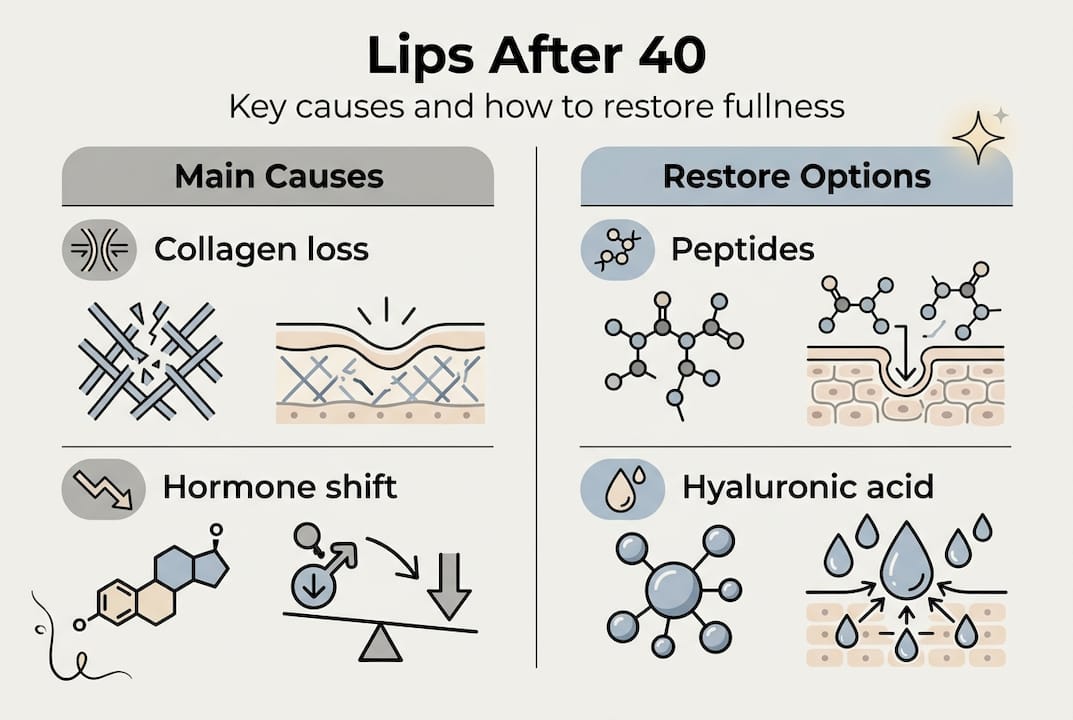
Below the surface, the orbicularis oris muscle (the circular muscle that surrounds the mouth) gradually loses mass. Fat pads that once supported lip contour shrink and shift downward. The bone underneath the mouth also resorbs over time, reducing the foundation that lips rest on. Together, lip thinning reaches 40%, the upper lip lengthens by 19%, and overall volume drops by 21% due to muscle atrophy and bone resorption.
Key structural changes at a glance:
- Collagen type III: up to 40% reduction by midlife
- Hyaluronic acid: up to 55% reduction, accelerating at menopause
- Lip thickness: up to 40% thinner over time
- Upper lip length: increases 19% as support structures weaken
- Volume: 21% average loss linked to muscle and bone changes
Menopause adds another layer of acceleration. Estrogen plays a direct role in collagen synthesis and skin hydration. When estrogen drops, collagen production slows faster, sebum output decreases, and the lip barrier weakens. This is why many women notice the most dramatic changes in their late 40s and early 50s. Learning about the ingredients for lip health that target these specific deficits is a practical starting point for building a response plan.

| Factor | Change after 40 | Impact on lips |
|---|---|---|
| Collagen type III | Up to 40% loss | Loss of firmness and structure |
| Hyaluronic acid | Up to 55% loss | Flattening, reduced plumpness |
| Estrogen levels | Significant drop at menopause | Faster collagen and hydration loss |
| Muscle mass | Gradual atrophy | Thinner, less defined lip shape |
| Bone density | Resorption under mouth | Reduced foundation, lip drooping |
What makes women’s lips more vulnerable after 40?
Not all facial skin ages at the same rate, and lips are in a category of their own. Compared to the cheek or forehead, lip skin is thinner, has only 3 to 5 cell layers, and contains no oil glands at all. That absence of oil glands means lips cannot self-moisturize the way the rest of your face can. They rely entirely on external hydration and the integrity of their own barrier.
Women’s lip skin is also structurally different from men’s. It tends to be thinner, with fewer supporting fibers and a different muscle attachment pattern. This means that the same hormonal and structural changes hit women harder and earlier. Women over 40 show more severe perioral wrinkles and volume loss, with first fine lines appearing around ages 32 to 33 and becoming clearly visible by 45.
“Lips have no oil glands, a thinner dermis, and high water loss rates, making them the most structurally vulnerable area of the face to age-related change.”
Trans Epidermal Water Loss (TEWL) is a measure of how much moisture escapes through the skin barrier. Lips have significantly higher TEWL than facial skin, which means they dehydrate faster and lose their plumpness more readily. When the barrier is compromised by UV exposure, cold weather, or harsh products, this water loss increases even further.
Why women over 40 face greater lip aging risk:
- Thinner lip dermis with fewer structural fibers
- No oil glands to maintain natural moisture
- Higher TEWL compared to surrounding facial skin
- Estrogen-dependent collagen production drops sharply at menopause
- Muscle attachment patterns speed visible sagging and thinning
Pro Tip: Starting a targeted lip care routine in your early 40s, before visible volume loss sets in, gives active ingredients time to build collagen reserves and reinforce the barrier. Waiting until changes are obvious means you are working to reverse rather than prevent. Look for hydrating products for aging lips that combine barrier support with active ingredients.
Common myths about why lips lose volume
Because lip aging is so visible and so personal, it attracts a lot of oversimplified explanations. Some of the most common ones actually lead women toward solutions that underdeliver or miss the point entirely.
Myth 1: It is mostly genetics. Genetics play a role in your baseline lip shape, but the structural changes after 40 are driven by universal biological processes: collagen loss, hormonal shifts, bone resorption, and barrier breakdown. You cannot opt out of these with good genes alone.
Myth 2: Staying hydrated is enough. Drinking more water helps your overall skin health, but it does not restore lost collagen, rebuild fat pads, or replace depleted hyaluronic acid deep in the tissue. Surface hydration and deep volume loss are completely different problems.
Myth 3: Fillers are the complete solution. Fillers add volume temporarily, but single-method treatments are insufficient for lasting results because lip aging is multi-factorial. Fillers do not repair the barrier, stimulate collagen, or address muscle or bone changes. Understanding lip filler options is useful, but fillers work best as part of a broader strategy.
Myth 4: Lip balm prevents aging. Standard lip balms seal the surface temporarily. They do not contain actives that stimulate collagen or hyaluronic acid production. Knowing which benefits of key lip ingredients to look for separates effective products from basic moisturizers.
| Myth | Reality |
|---|---|
| Genetics determine everything | Biology drives structural loss universally |
| Hydration fixes volume loss | Surface moisture does not replace deep tissue |
| Fillers solve the problem | Fillers are one tool, not a complete answer |
| Lip balm prevents aging | Balms lack actives for collagen or HA support |
Pro Tip: When evaluating any lip product or treatment, ask whether it addresses at least two of the core causes: barrier repair, collagen stimulation, or hyaluronic acid replenishment. Products that target only one factor rarely deliver visible, lasting results.
What actually works: Strategies to slow or reverse lip volume loss
The research is clear that replenishing collagen, HA, and circulation together, rather than relying on any single solution, produces the best outcomes after 45. Here is what the evidence supports.
Topical actives that make a measurable difference:
- Peptides signal the skin to produce more collagen and elastin, working at the cellular level rather than just coating the surface
- Hyaluronic acid in topical form draws moisture into the tissue and temporarily plumps the vermilion when applied consistently
- Retinol (in low concentrations around the lip area) stimulates cell turnover and collagen synthesis
- SPF protection on and around the lips prevents UV-driven collagen breakdown, which is one of the fastest ways to accelerate lip aging
- Niacinamide strengthens the barrier and reduces water loss, directly addressing the high TEWL issue in lip skin
Cosmetic and clinical options:
For women who want faster or more significant results, hyaluronic acid fillers remain a well-studied option when used by a qualified practitioner. Microfat transfer (injecting your own fat cells) is a longer-lasting alternative that also adds structural support. These work best alongside topical care rather than instead of it.
For a non-injectable approach, natural lip enhancement steps that combine circulation-boosting ingredients with barrier repair can produce visible improvement over weeks. Consistent use of top lip ingredients for 40+ matters more than any single application.
Pro Tip: Apply your active lip treatment at night when skin repair cycles are most active. Layer a barrier-sealing balm on top to lock in the actives and reduce overnight water loss. You can also explore lip plumping tips that use circulation and ingredient layering for a visible effect without needles.
Our perspective: What most solutions miss for women over 40
Most lip care products and even many clinical treatments are designed around a single problem: add volume, or add moisture, or smooth lines. For women in their 40s and beyond, this one-track thinking is why so many solutions feel disappointing after a few weeks.
Lip aging after 40 is not one problem. It is at least five happening at the same time: barrier breakdown, collagen loss, hyaluronic acid depletion, fat pad shrinkage, and hormonal acceleration. Treating one without the others is like fixing a leak in one pipe while three others are still running.
What we find consistently overlooked is the barrier. Because lips have no oil glands and extremely high water loss rates, a 360-degree approach that includes barrier restoration is not optional. It is the foundation everything else builds on. Without a functioning barrier, even the best actives evaporate before they can work.
Hormonal transitions also deserve more attention than they typically get in product marketing. The collagen drop at menopause is not gradual. It is steep. Women who start comprehensive lip care routines in their early 40s, before the menopause acceleration, consistently see better long-term outcomes than those who start later. Timing matters as much as product choice.
Explore effective solutions and next steps
Now that you understand the real drivers of lip volume loss, the next step is connecting that knowledge to products that actually address them. Targeted formulas that combine barrier repair, collagen-stimulating peptides, and hyaluronic acid give you the multi-pronged approach the science recommends.

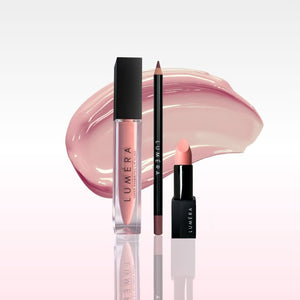
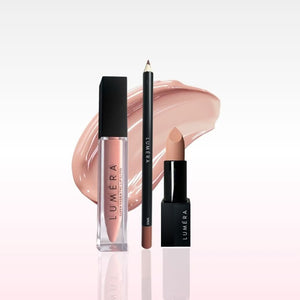
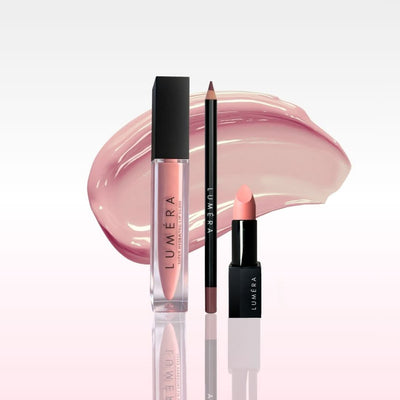
The Miss Bombshell Lip Kit from Luméra Cosmetica is formulated with this layered approach in mind, offering both immediate visual fullness and ingredients that support long-term lip health. For a deeper look at building your routine, the lip fullness guide walks through practical steps you can start today. Real results come from consistent, informed choices, and you now have the foundation to make them.
Frequently asked questions
What age do lips typically start to lose volume?
Lips begin thinning in the early to mid-30s, but volume loss accelerates rapidly after age 45 due to menopause-related hormonal and structural changes that speed up collagen and hyaluronic acid depletion.
Is filler the only solution for lip volume loss?
No. Multi-target approaches combining collagen, hyaluronic acid replenishment, and barrier repair outperform filler alone because lip aging involves multiple simultaneous causes that a single treatment cannot fully address.
Can lip volume loss be prevented?
Prevention is possible by applying SPF to the lip area, using actives like peptides and hyaluronic acid consistently, and prioritizing barrier restoration to reduce the water loss that accelerates structural decline.
How is lip aging different from skin aging elsewhere on the face?
Lips age faster because they have thinner skin with only 3 to 5 layers, no oil glands to self-moisturize, and significantly higher water loss rates than the surrounding facial skin.
Are there medical reasons for lip fat loss besides aging?
Rare conditions like HIV-related lipoatrophy can cause lip fat loss that mimics aging, but in healthy women over 40, the cause is almost always the normal biological aging process described above.
Recommended
- Key ingredients for healthier, more youthful lips after 40 – Luméra Cosmetica
- 7 Best Makeup Tips for Mature Lips to Restore Fullness – Luméra Cosmetica
- Make Lips Look Fuller Step by Step: Achieve a Plumper Pout – Luméra Cosmetica
- How to Make Lips Look Fuller Naturally: A Step-by-Step Guide – Luméra Cosmetica
- Lip filler aftercare: achieve natural results safely