

Lip Filler Treatment: Impact on Mature Beauty

Recent studies show that over 60 percent of mature women now consider lip fillers a trusted way to achieve a refreshed look without surgery. For those in cities across Australia and the UK, the rise in american cosmetic techniques has made lip enhancement safer and more customizable than ever. This guide sheds light on real facts, proven safety standards, and expert tips so you can make informed decisions and avoid common misconceptions as a first-time lip filler patient.
Table of Contents
- Lip Fillers Defined: Facts And Misconceptions
- Popular Lip Filler Types And Techniques
- Lip Filler Process: Consultation To Results
- Safety Standards And Legal Regulations
- Risks, Costs, And Safer Alternatives
Key Takeaways
| Point | Details |
|---|---|
| Lip Fillers Are Subtle Enhancements | Modern lip fillers focus on natural-looking results and individualized enhancements rather than exaggerated volume. |
| Consultation is Essential | A comprehensive consultation with a qualified practitioner is vital to assess individual needs and expectations before treatment. |
| Safety Standards Are Critical | Adherence to safety regulations and practitioner qualifications is crucial to minimize risks associated with lip filler procedures. |
| Consider Costs and Risks | Lip filler treatments vary in cost, and potential risks should be weighed against desired outcomes and alternative options. |
Lip Fillers Defined: Facts and Misconceptions
Lip fillers represent a nuanced cosmetic enhancement procedure designed to augment lip volume, shape, and overall aesthetic appearance. Dermal lip augmentation techniques have rapidly evolved, offering mature women sophisticated options for natural-looking rejuvenation.
At their core, lip fillers are minimally invasive treatments utilizing injectable substances - most commonly hyaluronic acid - to create fuller, more defined lip contours. These specialized cosmetic procedures allow individuals to address age-related volume loss, asymmetry, and subtle structural changes that occur naturally with aging. Interestingly, recent research suggests that motivations for lip enhancement extend beyond pure aesthetic considerations, with social media significantly influencing perceptions of ideal lip anatomy and beauty standards.
Contrary to popular misconceptions, modern lip fillers are not about creating dramatically oversized or artificial-looking lips. Contemporary aesthetic approaches emphasize subtle, personalized enhancements that complement an individual’s unique facial structure. Practitioners now focus on techniques that provide natural-looking volume, maintaining proportionality and individual character.
Key aspects of contemporary lip filler treatments include:
- Precise volume restoration
- Symmetry correction
- Hydration and texture improvement
- Minimal invasiveness
- Customizable results
Pro tip: Always schedule a comprehensive consultation with a board-certified professional who specializes in mature aesthetic treatments to understand your unique lip enhancement possibilities.
Popular Lip Filler Types and Techniques
Hyaluronic acid (HA) fillers dominate the lip augmentation landscape, offering mature women sophisticated options for subtle and natural-looking enhancements. Contemporary lip augmentation techniques have evolved to prioritize individual facial anatomy and personalized aesthetic goals, moving beyond the one-size-fits-all approach.

Two primary injection techniques currently define modern lip filler treatments: needle and cannula methods. Advanced injection strategies emphasize the importance of understanding precise lip anatomy to achieve natural, balanced results. Needle techniques allow for more precise placement of filler, while cannula methods can minimize bruising and provide smoother product distribution.
The most prevalent types of lip fillers include:
- Restylane series (fine line correction)
- Juvederm Ultra and Volbella (volume and hydration)
- Belotero Balance (soft, natural integration)
- Sculptra (collagen stimulation)
Each filler type offers unique benefits tailored to specific aesthetic requirements, such as addressing volume loss, improving lip symmetry, or enhancing overall lip texture and hydration.
Here’s a comparison of the most common lip filler types and their primary benefits:
| Filler Type | Main Benefit | Texture Effect | Typical Duration |
|---|---|---|---|
| Restylane series | Fine line correction | Smooth and supple | 6-9 months |
| Juvederm Volbella | Targeted volume, hydration | Soft, subtle plump | 9-12 months |
| Belotero Balance | Natural integration | Blends seamlessly | 6-12 months |
| Sculptra | Collagen stimulation | Gradual firming | Up to 24 months |
Pro tip: Request before-and-after photographs during your consultation to visualize potential outcomes and ensure your aesthetic expectations align with the proposed treatment.
Lip Filler Process: Consultation to Results
Comprehensive lip filler treatments represent a sophisticated approach to aesthetic enhancement that begins with a thorough initial consultation. This critical first step involves an in-depth evaluation of your unique facial anatomy, aesthetic goals, medical history, and specific lip characteristics to develop a personalized treatment strategy.
The actual injection process is a nuanced procedure requiring exceptional skill and precision. Advanced injection techniques focus on balancing natural volume with individual facial proportions. Practitioners typically use local anesthesia to ensure patient comfort and employ either needle or cannula methods to strategically place hyaluronic acid fillers, minimizing potential bruising and optimizing aesthetic outcomes.
Key steps in the lip filler journey typically include:
- Comprehensive initial consultation
- Facial anatomy assessment
- Aesthetic goal discussion
- Filler type selection
- Precise injection technique
- Immediate post-treatment evaluation
- Follow-up monitoring
Patients can expect gradual results that develop over several weeks as the filler integrates with existing lip tissue, creating a subtle, natural enhancement. The final outcome depends on multiple factors, including filler type, injection technique, and individual healing response.
Pro tip: Schedule your follow-up consultation two weeks after the initial treatment to assess results and discuss any minor refinements.
Safety Standards and Legal Regulations
Global regulatory frameworks surrounding lip filler treatments have become increasingly sophisticated, prioritizing patient safety and professional accountability. These regulations vary internationally but consistently emphasize the critical importance of practitioner qualifications, product standards, and comprehensive patient screening protocols.
Safety standards for cosmetic procedures mandate strict guidelines for medical professionals performing lip filler injections. These comprehensive protocols address multiple dimensions of patient care, including pre-treatment medical history evaluation, precise injection techniques, and robust adverse event management strategies. Licensed practitioners must demonstrate expertise in preventing and responding to potential complications such as vascular occlusion, allergic reactions, and unexpected tissue responses.
Key safety regulations typically encompass:
- Mandatory professional certification
- Rigorous product quality control
- Comprehensive patient medical screening
- Detailed informed consent processes
- Post-treatment monitoring protocols
- Adverse event reporting requirements
- Ongoing professional education mandates
The regulatory landscape continues to evolve, with increasing emphasis on transparency, patient protection, and standardized professional practices. Mature patients considering lip filler treatments should prioritize practitioners who demonstrate strict adherence to these comprehensive safety standards and maintain current professional credentials.
Pro tip: Always verify your practitioner’s current professional credentials and request documentation of their adherence to national safety standards before proceeding with any cosmetic procedure.
Risks, Costs, and Safer Alternatives
Comprehensive lip filler risk assessment reveals a nuanced landscape of potential complications and financial considerations for mature patients seeking aesthetic enhancements. The spectrum of risks ranges from mild, temporary side effects like bruising and swelling to more serious long-term inflammatory responses that can emerge months after the initial procedure.
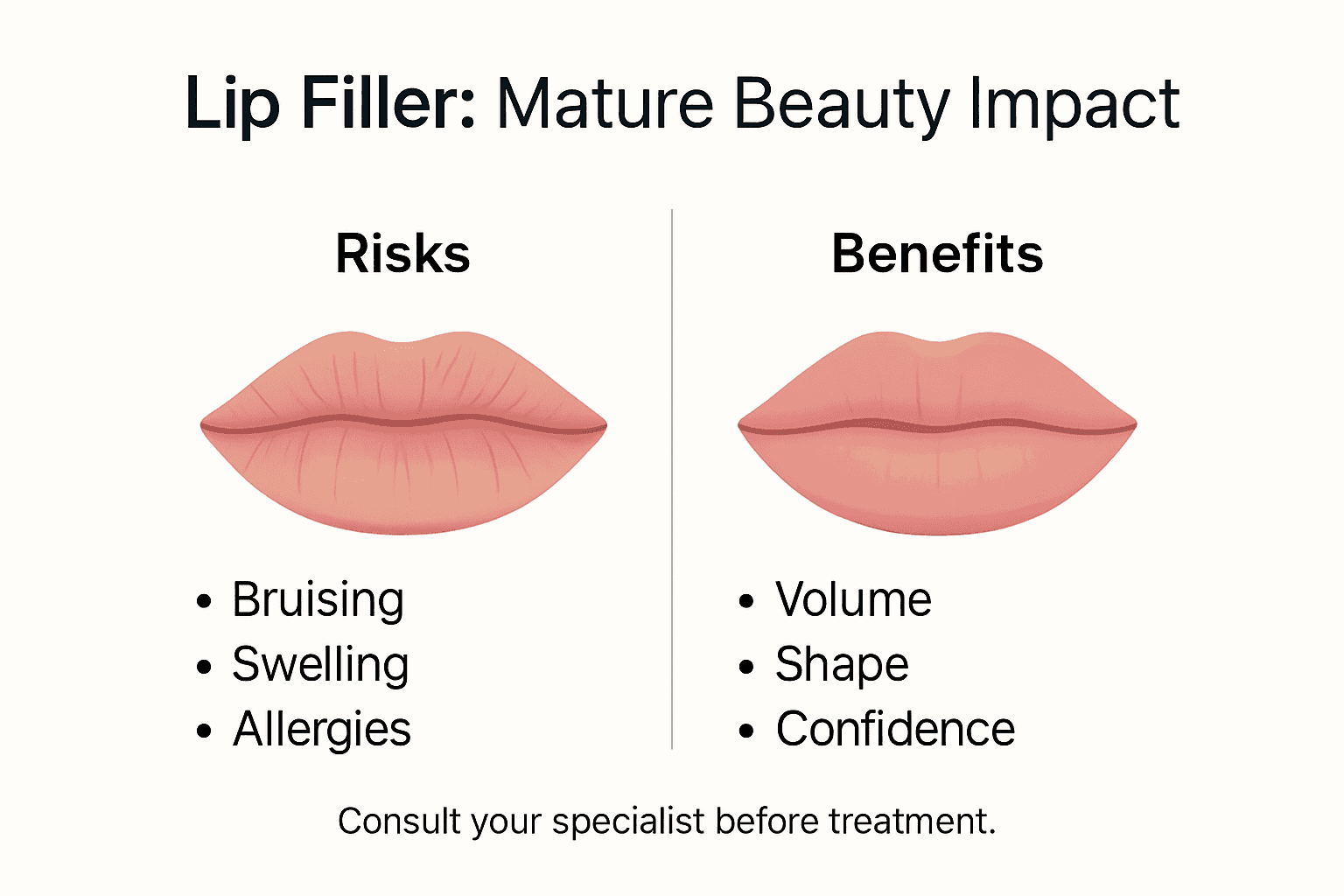
Cost factors for lip filler treatments are multifaceted, typically influenced by geographic location, practitioner expertise, product quality, and specific treatment complexity. Pricing can vary dramatically, with professional treatments ranging from $500 to $2,000 per session. The most significant risks include potential allergic reactions, vascular complications, infection, and rare but serious granulomatous inflammatory responses that might require additional medical intervention.
Safer alternatives and risk mitigation strategies include:
- Choosing hyaluronic acid fillers with proven biocompatibility
- Selecting experienced, board-certified practitioners
- Undergoing comprehensive medical screenings
- Utilizing conservative, minimal-volume injection techniques
- Maintaining realistic aesthetic expectations
- Considering temporary, less invasive enhancement methods
- Prioritizing natural lip care and hydration
For patients seeking alternatives to traditional lip fillers, options range from topical lip plumpers and collagen-stimulating serums to non-invasive cosmetic techniques that can provide subtle volume and texture improvements without injectable interventions.
Below is an overview of common risks, associated costs, and safer alternatives for lip filler treatments:
| Aspect | Typical Example or Range | Considerations |
|---|---|---|
| Common Side Effects | Temporary bruising, swelling | Usually mild and short-term |
| Major Risks | Vascular occlusion, infection | Require medical expertise |
| Treatment Cost | $500–$2,000 per session | Varies by location and provider |
| Non-Invasive Options | Topical plumpers, serums | Temporary results, easy to use |
Pro tip: Request a detailed medical consultation that includes a comprehensive review of your personal health history and potential contraindications before pursuing any cosmetic lip enhancement procedure.
Enhance Your Natural Beauty with Caring Lip Solutions
Mature beauty deserves gentle and effective care that complements your unique facial features without invasive procedures. If you are considering lip filler treatments but are concerned about maintaining natural hydration and lip texture, exploring quality topical options can provide subtle yet noticeable improvements. Our specialized LIP OIL – Luméra Cosmetica is designed to nourish and plump lips safely, enhancing your smile while supporting the delicate balance of hydration and softness.

Discover how to nurture your lips every day by visiting Luméra Cosmetica and explore our full range including the innovative REELUP (DO NOT DELETE) – Luméra Cosmetica collection for targeted treatments. Take the first step towards refined, naturally youthful lips that harmonize with your beauty goals. Shop now and experience the confidence of enhanced lip care crafted with mature skin in mind.
Frequently Asked Questions
What are lip fillers and how do they work?
Lip fillers are minimally invasive cosmetic treatments that use injectable substances, primarily hyaluronic acid, to enhance the volume, shape, and overall appearance of the lips. These fillers address age-related volume loss and asymmetry, providing a natural-looking enhancement.
What types of lip fillers are available?
The most common types of lip fillers include Restylane series for fine line correction, Juvederm Ultra and Volbella for volume and hydration, Belotero Balance for natural integration, and Sculptra for collagen stimulation. Each type offers unique benefits tailored to specific aesthetic needs.
What is the process of getting lip fillers?
The lip filler process begins with a comprehensive consultation involving an assessment of facial anatomy, aesthetic goals, and medical history. The injection process requires skill and precision, often using local anesthesia, and can involve either needle or cannula methods to place the filler.
Are there any risks associated with lip fillers?
Yes, risks may include temporary side effects like bruising and swelling, as well as more serious complications such as vascular occlusion or infection. It is essential to choose experienced practitioners and adhere to safety standards to minimize these risks.
Recommended
- 7 Best Makeup Tips for Mature Lips to Restore Fullness – Luméra Cosmetica
- Lip Makeup for Mature Women: Complete Guide – Luméra Cosmetica
- How to Create Perfect Pout Naturally for Women 40+ – Luméra Cosmetica
- 7 Expert Lip Combos for Timeless Beauty Over 40 – Luméra Cosmetica
- 7 Βασικοί Όροι Φυσικής Ομορφιάς για Όλους - Eneleo - Natural Skin Care