

Get Noticeably Fuller Lips in 4–8 Weeks Without Injections

Vasodilator glosses and hyaluronic acid serums give you an instant, temporary boost for a few hours. Peptide actives, consistent hydration, exfoliation, and facial exercises build subtler, cumulative fullness over four to eight weeks. In-office lip flips and LED treatments push results further without a filler needle. Skip hyaluron pens entirely: they carry real infection and vascular risk. No needle-free method fully replaces filler, but combined correctly, they get you noticeably closer than most people expect.
TL;DR:
- Hyaluronic acid serums and peptides gradually improve lip fullness when used consistently over four to eight weeks, with no irritation for sensitive lips.
- Vasodilator glosses provide a quick, temporary plump effect lasting one to three hours and should be applied about 20 minutes before an event.
- In-office treatments like lip flips and LED sessions can enhance lip appearance without fillers but require professional procedures and may have limited duration.
- Hyaluron pens are unsafe for lip augmentation due to risks of uneven results, infection, and vascular damage, requiring caution and professional consultation.
- DIY remedies such as cold compresses, sugar scrubs, and mild spice-based products offer short-term results and carry risks of dryness or irritation if overused.
Table of Contents
- How to Get Fuller Lips Without Injections: A Quick Shortlist
- What’s the Best Way to Plump Lips Without Filler at Home?
- Are Hyaluron Pens Safe for Plumping Lips?
- How Long Does It Take to See Fuller Lips Naturally?
- Why Trust This Guide on Plumping Lips Without Filler?
- Does Facial Yoga Actually Make Lips Look Bigger?
- Can Your Diet Change How Full Your Lips Look?
- What Home Remedies Actually Help Plump Lips?
- How Do You Pick Lip Products for Sensitive or Dry Skin?
- What Side Effects Can Topical Lip Plumpers Cause?
- A Curated Lip Kit Built for This Exact Routine
- A Final Note on Expectations
- Sources
How to Get Fuller Lips Without Injections: A Quick Shortlist
Not every method fits every goal. Some are built for a Saturday night, others for a slow, steady change you’ll notice in the mirror a month from now. Here’s how the safe, needle-free options break down by what you’re actually trying to do.
- Instant event boost: Vasodilator plumping gloss (cinnamon, ginger, or capsaicin based) swells lips within minutes; effect fades in 1 to 3 hours, so time it right before you walk out the door.
- Instant, gentler option: Hyaluronic acid serum layered under an occlusive balm plumps through hydration alone; lasts a few hours and won’t irritate sensitive lips.
- Routine improvement: Peptide serums plus weekly exfoliation and nightly occlusive layering build modest, cumulative fullness over 4 to 8 weeks.
- Routine improvement, low effort: Daily lip massage and light facial exercises support circulation and skin tone with almost no cost or risk.
- Professional non-filler: A lip flip increases upper-lip show for a few months using a small dose of neurotoxin, not volume.
- Professional non-filler, no downtime: LED sessions or a Hydrafacial Perk stimulate circulation and collagen response with visible but temporary results.
Best for sensitive lips: hyaluronic acid plus peptides, since neither relies on irritation to create the plump effect. Best for a same-day event: a vasodilator gloss, applied about 20 minutes before you need the look.
What’s the Best Way to Plump Lips Without Filler at Home?
Each method below works differently, and knowing the mechanism is what keeps you from wasting money or irritating your lips for nothing.
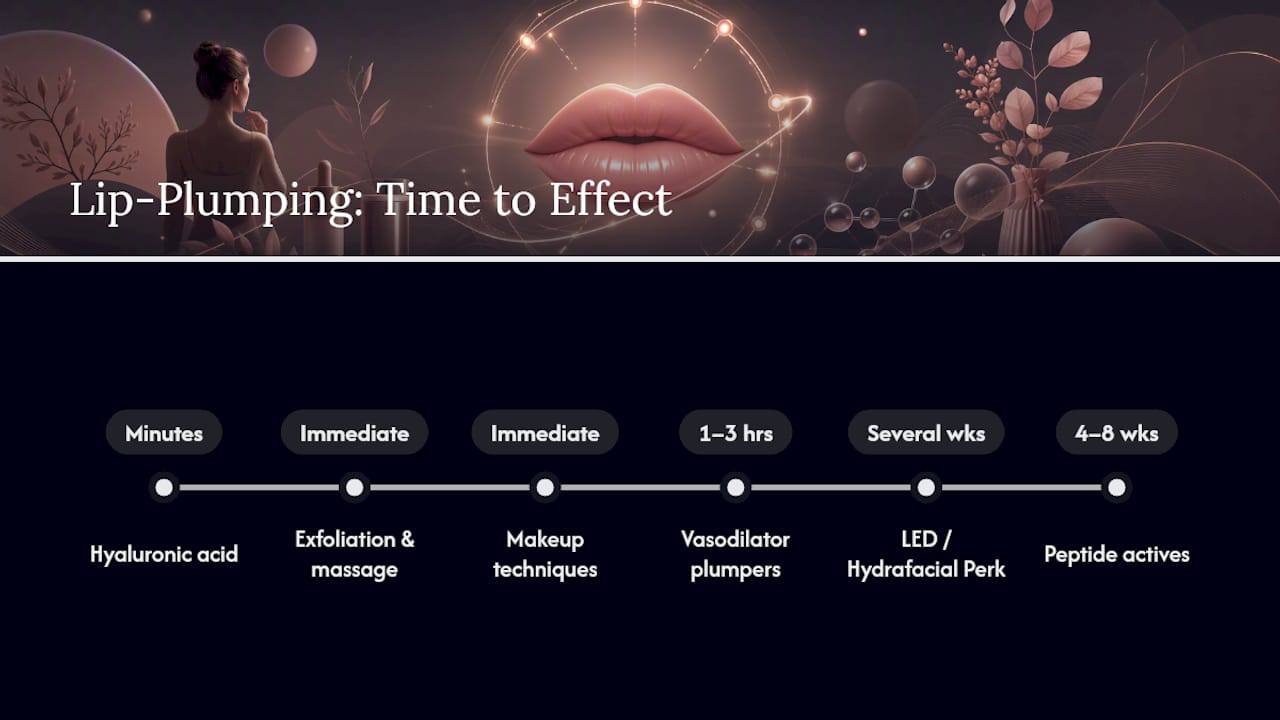
1. Topical hyaluronic acid. Apply HA serum to slightly damp lips first. Hyaluronic acid pulls in surrounding moisture, so damp skin gives it more to hold onto. Seal it with an occlusive balm (shea butter, petrolatum, or a ceramide-based balm) right after. The occlusive layer traps that moisture at the surface instead of letting it evaporate, which is what creates the temporary plump look. Topical hyaluronic acid and occlusive layering can visibly smooth and fill fine lines within minutes, though the effect fades once the balm wears off. Reapply two to three times a day for the most consistent look.
2. Peptide actives. Peptide serums work on a slower timeline because they’re signaling your skin to behave differently, not just holding water on the surface. They send a message to skin cells to ramp up collagen production, and collagen is structural, not hydrating. Expect to wait 4 to 8 weeks before you notice a real difference in texture or perceived fullness. Peptides suit anyone with sensitive lips who reacts badly to tingling plumpers, since there’s no active irritation involved.
3. Vasodilator plumpers. Capsaicin, cinnamon oil, and ginger extract irritate the skin’s surface just enough to widen blood vessels and pull fluid to the area. That’s the tingle you feel, and it’s also the swelling you see. The effect typically lasts one to three hours. Used occasionally, it’s a fast fix. Used daily, these ingredients can cause chronic dryness and irritation, which ironically makes lips look thinner and more chapped over time. Patch-test any new plumper on your inner forearm for 24 hours before putting it anywhere near your mouth.
4. Exfoliation and massage. A gentle scrub of brown sugar and honey, massaged in small circles for 30 to 60 seconds, clears flaking skin so serums and balms actually absorb instead of sitting on top. Do this once or twice a week, not daily. Follow immediately with a moisturizing balm. Massage separately, using your fingertip in small circular motions for a minute or two, boosts circulation to the area and can make lips appear slightly fuller right after.
5. Makeup techniques. Subtle overlining, blended carefully at the cupid’s bow rather than drawn in a hard line, gives the most reliable instant effect of anything on this list. Follow with a light, reflective gloss placed only at the center of the lower lip. Light bounces off that spot and creates the illusion of more volume. Skip the heavy, high-contrast liner. It reads as obvious rather than natural.
6. LED and Hydrafacial Perk. A typical session runs 15 to 20 minutes. Red light stimulates the same collagen response peptides trigger topically, just with more intensity and professional equipment. Results usually show up gradually over several weeks of repeated sessions, and pricing varies widely by provider and region.
Pro Tip: Layer, don’t stack. Apply HA serum first, let it absorb for a minute, then seal with balm. Piling plumper directly on top of balm mostly just slides around instead of working.
For more on lining technique specifically, our step-by-step guide to fuller-looking lip lining walks through blending in more detail.
Are Hyaluron Pens Safe for Plumping Lips?
No. Hyaluron pens use high-pressure air to force filler under the skin without a needle, and that lack of control is exactly the problem. Dermatologists warn that hyaluron pens can cause uneven results, infection, nodules, and in rare cases vascular occlusion or tissue damage, because there’s no way to see where the product actually goes once it’s injected.
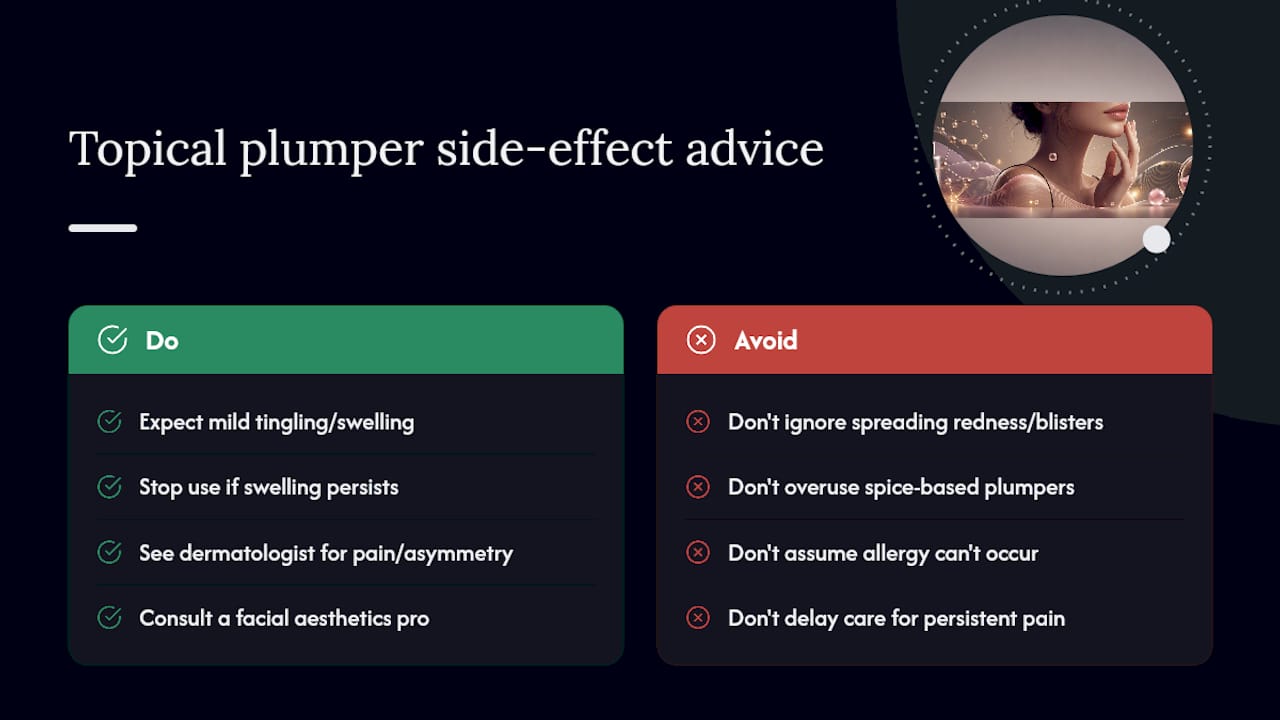
Before trying any new topical plumper, patch-test it: apply a small amount to your inner forearm or behind your ear and wait 24 to 48 hours. Stop immediately if you see spreading redness, blistering, or swelling beyond the test site.
Go easy on essential oils and spicy actives. Dilute cinnamon or peppermint oil in a carrier oil rather than applying it directly, and never combine multiple vasodilator products in one sitting.
See a board-certified dermatologist or plastic surgeon if you notice swelling that doesn’t resolve, asymmetry, or persistent pain from any product.
How Long Does It Take to See Fuller Lips Naturally?
Give any routine 4 to 8 weeks before judging whether it’s working. Cumulative changes from peptides, exfoliation, and massage take that long to show up in texture and perceived fullness, and rushing the timeline just leads to overusing irritant plumpers instead.
- Daily: hydrate, apply an SPF-containing balm during the day, and layer a nightly occlusive balm before bed. Apply peptide serum once daily, ideally at night.
- Weekly: exfoliate gently once or twice, and fit in two or three short massage or exercise sessions.
- Before an event: apply your vasodilator gloss about 20 minutes ahead so the peak swelling lines up with when you actually need it, and cycle plumpers rather than using them daily to avoid chronic irritation.
- Track progress: take a consistent, well-lit photo weekly and note changes in texture, color, and how much upper lip shows when you smile.
Why Trust This Guide on Plumping Lips Without Filler?
Luméra Cosmetica builds its recommendations around the same routines its own step-by-step guides walk readers through, including detailed lip-lining tutorials and natural at-home plumping methods. The split in this article, hyaluronic acid and peptides for hydration and gradual firmness versus vasodilators for a short-term visual bump, tracks with how dermatologists quoted in outlets like Women’s Health frame the same distinction.
None of this replaces professional care. If your lips feel persistently dry, uneven, or you want a bigger change than topical routines and makeup can deliver, talk to a board-certified dermatologist about options like a lip flip or in-office treatments before trying anything more aggressive at home.
Does Facial Yoga Actually Make Lips Look Bigger?
Facial yoga for lips won’t add volume the way collagen or hyaluronic acid does, but it does something useful: it tones the orbicularis oris, the ring muscle circling your mouth, and improves blood flow to the area. Better circulation means a slightly fuller, more defined look over time, even without a structural change underneath.
A few exercises show up consistently in facial yoga routines. The “fish face,” pulling your lips and cheeks inward and holding for 10 to 15 seconds, works the muscle directly. The “O” press, forming an exaggerated O shape and pressing your lips together firmly, does the same from a different angle. Lip pulls, where you stretch your lips wide into a smile and hold, target the same muscle group from the sides.
Do these for 5 to 10 minutes a day, and treat it the same way you’d treat any fitness routine: consistency matters more than intensity. A single ambitious session won’t do anything. Ten minutes most days for a month might show up as slightly firmer-looking lips, especially paired with the hydration and peptide routine covered earlier.
Worth being honest here. Facial exercises are the weakest lever on this list for actual fullness. They’re a reasonable add-on for someone who wants to try everything low-risk, not a stand-alone strategy for anyone hoping for a dramatic change.
Can Your Diet Change How Full Your Lips Look?
What you eat and drink shows up on your lips faster than almost anywhere else on your face, because lip skin has no oil glands and is only a few cell layers thick. Dehydration is the fastest way to make lips look thin and flat, so water intake matters more here than most people assume.
Collagen production, the process peptide serums are trying to jump-start topically, also depends on what you’re feeding your body. Vitamin C is essential for collagen synthesis, so citrus, bell peppers, and leafy greens support the same goal your serum is working toward from a different direction. Zinc and healthy fats, found in nuts, avocado, and fatty fish, help maintain the skin barrier that keeps lips from losing moisture in the first place.
Alcohol and excess caffeine both dehydrate skin, lips included, and a rough night can genuinely show up as flatter, drier lips the next morning. Smoking is worse: it breaks down collagen and constricts blood vessels, which over years makes lips visibly thinner, not just temporarily dry.
None of this replaces a topical routine, but skipping it undercuts everything else you’re doing. A great peptide serum applied over chronically dehydrated, nutrient-starved skin is fighting an uphill battle. Fix the inputs first, then let the topical routine do its job on top of that foundation.
What Home Remedies Actually Help Plump Lips?
Kitchen-cabinet plumpers have a long history for a reason: they’re cheap, and some of them genuinely work, at least temporarily. Healthline’s roundup of DIY plumping methods includes cayenne pepper mixed into balm, peppermint oil diluted in a carrier oil, and simple sugar scrubs, all of which show up repeatedly across dermatology-adjacent advice because they’re low-risk when used correctly.
A basic sugar and honey scrub, mixed in equal parts and massaged gently for under a minute, sloughs off dry skin so anything applied afterward absorbs better. A drop of diluted cinnamon or peppermint oil mixed into a neutral balm gives you a mild version of the vasodilator effect covered earlier, though the same irritation warnings apply here too.
Cold compresses deserve a mention most guides skip. Holding an ice cube wrapped in a cloth against your lips for 10 to 15 seconds can temporarily increase blood flow to the surface as your body responds to the cold, giving a brief, gentle plump with zero irritation risk. It’s a good option for anyone who reacts badly to spicy or tingling ingredients.
The honest caveat, repeated across every credible source on this topic: DIY plumpers deliver short-lived results, measured in hours, not days. Treat them as an occasional touch-up, not your core routine. Overuse of anything with cayenne, cinnamon, or peppermint oil will eventually leave lips drier than when you started.
How Do You Pick Lip Products for Sensitive or Dry Skin?
Not every plumping product suits every lip type, and this is where a lot of people go wrong: they buy whatever’s trending instead of matching the product to their actual skin.
If your lips are chronically dry or flaky, prioritize occlusive ingredients (shea butter, ceramides, ozokerite) over anything with a tingling or warming sensation. Vasodilator plumpers will only worsen existing dryness, no matter how tempting the instant puff looks.
If you have naturally sensitive skin or a history of reacting to skincare, patch-test everything new, including “natural” or “clean” labeled products. Essential oils in particular are common irritants precisely because brands market them as gentle. Go for fragrance-free, peptide-and-HA-based formulas as your baseline, and treat anything with cayenne, cinnamon, or menthol as an occasional extra rather than a daily product.
Combination or normal skin tolerates more experimentation, but the same rule applies across the board: introduce one new product at a time. Layering three untested actives at once makes it impossible to know which one caused a reaction if something goes wrong.
Texture matters too. A gloss with a thin, watery consistency won’t hold moisture the way a balm-based formula will, so if hydration is your goal rather than instant shine, skip the wateriest options on the shelf.
What Side Effects Can Topical Lip Plumpers Cause?
The most common reaction to any plumping product is exactly the effect it’s designed to produce: mild tingling, warmth, and slight swelling. That’s expected and temporary. Problems start when that reaction goes further than intended.
Watch for redness that spreads beyond the lip line, blistering, or swelling that lasts more than an hour or two after applying a vasodilator product. Overusing cinnamon, ginger, or capsaicin based plumpers can cause chronic dryness and irritation, and repeated irritation over weeks can leave lips more prone to cracking and peeling long-term, undoing the exact effect you were going for.
Allergic reactions to specific ingredients are also possible, separate from the expected tingling. Essential oils, certain dyes in tinted glosses, and preservatives are the usual culprits. A true allergic reaction typically involves itching, hives, or swelling that doesn’t match the mild warmth of a working vasodilator, and it can show up even on a product that’s never bothered you before if the formula changed.
If you notice persistent swelling, asymmetry between your lips, or pain that doesn’t resolve within a day, stop using the product and check in with a dermatologist rather than assuming it’ll settle on its own. For anyone weighing whether a stronger cosmetic procedure makes more sense than continuing to manage side effects at home, a professional consultation on facial aesthetics can help you understand what’s realistic for your specific proportions before you spend more money chasing a topical fix.
A Curated Lip Kit Built for This Exact Routine
If you’d rather not build a routine from six different products bought separately, Some companies offer curated kits combining hydrating, skincare-infused products to simplify a lip care routine.
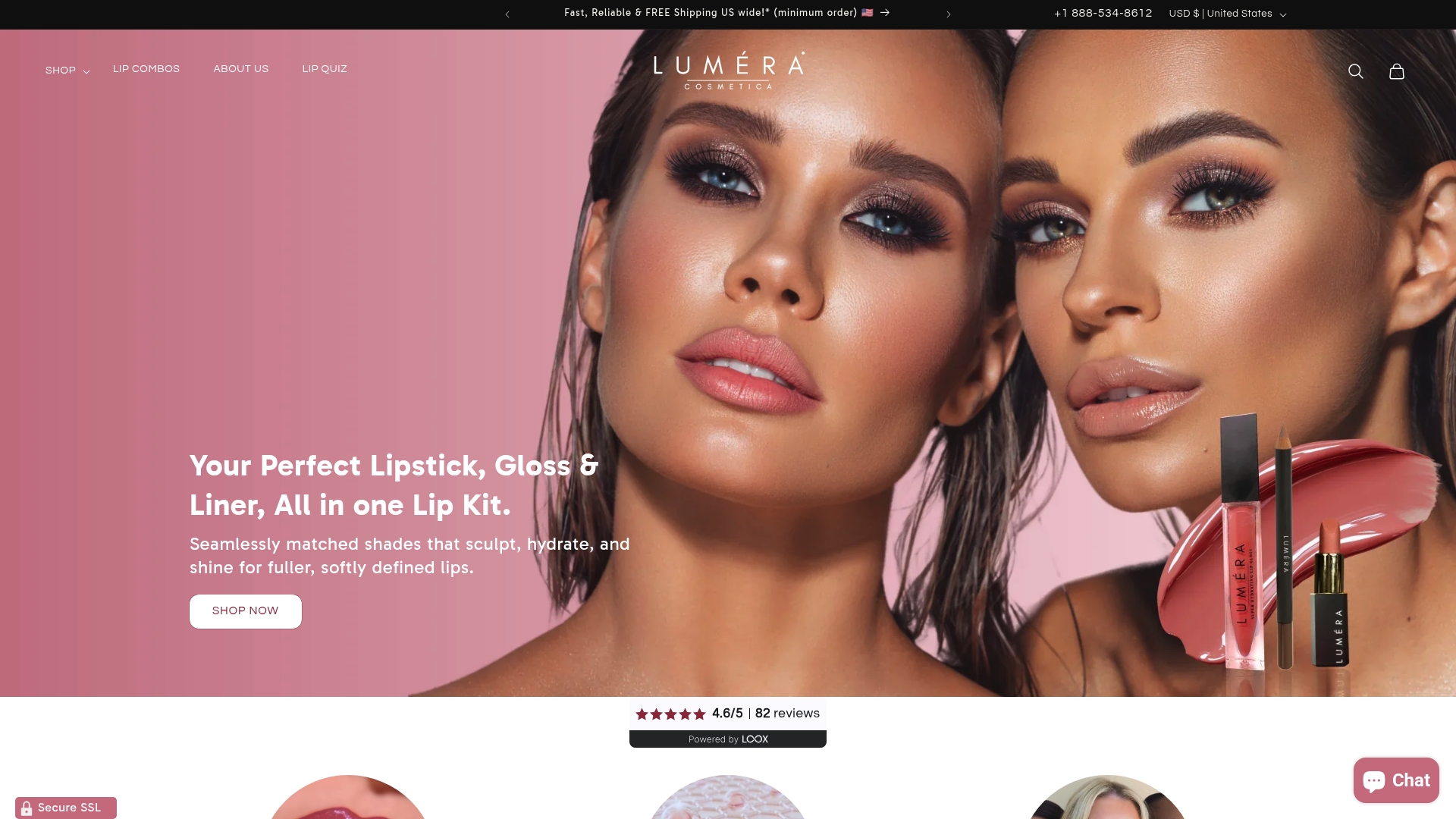
These kits often include plumping gloss, liner, and lipstick formulated for mature lips that may need more hydration support than standard drugstore products. Expect the same maintenance pattern covered throughout this guide: daily use for ongoing hydration, with the plumping effect most visible right after application and fading over a few hours like any topical product.
It’s a fit for anyone who wants the routine without the trial and error of matching six separate products to their own coloring and skin type. Browse the natural plumping lip gloss collection to see which shade and formula matches your lip tone before you order.
A Final Note on Expectations
Needle-free methods enhance what you already have. They don’t replace what a filler physically adds. Be patient, photograph your progress weekly, and experiment carefully. For step-by-step routines, Luméra’s tutorials are a good next stop.
— Rebecca


