How to Stop Lipstick Bleeding for Women Over 40

TL;DR:
- Lipstick bleeding occurs when pigment migrates beyond the lip line into fine lines and surrounding skin but can be prevented with proper preparation, barriers, and layered application techniques. Exfoliating, hydrating, using primers and concealers, and applying two thin layers with tissue and powder significantly reduce bleeding, especially for women over 40. Choosing the right formulas, like satin finishes, and avoiding heavy balms and gloss at the edges further enhances longevity and crispness of lip color.
Lipstick bleeding is the migration of pigment beyond your natural lip line into the fine lines and surrounding skin, and it is one of the most common and fixable makeup problems for women over 40. Knowing how to stop lipstick bleeding comes down to three things: proper lip preparation, physical and chemical barriers, and a layered application method. The right combination of a clear lip liner, a silicone-based primer, and the tissue-and-powder technique will keep your color crisp from morning to evening. This guide covers every step in the order you need to follow it.
How to stop lipstick bleeding: start with lip prep
The condition of your lips before you apply any product determines whether your color stays put or travels. Dead skin and dry lips create uneven texture that acts like a road map for pigment migration. Smooth, hydrated lips give lipstick a uniform surface to grip.

Exfoliate first
Use a soft lip scrub or a damp washcloth and work in small circles for about 30 seconds. You are removing the flaky surface layer that causes lipstick to sit unevenly and bleed into cracks. Do this two to three times a week, not daily, to avoid irritation.
Hydrate and wait
Apply a thin layer of a lightweight, non-greasy lip balm after exfoliating. The key step most women skip is waiting. Proper balm absorption takes two to three minutes, and rushing past this window leaves a slippery film that pushes lipstick off course. After waiting, blot your lips firmly with a tissue to remove any excess product before you move on.
Pro Tip: Avoid balms with heavy petroleum bases like straight Vaseline right before lipstick. They feel luxurious but create a slick surface that no liner or primer can fully overcome.
Here is the prep sequence to follow every time:
- Exfoliate lips gently for 30 seconds using a scrub or soft cloth
- Apply a lightweight, absorbing lip balm
- Wait two to three minutes for full absorption
- Blot firmly with a tissue to remove excess
- Allow lips to feel slightly tacky before applying any product
Why primers and concealers are your best barrier tools
A lip primer does two things at once. It smooths fine lines around the mouth and creates a slightly tacky surface that grips pigment and holds it in place. Primer applied at the lip perimeter is just as important as the lipstick formula itself when it comes to stopping bleeding on mature lips.
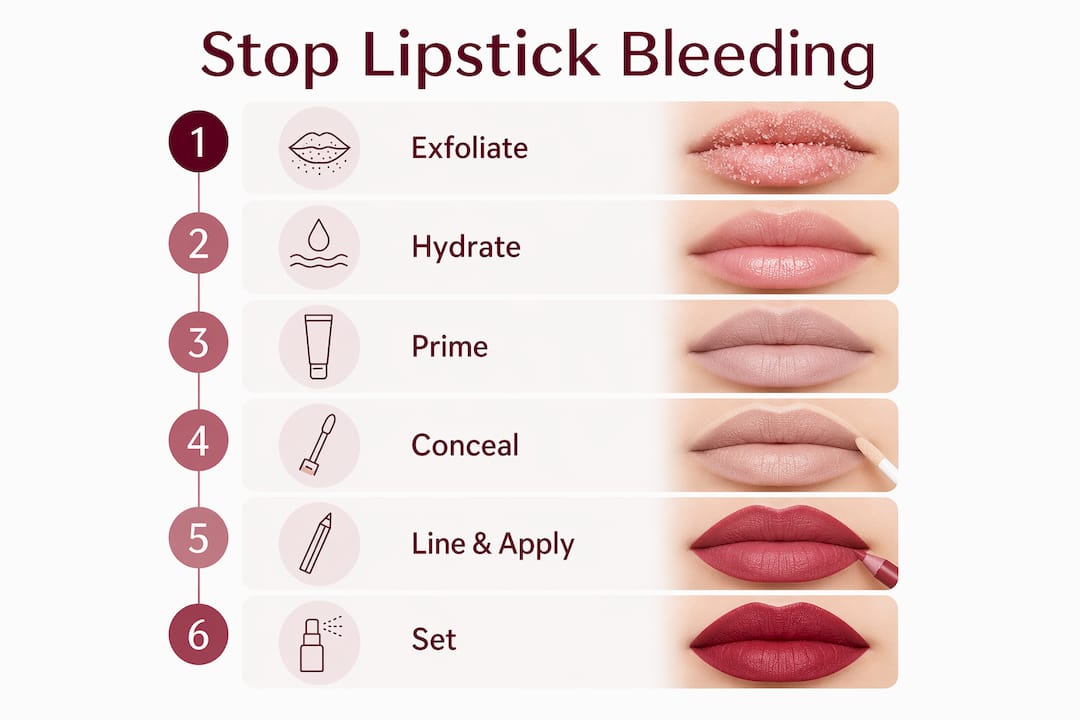
Silicone-based primers work particularly well because they fill fine lines without adding bulk. Apply your primer slightly outside the natural lip line, not just on the lips themselves. This creates an invisible chemical dam that stops pigment before it reaches the channels where bleeding happens. Allow the primer to dry for about 60 seconds before applying color.
Concealer adds a second layer of defense. Apply a small amount around the outer edge of your lips using a fine brush or your fingertip, then blend it outward by about two to three millimeters. This sharpens your lip line definition and creates a physical barrier that pigment cannot easily cross.
Pro Tip: Set your concealer with a light dusting of translucent powder before you apply lipstick. This step locks the concealer in place and dramatically extends how long your barrier holds.
Here is a quick comparison of the two barrier options:
| Barrier type | Best for | Application tip |
|---|---|---|
| Silicone-based primer | Filling fine lines, creating grip | Apply just outside lip line, dry 60 seconds |
| Concealer plus powder | Sharpening edges, physical block | Blend outward 2-3mm, set with translucent powder |
For a detailed walkthrough of primer application, Lumeracosmetica has a full guide on using lip primer for longer-lasting color.
Lip liner strategies that work for mature lips
Lip liner is the most underrated tool for stopping lipstick feathering. It works as a waxy fence around your lips, and clear liners create invisible barriers that work with any lipstick shade you own. You never have to worry about matching your liner to your lipstick when you use a clear or nude wax liner.
One technique that works especially well for women over 40 is applying liner after your lipstick rather than before. This avoids the harsh, visible outline that can look aging on mature lips, while still locking the color in place at the edges. The liner sits on top of the color and seals the perimeter without creating a stark border.
For maximum hold, fill your entire lip with liner before applying lipstick. This gives the color something to grip across the full surface, not just at the edges. Use short, feathery strokes rather than one continuous line to keep the result looking natural. Lumeracosmetica’s guide on lip liner techniques covers this approach in detail.
| Liner type | Visibility | Works with |
|---|---|---|
| Clear wax liner | Invisible | Any shade, any formula |
| Nude liner | Near-invisible | Neutral and warm tones |
| Matching liner | Visible | Bold, statement shades |
- Use a clear or nude liner for everyday wear to avoid harsh lines
- Apply liner after lipstick if you want a softer, more natural result
- Fill the full lip with liner to improve grip and longevity
- Use short strokes, not one continuous outline, for a natural finish
Step-by-step application that locks color in place
How you apply lipstick matters as much as what you apply before it. Two thin, buildable layers with blotting between them are twice as effective for long-lasting, bleed-proof color compared to one heavy swipe. The single heavy application is the most common mistake, and it is easy to fix.
Follow this sequence for every application:
- Apply your first thin layer of lipstick using a lip brush for precision. A brush gives you control at the edges that a bullet cannot match.
- Blot your lips with a single-ply tissue. Press gently. Do not rub.
- Dust a small amount of translucent powder over the tissue while it is still on your lips. This is the tissue-and-powder method that professional makeup artists use to set color without changing the shade or adding bulk.
- Apply your second thin layer of lipstick directly over the set base.
- Blot once more lightly to remove any excess.
Choose matte or satin finishes for the best bleed resistance. Gloss is the most fluid formula and the most likely to migrate. If you love gloss, limit it to the center of your lips only. Keeping gloss away from the edges preserves the barrier you have built and prevents the fluid pigment from traveling into fine lines.
Pro Tip: A lip brush is not optional if bleeding is your main concern. The precision it gives you at the outer edges is the difference between a crisp line and color that starts migrating within an hour.
For a full application walkthrough suited to mature lips, Lumeracosmetica’s lipstick application guide covers every step in detail.
Common mistakes that cause bleeding on mature lips
Most lipstick bleeding problems come from a short list of fixable habits. Identifying which one applies to you is the fastest way to see improvement.
Heavy petroleum-based balms applied immediately before lipstick are the single most common cause of slippage and bleeding. The fix is switching to a lighter balm and waiting the full five to ten minutes before applying any color product.
Applying gloss all the way to the lip edge is the second most common error. Gloss is fluid by nature, and its fluid pigment travels easily into fine lines. Keeping it centered solves this without giving up the shine you want.
Skipping the lip perimeter entirely is a mistake that affects women with visible fine lines around the mouth. The skin just outside your lip line needs the same attention as the lips themselves. Primer or foundation on that perimeter skin fills the channels where pigment migrates.
Makeup expert Bobbi Brown has noted that comfort and ease of reapplication matter more than chasing 24-hour wear. Satin formulas that do not dry out or accentuate texture are a better fit for mature lips than harsh long-wear products that grip too aggressively and crack over time.
- Switch from petroleum balms to lightweight, absorbing formulas
- Wait five to ten minutes after balm before applying any lip product
- Keep gloss centered, never at the edges
- Treat the skin around your lips with primer or foundation
- Choose satin or comfortable matte formulas over extreme long-wear products
For more tips tailored to mature lips, Lumeracosmetica’s resource on lip makeup after 40 addresses the specific challenges that come with changing lip texture.
Key takeaways
Stopping lipstick bleeding requires a three-part system: prepared lips, a physical or chemical barrier, and a layered application with the tissue-and-powder setting method.
| Point | Details |
|---|---|
| Prep lips before every application | Exfoliate, apply lightweight balm, wait 2-3 minutes, then blot before any product. |
| Use primer outside the lip line | Silicone-based primer just beyond the lip edge creates an invisible barrier against pigment migration. |
| Choose a clear liner for any shade | Clear wax liners stop feathering without creating harsh visible lines on mature lips. |
| Apply in two thin layers with blotting | Two blotted layers with the tissue-and-powder method outperform one heavy application every time. |
| Keep gloss away from lip edges | Limiting gloss to the lip center prevents fluid pigment from traveling into fine lines. |
What I have learned about lipstick and mature lips
I spent years chasing the idea that the right lipstick formula would solve everything. It does not. The formula matters, but the system around it matters more. What actually changed my results was treating the skin outside my lip line as part of the application, not an afterthought.
The clear liner technique was the single biggest shift for me personally. I resisted it for a long time because it felt like an extra step. Once I started using it consistently, I stopped touching up my lip line entirely by midday. That is not a small thing when you are busy.
I also think the beauty industry oversells extreme long-wear formulas to women over 40. Those products grip hard, dry out, and accentuate every line on your lips by noon. A good satin formula applied correctly with a primer and liner will outlast most long-wear products and look better doing it. Comfort is not a compromise. It is the smarter choice.
The tissue-and-powder method is the one technique I recommend to every woman who tells me her lipstick bleeds. It takes thirty extra seconds and it works every time. There is no product that replaces it.
— Rebecca
Put these techniques to work with the right lipstick

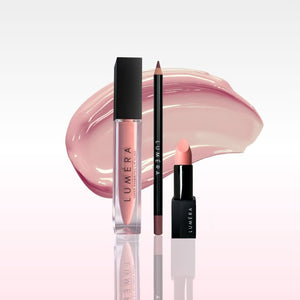
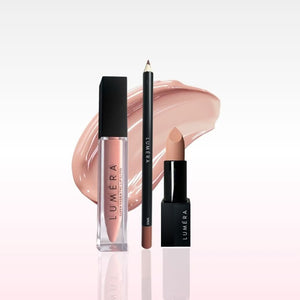
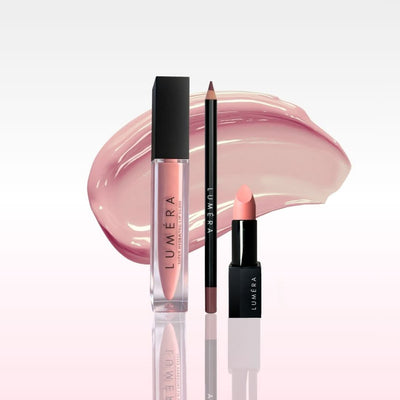
Mastering the prep, barrier, and layering system gives you the foundation. The lipstick you choose to build on it makes a real difference. Lumeracosmetica’s Perfect Kiss Lipstick is formulated with a smooth, comfortable texture that works with primers and liners rather than against them. The satin finish grips evenly across the lip surface, resists migration at the edges, and wears through the day without drying or cracking. If you have been struggling with bleeding despite trying the right techniques, the formula itself may be the missing piece.
FAQ
Why does lipstick bleed into fine lines around the mouth?
Fine lines around the lips create physical channels that draw pigment outward through capillary action. Mature skin has more of these channels, which is why bleeding becomes more noticeable after 40.
What is the fastest way to stop lipstick feathering?
Apply a clear wax lip liner just outside your natural lip line before or after lipstick. This creates an immediate waxy barrier that stops pigment migration without changing the look of your color.
Does lip primer actually prevent lipstick bleeding?
Yes. A silicone-based primer smooths fine lines and creates a tacky surface that holds pigment in place. Applied just outside the lip line and allowed to dry for 60 seconds, it forms a reliable barrier against bleeding.
Should I use gloss if I want to prevent bleeding?
Gloss can still be part of your routine if you limit it to the center of your lips. Applying gloss to the outer edges is a primary cause of bleeding because its fluid formula travels easily into surrounding fine lines.
How do I keep lipstick from bleeding throughout the day?
Use the tissue-and-powder method after your first layer of lipstick, then apply a second thin layer. This sets the color with a durable matte seal that resists migration for several hours without requiring constant touch-ups.