Lip Plumper Ingredients Explained: Instant vs. Lasting Results

TL;DR:
- Lip plumpers rely on irritants, humectants, peptides, or occlusives to produce immediate, gradual, or optical effects. Products with early-listed irritants give short-term tingle effects, while peptides and hyaluronic acid support long-term lip improvement through hydration and structural support. Combining these ingredients with barrier-protective emollients offers safer, more effective daily care.
Most lip plumpers rely on one of four ingredient groups: irritants and vasodilators (capsaicin, menthol, cinnamon oil) for a temporary swelling effect lasting a few hours; humectants (hyaluronic acid, glycerin) that draw water to the lip surface; peptides (palmitoyl tripeptide-1, palmitoyl tripeptide-38) that aim for gradual structural support over weeks; and occlusives or film formers (petrolatum, shea butter, beeswax) that seal in moisture and create optical fullness. Knowing which group leads an INCI list tells you whether you are buying a tingle-now product or a slow-build treatment.
- Irritants/vasodilators: Capsaicin (from cayenne), Cinnamomum zeylanicum bark oil, menthol, benzyl nicotinate
- Humectants: Sodium hyaluronate, glycerin, glucomannan
- Peptides: Palmitoyl tripeptide-1, palmitoyl tripeptide-38, hexapeptide-11
- Occlusives/film formers: Petrolatum, beeswax, shea butter, squalane
Both the FDA’s cosmetic framework and the EU Cosmetics Regulation influence which concentrations of irritant actives are permissible in leave-on products sold in the United States and abroad. Lumeracosmetica builds its formulas with those allowable limits in mind.
TL;DR: Check the INCI list — if a tingle ingredient appears in the first third, expect a short-lived flush; if peptides and hyaluronate lead, expect gradual hydration benefits.
Table of Contents
- What ingredients are in lip plumper, and how do they work?
- Which irritant and vasodilator ingredients cause the tingle?
- Do peptides and hyaluronic acid actually plump lips over time?
- How do hydrators and occlusives support lip health?
- How do you read a lip plumper INCI list?
- Two safe DIY lip plumper recipes with exact proportions
- What are the side effects, and who should avoid lip plumpers?
- How long does the effect last, and how often should you apply?
- Lumeracosmetica’s science-backed checklist for choosing a lip plumper
- Key Takeaways
- The case for balanced formulas over maximum tingle
- Lumeracosmetica’s Ombre Effect Lip Hi-Lighter: a balanced option worth trying
- Useful sources
What ingredients are in lip plumper, and how do they work?
There are three distinct mechanisms at play in most plumping products: mild irritation and vasodilation, hydration and humectancy, and topical film or optical effects. Peptides represent a fourth, slower-acting attempt at structural support.
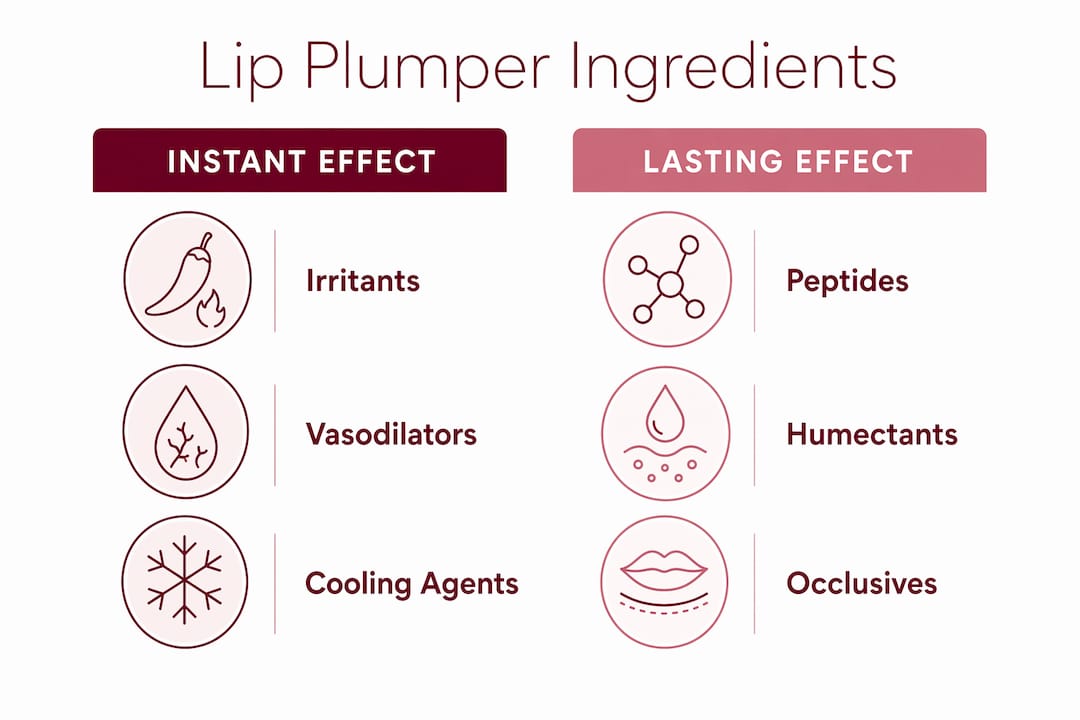
Vasodilation (the tingle mechanism) is the most immediately noticeable. Irritant actives stimulate sensory nerve endings in the lip, which triggers capillary dilation and a rush of blood and fluid to the tissue. Dermatologists describe this as a micro-inflammatory response rather than a therapeutic structural change — the lips are temporarily inflated with fluid, not rebuilt. That effect lasts roughly 1–4 hours.
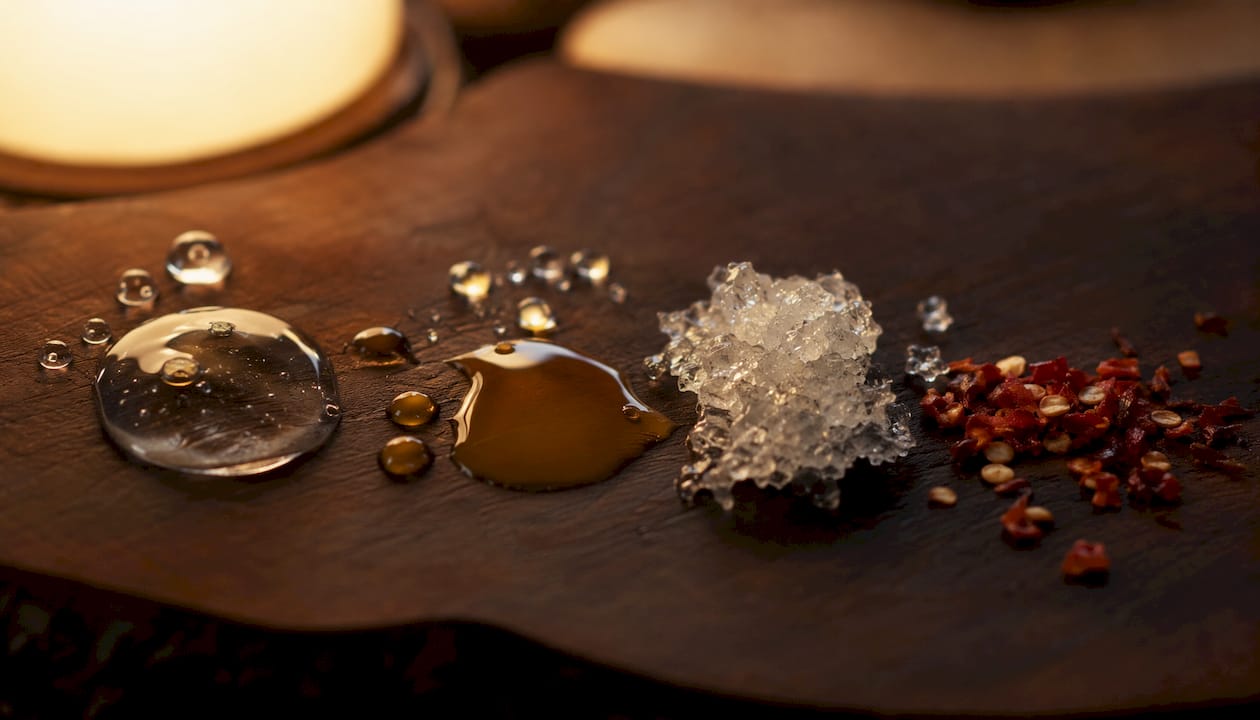
Humectancy works differently. Ingredients like hyaluronic acid and glycerin attract water molecules from the deeper dermis and the surrounding air, holding them at the stratum corneum. The result is a smoother, slightly plumper surface that improves with repeated daily use over weeks.
Optical and film effects are the quiet third player. High-gloss finishes and light-reflecting film formers scatter light across the lip surface, creating the visual impression of volume without any tissue change at all. Gloss placement in the center of the lip amplifies this effect. As journalistic coverage of the category notes, these three approaches — irritation, hydration, and optical shine — cover the full spectrum of how plumpers deliver their results.
Which irritant and vasodilator ingredients cause the tingle?
These are the actives most readers feel within seconds of application. Each works by triggering a sensory response in lip tissue:
- Capsaicin / Capsicum frutescens fruit extract: The compound responsible for chili pepper heat. On lips, it stimulates TRPV1 nerve receptors, producing a burning warmth and rapid capillary dilation.
- Cinnamomum zeylanicum bark oil (cinnamon oil) / cinnamaldehyde: A warming, slightly spicy sensation. One of the most common irritant actives in commercial plumpers and DIY recipes alike.
- Menthol / Mentha piperita (peppermint) oil: Produces a cooling tingle rather than heat. Menthol acts as a natural vasodilator, increasing blood flow while giving a refreshing sensation.
- Benzyl nicotinate: A niacin derivative with vasodilation properties; produces a warm flush without the spice profile of cinnamon or capsaicin.
- Camphor: Mild cooling and numbing effect; often combined with menthol.
- Zingiber officinale (ginger) root oil: Warming, gentler than capsaicin; used in milder formulas.
- Eugenia caryophyllus (clove) oil: Eugenol-rich; produces a numbing warmth and carries a higher sensitization risk than most others on this list.
The intensity of perceived plump often correlates directly with the degree of irritation, and that trade-off is real: stronger actives deliver more visible immediate effect but carry higher risk of dryness and barrier damage with repeated use. Clinicians consistently flag contact dermatitis, chronic dryness, and cracked lips as the most common overuse outcomes. Clove oil in particular carries a higher sensitization risk than menthol or ginger.
Pro Tip: Before applying any tingle-based plumper to your lips, do a 24-hour patch test on the inner forearm. Apply a small amount, cover loosely, and check for redness, swelling, or itching before using it on your lips. Never apply to broken skin or immediately after lip filler injections.
A sample INCI fragment showing these ingredients in context: Ricinus communis seed oil, Cinnamomum zeylanicum bark oil, Mentha piperita oil, tocopherol, beeswax. Cinnamon and peppermint oils appearing early in that list signal a product built primarily around the irritant mechanism.
Do peptides and hyaluronic acid actually plump lips over time?
These are the ingredients marketed as “filler alternatives,” and they do deliver results — just not the kind you feel in five minutes.
Peptides are short amino acid chains that act as messenger signals to skin cells. The most studied in lip plumpers include:
- Palmitoyl tripeptide-1: Proposed to stimulate collagen and glycosaminoglycan synthesis in the dermis.
- Palmitoyl tripeptide-38: A signal peptide found in products like the DailyMed-listed Derma Lip Plumper Balm, which lists it alongside hyaluronic acid and Portulaca pilosa extract.
- Hexapeptide-11: Used for surface smoothing and texture improvement.
Topical peptides and humectants require consistent daily application over multiple weeks to deliver modest, cumulative fullness — they do not create the immediate, hours-long swelling that irritants do. That is not a failure of the ingredient; it is simply a different mechanism.
Hyaluronic acid (sodium hyaluronate) works as a humectant, drawing water to the lip surface and smoothing fine lines. Molecular weight matters here: lower-molecular-weight sodium hyaluronate penetrates slightly deeper into the stratum corneum, while high-molecular-weight forms sit on the surface and create a plumping film. Glycerin and plant-derived glucomannan work similarly.
Topical collagen is largely a surface moisturizer. Its molecule is too large to penetrate deeply and cannot meaningfully increase internal collagen the way an injectable would. Products that lead with “collagen” on the label are selling hydration, not structural volume.
For readers exploring natural plumping approaches, the peptide-plus-hyaluronate combination is the most evidence-supported route to gradual improvement without irritation risk.
How do hydrators and occlusives support lip health?
Humectants pull water in; occlusives keep it there. Understanding the difference helps you read a formula’s intent at a glance.
| Ingredient class | Purpose | Common INCI names |
|---|---|---|
| Humectants | Attract and bind water to lip surface | Sodium hyaluronate, glycerin, propylene glycol, glucomannan |
| Occlusives | Seal moisture in, protect barrier | Petrolatum, beeswax, mineral oil, lanolin |
| Emollients | Soften and smooth, fill surface gaps | Squalane, jojoba oil (Simmondsia chinensis seed oil), shea butter (Butyrospermum parkii), avocado oil (Persea gratissima oil) |
| Film formers | Create surface gloss, optical volume | Polybutene, dimethicone, various waxes |
Dermatologist guidance is clear: pairing an irritant active with occlusives like shea butter or jojoba oil reduces the drying effect and protects the lip barrier. An irritant-only formula strips moisture with repeated use; an irritant-plus-occlusive formula counteracts that. Squalane, which mimics the skin’s own sebum, is particularly effective at restoring suppleness without greasiness. Plant butters — cocoa and shea — add fatty acids that support the barrier long after the tingle fades.
- Humectants work best when applied to slightly damp lips so there is ambient moisture to attract.
- Occlusives applied over a humectant layer lock in the water that has already been drawn to the surface.
- Emollients like avocado oil and jojoba oil bridge the two functions, softening while also providing a light occlusive effect.
For a deeper look at how lip health connects to overall appearance, pairing a well-formulated plumper with a consistent barrier-care routine makes a measurable difference in how lips look and feel over time.
How do you read a lip plumper INCI list?
Use this three-step checklist: find potential irritants, find humectants and peptides, then find occlusives and soothers. INCI order runs from highest to lowest concentration, so where an ingredient appears tells you as much as what it is.
Step 1 — Scan for tingle cues (irritants near the top = stronger effect): Look for: menthol, Mentha piperita oil, Cinnamomum zeylanicum bark oil, capsicum frutescens fruit extract, benzyl nicotinate, camphor, Eugenia caryophyllus oil.
Step 2 — Find humectants and peptides: Look for: sodium hyaluronate, glycerin, palmitoyl tripeptide-1, palmitoyl tripeptide-38, hexapeptide-11, glucomannan.
Step 3 — Identify occlusives and soothers: Look for: petrolatum, beeswax, Butyrospermum parkii (shea) butter, Simmondsia chinensis seed oil, squalane, tocopherol (vitamin E).
Sample INCI walkthrough:
Ricinus communis seed oil, Cinnamomum zeylanicum bark oil, Mentha piperita oil, sodium hyaluronate, Butyrospermum parkii butter, tocopherol, beeswax.
Reading this label: castor oil is the base carrier; cinnamon and peppermint oils appear early, signaling an irritant-first formula; sodium hyaluronate adds hydration support; shea butter and beeswax close the formula as occlusive soothers. This product delivers immediate tingle with some barrier protection built in.
| INCI token | What it signals |
|---|---|
| Menthol / Mentha piperita oil | Irritant (cooling vasodilator) |
| Cinnamomum zeylanicum bark oil | Irritant (warming vasodilator) |
| Capsicum frutescens extract | Irritant (heat/burning vasodilator) |
| Sodium hyaluronate | Humectant |
| Glycerin | Humectant |
| Palmitoyl tripeptide-1 / -38 | Peptide (structural signaling) |
| Petrolatum / beeswax | Occlusive |
| Butyrospermum parkii butter | Occlusive/emollient |
| Fragrance / parfum | Common allergen flag |
| Phenoxyethanol / parabens | Preservative (sensitization risk for some) |
Pro Tip: Actives listed in the final 5–10% of an INCI list are often present at concentrations too low to be functional. If a peptide appears last, after fragrance and preservatives, treat it as a marketing claim rather than a working ingredient.
Two safe DIY lip plumper recipes with exact proportions
DIY can work, but concentration control is everything. These two recipes stay within conservative safety margins.
Recipe A: mild warming gloss
- Melt 5 g petroleum jelly or a plain lip balm base in a small glass bowl over warm water.
- Add 1 drop of cinnamon essential oil (Cinnamomum zeylanicum bark oil). One drop in 5 g equals approximately 0.5–1.0% concentration — the conservative leave-on limit for facial skin on delicate lip tissue.
- Stir thoroughly, pour into a small tin, and allow to cool completely.
- Apply a thin layer to lips. Expect mild warmth for 30–60 minutes. Rinse off if burning intensifies.
Recipe B: hydrating plumping balm
- Combine 4 g shea butter with 1 g jojoba oil in a small bowl, warmed until soft.
- Add 3–4 drops of a cosmetic-grade glycerin or a few drops of a water-based hyaluronic acid serum (mix while the base is still warm but not hot, to avoid separation).
- Stir well and transfer to a small container. Apply nightly as a conditioning treatment.
Safety rules — non-negotiable:
- Patch test every new formula on your inner arm for 24 hours before applying to lips.
- Never exceed 1 drop of essential oil per 5 g of base for a leave-on lip product. Practitioners warn that DIY recipes lack precise concentration control and can produce contact dermatitis or severe localized burning when essential oils are too concentrated.
- Never use raw capsaicin powder directly on lips. Even a small measurement error can cause a chemical burn.
- Keep all formulas away from eyes and mucous membranes.
- If burning does not subside within a few minutes, rinse with cool water, apply plain petrolatum, and do not reapply.
- Discard any batch that smells off or changes color; homemade products have no preservative system.
What are the side effects, and who should avoid lip plumpers?
Common side effects:
- Transient redness, tingling, and mild swelling (expected with irritant formulas)
- Dryness and flaking with repeated daily use of high-irritant products
- Cracked lips from barrier disruption over time
- Contact dermatitis: redness, itching, and blistering, most often triggered by cinnamon oil, clove oil, or fragrance components
- Hyperpigmentation with chronic irritation in people with deeper skin tones
- Rare but possible: systemic allergic reaction requiring medical attention
Who should avoid or proceed with caution:
- People with eczema, cheilitis, or any active lip irritation
- Anyone who has had injectable lip fillers within the past two weeks (consult your injector before using irritant-based products)
- Pregnant or nursing individuals, since certain essential oils (camphor, clove, peppermint in high doses) carry precautionary advisories — check with a healthcare provider
- People with known fragrance or essential oil allergies
If a reaction occurs: Stop use immediately, rinse with cool water, and apply a plain occlusive like petrolatum. Take an oral antihistamine if itching spreads beyond the lip area. See a dermatologist if symptoms worsen or do not resolve within 48 hours.
On the regulatory side, the FDA’s cosmetic framework in the United States requires that ingredients be safe at their labeled use concentrations, and the EU Cosmetics Regulation sets specific maximum allowable levels for certain irritant actives in leave-on products. Neither framework pre-approves individual products, so reading the INCI list yourself remains the most reliable safety check.
How long does the effect last, and how often should you apply?
Duration by mechanism:
- Irritant/vasodilator plump: 1–4 hours, then fully resolved
- Humectant surface smoothing: immediate with each application; cumulative improvement builds over weeks of daily use
- Peptide structural support: gradual improvement over weeks to months with consistent daily use; no single-application effect
Frequency guidelines:
- Mild-tingle products: no more than once daily; sensitive skin types should limit to every other day or less
- Hydrating treatments (hyaluronate, glycerin, emollients): safe for daily use, morning and evening
- Peptide and HA treatments: most effective as nightly applications when skin repair processes are most active
Application tips that actually make a difference:
- Apply gloss to the center of the lips only — full-coverage gloss flattens the optical effect
- Exfoliate gently once or twice a week to remove dry skin before applying any plumper
- Layer a plain occlusive balm over your plumper at night to lock in hydration
- Avoid stacking two different irritant products in the same routine
One brief note on professional fillers: if you have had hyaluronic acid filler injections, wait at least two weeks and get clearance from your injector before using any irritant-based plumper over the treated area. For a broader look at how plumpers fit into a daily routine, Lumeracosmetica’s editorial content covers age-related formulation considerations in detail.
Lumeracosmetica’s science-backed checklist for choosing a lip plumper
Lumeracosmetica recommends preferring formulas that pair immediate enhancers with barrier-supporting occlusives and humectants for a safer short-term plump. A product that only tingles is doing half the job.
Product-selection checklist:
- Named actives with INCI names visible on the label (not just “plumping complex”)
- At least one occlusive or emollient in the top half of the INCI list to balance any irritant
- Humectant present (sodium hyaluronate, glycerin) for surface hydration
- Fragrance and allergen flags checked: “parfum,” “fragrance,” or specific essential oils near the top of the list signal higher sensitization risk
- Actives listed early in the INCI for functional concentration; peptides or actives buried after preservatives are likely cosmetic-only additions
A balanced formula is not a compromise — it is the only way to use a plumper regularly without paying for it in dryness and barrier damage. The tingle is a signal, not a goal.
Topical products cannot replicate injectable filler, and Lumeracosmetica is transparent about that. The goal of a well-formulated plumper is a temporary, comfortable enhancement that supports lip health rather than depleting it. For deeper reading on what actually makes lip plumpers work, Lumeracosmetica’s blog covers the science behind each ingredient class.
Key Takeaways
Lip plumpers work through four ingredient groups, and knowing which one leads the INCI list tells you exactly what to expect from a product.
| Point | Details |
|---|---|
| Four ingredient groups | Irritants, humectants, peptides, and occlusives each produce a different effect and timeline. |
| Irritant effects are temporary | Tingle-based plumping from capsaicin, menthol, or cinnamon oil lasts 1–4 hours and does not increase real lip volume. |
| Peptides and HA need time | Palmitoyl peptides and sodium hyaluronate deliver gradual improvement over weeks of daily use, not single-application results. |
| DIY requires precise dilution | Stay at or below 1 drop of essential oil per 5 g of base; higher concentrations risk contact dermatitis or burns. |
| Lumeracosmetica’s approach | Lumeracosmetica recommends formulas that pair irritant actives with occlusives and humectants for safer, repeated use. |
The case for balanced formulas over maximum tingle
The beauty industry has a habit of equating sensation with efficacy, and lip plumpers are the clearest example of that problem. A product that burns intensely is not working harder than one that tingles gently. It is simply more irritating. The research is consistent on this: the tingle and the plump are the same inflammatory event, and chasing a stronger sensation means accepting more barrier damage with every application.
What actually serves lips over time is a formula that delivers a noticeable effect without stripping the tissue that makes lips look full in the first place. Hydrated, intact lips look plumper than irritated, dry ones — full stop. That is why Lumeracosmetica leans toward formulas that balance the immediate enhancer with real occlusive and humectant support, rather than maximizing the tingle and calling it a result.
Try things carefully. Patch test. Read the INCI before you buy. And if a product leaves your lips drier than before you applied it, that is the formula telling you something worth listening to.
Lumeracosmetica’s Ombre Effect Lip Hi-Lighter: a balanced option worth trying
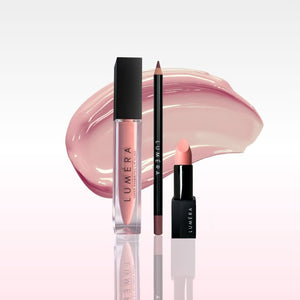
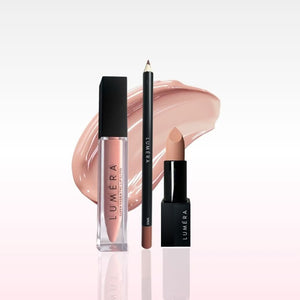
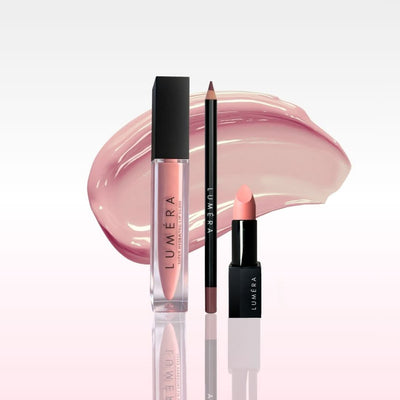
If you want a product that delivers visible luminosity and a mild plumping effect without leaning entirely on irritant actives, the Ombre Effect Lip Hi-Lighter from Lumeracosmetica is worth a close look. It is formulated to combine optical fullness with conditioning ingredients, making it a practical everyday option rather than a single-use event product.
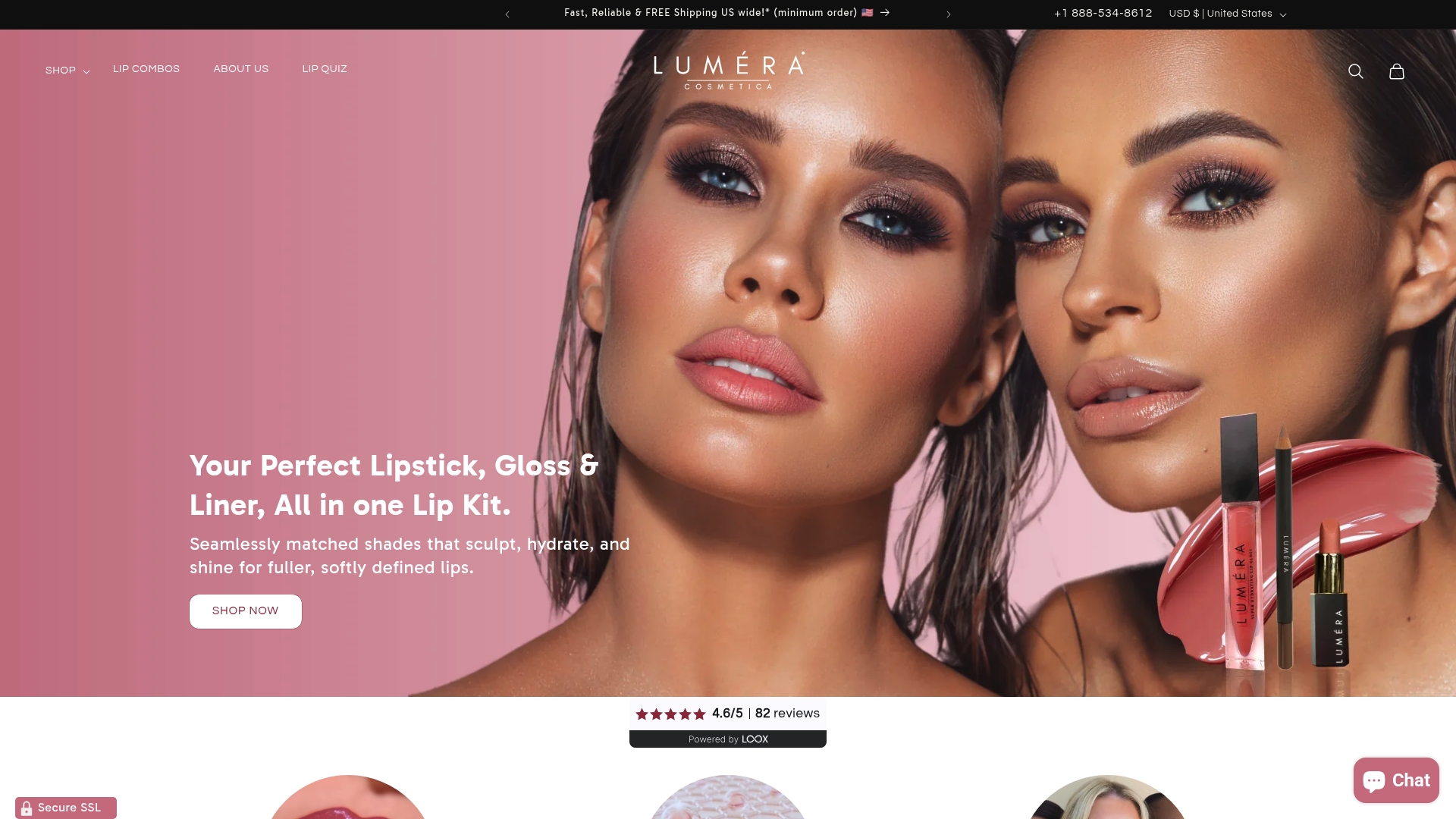
Honest limitations: this is not a filler replacement, and the visual effect is temporary. Pair it with a nightly occlusive balm for best results, and patch test before your first use if you have sensitive skin or fragrance sensitivities. The full ingredient list is available on the product page so you can run it through the INCI checklist in this guide before purchasing.
Check the product page to review the INCI, see available shades, and order directly.
Useful sources
- DailyMed — Derma Lip Plumper Balm label: Official U.S. National Library of Medicine label listing palmitoyl tripeptide-38, hyaluronic acid, and Portulaca pilosa extract with exact concentrations. Primary source for peptide and HA ingredient data.
- DermApproved — Lip Plumpers & Filler Alternatives: Dermatologist-reviewed breakdown of tingle chemistry, vasodilation mechanism, and the irritation-vs-structure distinction. Best source for mechanism accuracy.
- Allure.ph — How Lip Plumpers Work: Clinician-sourced explanation of humectants, peptides, and the micro-inflammatory response; includes occlusive pairing advice.
- Los Angeles Times — Do Lip Plumpers Work?: Journalistic overview of the three plumping methods and practitioner warnings on DIY concentration risks.
- Beautylish — The Secret Ingredients Behind Lip Plumpers: Industry perspective on vasodilation, collagen/hyaluronic acid marketing claims, and ingredient safety at commercial concentrations.
- Respect Manufacturing — Top 10 Natural Lip Plumper Ingredients: Practical overview of natural irritant and humectant ingredients with formulation context; useful for DIY ingredient sourcing.
- Lumeracosmetica — What Makes Lip Plumper Work: Brand editorial covering the science of each ingredient class; good companion reading to this guide.
- Blanca Whitening — Lip Health and Smile Appearance: Evidence-based resource on lip health, barrier care, and ingredient combinations relevant to long-term lip condition.