Natural oils in cosmetics: 20% more hydration for mature skin

Natural oils deliver up to a 20% increase in skin hydration compared to synthetic alternatives, yet a surprising number of women over 40 still reach for synthetic formulas believing they offer better anti-aging results. This belief persists despite growing research pointing in the opposite direction. For mature skin, which loses moisture faster and repairs itself more slowly, the source of your oils genuinely matters. This article breaks down the science behind natural oils, compares them honestly with synthetics, and gives you a practical framework for building a routine that actually works for skin over 40.
Table of Contents
- Why natural oils matter for mature skin
- The science: How natural oils work in cosmetics
- Comparing natural vs. synthetic oils: What women 40+ need to know
- Safety, regulations, and practical guidelines for mature users
- Smart routines: Maximizing natural oil benefits for mature skin
- Explore nourishing cosmetics for mature skin
- Frequently asked questions
Key Takeaways
| Point | Details |
|---|---|
| Natural oils hydrate mature skin | Scientific evidence shows up to a 20% increase in skin hydration with natural oils compared to synthetic alternatives. |
| Linoleic acid repairs skin barrier | Oils rich in linoleic acid help proliferate cells and restore skin barrier function in women over 40. |
| Safe use requires proper dilution | Essential oils should be diluted and patch tested to avoid irritation, complying with EU safety guidelines. |
| Nanoemulsions boost results | Nanoencapsulated oils offer enhanced stability and penetration, supporting measurable hydration boosts for mature skin. |
| Choose routines for your skin type | Smart layering and mixing of natural oils according to skin needs delivers the strongest anti-aging and hydration benefits. |
Why natural oils matter for mature skin
After 40, your skin produces less sebum, the natural oil that keeps your barrier intact and your complexion supple. This is not just a cosmetic inconvenience. A weakened skin barrier means faster moisture loss, more sensitivity, and slower recovery from environmental stress. Natural oils step in to fill that gap in ways that synthetic alternatives simply cannot replicate at a biological level.
A systematic review of natural oils confirmed that plant-based oils enhance skin barrier function, hydration, and anti-aging effects specifically in women over 40. They work through four key mechanisms:
- Emollient action: Softening and smoothing the skin surface by filling gaps between skin cells
- Occlusive action: Forming a light protective layer that slows water evaporation
- Antioxidant activity: Neutralizing free radicals that accelerate visible aging
- Anti-inflammatory properties: Calming redness and irritation common in mature skin
Beyond performance, natural oils align with the clean beauty values that matter to many women in Australia and Europe. Choosing plant-derived ingredients supports sustainable sourcing and reduces your exposure to petrochemical byproducts. If you are curious about how this extends to lip care, our guide on eco-friendly lip oils covers the environmental and skin benefits in detail.
“For mature skin, the right natural oil is not just a moisturizer. It is a barrier repair tool, an antioxidant delivery system, and a long-term investment in skin resilience.”
Women with sensitive or reactive skin will also find that many natural oils are gentler than synthetic emollients. Our resource on organic cosmetics for sensitive skin explores this further if sensitivity is a concern for you.
The science: How natural oils work in cosmetics
Not all natural oils are created equal, and the difference comes down to fatty acid composition. Two fatty acids dominate the conversation: linoleic acid and oleic acid. Understanding which is which will change how you shop.
Linoleic acid (omega-6) is the one you want for mature skin. It promotes keratinocyte and fibroblast proliferation, meaning it actively supports the skin cells responsible for repair and renewal. Oils rich in linoleic acid are lighter, absorb faster, and strengthen the barrier without clogging pores.
Oleic acid (omega-9), found in high concentrations in olive oil, is a different story. While it has its place, oleic acid can actually disrupt the skin barrier in some individuals, particularly those with already compromised or sensitive skin. It is heavier and better suited to very dry, non-reactive skin types.
Here is a quick comparison of common natural oils by fatty acid profile:
| Oil | Dominant fatty acid | Best for |
|---|---|---|
| Apricot kernel | Linoleic | Barrier repair, mature skin |
| Evening primrose | Linoleic | Cell renewal, dry mature skin |
| Rosehip | Linoleic | Anti-aging, pigmentation |
| Olive oil (EVOO) | Oleic | Very dry, non-sensitive skin |
| Argan | Mixed | General hydration and softness |
One of the most exciting advances in natural oil cosmetics is nano-encapsulation. By breaking oils into microscopic droplets, formulators create nanoemulsions with better stability and significantly improved skin penetration. This matters for mature skin because thinner, less elastic skin can struggle to absorb heavier oil molecules efficiently.

Polyphenols in extra virgin olive oil (EVOO) also deserve a mention. These plant compounds act as powerful antioxidants, protecting skin cells from oxidative damage that accelerates wrinkles and uneven tone.
Pro Tip: When reading a product label, look for apricot kernel oil or evening primrose oil in the first five ingredients. Their position on the list tells you how much is actually in the formula.
For lip-specific applications, our article on lip oil for mature lips explains how these fatty acid principles apply to lip care. You can also explore how emollients in lipstick interact with natural oils in color cosmetics.
Comparing natural vs. synthetic oils: What women 40+ need to know
Synthetic oils are not inherently bad. They are engineered for consistency, long shelf life, and precise performance. But when it comes to mature skin, the trade-offs are real.
| Property | Natural oils | Synthetic oils |
|---|---|---|
| Skin hydration | Superior, up to 20% more | Moderate |
| Long-term lubrication | Excellent | Good |
| Spreading ability | Moderate | Excellent |
| Occlusivity | Moderate | High |
| Antioxidant content | Present (polyphenols) | None |
| Sustainability | High | Low to moderate |
| Shelf stability | Lower (oxidation risk) | High |
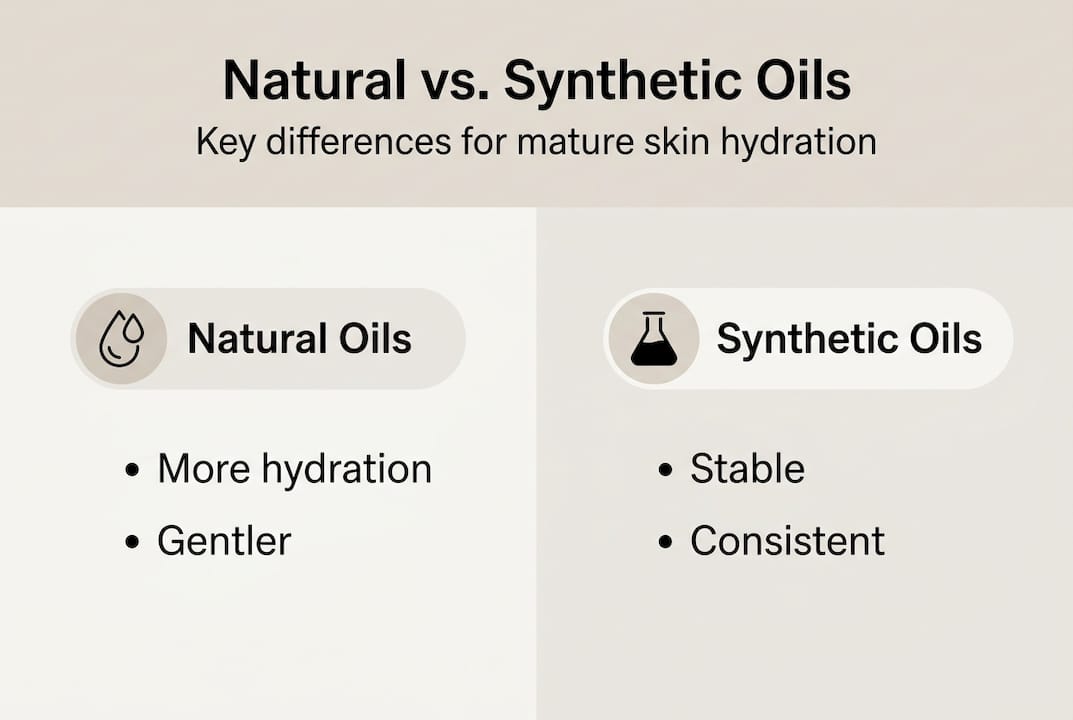
Research comparing natural vs. synthetic emollient oils found that natural oils deliver superior long-term lubrication and hydration, while synthetics win on spreading and occlusion. For mature skin, long-term lubrication is often the priority because it directly addresses the chronic dryness that comes with hormonal changes after 40.
Key takeaways for mature skin users:
- Natural oils feed the skin with bioactive compounds that synthetics cannot provide
- Synthetic oils may feel silkier on first application but do not improve barrier function over time
- EVOO outperforms petrolatum on certain barrier metrics, despite petrolatum’s reputation as the gold standard occlusive
- Texture preference is personal, but hydration outcomes favor natural oils consistently
“The skin does not care how luxurious a formula feels in the first five seconds. It responds to what happens over hours and days of use.”
Our guide on natural oils for lips applies these same principles to lip care, where dryness and fine lines are especially visible after 40. For a broader look at how oils function in lip products, see our piece on the role of lip oils.
Safety, regulations, and practical guidelines for mature users
Natural does not automatically mean safe for everyone. Essential oils, which are concentrated plant extracts, require careful handling. They are potent, and undiluted application can cause irritation, sensitization, or allergic reactions, particularly on mature skin that is already more reactive.
EU Cosmetics Regulation (EC) No 1223/2009 restricts certain essential oil metabolites in cosmetic products to protect consumers. Australia follows comparable safety frameworks. This means reputable brands formulate within tested, safe concentration limits, but it also means you should be cautious with DIY blends or unregulated products.
Here is a practical safety checklist for mature women using natural oils:
- Always dilute essential oils in a carrier oil before applying to skin. A 1-2% dilution is standard for facial use.
- Patch test every new oil on your inner arm for 24-48 hours before applying to your face or lips.
- Check the ingredient list for potential allergens, especially if you have nut sensitivities (almond oil, for example).
- Store natural oils correctly in dark, cool conditions to prevent oxidation, which can make them irritating.
- Choose products with nanoencapsulated oils when available, as this technology reduces volatility and improves penetration without increasing irritation risk.
Pro Tip: If a natural oil product smells rancid or noticeably different from when you first opened it, stop using it. Oxidized oils can trigger inflammation rather than soothe it.
For a broader understanding of how ingredients are classified and regulated, our guide on cosmetic ingredient types is a useful reference. You can also explore what natural makeup means in terms of formulation standards and labeling.
Smart routines: Maximizing natural oil benefits for mature skin
Knowing which oils to use is only half the equation. How and when you apply them determines whether you get the full benefit or just a greasy layer that sits on top of your skin.
Follow these steps to build an effective natural oil routine for mature skin:
- Cleanse gently with a non-stripping cleanser to preserve whatever natural sebum your skin still produces.
- Apply your serum first while skin is slightly damp. Serums contain smaller molecules that need direct skin contact to penetrate.
- Layer your natural oil next, pressing it gently into the skin rather than rubbing. This seals in the serum and begins barrier repair.
- Finish with a moisturizer if needed, particularly in dry climates or during winter months in Europe and Australia.
- Use linoleic-rich oils like apricot kernel or evening primrose as your primary facial oil. These support cell proliferation and barrier repair most effectively for mature skin.
For lip care specifically, the same layering logic applies. A lip oil applied over a hydrating lip treatment locks in moisture and keeps lips looking fuller and smoother. Our tutorial on natural lip look for women 40+ walks through a complete lip routine using natural oils. If definition is part of your look, our guide on lip liner for mature lips pairs well with an oil-based lip care routine.
Pro Tip: Blend a few drops of evening primrose oil into your regular moisturizer during winter. It boosts hydration without changing the texture of your existing product, making it an easy upgrade with no extra steps.
Explore nourishing cosmetics for mature skin
If this article has you rethinking your current routine, you are not alone. Many women over 40 discover that switching to natural oil-based formulas is the single most effective change they make for long-term skin and lip health. The science backs it up, and the results speak for themselves.
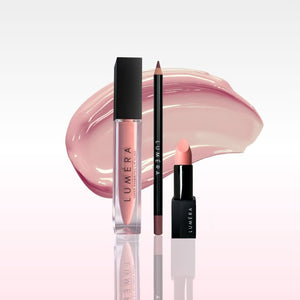
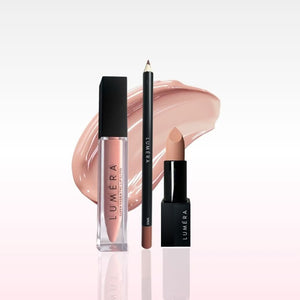
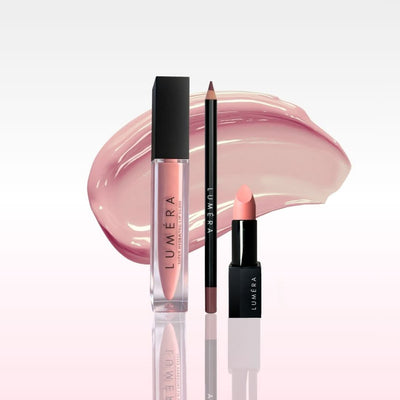
At Lumera Cosmetica, we formulate with mature skin in mind, using natural oils that deliver real, measurable hydration and barrier support. Our Miss Bombshell Lip Kit is a great starting point if you want to experience the difference that natural oil-based lip care makes. For a full look at our clean beauty range designed for women who know exactly what their skin needs, visit our natural beauty solutions page and explore what works for you.
Frequently asked questions
Which natural oils are best for mature skin?
Linoleic-rich oils like apricot kernel and evening primrose are the top choices for mature skin because they actively support cell renewal and barrier repair without disrupting skin balance.
Are natural oils safer than synthetic oils in cosmetics for women over 40?
Both can be safe when properly formulated, but natural oils require more care. Essential oils can irritate at high concentrations, so always patch test and choose products from brands that follow EU or equivalent safety standards.
What results can mature women expect when switching to natural oils?
Empirical data shows a 10-20% hydration increase and measurable improvement in barrier function when natural oils replace synthetic alternatives in a daily routine.
Are natural oils regulated differently in Australia and Europe?
EU Cosmetics Regulation (EC) No 1223/2009 restricts certain essential oil metabolites in cosmetic products, and Australia applies comparable safety guidelines, so reputable products sold in both regions meet rigorous standards.