

What Is a Beauty Blog and How Do You Find a Trustworthy One?

A beauty blog is a regularly updated site that publishes hands-on makeup tutorials, product reviews, skincare advice, and trend coverage from either professional editors or personal creators. The best ones combine visual proof (swatches, close-up shots) with real testing details so you can act on the advice instead of just reading it.
Expect to find:
- Step-by-step makeup tutorials with photos or video
- Product reviews and shade swatches
- Skincare routine breakdowns
- Trend reports and new launch coverage
- Personal essays, interviews, and community features
Use this guide to match the right blog format to whatever you’re actually trying to do, whether that’s picking a foundation shade or figuring out if a viral serum is worth your money.
Key Takeaways
A trustworthy beauty blog combines transparent testing details, dated content, and honest swatch photography with a format that matches your specific goal.
| Point | Details |
|---|---|
| Match format to goal | Use tutorials for technique, swatches for shade matching, and best-of lists for fast shopping decisions. |
| Check for testing specifics | Trust posts that name a timeframe and skin type over vague praise like “I loved this.” |
| Verify shade consistency | Cross-check shade names against the brand’s own naming and a second swatch source. |
| Confirm expert review | Look for dermatologist or medical review tags on skincare-heavy claims. |
| Curate a focused feed | Follow two or three niche creators who match your skin type or concern instead of dozens of generalists. |
Table of Contents
- What Do the Best Beauty Blogs Actually Publish?
- How Do You Use a Beauty Blog to Reach a Specific Goal?
- How Can You Tell If a Beauty Blog Is Trustworthy?
- How Do You Follow and Personalize Your Beauty Content Feed?
- Why Do Expert Review Boards Matter for Beauty Content?
- What Makes Community-Driven Beauty Content Worth Reading?
- What Criteria Actually Separate a Credible Blog From a Sloppy One?
- How Do You Choose the Right Beauty Blog for Your Needs?
- What the Best Beauty Bloggers Get Right About Trust
- Sources
What Do the Best Beauty Blogs Actually Publish?
Most established beauty sites rotate through a handful of formats, and each one serves a different purpose. Step-by-step tutorials break a look into numbered stages, usually with a photo at each step and a product list down the side. Product reviews and swatches pair a written verdict with close-up images showing the shade against different skin tones, plus notes on finish, wear time, and price. Skincare breakdowns walk through a routine in order (cleanser, treatment, moisturizer, SPF) and usually flag which ingredients pair well and which ones fight each other.
Trend pieces and seasonal roundups cover what’s launching and why it’s getting attention, while “best of” lists and monthly favorites compile tested picks into one scannable post. Editorial outlets like Allure lean heavily on editor-approved picks and curated seasonal lists to help readers cut through the noise of constant new releases. Personal blogs often do the same thing through haul-style posts. The Beauty Look Book has built a loyal following on monthly favorites and honest haul recaps that read more like a friend’s recommendation than a press release.
- Tutorials: best when you’re learning a new technique step by step
- Swatches and reviews: best when you need to compare shade or finish before buying
- Trend pieces: best for staying current without doomscrolling social media
- Best-of lists: best when you want a shortcut through dozens of options
Pro Tip: When you look at a swatch photo, check for natural lighting and at least two skin tones side by side. A single swatch under a ring light tells you almost nothing about how a shade wears in daylight.
How Do You Use a Beauty Blog to Reach a Specific Goal?
Reading beauty content passively rarely gets you the result you want. Treat it like a tool, not entertainment, and you’ll get further faster.
To learn a technique:
- Find a tutorial that matches your eye shape, skin type, or skill level, not just a trending look.
- Follow the steps in order once before customizing anything.
- Check the comments or reviews for common trouble spots other readers hit.
To match a foundation shade:
- Look for a review that lists undertone (warm, cool, neutral) alongside the shade name.
- Cross-reference with a shade-matching resource like Temptalia’s Foundation Matrix, which maps equivalent shades across dozens of brands and formulas.
- Confirm with a swatch photo taken in daylight, not studio lighting.
To verify a product claim: Check whether the reviewer specifies how long they tested the product and under what conditions. A claim like “reduced redness” means little without a timeframe attached.
Shopping checklist when a blog links a product: shade name, finish (matte, dewy, satin), price, and at least one line about wear time or tester experience. If a post is missing all four, treat the recommendation as a guess rather than a review. Practitioner bloggers like Layers of Beauty build routines around skin health first, then layer makeup on top, which is worth following if your goal is technique that actually holds up, not just a look that photographs well.
Pro Tip: Bookmark a blog’s swatch gallery instead of relying on memory. Side-by-side swatch tools let you catch undertone mismatches that a single photo review will never show you.
How Can You Tell If a Beauty Blog Is Trustworthy?
Not every post claiming “dermatologist-approved” or “tested for 30 days” has receipts to back it up. A few checks separate the reliable sites from the ones chasing clicks.
Signals that build trust:
- A visible author bio with relevant experience or credentials
- Clear post dates, so you know if the product info is current
- Complete product details: price, shade range, where to buy
- High-resolution swatches showing texture and undertone, not just color
- Disclosure when a product was gifted, sponsored, or purchased
Red flags to watch for:
- No publish or update date anywhere on the post
- Vague testing language (“I loved this!”) with no specifics on duration or skin type
- Stock photography instead of the reviewer’s own swatches
- Shade names that don’t match what’s printed on the actual product
- Zero disclosure on sponsored content mixed in with organic reviews
Pro Tip: Before trusting a big editorial claim, cross-check it against a second source, ideally one with its own swatch gallery like Temptalia, which publishes dupe lists that let you compare formulas and undertones across brands rather than trusting one writer’s opinion.
How Do You Follow and Personalize Your Beauty Content Feed?
Following every beauty account you find leads to a cluttered feed and information overload. Building a curated one takes about twenty minutes and saves you hours of scrolling later.
Start by picking two or three blogs whose skin type, tone, or age range actually matches yours, then subscribe to their email list or RSS feed instead of relying on an algorithm to surface their posts. Use platform features like saved collections or watchlists to track specific product categories you’re shopping for, whether that’s clean skincare or long-wear foundation.
- Follow niche creators who specialize in your specific concern (mature skin, oily skin, deep-set eyes)
- Set alerts or notifications for launch season posts from your favorite editorial sites
- Use tagged filters when a blog offers them (skin type, budget, finish)
- Save swatch galleries you return to often for shade-matching
If you’re further along and want community-level access rather than one-off posts, a platform like LumariPRO supports creators building ongoing beauty conversations with dedicated support behind them.
Pro Tip: Tag creators by specialization in your bookmarks (shade-matching, mature skin, drugstore dupes) so you can find the right voice fast instead of scrolling through a saved folder of forty random links.
Why Do Expert Review Boards Matter for Beauty Content?
Professional beauty editorial platforms increasingly route stories through expert review boards made up of dermatologists, doctors, and nutritionists before publishing anything with a medical or scientific claim. Byrdie built this practice into its editorial process specifically to catch inaccurate skincare claims before they reach readers.
That kind of oversight shows up in small but telling details: dated test notes, specific ingredient callouts instead of vague marketing language, and transparent swatch photography that hasn’t been retouched to smooth out texture.
- Look for a “reviewed by” or “medically reviewed” tag on skincare-heavy posts
- Check whether ingredient claims link back to a specific study or expert quote
- Notice if swatch photos show texture honestly, including flaws
A growing share of professional beauty sites now attach named medical reviewers to skincare content, a shift that separates editorial operations from personal blogs relying purely on lived experience. Neither approach is inherently better, but knowing which one you’re reading changes how much weight to give a claim.
What Makes Community-Driven Beauty Content Worth Reading?
Some of the most useful beauty writing isn’t a review at all. It’s a conversation. Into The Gloss built its entire identity around backstage interviews and community dialogue, asking real people to walk through their actual routines instead of a polished list of ten-step regimens.

That format works because it surfaces details a formal review skips: how someone actually applies a product, what they skip on lazy days, which “holy grail” item they’ve repurchased for a decade. Personal essays function the same way. A writer describing a bad reaction to a trending ingredient, or a years-long struggle finding the right shade, gives you context no spec sheet can. Interviews with makeup artists, estheticians, or longtime bloggers add a layer of practical wisdom that’s harder to fake than a five-star product rating.
Brand-run editorial extensions have picked up on this too. Glossier’s Life blends product context with routine stories and interviews, functioning less like a sales page and more like a community publication tied to the brand.
When you’re evaluating this kind of content, the question isn’t “is this objective?” because personal essays never are. The question is whether the writer is transparent about their own experience versus presenting anecdote as universal fact.
What Criteria Actually Separate a Credible Blog From a Sloppy One?
Credibility comes down to a handful of checkable facts, not vibes. Start with authorship: does the site name a real person with relevant background, or is content published under a generic “team” byline with no way to verify expertise?
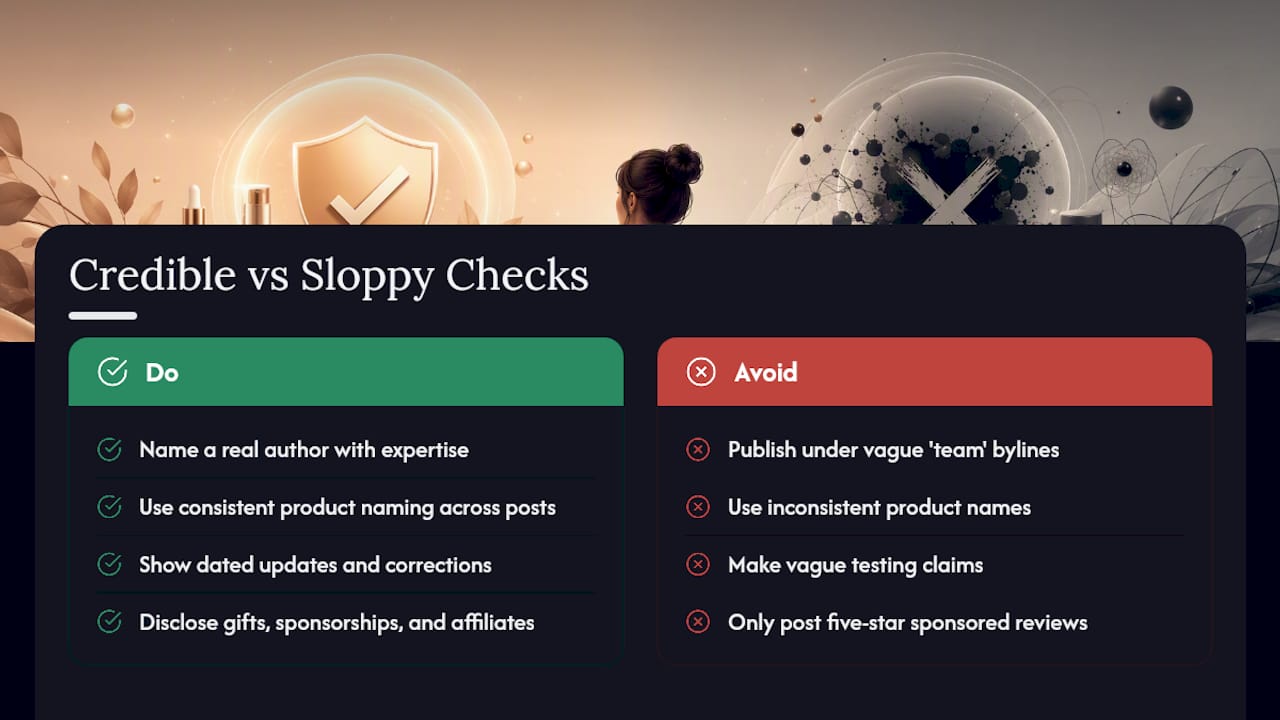
Next, check consistency. A credible site names shades the same way across every post; if a foundation is called “Warm Beige” in one review and “Sand” in another for the same product, that’s a sign the content wasn’t fact-checked against the brand’s actual naming. Look at how the site handles corrections and updates too. A dated “updated” note on an older post suggests active maintenance rather than a page abandoned the moment it published.
Testing transparency matters just as much. Vague phrases like “this changed my skin” carry far less weight than a specific timeline and application method. And disclosure is non-negotiable: any site accepting gifted products, sponsorships, or affiliate commissions should say so, plainly, near the review itself, not buried in a footer link.
Finally, weigh the site’s independence. Blogs that mix a healthy number of unsponsored, critical reviews alongside positive ones tend to be more reliable than sites where every single product review reads like a five-star endorsement.
How Do You Choose the Right Beauty Blog for Your Needs?
The right blog depends on what you’re optimizing for: expertise level, niche focus, or personal style. If you want data-driven precision on shade and formula, a technical site with swatch tools and dupe databases will serve you better than a lifestyle blog built around personal essays. If you want relatable, conversational advice, a personal blog with a consistent voice and visible testing history will feel more useful than a large editorial operation.
Niche focus matters more than most readers realize. A generalist beauty site covers everything from skincare to fragrance, which is useful for broad trend awareness but less useful if you have a specific concern like mature skin, sensitive skin, or a narrow budget. Seek out creators who specialize; a blog built entirely around a concern you share will surface product options a generalist site never mentions.
Consider expertise level too. Beginners benefit from step-by-step tutorials with heavy visual guidance, while advanced readers often want ingredient-level skincare analysis or shade comparisons across a dozen brands at once. Style is the final filter: some readers want fast, scannable listicles, others want long-form essays with narrative context. There’s no universally “best” beauty blog, only the one that matches your specific goal at the moment you’re reading it.
What the Best Beauty Bloggers Get Right About Trust
The bloggers whose advice actually holds up don’t just say a product works. They show the testing process: dated notes, side-by-side swatches, ingredient lists cross-checked against what’s claimed on the label. That transparency is the difference between a recommendation you can act on and a five-star rating you have to take on faith.
If you’re choosing between two blogs covering the same product, pick the one that shows its work: photos, dates, and specifics over adjectives.
Sources
- Byrdie - Insider Beauty Tips, Product Reviews & Makeup Trends
- Foundation Matrix — Temptalia
- Beauty Tips That Actually Work | Layers of Beauty
- Into The Gloss - Beauty Tips, Trends, And Product Reviews
- Allure — Beauty Tips, Trends & Product Reviews | Allure


