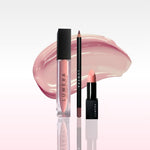
Beauty Balm Explained: What It Is and How to Use It

TL;DR:
- Beauty balms encompass a range of products from light BB creams to occlusive treatments, often causing confusion. They can simplify routines for women over 40 by combining hydration, light coverage, and skin benefits, but understanding their true formulation is essential. Choosing the right beauty balm depends on your skin needs, label details, and proper application to achieve natural, comfortable results.
Walk into any beauty aisle or scroll through an online store, and you’ll find “beauty balm,” “BB cream,” and “balm” stacked side by side like they’re interchangeable. They’re not. For women over 40 navigating routines that need to work harder and smarter, that confusion can lead to spending money on the wrong product or missing out on real skin benefits. Cambridge Dictionary describes BB cream as a light, foundation-type product that evens skin tone while delivering skincare benefits, but that’s only part of the story. This guide breaks down what beauty balm actually means, how it differs from everything else on the shelf, and how to use it to your advantage.
Table of Contents
- What is a beauty balm?
- How beauty balms differ from other balms and BB creams
- Key benefits of beauty balms for women over 40
- Choosing and using a beauty balm for your skin needs
- What most guides miss about beauty balms
- Discover beauty solutions for your best skin
- Frequently asked questions
Key Takeaways
| Point | Details |
|---|---|
| Beauty balm defined | Beauty balm can refer to either a complexion product like BB cream or a moisturizing treatment balm, depending on the label and formula. |
| Know your product | Always check if your beauty balm is designed for coverage, barrier support, or both—claims vary widely. |
| Benefits for mature skin | Beauty balms offer hydration, help reduce water loss, and can simplify your skincare and makeup routine. |
| Personalization is key | Select a beauty balm based on your unique skin needs, ingredients, and desired results. |
What is a beauty balm?
The term “beauty balm” gets thrown around loosely, and that’s where the trouble starts. At its most common, BB cream stands for “blemish balm” or “beauty balm” and refers to a sheer-to-light coverage complexion product that blends skincare and makeup into one formula. Think of it as foundation’s lighter, more nurturing cousin. It evens skin tone without the full-coverage weight of traditional foundation, and it often layers in hydration, antioxidants, or sometimes SPF.
But “beauty balm” doesn’t always mean BB cream. The word “balm” on its own has a separate identity. According to Anokha Skincare, a balm in its traditional sense is a solid or semi-solid product built from emollient oils and waxes, designed to lock in moisture, soothe irritation, and protect the skin’s surface. These are not makeup products. They’re closer to a thick moisturizer or an occlusive treatment you’d use overnight or on areas that need intense hydration.
What makes this confusing is that brands now use the phrase “beauty balm” for everything from tinted primers to hybrid treatment products that sit somewhere between skincare and makeup. The label doesn’t follow a universal standard.
| Term | Common format | Primary purpose | Makeup or skincare? |
|---|---|---|---|
| BB cream | Liquid or gel | Light coverage, skincare extras | Both |
| Beauty balm | Varies widely | Coverage, hydration, or treatment | Both or either |
| Classic balm | Solid or semi-solid | Moisture, barrier protection | Skincare |
| Tinted balm | Soft solid or cream | Sheer color, hydration | Mostly makeup |
“If a product is labeled ‘beauty balm,’ it might be a BB cream, a treatment balm, or something entirely in between. The label tells you the marketing story, not the full formula.”
Understanding this range matters especially for women over 40, where skin needs shift toward hydration and barrier support rather than heavy coverage. Choosing the right product starts with knowing which version of “beauty balm” is actually in the jar. These hybrid makeup and skincare products are one of the most exciting developments in modern beauty, but only when you know what you’re actually reaching for.
How beauty balms differ from other balms and BB creams
The beauty category has blurred its own lines intentionally. Brands know that “multi-use” sells, and slapping “beauty balm” on a label immediately positions a product as versatile and desirable. But the practical differences between a beauty balm, a BB cream, and a classic balm are real, and they matter when you’re choosing your daily products.
ShopCosy describes True Flex Skin Balm as a multi-use treatment product that blurs the boundary between skincare and makeup, offering priming, concealing, and hydrating benefits in one step. That’s the modern beauty balm at its broadest. Meanwhile, a classic BB cream leans more makeup-forward, with skin-evening pigment, lightweight texture, and potentially SPF.
Classic balms are something else entirely. They’re thick. They’re rich. They don’t go on sheer. They’re designed for dryness, post-treatment skin, or barrier repair, not for finishing your morning look.
Here’s how they stack up side by side:
| Product | Texture | Coverage | Hydration level | SPF possible | Best for |
|---|---|---|---|---|---|
| BB cream | Liquid/gel | Light to medium | Moderate | Often yes | Daily complexion base |
| Beauty balm (hybrid) | Cream to soft solid | Sheer to light | High | Sometimes | Simplified routines |
| Classic balm | Solid/semi-solid | None | Very high | Rarely | Intense moisture, barrier care |
| Tinted moisturizer | Liquid | Very sheer | Moderate | Sometimes | Fresh, no-makeup look |
As Vogue explains, product categories are increasingly blurred, with some items marketed as balms while acting more like tinted moisturizers or hybrid makeup bases. The smart move is to treat every product’s claims as specific to that formula rather than assuming all beauty balms behave the same way.
Key things to look for on the label:
- Coverage level: Sheer, light, medium, or full? For skin over 40, light and sheer usually look more natural.
- SPF rating: Not all beauty balms offer sun protection. If yours doesn’t, layer a separate SPF underneath.
- Key ingredients: Look for hyaluronic acid, squalane, niacinamide, or plant-based oils for skincare payoff.
- Finish: Dewy finishes flatter mature skin; matte formulas can settle into fine lines.
Pro Tip: If you’re new to beauty balms, try patting a small amount onto clean skin with your fingertips before committing to a full face. It lets you see the actual finish and coverage without the pressure of a full application.
When it comes to makeup essentials for mature skin, a beauty balm can earn a permanent spot in your routine by simplifying the steps without sacrificing results. And if you’re curious about the added dimension of color, exploring the benefits of tinted balms can open up a whole new category for both your lips and complexion.
Key benefits of beauty balms for women over 40
A clear definition isn’t enough. Understanding the core benefits helps you decide if a beauty balm is right for your daily routine.
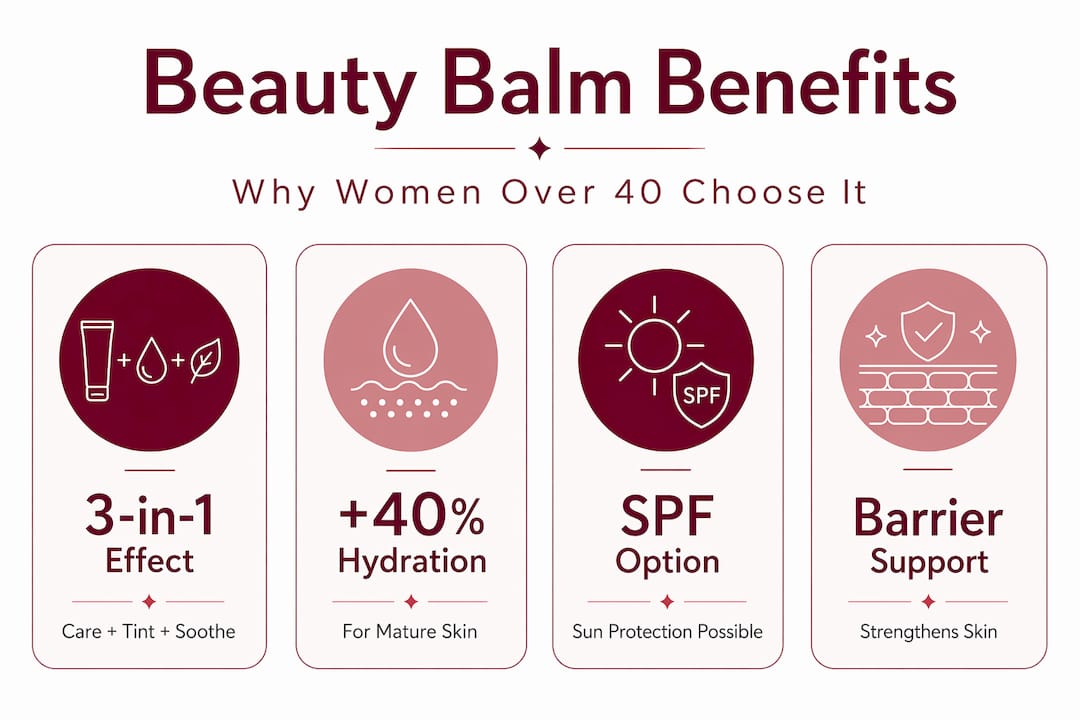
Skin over 40 changes in specific, predictable ways. Oil production decreases. The skin barrier becomes less efficient at holding moisture. Fine lines and texture become more visible, especially under heavier foundation formulas. This is exactly where a well-chosen beauty balm can shine.
The main benefits worth knowing:
- Moisture sealing: Rich balm formulas are occlusive, meaning they physically prevent water from leaving the skin’s surface. Vogue’s research on face balms confirms that balms are more occlusive than lighter water-based moisturizers, making them especially useful for dry or barrier-compromised skin, which describes most skin over 40.
- Simplified routines: A hybrid beauty balm can replace two or three steps: moisturizer, primer, and light foundation. This isn’t cutting corners. For mature skin, fewer products mean less chance of irritation or pilling.
- Luminosity without glitter: Many beauty balms deliver a natural glow by reflecting light off the skin rather than sitting on top of it. This is fundamentally different from shimmer or highlighter and tends to look much more age-appropriate and skin-like.
- Comfort throughout the day: Emollient-heavy formulas don’t tighten or feel dry as the day progresses. They stay comfortable, which matters more than it sounds after a full day.
- Barrier support: The occlusive ingredients in balms, typically plant waxes, mineral oil, or petrolatum, work as a physical shield over the skin. For skin that’s recovering from treatments or environmental exposure, this is genuinely restorative.
Statistic to note: Transepidermal water loss (the technical term for moisture evaporating through skin) increases significantly with age and environmental stress. Occlusive products like balms are among the most effective tools for hydration and barrier support because they don’t rely on the skin absorbing ingredients. They simply stop moisture from leaving.
Pro Tip: Apply your beauty balm as the final step after serums and moisturizer, not before. This locks everything underneath in while adding a smooth, even finish on top.
Think of a beauty balm as a tool for pairing skincare and makeup seamlessly. When the line between caring for your skin and presenting it at its best disappears, your routine becomes effortless rather than exhausting.
Choosing and using a beauty balm for your skin needs
Now that you know why beauty balms can be a smart choice, here’s how to confidently select and integrate them into your regimen.
Step-by-step guide to getting it right:
-
Define your goal first. Are you looking for hydration, light coverage, SPF protection, or barrier repair? Knowing your primary goal narrows the field immediately. A choosing the right balm formula mindset applies here: match the product to your specific need, not the trendiest option.
-
Read the ingredient list, not just the front label. Words like “occlusive,” “emollient,” or “film-forming” tell you more about how a product behaves than marketing claims like “nourishing” or “radiant.”
-
Match the formula to your skin type. If your skin leans dry or mature, a richer, more occlusive beauty balm will feel comfortable and last longer. If your skin is combination, look for lighter balm formats that won’t feel heavy in your T-zone.
-
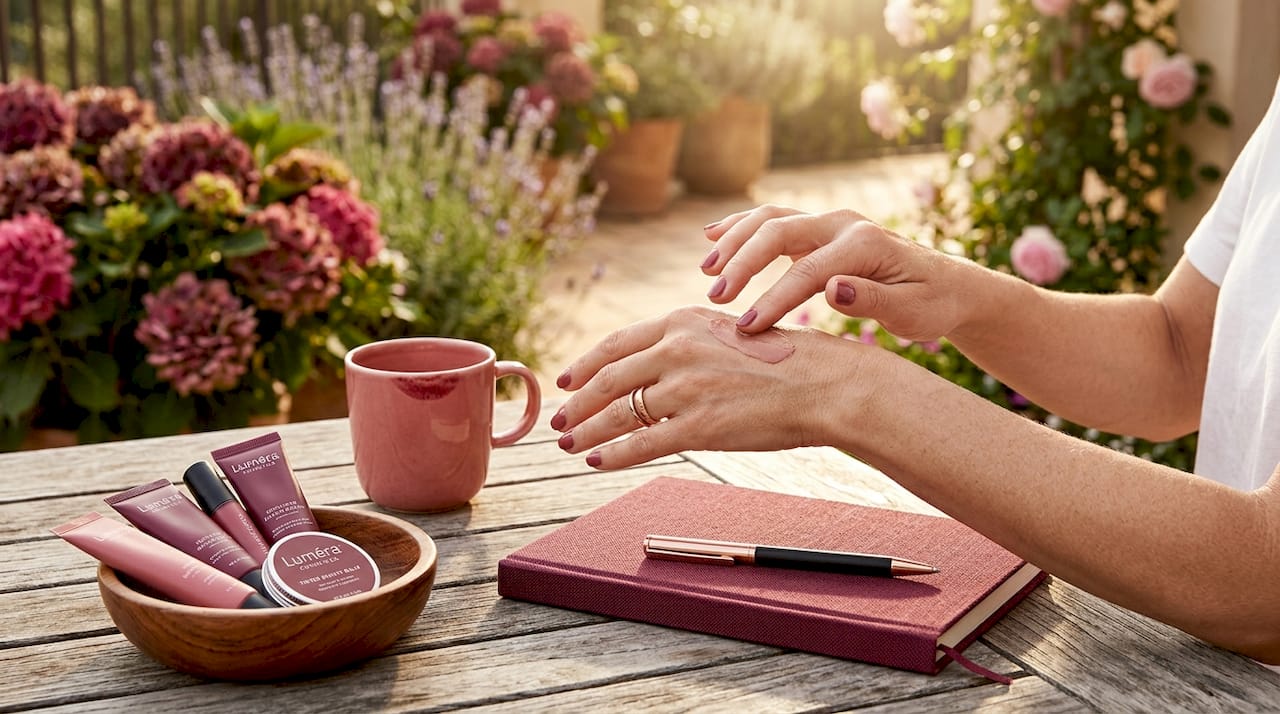
Apply to prepped skin. Always start with cleansed, moisturized skin. A beauty balm applied over bare, dry skin may look patchy or settle into lines. A light hydrating serum underneath makes a significant difference in the final finish.
-
Use fingertips or a damp sponge. Fingers warm the product and press it into skin for a natural, skin-like result. A damp sponge creates a more even, blended finish. Avoid dry brushes, which can drag and disrupt the texture.
-
Layer thoughtfully. You don’t need much. A pea-sized amount covers most of the face. Add more only where you want extra coverage or moisture.
“Think of a beauty balm as a canvas, not a costume. The goal is to look like a better version of yourself, not a different person.”
Cambridge Dictionary’s definition is a practical starting point for shoppers: if a product is labeled “BB cream” or “beauty balm,” expect light coverage with hydration. If it’s simply a “treatment balm,” expect an emollient or occlusive formula without color payoff.
For women with specific wellness or nutritional goals that support skin health from within, boosting skin health through vitamins and nutrients is a complementary step that many overlook. Beauty balms work best as part of a broader, considered routine. Explore makeup routines for mature skin to see how a beauty balm slots into a realistic, time-efficient approach.
What most guides miss about beauty balms
Most articles on beauty balms fall into one of two traps: they either treat BB cream and beauty balm as synonyms, or they present “multi-use” as a miracle solution. After years of working in cosmetics and watching product trends come and go, we’ve noticed something more interesting and more honest.
The real issue isn’t the products. It’s the labels.
Beauty brands have a financial incentive to make their products sound like everything to everyone. “Beauty balm” is a phrase that tests well in marketing because it sounds luxurious, purposeful, and science-adjacent without committing to anything specific. That ambiguity is a feature for brands and a problem for shoppers. Vogue highlights this directly, noting that product categories increasingly blur, with items marketed as balms behaving like tinted moisturizers or hybrid bases. The confusion isn’t accidental.
For women over 40, this matters more than it does for younger skin. When your skin has specific needs, whether that’s barrier repair, reduced sensitivity, or natural luminosity without heaviness, you can’t afford to guess. A product that promises “multi-use convenience” but delivers too much occlusive weight or too little coverage wastes your time and potentially irritates your skin.
Here’s the honest truth about multi-use products: they work beautifully when they’re genuinely designed for overlap, not when “multi-use” is a shorthand for “we couldn’t decide what this is.” Always look for a product where the multiple claims make biological sense together. Hydration plus light coverage makes sense. SPF plus occlusive barrier care in a heavy formula often doesn’t, because the SPF filter needs even, thin application to work properly, while heavy balms encourage thick application.
Think about your routine as a series of intentional layers rather than a compressed pile of shortcuts. A day-to-night makeup shift might mean starting with a beauty balm in the morning for a natural finish, then adding more defined lip color or a touch more coverage for an evening look. The balm does the heavy lifting of skin prep and light coverage; the rest builds on it.
Label confusion is not your fault. It’s the inevitable result of an industry that markets to emotion first and clarity second. Read ingredients. Test on skin. Trust your own experience over the claims on the front of the packaging.
Discover beauty solutions for your best skin
If today’s guide has helped cut through the noise around beauty balms, the next step is finding products that actually live up to the promise. At Luméra Cosmetica, we create makeup and lip essentials designed specifically with women’s real skin needs in mind, not just a generic audience.
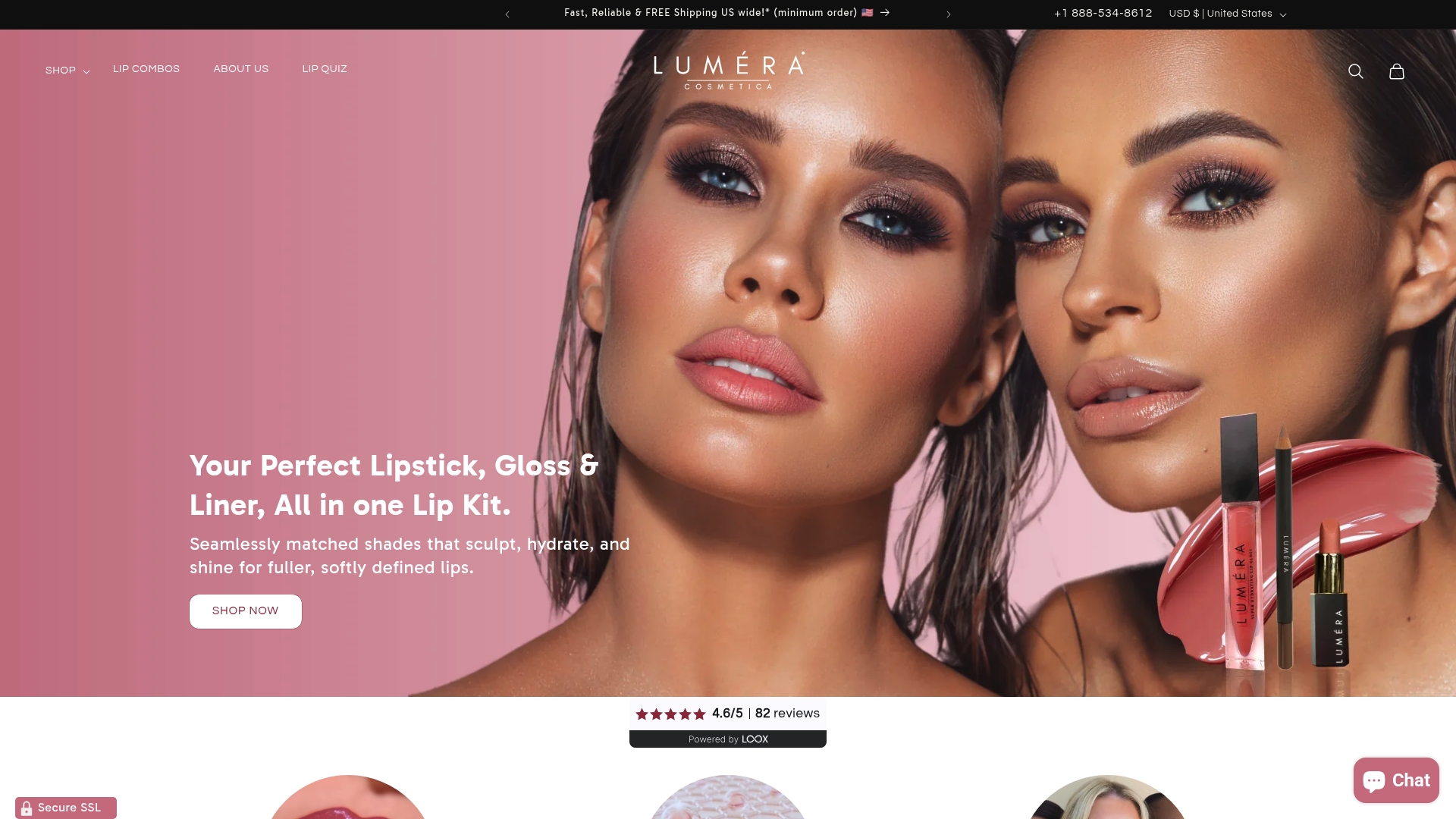
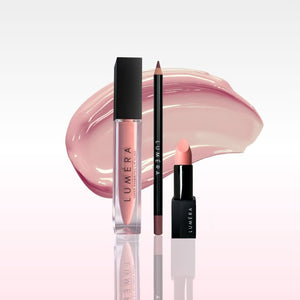
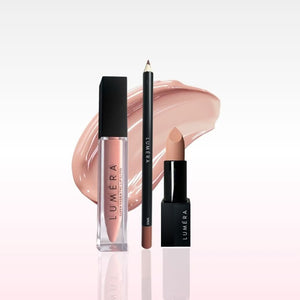
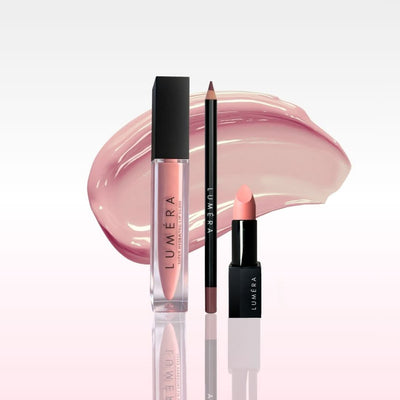
Whether you’re looking to simplify your morning routine with a multi-purpose formula or add a beautifully pigmented lip product that also nourishes, our collection is built for women who want results without the guesswork. Start with something iconic: the Miss Bombshell Lip Kit is a favorite for good reason, pairing comfort, color, and care in one box. Explore the range and find what works beautifully for you.
Frequently asked questions
Is beauty balm good for sensitive or mature skin?
Yes, beauty balms typically contain emollients that soothe and support skin’s barrier, making them an excellent choice for mature or sensitive skin that needs comfort alongside light coverage.
Does every beauty balm include SPF?
No, SPF is not a standard feature across all beauty balms. Some BB creams and hybrid balms include sun protection, but formulas vary widely, so always check the label before skipping your sunscreen.
Can a beauty balm replace moisturizer and foundation?
Certain hybrid beauty balms can genuinely take the place of both, offering skincare hydration and light coverage in a single product. Brands now create multi-use balms that function as primer, concealer, and moisture treatment simultaneously.
What is the best way to apply a beauty balm?
Apply a small amount to clean, moisturized skin using clean fingertips or a damp sponge, patting gently rather than rubbing to preserve the texture and create an even, natural-looking finish.
Are beauty balms suitable for oily skin?
Lighter beauty balm formulas can work well for oily skin, but richer, more occlusive versions may feel heavy or contribute to congestion. As product categories blur, always check the texture and finish claims for your specific skin type before purchasing.