How to Use Lip Primer for Longer-Lasting Color

TL;DR:
- Lip primer creates a grip and neutralizes natural lip tone to improve lipstick longevity and color accuracy. Proper application, including exfoliation, wait time, and thin layering, prevents feathering and enhances stain resilience, especially for mature lips. Rushing the process or layering over oily balms undermines primer effectiveness, making patience essential for best results.
Lip primer is a specialized cosmetic base that smooths the lip surface, creates grip for lipstick, and prevents color from feathering or fading throughout the day. Knowing how to use lip primer correctly separates a lip look that lasts two hours from one that holds through dinner, drinks, and everything in between. For women in their 30s, 40s, and 50s, this step matters even more. Fine lines around the mouth become natural channels for lipstick bleed, and lip primer is the most direct way to stop that from happening. Products like MAC Prep + Prime Lip and Sarah Creal’s Lip Grip Peptide Priming Treatment have made this step a non-negotiable for professional makeup artists.
How to use lip primer: what it is and why it works
Lip primer, also called lipstick primer or lip base, is a cosmetic product) that creates a smooth, slightly tacky surface on the lips so lipstick adheres better and lasts longer. Think of it as the same logic behind face primer. Without a base, lipstick sits on top of natural oils, moisture, and texture irregularities. With a base, it grips.
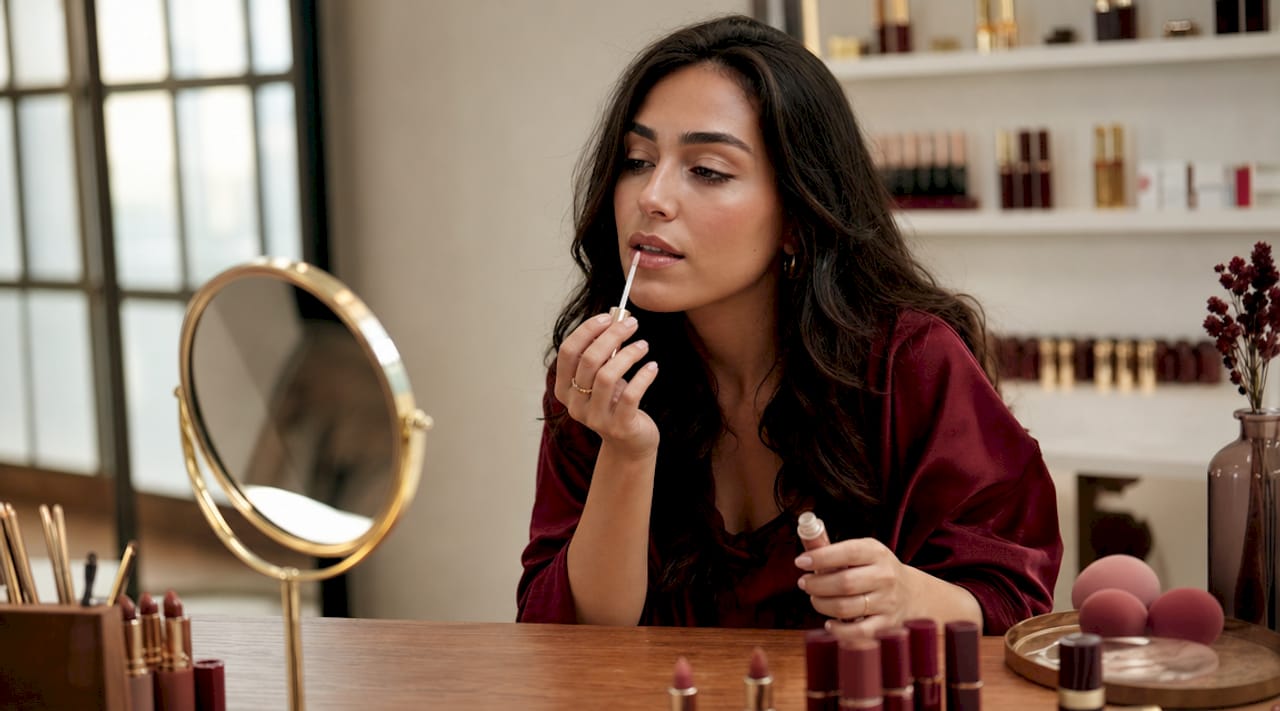
The benefits go beyond longevity. Lip primer neutralizes your natural lip tone, which means the lipstick color you apply reads truer to the shade in the tube. Makeup artist Nicole Valledor explains that primer essentially blanks out your lip’s natural pigment so bold reds, deep berries, and nudes all appear exactly as intended. That single benefit alone justifies the extra 90 seconds the step requires.
Primer also prevents feathering and smearing) by filling in the fine lines and micro-cracks that naturally form on lips. L’Oréal and Allure both identify this smoothing and longevity function as the core reason makeup artists recommend primer for matte and bold shades specifically, since those formulas have less slip and show migration more visibly.
What you need before applying lip primer
Getting the most from lip primer starts before you open the tube. Prep is not optional. Primer applied over dry, flaky lips produces an uneven finish that no amount of lipstick can fix.
Start with exfoliation. A gentle lip scrub, or even a damp washcloth in small circular motions, removes dead skin and creates a smooth canvas. You do not need a dedicated product. A homemade mix of brown sugar and honey works just as well. The goal is a clean, even surface.
Choose the right primer formula for your lips:
- Balm-based primers (like Laneige Lip Sleeping Mask worn as a day primer) suit very dry or chapped lips that need hydration alongside grip
- Silicone-based primers fill fine lines most effectively and are ideal for matte or long-wear lipstick formulas
- Peptide-infused primers such as Sarah Creal’s Lip Grip Peptide Priming Treatment are specifically formulated for mature lips, softening lines while improving hold
- Clear or skin-tone primers work universally and are the safest starting point if you are new to the step
Blot before you prime. Applying lip primer over a heavy layer of petroleum-based balm or oily residue reduces primer effectiveness significantly. The oils dilute the primer’s grip and cause lipstick to slide. If you used a balm for hydration, wait 10 minutes or blot thoroughly with a tissue before applying primer.
Pro Tip: If your lips tend to be naturally oily, press a single-ply tissue against them for three seconds before priming. This removes surface oil without stripping moisture, giving the primer a clean surface to bond with.
Pairing primer with the right lip liner also matters. A lip liner applied after primer but before lipstick locks the color boundary and gives the lipstick a second layer of grip at the edges where feathering is most likely to start.
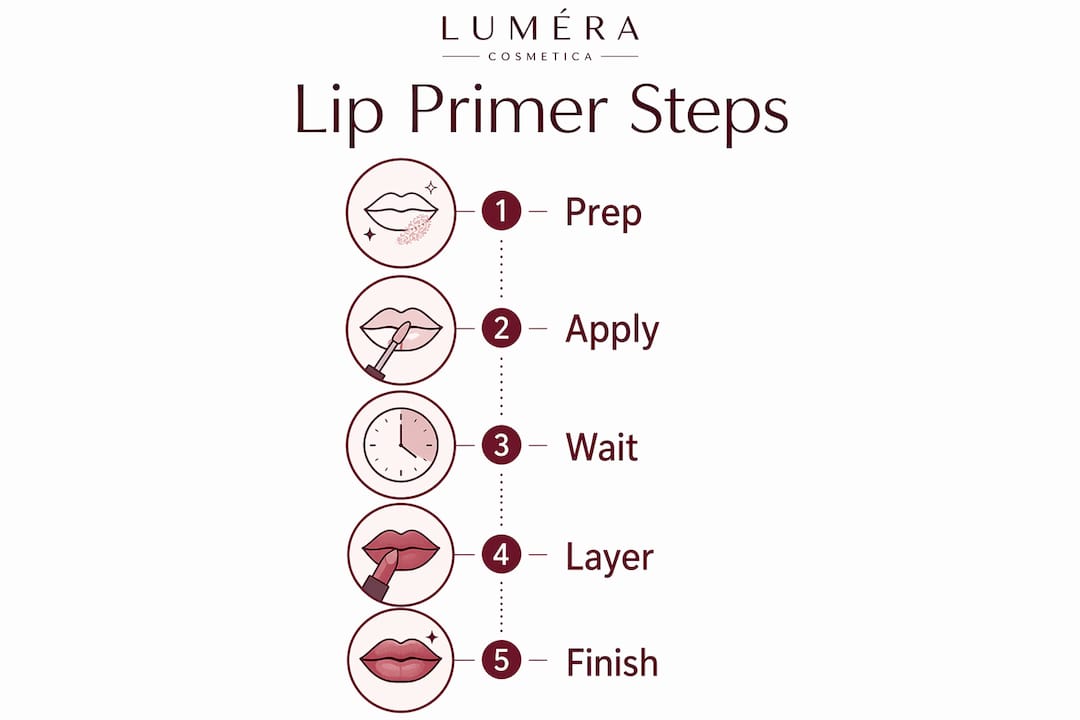
Step-by-step guide: how to apply lip primer correctly
Follow these steps in order. Skipping or rushing any one of them reduces the result.
- Exfoliate and blot your lips. Remove flakes and surface oils as described above. Start with a clean, dry lip surface.
- Apply a thin, even layer of primer. Use the applicator wand, your fingertip, or a small lip brush to spread primer across the entire lip area. Extend it slightly beyond your natural lip line. This creates an invisible barrier at the edges where feathering typically begins.
- Wait 30 to 60 seconds. Makeup artist Lindsey Sanchez advises letting primer sit 40 to 60 seconds before moving on. LipstickQueen recommends the full 60 seconds to prevent feathering. This pause is the most skipped step and the most consequential one.
- Blot lightly if the primer feels tacky or oily. A single press of a tissue removes excess product without disturbing the base.
- Apply lip liner. Trace your natural lip line or slightly outside it for a fuller look. Fill in the entire lip with liner if you want maximum color longevity. Check out Lumeracosmetica’s guide on lining lips fuller for precise technique.
- Apply your lipstick. Press it on rather than dragging it. Pressing bonds the color to the primer base instead of disrupting it.
- Blot and reapply for intensity. Press a tissue against your lips, then apply a second coat. This builds color without adding bulk.
Pro Tip: For matte or liquid lipsticks, skip the second blot and press a single-ply tissue over the finished lip instead. This sets the color and reduces transfer without dulling the finish.
The table below shows how primer application varies by lipstick formula:
| Lipstick type | Primer recommendation | Key timing note |
|---|---|---|
| Matte | Silicone-based primer | Full 60-second wait |
| Liquid lipstick | Thin layer, no excess | Blot primer before applying |
| Satin or cream | Any formula works | 30 seconds minimum |
| Bold or dark shades | Neutralizing skin-tone primer | Liner fill-in recommended |
Common mistakes when using lip primer
Most lip primer failures come down to four predictable errors. Recognizing them is faster than troubleshooting after the fact.
- Layering primer over oily balm. Lip balm and lip primer serve different roles. Balm hydrates. Primer grips. Applying primer directly over a petroleum-based balm without blotting creates a slick surface that defeats the primer’s purpose entirely.
- Using too much product. A thin, even layer is all you need. Excess primer causes pilling, where the product rolls into small clumps under lipstick, creating a cakey, uneven finish. Less is genuinely more here.
- Reapplying primer mid-day. Midday touch-ups should never involve re-priming. Layering primer over existing lipstick creates buildup that looks heavy and uneven. Blot with a tissue and reapply lipstick only.
- Skipping exfoliation. Primer applied over dry, flaky lips amplifies texture rather than smoothing it. The primer fills in cracks but also highlights them if the surface has not been prepped. Exfoliate first, always.
- Rushing the set time. Applying lipstick immediately after primer means the two products mix rather than layer. The result is reduced wear time and uneven color. The 30 to 60 second wait is not optional.
Signs that primer is not working as expected include early feathering within the first hour, lipstick that slides toward the corners of the mouth, or color that looks patchy after the first hour. Each of these points back to one of the five mistakes above.
How lip primer benefits mature lips and bold colors for women 30-50
For women in their 30s through 50s, lip primer is not a luxury step. It is the step that makes bold lip color wearable. Fine lines around the mouth deepen with age, and those lines are exactly where lipstick migrates. Primer fills and smooths fine lines to form a physical barrier at the lip perimeter, which is why makeup artists consistently recommend it for this age group.
Hydration is the other factor. Mature lips tend to be drier, and dry lips crack under matte formulas. Peptide-infused primers like Sarah Creal’s Lip Grip Peptide Priming Treatment address both concerns. They soften fine lines and enhance comfort without the greasiness that undermines lipstick grip. The peptide and honey polymer combination in that formula specifically targets the texture issues most common in lips over 35.
Color payoff also improves significantly with primer. A deep burgundy or a true red applied directly to lips with natural pigmentation often reads darker or cooler than intended. Primer neutralizes that base tone, so the color you see in the tube is the color you get on your lips. For women building a statement lip look, this is the difference between a color that works and one that fights your complexion.
“Primer blanks out your natural lip color so the lipstick shade reads exactly as it was formulated.” — Nicole Valledor, makeup artist
Pro Tip: If you want to wear a bold shade without liner, use a neutralizing skin-tone primer and extend it just past your lip line. It acts as a soft boundary that slows feathering without the precision work of liner.
For a full walkthrough on pairing primer with lipstick application technique, Lumeracosmetica’s guide on applying lipstick step by step covers the complete process.
Key takeaways
Lip primer works because it creates a grippy, neutralized base that extends lipstick wear, prevents feathering, and makes color appear truer to its intended shade.
| Point | Details |
|---|---|
| Prep before priming | Exfoliate lips and blot away oils before applying primer for best adhesion. |
| Wait before lipstick | Let primer set for 30 to 60 seconds so it absorbs fully before color goes on. |
| Less product is better | A thin, even layer prevents pilling and cakey buildup under lipstick. |
| Mature lips need peptides | Peptide-infused primers smooth fine lines and add comfort without reducing grip. |
| Never re-prime mid-day | Blot and reapply lipstick only. Layering primer over existing color causes buildup. |
Why patience is the real secret to lip primer
I have been testing lip products long enough to know that most people who say lip primer “doesn’t work” skipped the wait time. That 40 to 60 seconds feels like nothing when you are in a rush, but it is the entire mechanism. Primer needs to bond with the lip surface before lipstick goes on top. Apply lipstick too soon and you are essentially mixing two products instead of layering them.
The other thing I have learned is that more product does not mean more performance. The instinct is to apply a generous coat and assume it will last longer. It does the opposite. A thin, precise layer that you let set properly outperforms a thick application every single time.
For mature lips specifically, I always recommend starting with a peptide or hydrating formula rather than a purely silicone-based one. Silicone fills lines well, but on drier lips it can emphasize texture if the lip is not adequately hydrated underneath. A balm-based or peptide primer gives you the smoothing effect with enough moisture to keep the lip surface flexible under matte formulas.
The technique of extending primer just past the lip line is one of those small adjustments that produces a noticeably cleaner result. It takes two extra seconds and it genuinely stops feathering at the source. Most people trace only the lip itself. Going just beyond the natural edge is where the real control happens.
— Rebecca
Discover Lumeracosmetica’s lip collection
Lumeracosmetica carries a curated range of lip products designed to work together from prep through finish. Whether you are looking for a primer that smooths fine lines, a formula that pairs with bold matte shades, or a complete lip routine built for lasting color, the collection covers every step. The Lumeracosmetica lip range includes options suited to dry, mature, and combination lips, with formulas that complement both everyday wear and statement looks. Browse the full collection for product recommendations, application tutorials, and expert guidance on building a lip routine that actually holds.
FAQ
What is a lip primer and what does it do?
Lip primer is a cosmetic base applied to lips before lipstick to create grip, smooth texture, and extend color wear. It also neutralizes natural lip pigment so lipstick shades appear truer and more vibrant.
How do you use lip primer correctly?
Apply a thin, even layer over clean, exfoliated lips and slightly beyond the lip line, then wait 30 to 60 seconds before applying lipstick. Rushing the set time is the most common reason primer underperforms.
Do I need lip primer if I already use lip liner?
Lip liner controls the edge and adds some grip, but it does not smooth the full lip surface or neutralize tone the way primer does. Using both together produces the longest-lasting, most even result.
Can I apply lip primer over lip balm?
Only if you blot thoroughly first. Applying primer directly over a petroleum-based or oily balm dilutes the primer’s grip and causes lipstick to slide. Wait 10 minutes after balm or blot completely before priming.
Is lip primer worth it for mature lips?
Peptide-infused and hydrating primers are specifically beneficial for lips over 35, as they soften fine lines and prevent feathering into the vertical lines around the mouth that deepen with age.