How coconut oil supports lip care for women over 40

TL;DR:
- Coconut oil functions as a mild occlusive and emollient that reduces water loss and softens lips, especially effective when layered with humectants. Its benefits are best maximized through proper layering, personalized routines, and careful consideration of individual sensitivities, particularly for mature skin over 40. Used correctly as part of a comprehensive lip care system, coconut oil provides genuine hydration and comfort, but it is not a universal solution.
Coconut oil has earned near-legendary status in natural beauty circles, and for good reason. But the idea that it works perfectly for every lip concern, on every skin type, at every age, is more complicated than most guides admit. For women over 40, lips are thinner, drier, and more vulnerable to irritation than they were two decades ago. Understanding exactly how coconut oil works, when it shines, and when something else might serve you better is the difference between lips that feel genuinely nourished and ones that are stuck in a frustrating cycle of dryness and disappointment.
Table of Contents
- How coconut oil works for your lips: Science and basics
- Coconut oil vs. other lip care heroes: What’s truly effective?
- Safety and sensitivity: When coconut oil isn’t always the answer
- The best way to use coconut oil for hydrated, comfortable lips
- A fresh perspective: Coconut oil in real-world mature lip care
- Explore natural lip care solutions with Luméra Cosmetica
- Frequently asked questions
Key Takeaways
| Point | Details |
|---|---|
| Moisture-locking benefits | Coconut oil forms a protective barrier on the lips, reducing water loss and improving comfort for several hours. |
| Occlusive vs. emollient | While coconut oil softens and hydrates, it’s not as strong an occlusive as petrolatum or lanolin and works best combined with other ingredients. |
| Sensitive skin caution | Patch test coconut oil on your lips if you’re prone to irritation or perioral dermatitis, as reactions can occur. |
| Smart layering routine | Maximize results by applying a hydrating product before sealing with coconut oil, especially for mature, dry lips. |
How coconut oil works for your lips: Science and basics
Coconut oil is not magic. It works because of chemistry, and once you understand that chemistry, you can use it far more effectively. The primary role coconut oil plays in lip care is as a combination occlusive and emollient. As an occlusive, it creates a thin, water-resistant film on the surface of the lips. As an emollient, its fatty acids soften the texture of the lip’s outer layer, filling in microscopic cracks and making lips feel smooth and supple.
Coconut oil on chapped lips works mainly by acting as an occlusive emollient: its fatty acids form a surface lipid film that reduces transepidermal water loss and improves hydration for several hours. This is genuinely useful, especially for mild to moderate dryness. It is not, however, a humectant. That means it does not draw water into the lip tissue from the environment or from deeper skin layers. It can only hold in the moisture that is already there.
Here is what coconut oil does well for your lips:
- Reduces water evaporation from the lip surface for several hours after application
- Softens rough or flaky lip texture with its emollient fatty acid profile
- Provides a light, comfortable feel that many women prefer over heavy wax-based balms
- Blends easily with other ingredients, making it a flexible base for lip oil hydration products
“Coconut oil’s effectiveness on lips depends heavily on how it is layered with other products. Applied alone to very dry lips, it may feel like enough but lack the staying power to address deeper dryness. Paired with a humectant, it becomes significantly more powerful.”
The fatty acid profile of coconut oil, which is dominated by lauric acid, also gives it mild antimicrobial properties. This is one reason coconut oils in beauty formulations remain popular. For mature lips that are prone to minor cracking and vulnerability to environmental stressors, that added benefit is worth noting.
Coconut oil vs. other lip care heroes: What’s truly effective?
To use any ingredient wisely, you need context. Lip care ingredients generally fall into three functional categories: occlusives, humectants, and emollients. Understanding which category an ingredient belongs to tells you what role it plays in your routine.
Lip balms often rely on the same three functional buckets, where occlusives like petrolatum and beeswax reduce water loss by forming a protective barrier, while coconut oil serves primarily as an emollient component that also contributes some occlusive moisture-sealing effect.
Here is how coconut oil compares to other commonly used lip care ingredients:
| Ingredient | Type | Occlusive power | Emollient feel | Best for |
|---|---|---|---|---|
| Petrolatum | Occlusive | Very high | Heavy | Severe dryness, harsh climates |
| Beeswax | Occlusive | High | Waxy | Barrier protection, cold weather |
| Lanolin | Occlusive + emollient | High | Rich | Cracked, compromised lips |
| Coconut oil | Emollient + mild occlusive | Moderate | Light | Mild dryness, everyday use |
| Shea butter | Emollient | Moderate | Creamy | Comfort, normal dryness |
| Hyaluronic acid | Humectant | None | Light | Drawing moisture into tissue |
OTC lip balm rankings consistently place petrolatum as a stronger, more reliable moisture-sealing barrier than coconut oil, whose performance varies more by skin type and condition. This does not mean coconut oil is inferior. It means it belongs in a different position in your routine, or in a different season.
Research comparing plant oils found that a single application of coconut oil increased stratum corneum hydration but showed weaker barrier effects than some other plant oils tested in the same study. For women over 40, whose lips already lose moisture faster due to reduced oil gland activity and thinner skin, that distinction matters.
For those who find petrolatum too heavy or prefer plant-based options, lanolin vs petroleum comparisons show that lanolin offers a strong occlusive effect with added emollient richness, making it another powerful alternative worth exploring.
The role of emollients in lip products goes beyond just texture. They directly influence how comfortable lips feel throughout the day and how well other actives can do their job. Coconut oil earns its place in well-formulated products because it enhances feel and contributes measurable hydration benefits.
For women over 40 specifically, the key benefits of lip balm extend beyond basic moisture, including protection from UV exposure and supporting the lip’s diminished natural barrier function.
Pro Tip: In dry or cold climates, layer coconut oil over a hyaluronic acid serum or glycerin-based product before bed. The humectant draws moisture in, and the coconut oil holds it there overnight for noticeably softer lips by morning.
Safety and sensitivity: When coconut oil isn’t always the answer
Here is where many natural beauty guides fall short. They recommend coconut oil for everyone, omitting a critical caveat. Coconut oil does not suit every skin type or every lip condition, and for mature skin that has become more reactive over time, this matters.
Topical coconut-derived products are not universally tolerated. Adverse reactions such as irritation or contact dermatitis are possible, including in the perioral region in susceptible people. Perioral dermatitis, which causes redness and pustules around the mouth, can be aggravated by oil-based products including coconut oil. Women with rosacea should also approach coconut oil with care, as its richness can sometimes trigger flares in the perioral area.
Before adding coconut oil to your lip routine, follow these steps to minimize risk:
- Check your history. If you have experienced perioral dermatitis, rosacea, or eczema around the mouth, speak with a dermatologist before using coconut oil on or near lips.
- Patch test first. Apply a small amount of coconut oil to the inner arm or the corner of your chin. Wait 24 to 48 hours and look for redness, itching, or swelling.
- Start slowly. Use coconut oil once daily rather than multiple times, and monitor your lips closely for the first two weeks.
- Watch for warning signs. Increased redness, stinging, peeling, or paradoxical dryness after application are all signals to stop use and reassess.
- Choose the right form. Virgin, unrefined coconut oil is less processed and less likely to contain added fragrances or preservatives that could cause reactions.
For women exploring ingredients for youthful lips, understanding potential irritants is just as important as knowing what works. Mature skin after 40 often becomes more reactive, not less, because the skin barrier has thinned and immune responses in the skin can be more sensitized.
It is also worth noting that coconut oil irritation is more common than most people realize. Some individuals experience what looks like dryness but is actually mild, ongoing irritation from frequent application. If your lips feel worse despite consistent use of coconut oil, that is important information.
Pro Tip: Keep a simple lip journal for two weeks when trying any new ingredient. Note application time, frequency, and how your lips feel two hours later. Patterns reveal themselves quickly and save you months of guesswork.
Statistic to know: Contact dermatitis affects a meaningful portion of the population, and lip skin is particularly vulnerable due to its thin structure and lack of a protective stratum corneum compared to other facial skin. Sensitivity can increase after 40 as the skin’s natural repair processes slow down.
The best way to use coconut oil for hydrated, comfortable lips
With a clear understanding of what coconut oil does and where its limits are, you can build a routine that actually delivers results. The key principle is layering. Coconut oil works best when it is sealing in moisture that is already present, not when it is applied to dry, parched lips alone.
Using coconut oil as a lip emollient and pairing it with a humectant hydrating step produces the best results, especially for women over 40 dealing with persistent dryness or cracking.
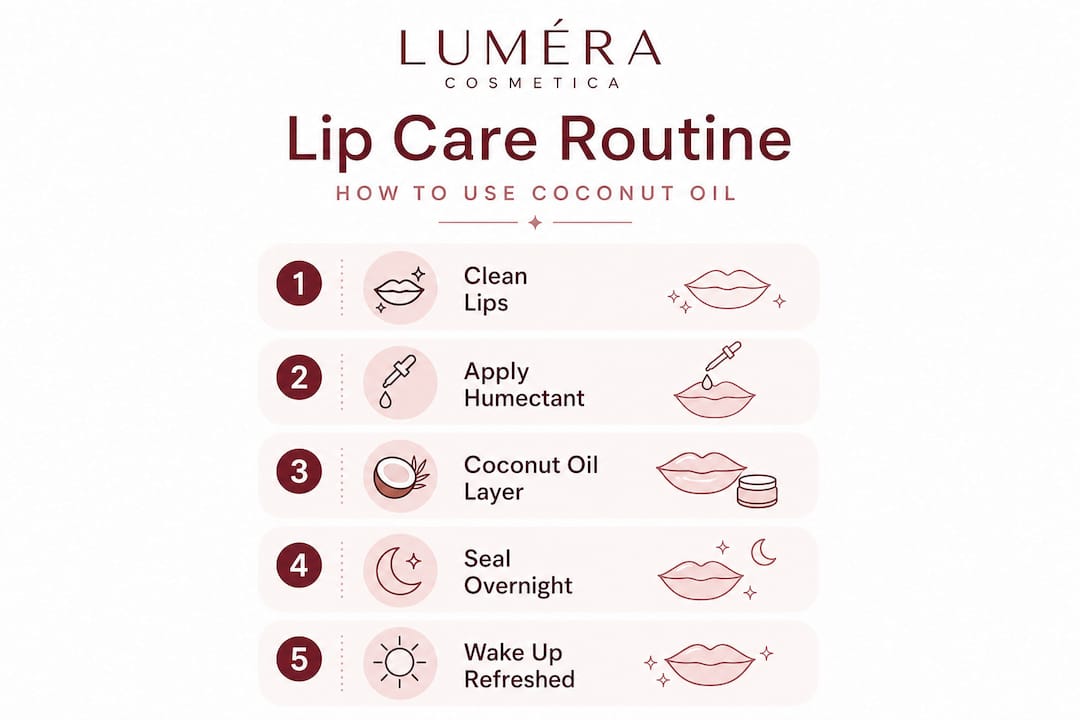
Here is a practical, step-by-step routine:
- Gentle exfoliation (optional, 1 to 2 times per week). Use a soft toothbrush or a sugar scrub to remove flaky skin. This allows subsequent products to penetrate more effectively. Never scrub if lips are cracked or inflamed.
- Apply a humectant. A thin layer of glycerin, hyaluronic acid, or aloe vera provides the water base that coconut oil will then lock in. Give it 30 seconds to absorb.
- Apply coconut oil. Use your fingertip to press a small amount of unrefined, virgin coconut oil over the humectant layer. You do not need much. A pea-sized amount is sufficient.
- Consider a finishing layer in harsh conditions. In very cold or dry weather, add a beeswax or lanolin-based balm over the coconut oil for stronger barrier protection. This layering approach is especially useful for lip products for mature skin that need to perform through seasonal extremes.
- Repeat at night. Nighttime is when skin repair is most active. A bedtime application of humectant plus coconut oil can produce significant improvement in lip texture and comfort within a week.
When choosing coconut oil, opt for virgin, cold-pressed, unrefined coconut oil. Refined versions lose some of their beneficial fatty acids and may contain additives. Check the color. Unrefined coconut oil is white when solid and clear when melted. A yellowish tint or a processed smell is a sign it may be lower quality.
Some lip balms fail not because their ingredients are wrong but because the application order is off. Applying an occlusive first actually blocks humectants from reaching the skin surface, which is a very common and correctable mistake.
Adjusting your routine seasonally is equally important. Summer humidity means your humectant step can be lighter. Winter cold demands heavier occlusives on top of your coconut oil. Explore everyday lip care tips to build a routine that shifts with the seasons rather than staying static year-round.
Pro Tip: Blend a drop of coconut oil with a pea-sized amount of shea butter for a richer overnight mask. The combination of fatty acid profiles from both oils provides broader emollient coverage and superior comfort for very dry or mature lips.
A fresh perspective: Coconut oil in real-world mature lip care
We have seen women arrive at coconut oil with enormous hope, use it faithfully for a few weeks, and then quietly give up when it does not deliver the transformation they expected. That is not a failure of the ingredient. It is a mismatch between expectation and application.
Coconut oil is not the centerpiece of a lip care routine. It is one strong player in a team. Used correctly, it adds measurable comfort and hydration. Used in isolation on deeply dry, mature lips with no humectant underneath and no barrier protection over the top, it often underdelivers. That is the uncomfortable truth that most product guides skip.
Real-world results with coconut oil come from personalization. A woman in Melbourne dealing with dry winter winds needs a different layering approach than a woman in London navigating central heating and indoor dryness. Climate, diet, hydration levels, and individual skin reactivity all influence how coconut oil performs on your specific lips.
We also see women give up too quickly. Lip skin, like all skin, responds slowly to consistent care. Two weeks is barely enough time to establish a baseline. The women who see the most meaningful improvement are the ones who patch test, adjust, and give their routine a genuine six-to-eight week trial before deciding whether to change course.
The most important mindset shift is this: stop looking for the one perfect product and start building a practical lip care routine that works as a system. Coconut oil earns its place in that system for many women. But it works best when paired with other thoughtful choices rather than used as a standalone solution.
Explore natural lip care solutions with Luméra Cosmetica
You now know more about coconut oil and mature lip care than most guides will ever tell you. The next step is finding products that put this knowledge into practice without requiring you to mix ingredients yourself or second-guess every label.
At Luméra Cosmetica, we formulate lip care specifically for women over 40, blending ingredients like coconut oil, humectants, and targeted emollients in the right ratios and the right order. Our resources and product guides help you personalize a routine that works for your climate, your lip concerns, and your preferences. Whether you are starting fresh or refining what you already do, we make it easier to build a lip care approach that actually lasts.
Frequently asked questions
Is coconut oil safe to use on lips every day?
For most people, coconut oil is safe for daily lip use, but those with a history of irritation or perioral dermatitis should patch test first, since contact dermatitis is possible even with coconut-derived topical products.
Does coconut oil heal cracked lips better than other oils?
Coconut oil hydrates and softens lips effectively for mild dryness, but research shows that a single application produces weaker barrier effects than some other plant oils, making stronger occlusives like petrolatum or lanolin better choices for severely cracked lips.
Can coconut oil cause allergic reactions on lips?
Yes, adverse reactions including contact dermatitis are possible with coconut-derived topical products, particularly for those with sensitive or reactive skin around the mouth.
How should I layer coconut oil with other lip products?
Apply a humectant like glycerin or hyaluronic acid first, then use coconut oil as a final sealing step, since using coconut oil as an occlusive over a hydrating layer produces significantly better moisture retention than applying it alone.