

Busy Women 40+: Make a Tackle Box Makeup Organizer in Under 1 Hour

If you need durable, multi-compartment storage that keeps every product visible and survives being tossed in a suitcase, a tackle-box-style makeup case usually beats a bag. The exception: if you own a lot of tall bottles or oddly shaped palettes, a tackle box’s fixed trays can waste space, and a stackable acrylic system fits better. Check the buying checklist below before you commit to either.
TL;DR:
- Choose cases with durable materials like aluminum or coated plastic for longevity and reliability under frequent travel or heavy use.
- Measure your tallest products, such as serum bottles or palettes, before purchasing to avoid fit issues and costly returns.
- Regularly clean the case with water-based methods and protect clear acrylic from acetone or harsh chemicals to prevent discoloration or damage.
- Inconvert fishing tackle boxes can be customized with foam inserts, anti-slip liners, and a mirror for an affordable, purpose-built makeup case.
- Organize the contents based on your routine: shallow trays for daily essentials, deep compartments for backups, and a layout suited for travel or professional use.
Table of Contents
- What Is a Tackle Box Makeup Organizer, and Why Does It Work So Well?
- How Do You Choose the Right Tackle-Box Makeup Case?
- What Materials Hold Up Best, and How Do You Clean Them?
- How Do You Turn a Real Fishing Tackle Box Into a Makeup Case?
- What Do Everyday, Travel, and Pro Kit Layouts Actually Look Like?
- Where Should You Buy a Tackle-Box Makeup Case?
- An Organized Kit Changes How Your Whole Routine Feels
- A Simpler Alternative to Buying Bigger Storage
- Sources
What Is a Tackle Box Makeup Organizer, and Why Does It Work So Well?
A tackle-box makeup organizer is exactly what it sounds like: a hard-shell case built on the same folding-tray architecture anglers have used for decades, repurposed to hold lipsticks instead of lures. Open the lid and one or more shallow trays fan out on hinges, stacking on top of a deeper base compartment. Everything sits in its own slot, visible at a glance, instead of buried under a pile of loose products in a canvas pouch.
The design isn’t a beauty-industry invention. It traces back to a specific moment: a 1987 photo of Vanna White using a Plano fishing tackle box as makeshift storage, which directly inspired the Caboodles case that became a cultural fixture. That tiered-tray format stuck around because it solves a real problem: cosmetics come in wildly different shapes, and a bag forces you to dig for the one liner you need at the bottom.
Three use cases explain most of the demand:
- The daily edit. A compact case that lives on a counter or in a drawer, holding the dozen or so products you actually reach for each morning.
- The travel kit. A closed, latched case that survives a suitcase, protects glass bottles, and doesn’t spill lip gloss into your shoes.
- The pro or performance kit. A larger, deeper case for artists or performers who need backup products, brush sets, and quick access under time pressure.
The shared thread is visibility. Beauty editors have pointed out that tiered organizers like the Caboodles case make it easier to see what you own, which naturally pushes people toward smaller, more curated collections instead of hoarding duplicates they forgot about. When you can see everything, you stop buying a third backup mascara.
How Do You Choose the Right Tackle-Box Makeup Case?
Not every hard case labeled “makeup organizer” holds up the same way. Some flex under weight, some latches pop open mid-flight, some trays crack after a few months. Here’s what actually separates a case that lasts from one that ends up in a landfill within a year.
- Check the shell material first. Aluminum-framed cases resist crushing better than straight plastic, but they add weight. ABS plastic is lighter and cheaper but can flex or crack if overpacked. Acrylic panels look great and show off color-coded products but scratch more easily than either.
- Test the hinges and latches before buying, not after. A hinge that feels loose in a photo will feel worse after fifty openings. Metal latches with a locking mechanism hold up far better than simple plastic snap closures, especially if you’re checking the case in luggage.
- Measure your tallest items. Standing lipstick tubes, tall serum bottles, and thick palettes are the most common reason a tackle box fails a buyer. Editors who cover makeup storage consistently recommend measuring your actual products before purchasing rather than trusting a listing’s generic “fits most cosmetics” language.
- Confirm the divider system is adjustable. Fixed plastic slots are fine if your products are all similar sizes. If they’re not, look for movable dividers or removable tray inserts so you can reconfigure the layout as your collection changes.
- Check closed dimensions against your travel rules. If it’s going in a carry-on, measure the case closed and compare it against your airline’s personal-item allowance, not just “compact” in the description.
- Weigh handle and latch load capacity against how full you’ll pack it. A handle rated for light use will bend or snap under a fully loaded pro kit.
Pro Tip: Bring your three tallest products with you when shopping in person, or keep their exact measurements in your phone. A case that looks roomy in photos can be an inch too shallow for your favorite foundation bottle, and that’s the single most common return reason.
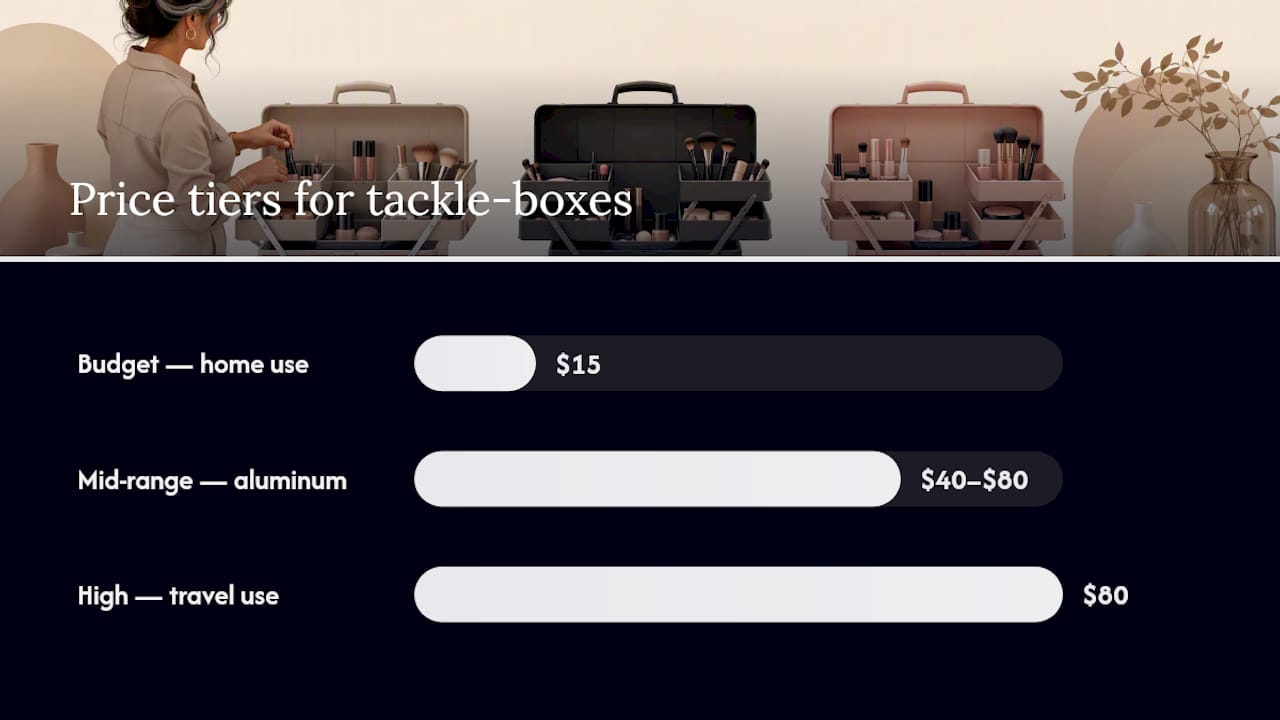
Budget and longevity track together more than people expect. A $15 plastic case might last a season of light home use. A $40 to $80 case with an aluminum frame and metal latches can survive years of travel. If you’re checking it as luggage regularly, spend toward the upper end. If it’s living on a bathroom counter, the cheaper option is fine.
What Materials Hold Up Best, and How Do You Clean Them?
Aluminum-framed cases with a plastic or acrylic tray interior tend to outlast pure plastic builds, especially for anyone checking a case as luggage repeatedly. Straight ABS plastic is lighter and less expensive, but it’s also more prone to hairline cracks at stress points like hinge mounts. Acrylic offers the clearest visibility into compartments, which matters if you’re color-matching lipstick shades quickly, but it scratches more easily than aluminum or coated plastic.
The material question that catches people off guard is chemical, not physical. Hard-shell plastics and acrylics can react to solvents found in some nail polish removers, certain makeup removers, and spot cleaners. Contact with acetone in particular can cloud, soften, or discolor a clear tray over time. The safer approach is water-based cleaning: a damp cloth with mild soap, not a solvent wipe.
A quick-clean routine worth building into your week:
- Wipe trays weekly with a damp microfiber cloth and a drop of gentle dish soap.
- Handle spills immediately. Pressed powders and liquid foundation set into plastic seams if left overnight.
- Dry the case fully before closing it. Trapped moisture in a latched case encourages mildew on foam liners.
- Check hinges every month or two for stiffness. A little food-safe lubricant on metal hinges prevents the squeak that eventually turns into a snap.
- Keep the case out of direct sun on a windowsill. UV exposure yellows clear acrylic faster than almost anything else.
Humidity matters more than most buyers realize. A case stored in a steamy bathroom will see faster hinge corrosion on lower-quality metal fittings than one stored in a bedroom drawer. If your only storage spot is the bathroom, wipe hinges dry after every shower-adjacent use, or budget for a case with coated stainless hardware instead of raw steel.
How Do You Turn a Real Fishing Tackle Box Into a Makeup Case?
You don’t need a beauty-branded product to get the tackle-box benefit. A genuine fishing tackle box from a hardware or sporting goods store often costs a fraction of a cosmetics-branded equivalent, and the conversion takes under an hour.
- Pick the right box first. Look for one with adjustable dividers already built into the trays, a smooth top-loading or side-swing tray mechanism, and a single sturdy top handle rather than side clips that dig into your palm.
- Test the fit before modifying anything. Set your tallest bottles and largest palette into the base compartment to confirm depth before you cut a single piece of foam.
- Line the compartments. Closed-cell foam inserts, cut to size and secured with Velcro strips, protect glass bottles from scratching against bare plastic and can be pulled out and washed when they get grimy.
- Add anti-slip material to shallow trays. A thin shelf liner keeps lipstick tubes from rolling every time you open the lid.
- Install a small stick-on mirror inside the lid. Most fishing tackle boxes don’t come with one, and it’s the single upgrade that makes the case feel purpose-built rather than borrowed.
- Sanitize before first use. Wipe every surface with a mild soap solution and let it air dry fully. Tackle boxes carry bait and lubricant residue you don’t want anywhere near your skin.
Pro Tip: Use Velcro strips instead of glue for any interior modification. It lets you pull out foam liners and wash them separately when makeup residue builds up, instead of scrubbing around fixed padding.
For brush holders, a strip of PVC pipe cut into short sections and glued into an unused corner compartment works better than loose storage. It keeps bristles from bending against the lid every time you snap it shut. For wobbly palettes in deep compartments, a folded strip of the same anti-slip liner wedged along one edge stops them from sliding during transport.
What Do Everyday, Travel, and Pro Kit Layouts Actually Look Like?
The same case format serves three very different packing jobs, and the layout should change depending on which one you’re solving for; for professional looks, consider expert advice about permanent makeup to complement your kit.
The everyday edit works best in the top, shallowest tray: your daily foundation or tinted moisturizer, one blush, one eyeshadow palette you actually use, mascara, and two lip products. Deeper base compartments hold backups and less frequently used items, brushes, and larger palettes you dip into a few times a week.
A short-trip travel kit needs a different priority order. Liquids go in the base compartment where they’re least likely to shift, wrapped in a small pouch in case of leaks. A carry-on-friendly travel kit usually means trimming down to one foundation, one concealer, one eye look, and one lip option rather than packing full-size everything. Shallow top trays are ideal for flat items: eyeshadow palettes, pressed powder compacts, and lip products that won’t roll during transit.
A performance or professional kit prioritizes redundancy over minimalism. Two of everything critical, secure closures on every compartment, and enough depth for full-size backups rather than travel sizes. Deep compartments hold brush rolls and quick-change items; shallow trays hold the products used most often during a set change or a run of client appointments. Backstage and performance storage guides consistently recommend flexible, visible systems for exactly this reason: under time pressure, you can’t afford to hunt.
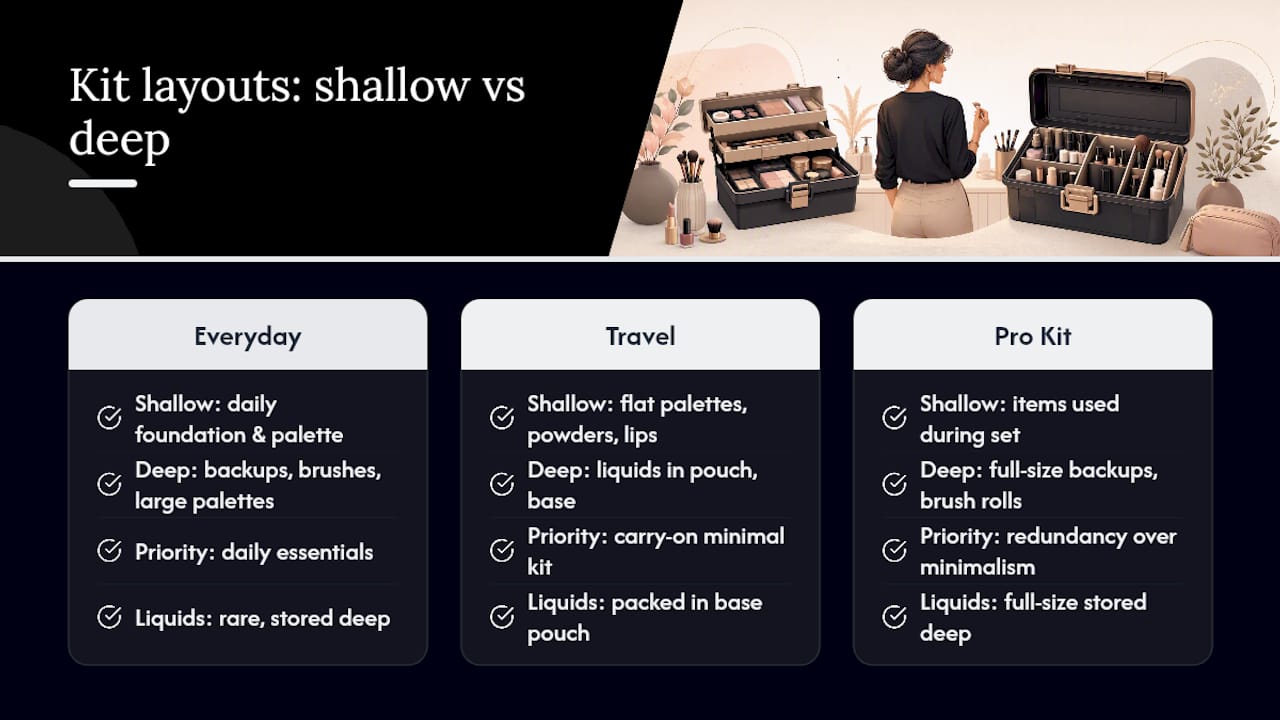
As a general rule, shallow trays are for anything flat that you use daily. Deep compartments are for bottles, brush handles, and backups you touch less often.
Where Should You Buy a Tackle-Box Makeup Case?
Three retail categories cover most buyers, and each comes with a different set of tradeoffs worth knowing before you click purchase.
- General marketplaces (large online retailers) offer the widest price range and fastest shipping, but listing quality varies wildly. Read every dimension line before buying, since “compact” and “travel-size” mean nothing without actual measurements.
- Specialty beauty and organization retailers tend to carry sturdier hardware and better-reviewed hinge systems, usually at a higher price point, but with clearer return policies if a case arrives damaged.
- Vintage and secondhand sellers occasionally turn up original Caboodles-style cases or genuine fishing tackle boxes at low prices, though you’re inheriting whatever wear the previous owner left behind.
Watch for these red flags in any listing: no interior dimensions given, only exterior shots with no open-tray photo, vague material descriptions like “durable plastic” with no specifics, and reviews mentioning hinge failure within the first month.
If you can inspect a case in person, do three things before buying: open and close every tray to feel for resistance or looseness, press the latch shut and pull to test its hold, and run a finger along tray edges to check for burrs or unfinished seams that will catch on fabric. When the shapes and volumes in your collection vary too much for a fixed tray layout, professional organizers often point buyers toward stackable acrylic systems or drawer dividers instead, since those flex more easily around odd-sized products.
Entry-level plastic cases tend to last about a season of regular use, while mid-range aluminum-framed cases generally hold up for several years of travel. Anything above that usually buys you premium hardware, better latches, or brand recognition rather than meaningfully better durability.
An Organized Kit Changes How Your Whole Routine Feels
Storage isn’t just about tidiness. When every product has a visible slot instead of getting lost in a bag, you stop repurchasing duplicates and start noticing what you actually reach for. That’s the same logic behind our own guide to organizing a makeup collection: an edited, visible set of products beats a crowded, hidden one almost every time.
For women building a quick morning routine, especially those over 40 who’ve already figured out their signature look, a tackle-box case removes the friction of searching. You know your lip color is in the top-left slot every single time. That consistency matters more than having twenty options buried in a bag.
If your goal is speed and hygiene as much as organization, the next logical step is looking at what’s actually in the case. Fewer, better products reduce clutter faster than any storage system alone can.
— Rebecca
A Simpler Alternative to Buying Bigger Storage
A tackle-box case solves the organization problem. It doesn’t solve the “I own twelve half-used lip products” problem, and sometimes the better move isn’t a bigger case, it’s a smaller collection. Some cosmetic brands build curated lip kits specifically for that: one pairing that does the job of three or four separate products, so there’s simply less to store in the first place.

Take the Sculpt & Shine Lip Duo as an example: a lipstick and complementary gloss matched together, formulated with skincare-infused ingredients, sized to slide into a single shallow tray slot instead of eating up half a compartment. If you’re also rethinking how many products actually earn a spot in your kit, our piece on multipurpose makeup for streamlined routines walks through the same idea in more detail. Order the Lip Duo directly from the brand’s online store and see how much lighter your case feels with one slot doing the work of three.
Sources
- Caboodles then and now: How this beauty kit started with Vanna White - Good Morning America
- Why the ’90s Caboodles Case Is the Greatest Makeup Organizer Ever | Vogue
- 12 makeup organization ideas from a professional organizer - Architectural Digest


