How to Remove Lipstick Safely: Gentle Steps for Women 40+

TL;DR:
- Gentle removal methods and proper aftercare prevent damage to aging, thinning lips.
- Oil-based removers and barrier-repairing balms like petrolatum are recommended for mature lips.
- Consistent hydration and avoiding irritants are key to maintaining healthy, supple lips over 40.
Removing lipstick at the end of the day sounds simple, but for women over 40, it can quietly cause real damage. Harsh rubbing, the wrong remover, or skipping aftercare strips moisture from lips that are already thinner and more fragile than they were a decade ago. The result? Dryness, irritation, and fine lines that build up over time. Your lips deserve a removal routine that is as intentional as the way you apply color. This guide walks you through every step, from choosing the right tools to rehydrating afterward, so your lips stay soft, healthy, and ready for color again tomorrow.
Table of Contents
- What you need: Essential tools and products
- Step-by-step: The gentle lipstick removal process
- Post-removal care: Rehydrating and repairing lips
- Troubleshooting: Common mistakes and solutions for mature lips
- What experts and real users wish they’d known about mature lip care
- Discover gentle lip care solutions with Luméra Cosmetica
- Frequently asked questions
Key Takeaways
| Point | Details |
|---|---|
| Hydration is critical | Moisturize your lips immediately after removal to prevent dryness and maintain a healthy barrier. |
| Avoid harsh methods | Gentle pressing and wiping protect mature, thinner lip skin from irritation and fine lines. |
| Choose safe balms | Use ointment-based balms with petrolatum, shea butter, or hyaluronic acid, and avoid irritants like menthol. |
| Prep and protect | Apply lip balm before lipstick and exfoliate weekly to keep lips smooth and easy to cleanse. |
What you need: Essential tools and products
After understanding why careful removal matters, let’s look at what you actually need for safe, gentle lipstick cleansing. Getting the right supplies before you start makes every step easier and less damaging.
Oil-based removers vs. micellar water are the two main options for breaking down lipstick pigment. Oil-based removers, like cleansing balms or pure oils such as jojoba or sweet almond, dissolve long-wear and matte formulas without any scrubbing. Micellar water is lighter and works well on sheer or gloss finishes, but it may require a second pass on deeper pigments. For mature lips, oil-based removers are generally the gentler, more effective pick.
Your choice of best lip gloss ingredients matters as much as your remover, because what you put on your lips before removal affects how easily color lifts off. Formulas with nourishing bases come off more cleanly than drying, waxy ones.
Comparing your tool options:
| Tool | Best for | What to watch for |
|---|---|---|
| Cotton pads | Everyday removal, all formulas | Use soft, unbleached pads to avoid friction |
| Microfiber cloths | Gentle, low-waste option | Wash frequently to prevent bacteria buildup |
| Pre-moistened wipes | Travel and quick removal | Check ingredient list; avoid alcohol-based wipes |
| Soft washcloth | Post-rinse cleanup | Always use with warm, not hot, water |
For aftercare, your balm choice is critical. The lip moisturizing science behind barrier repair comes down to occlusive ingredients that seal moisture in rather than just sitting on the surface. Look for these in your post-removal balm:
- Petrolatum: The gold standard for sealing moisture and repairing the lip barrier
- Shea butter: Rich in fatty acids, softens and nourishes
- Hyaluronic acid: Draws moisture into lip tissue
- Ceramides: Help restore the protective layer of lip skin
According to dermatologists, moisturize after removal with a balm containing petrolatum, shea butter, or hyaluronic acid to prevent dryness and repair the barrier, which is especially crucial for women over 40 whose lip skin is naturally thinner.

What you want to avoid is just as important. Skip balms containing menthol, camphor, or eucalyptus. These ingredients create a cooling sensation that feels soothing, but they actually irritate delicate lip skin and can worsen dryness over time. The same goes for fragranced lip products used as aftercare. When in doubt, simpler is better. If you use a soft lipstick for mature lips, removal will be gentler to begin with, which sets you up for easier aftercare.
Step-by-step: The gentle lipstick removal process
With your supplies ready, let’s walk through each step for removing lipstick properly. The order and technique matter more than most people realize.
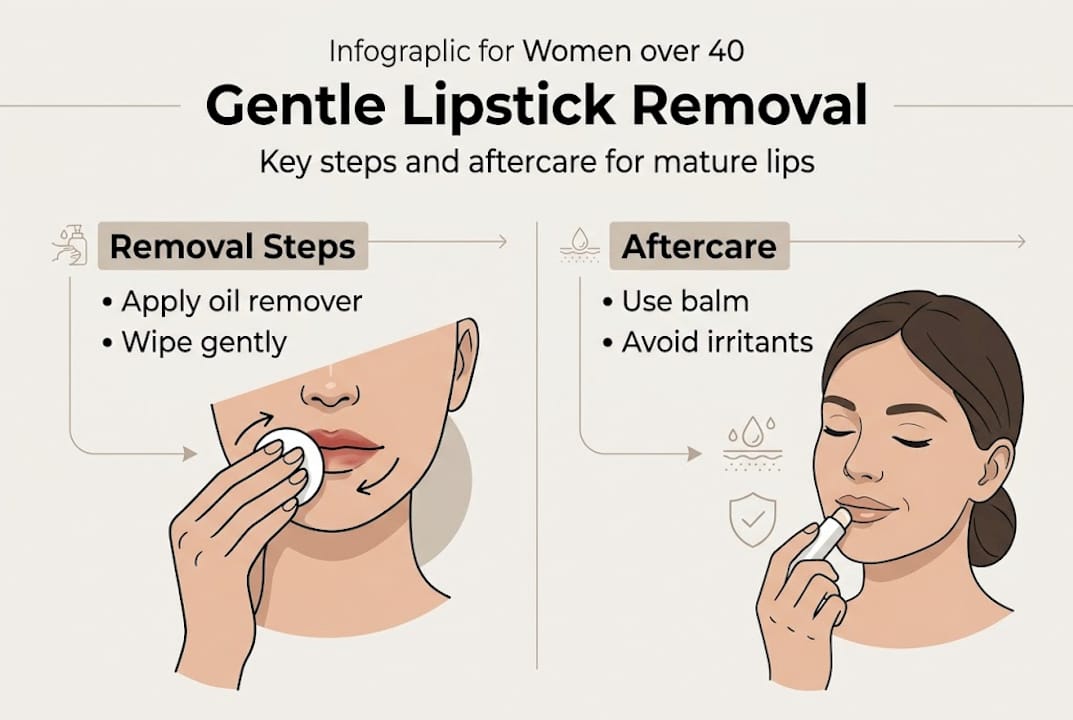
- Apply your remover directly to lips. Saturate a cotton pad or press a cleansing balm onto your lips. Do not rub immediately.
- Hold for 15 to 60 seconds. Let the remover do the work. Oil-based formulas need a moment to break down pigment, especially with matte or removing matte lipstick formulas that are designed to stay put.
- Press and lift gently. Use a soft pressing motion to lift the color away. Think of it like pressing a stamp rather than erasing a pencil mark.
- Repeat with a fresh pad if needed. Stubborn pigment may need a second application. Two gentle passes beat one harsh scrub every time.
- Rinse with lukewarm water. Warm water helps remove any remaining residue without stripping natural moisture the way hot water does.
- Pat dry with a soft cloth. Never rub dry. Press the cloth against your lips and let it absorb the moisture.
Dermatologists are clear that avoid rubbing or scrubbing lips during removal, and that pressing and wiping gently prevents irritation and fine lines. That one habit change makes a noticeable difference over weeks.
“Think of lipstick removal as skincare, not cleanup. The gentler you are now, the better your lips look tomorrow.”
Pro Tip: Prep your lips before applying lipstick each morning. A thin layer of balm applied 10 minutes before color creates a buffer that makes removal significantly easier at the end of the day. It also reduces the amount of pigment that sinks into fine lines. For anyone dealing with sensitivity, our removal tips for sensitive skin go deeper on this approach. And if you want to reduce how much effort removal takes from the start, lipstick layering tips can help you apply color in a way that wears beautifully without bonding stubbornly to your lips.
Post-removal care: Rehydrating and repairing lips
Once all lipstick is removed, it’s time to focus on healing and protecting your lips. This step is non-negotiable for mature skin, and skipping it is where most women undo all the careful work of gentle removal.
For mature lips, lips thin with age and lack oil glands, making them highly prone to chapping after wearing matte or long-wear lipsticks. That means post-removal hydration is not optional. It’s repair work.
How often and with what:
| Ingredient | What it does | Best used |
|---|---|---|
| Petrolatum | Seals moisture, repairs barrier | Night and daytime |
| Shea butter | Softens and nourishes | Anytime |
| Hyaluronic acid | Draws water into lip tissue | Morning and mid-day |
| Ceramides | Reinforces lip skin layer | Night balm or ointment |
Apply balm 6 to 8 times daily until your lips feel fully restored. That may sound like a lot, but lips have no oil glands of their own, so they rely entirely on what you apply. Think of it as topping up a reservoir throughout the day.
These ingredients will support your routine:
- Lip oils for hydration work beautifully as a mid-day refresh, sinking in quickly and giving lips a healthy, plump appearance
- Overnight masks with petrolatum give lips extended repair time while you sleep
- Tinted balms offer a compromise when you want a hint of color without the commitment of full pigment
For gloss options for mature lips, look for formulas that support hydration rather than just sit on the surface. These are easier to remove and double as a light treatment during wear.
Pro Tip: If your lips feel flaky or rough, do a weekly gentle exfoliation using a soft toothbrush or a sugar-and-honey scrub. Only once a week, and always follow immediately with a rich balm. The goal is to remove dead skin, not to stimulate fresh irritation. Check the age-related skin changes that affect lips specifically if you want to understand why this matters more as you get older.
Troubleshooting: Common mistakes and solutions for mature lips
If you experience discomfort or dryness despite following the steps, here’s how to troubleshoot and protect mature lips. Most problems come down to a handful of repeatable errors.
The most common mistakes:
- Scrubbing to remove stubborn pigment. This tears the delicate surface of lip skin and creates micro-irritation that worsens over days.
- Picking at dry or flaky patches. It feels satisfying but removes layers of skin that need time to heal naturally.
- Skipping aftercare because lips look fine. Lips can feel okay and still be depleted. Hydration prevents problems, it doesn’t just fix them.
- Using the same cotton pad for multiple wipes. A saturated pad redistributes pigment instead of lifting it. Use a fresh one for each pass.
- Choosing products with alcohol or fragrance. These dry the surface immediately and compound the moisture loss from removal.
Dermatologists recommend avoiding menthol and camphor in post-removal balms and using plain petrolatum for effective barrier repair. If you have been using a balm with these ingredients and your lips feel worse over time, switching products alone may resolve it within a week.
Signs your lips need attention:
- Persistent flaking that does not respond to balm
- A burning or stinging sensation after removal
- Redness that extends beyond the lip line
- Swelling or tenderness that lasts more than a day
If any of these persist for more than a week after switching to gentler products, a dermatologist visit is the right call. Allergic contact dermatitis from cosmetic ingredients is more common than most people expect and responds well to treatment.
Pro Tip: If you tend to make fixing lipstick mistakes throughout the day, you may be doing partial removals that leave residue and strip moisture repeatedly. Instead, use a lip liner tips strategy to keep color in place so touch-ups stay minimal.
What experts and real users wish they’d known about mature lip care
Step-by-step guides are useful, but there is a layer of knowledge that rarely makes it into tutorials. Here’s what we’ve learned from watching how women over 40 actually experience lipstick removal over time.
The biggest misconception is that any gentle method is equally good. In practice, the sequence matters as much as the technique. Women who skip the pre-makeup prep step and go straight to removal are always working harder than they need to. A thin balm layer before lipstick, as recommended in guidance on prepping lips before application, genuinely reduces removal effort and post-wear dryness.
Another truth that gets glossed over: what works for younger skin actively fails mature lips. Salicylic acid wipes, alcohol-based removers, and foaming cleansers are marketed as effective and they are, for a 25-year-old. For lips that are already thinner and slower to regenerate, those same products create a cycle of irritation that compounds daily.
The hydration techniques that make the biggest difference are also the least glamorous: petrolatum at night, consistent balm application throughout the day, and resisting the urge to lick your lips when they feel dry. That last habit worsens dryness every single time. The goal is a routine so consistent it becomes invisible, and lips that look after themselves because you looked after them first.
Discover gentle lip care solutions with Luméra Cosmetica
If this routine feels like a lot to piece together on your own, you don’t have to. Everything covered here, the gentle formulas, the nourishing aftercare, the products that actually respect mature skin, is what shapes the Luméra Cosmetica lip care approach.
At Luméra Cosmetica, every product is formulated with mature lips in mind. That means no harsh stripping agents, no unnecessary irritants, and no guessing about what’s safe for your skin. Whether you’re looking for a color that removes cleanly or a balm that genuinely restores, the collection is built around the science of aging lips, not adapted from a generic formula. Explore the full range and find products that make your end-of-day routine feel like self-care, not a chore.
Frequently asked questions
Why is lipstick removal different for women over 40?
Lip skin thins with age and loses oil glands, making it far more prone to dryness and irritation from removal methods that younger skin handles without issue.
What ingredients should I avoid in post-removal lip balm?
Skip anything containing menthol or camphor. Dermatologists confirm that menthol and camphor irritate and dry lips, while plain petrolatum provides effective barrier repair.
How often should I apply moisturizer after removing lipstick?
Apply an ointment-based balm 6 to 8 times daily to lock in moisture and actively repair the lip barrier between applications.
Is it safe to exfoliate lips if they are flaky?
Yes, but only once a week and very gently. As guidance confirms, exfoliate weekly gently if flakiness occurs, and always follow immediately with a rich moisturizing balm.