

How to Pick the Right Red Lipstick for Your Skin Tone

Match your lipstick’s undertone to your skin’s undertone first, then adjust the shade’s intensity for how deep or fair your complexion is. That’s the whole rule. Everything else, color theory, seasonal palettes, finish, application, is just fine-tuning around those two decisions.
Start here, tonight, with three quick moves:
- Check your veins in daylight, then confirm with the jewelry test (gold flatters warm undertones, silver flatters cool ones).
- Swatch one blue-based red and one orange-based red directly on your lips, not your hand.
- Photograph both swatches in natural light and compare which one makes your teeth look whiter and your skin look brighter.
Color theorists call this “personal color analysis,” a framework professional colorists use to map your coloring to a season. You don’t need a consultation to use the logic. Lumeracosmetica built its shade guides around exactly this test-first approach, because guessing from a tube in a store is how most people end up with three reds they never wear.
Pro Tip: Keep the swatch on for an hour before deciding. Reds oxidize and shift on skin oil, so the color at minute one isn’t always the color you’ll be wearing at lunch.
Key Takeaways
The right red comes from matching lipstick undertone to skin undertone, then adjusting shade depth to skin-tone depth, confirmed by a lip swatch in daylight.
| Point | Details |
|---|---|
| Identify undertone first | Combine the vein test, jewelry test, and sun-reaction test rather than relying on just one. |
| Match undertone families | Cool skin generally suits blue-based reds; warm skin generally suits orange-based reds. |
| Adjust for depth | Fair skin favors berries and blues; medium/olive suits warm corals; deep skin wears nearly any red well. |
| Test on lips, not hands | Swatch directly on the lips in natural light and photograph the result before deciding. |
| Shop with the method in mind | Lumeracosmetica offers a variety of finishes so you can compare finish and intensity against your undertone match. |
Table of Contents
- How to Identify Your Skin’s Undertone
- Matching Lipstick Undertone to Your Skin Undertone
- Choosing Shade Intensity for Your Skin Depth
- Can Your Color Season Help You Pick a Red?
- How to Test Red Lipstick Before You Commit
- Making Any Red Work: Application and Quick Fixes
- Try Curated Reds Built Around This Exact Method
- Frequently Asked Questions
- Sources
How to Identify Your Skin’s Undertone
Look at the veins on the inside of your wrist in natural light. Blue or purple veins usually mean a cool undertone. Green veins usually mean warm. If you genuinely can’t tell, or you see both, you likely lean neutral, which is more common than most undertone quizzes admit.
Cross-check with two more signals:
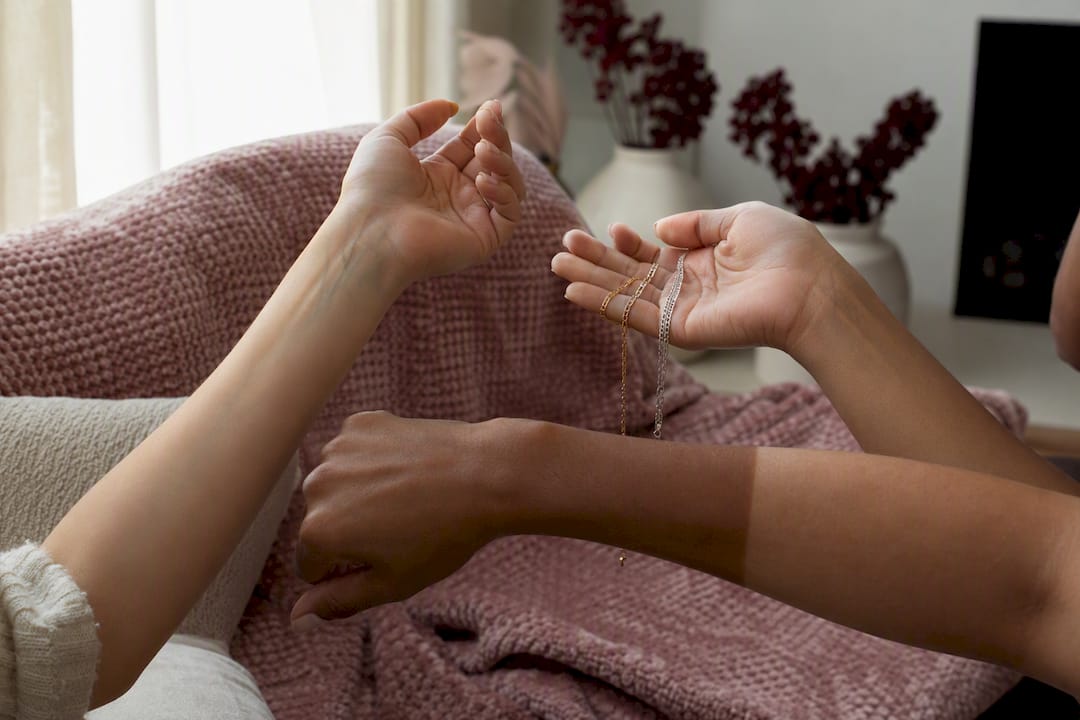
- Jewelry test: gold jewelry flattering your skin points to warm; silver or platinum flattering your skin points to cool.
- Sun test: skin that burns easily and rarely tans tends to run cool; skin that tans easily and rarely burns tends to run warm.
- Neutral tell: both metals look equally good, and your veins read blue-green.
A single test can mislead you. Combining vein color, jewelry reaction, and sun response gives a more reliable read on undertone than any one method alone, since a lot of people show mixed signals from a single test. If you land on neutral, don’t panic. It just means you have more flexibility in the next step than most people do.
Pro Tip: Run two of these three tests, then confirm your answer with an actual lip swatch. Theory gets you close. Your lips get you exact.
Matching Lipstick Undertone to Your Skin Undertone
Reds split into two families: blue-based (cool) and orange-based (warm). Blue-based reds read as cherry, berry, or true crimson, sometimes with a blue-red or “vampy” cast. Orange-based reds read as tomato, brick, or coral-red, with a visibly warmer, sunnier cast.
Cool undertones generally look most polished in blue-based reds. Warm undertones tend to look most natural in orange-based reds. There’s a genuine reason to care about this beyond flattery, too: blue-based reds are frequently noted for making teeth appear whiter by visual contrast, a small trick worth knowing if that’s a priority for you.
- Cool + blue-red = classic, polished, teeth-brightening effect.
- Warm + orange-red = natural, sun-kissed, less stark against the skin.
- Neutral undertones can genuinely wear either family, so the deciding factor becomes shade intensity, not undertone. Readers exploring warmer coloring might also look at complementary tones for olive and warm skin when picking accessories to go with the look.
Choosing Shade Intensity for Your Skin Depth
Undertone tells you which red family to shop. Skin-tone depth tells you how bright, dark, or saturated that red should be.
Fair skin often reads best in cool blues, berry shades, or a true bright red, because the contrast between fair skin and a strong red reads as intentional rather than harsh. Medium and olive skin tends to carry warm corals and true reds well, since the golden undertone in the skin meets the warmth in the lipstick halfway. Deep skin tones have the widest range available: bright cherries, deep wines, brick, and berry all sit well against richer melanin, with almost no red looking “too much.”
Contrast is a tool, not an accident. High contrast, a bright true red against fair skin, reads as bold and deliberate. Lower contrast, a muted brick or wine, reads as quieter and more everyday. Pick the contrast level on purpose instead of stumbling into it.
- Fair: cool blues, berries, or one true bright red.
- Medium/olive: warm corals, true reds.
- Deep: nearly the full spectrum, from cherry to wine to deep berry.
Pro Tip: If a red reads too dark on you, sheer it out with a dab of lip balm. If it reads too bright or too light, layer a slightly deeper lip liner underneath it or add a touch of gloss to shift the saturation before you write off the shade entirely.
Can Your Color Season Help You Pick a Red?
Seasonal color analysis gives you a shortcut when undertone and depth still leave you with too many options. It maps your coloring to one of four seasons, and each season pulls toward a distinct red family.
Springs generally look best in warm, salmon-leaning reds. Summers suit cool, muted berry tones. Autumns favor earthy reds with a brown or terracotta cast. Winters carry bright, blue-based reds, the classic “siren red,” better than almost anyone else.
This mapping comes from color wheel principles applied to personal coloring, the same logic stylists use to explain why one red looks alive on you and another looks like it’s wearing you instead.
- Use season mapping when you’re overwhelmed by options and want a starting shortlist.
- Use direct lip swatching when you’ve narrowed to two or three finalists and need the real answer.
How to Test Red Lipstick Before You Commit
Testing on the back of your hand tells you almost nothing useful. Hand skin and lip skin differ in texture and undertone, so the only test that matters happens on your actual lips, in daylight.
In-store, follow this sequence:
- Wipe the bullet clean with a tissue before testing.
- Swatch directly on your lips, not your wrist or hand.
- Test one cool red and one warm red side by side for comparison.
- Step outside or near a window to check the color in natural light.
At home, extend the test:
- Photograph the swatch in daylight, since phone cameras often reveal undertone shifts your eye misses indoors.
- Wear it for an hour to check comfort, transfer, and how it settles into lip lines.
- Check how it makes your teeth look. Brightening is a good sign; yellowing means the shade fights your undertone.
Pro Tip: Bring a swatch of your most-worn top or jacket color when you shop. A red that clashes with your wardrobe staples will sit in a drawer no matter how good it looked on your lips.
Making Any Red Work: Application and Quick Fixes
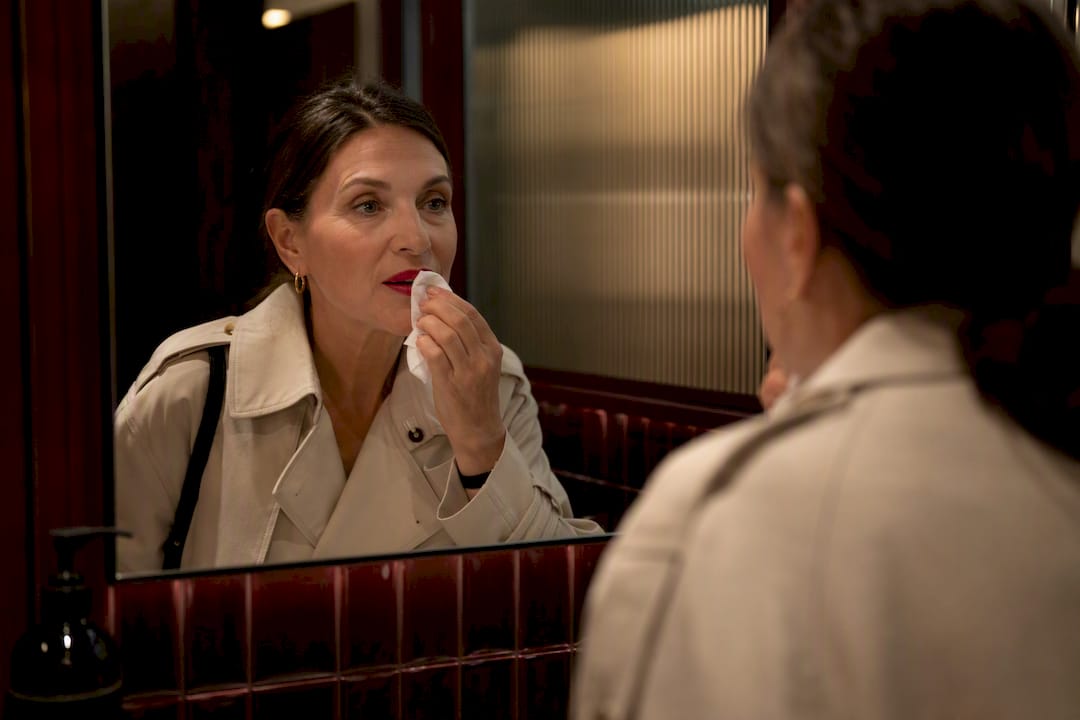
Prep matters more with red than with almost any other lip color, since red shows every flake and uneven patch. Exfoliate lightly, then outline with a matching liner before filling in the color. Lining first also slows fading and keeps the edge crisp through a meal.
Finish changes how a shade reads almost as much as undertone does. A matte formula intensifies saturation and reads darker; a satin or glossy finish lightens the visual weight and softens contrast. If a matte red feels aggressive, the same pigment in a satin finish can feel entirely different on your face.
- Apply in thin layers and blot between coats for longevity.
- Mute a bright red by pressing a warm gloss over it.
- Brighten a deep red by sheering the center of the lip with balm, leaving the outer edge fuller for shape.
A Quick Note From the Editor
Matching undertone first, then adjusting depth, takes the guesswork out of a color everyone assumes is complicated. Confidence, and whether the shade fits your day, closes the gap.
Try Curated Reds Built Around This Exact Method
You don’t have to build a testing kit from five different drugstore shelves to find your red. Lumeracosmetica curates its lip collection around the same undertone-first, depth-second logic covered here, with finishes ranging from matte to satin to gloss so you can compare intensity without buying three separate products from three separate brands.
If you already know you lean cool with a fair complexion, or warm with deep, rich skin, that narrows the shopping list before you even open a page. Browse the current shade range at Lumeracosmetica and check which finish options are available for the reds that match your undertone and depth, then order a shade to swatch at home in your own lighting before committing to a full-size favorite.
Frequently Asked Questions
How do I choose the right red lipstick for my skin tone? Identify your undertone with the vein, jewelry, and sun tests, then pick a blue-based red for cool undertones or an orange-based red for warm ones. Adjust the intensity based on how fair or deep your skin is.
What’s the fastest way to tell if a red lipstick suits me? Swatch it directly on your lips, not the back of your hand, and check it in natural daylight. If your teeth look brighter and your skin looks more awake, you’ve likely found a match.
Can neutral undertones wear any red? Neutral undertones have more flexibility between blue-based and orange-based reds, so the shade’s intensity and your color season matter more than undertone in that case.
Does lipstick finish change how a red shade looks? Yes. Matte formulas intensify saturation and read darker, while satin and gloss finishes soften the color and lighten its visual weight on the lips.
What if a red shade feels too dark or too bright once I’ve bought it? Sheer a dark red with lip balm to lighten it, or deepen a bright red with a darker liner or a layer of gloss to adjust the saturation before deciding it’s the wrong shade.
Sources
- How To Use Color Theory To Find Your True, Perfect Red Lipstick
- Makeup tricks that make your teeth look whiter
- Here’s How Different Shades Of Red Lipstick Look On 4 Women


