

Why Lips Get Dry in Winter and How to Fix It Fast

Cold, low-humidity air pulls water out of your lips far faster than it pulls water out of the rest of your face, and your lips have no oil glands to fight back. That combination is the entire story. The fix starts now: smear on a thick, occlusive ointment like petroleum jelly, stop licking your lips, and wrap a scarf over your mouth before you step outside.
Three things to do in the next five minutes:
- Apply a thick layer of plain petroleum jelly, not a thin, flavored balm.
- Resist the urge to lick your lips. Saliva evaporates and makes the dryness worse.
- Cover your mouth with a scarf if you’re heading into wind or freezing air.
Here’s the physiology in one line: because lips have no sweat or oil glands, they lose moisture up to ten times faster than the skin on your cheeks or forehead once humidity drops.
Key Takeaways
Winter lips dry out because they lack oil glands and lose moisture up to ten times faster than facial skin once cold, dry air sets in, and healing takes a consistent two-to-three-week occlusive routine, not a single application.
| Point | Details |
|---|---|
| Lips lack oil glands | This is why they dehydrate up to ten times faster than facial skin in low humidity. |
| Stop licking immediately | Saliva evaporates and worsens dryness, and repeated licking can cause lip-licking dermatitis. |
| Use occlusives, not flavored balms | Petrolatum, dimethicone, and ceramides seal moisture in; menthol, camphor, and fragrance irritate. |
| Expect two to three weeks | Consistent nightly occlusion and SPF protection typically show real improvement in that window. |
| Consider a curated option | Lumeracosmetica’s Perfect Kiss Lipstick pairs color with hydration for readers who want a vetted product. |
Where these facts come from
- American Academy of Dermatology: explains why lips lack oil glands and dry out faster than facial skin.
- Cleveland Clinic: covers causes, treatment, and the two-to-three-week healing timeline for cheilitis.
- Cleveland Clinic Health: practical tips on humidifiers and covering the mouth outdoors.
- PMC review on lip-licking dermatitis: details irritant ingredients and behavioral interventions for chronic cheilitis.
- NHS: lists common causes of sore or dry lips, including nutritional and allergy-related triggers.
Table of Contents
- Why Winter Makes Lips Dry: Physiology, Environmental Triggers, and Risk Factors
- How to Treat Chapped Lips Now: Step-by-Step Remedies and Ingredient Guidance
- Preventing Dry Lips in Winter: Daily Routine, Outdoor Protection, and Home Environment Tips
- Red Flags and When to Seek Medical Care
- Evidence-Based Healing Timeline and a Clinician-Recommended Routine
- Frequently Asked Questions
- Sources
Why Winter Makes Lips Dry: Physiology, Environmental Triggers, and Risk Factors
Your lips are covered by something called the vermilion border, a thin, delicate strip of skin with far fewer layers than the skin elsewhere on your face. It has no oil glands and no sweat glands, so it can’t produce the lipid film that keeps the rest of your face’s moisture locked in. The American Academy of Dermatology notes that this missing barrier is why lips dry out and crack so much faster than the skin around them, especially once outdoor humidity plunges.
Winter throws several environmental stressors at that already-weak barrier at once:
- Low outdoor humidity pulls moisture from the skin’s surface through simple evaporation.
- Cold wind strips away whatever thin protective layer your lips manage to build.
- Indoor heating dries the air inside your home to levels sometimes lower than a desert.
- UV exposure doesn’t disappear in winter. Sun reflecting off snow can burn already-chapped lips.
Certain habits and health conditions make things measurably worse. The NHS lists cold weather, dry air, wind, sun damage, dehydration, allergies, and nutritional deficiencies among the common causes of sore or dry lips, and several of those overlap directly with winter conditions. On top of the weather, watch for these behavioral and medical contributors:
- Lip-licking, which feels soothing for a second but leaves lips drier once saliva evaporates.
- Mouth-breathing, common with winter colds and stuffy noses, which dries lips overnight.
- Certain medications, including retinoids and some acne treatments, that thin the skin.
- Atopic dermatitis, eczema, or other autoimmune conditions, which raise the risk of chronic or severe cheilitis rather than a mild, temporary case.
If you recognize several of these at once, your lips aren’t reacting to bad luck. They’re reacting to a stacked set of triggers that each chip away at an already-thin barrier.
How to Treat Chapped Lips Now: Step-by-Step Remedies and Ingredient Guidance
Treating chapped lips isn’t complicated, but the order matters. Skip a step and you slow down healing by days.
- Cleanse gently with lukewarm water. Skip harsh exfoliants while lips are cracked.
- Apply a thick layer of an occlusive ointment, not a thin balm stick swiped once.
- Reapply every couple of hours, and always right after eating or drinking.
- Cut out flavored, scented, or tingling balms until the cracking clears up.
- Cover your mouth with a scarf or mask whenever you’re outside in wind or freezing temperatures.
Not every lip product on the shelf actually helps. The ingredients that matter are the ones that physically seal water into the skin rather than the ones that smell nice. A dermatology review on lip-licking dermatitis points to a short list worth checking on any label:
- Petrolatum forms a physical seal over the skin, cutting water loss dramatically.
- Dimethicone works similarly, creating a breathable barrier without feeling greasy.
- Ceramides replace lipids your skin’s barrier is missing, helping it repair itself.
- Shea butter softens rough, flaking skin while adding a mild occlusive layer.
The same review flags ingredients that routinely backfire on already-damaged skin:
- Menthol and camphor create a cooling tingle that feels like relief but dries lips out further.
- Cinnamon, citrus, and other flavoring agents are common irritants for cracked skin.
- Fragrances of almost any kind can trigger contact dermatitis on compromised lips.
- Propolis and colophony (a rosin derivative found in some “natural” balms) are known sensitizers.
Pro Tip: Apply a thick, unscented occlusive ointment right before bed and let it sit undisturbed for eight hours. Nighttime is when your lips get the longest uninterrupted stretch without talking, eating, or wind exposure, so it’s the best window for the barrier to actually rebuild.
Preventing Dry Lips in Winter: Daily Routine, Outdoor Protection, and Home Environment Tips
Prevention is less about finding a miracle product and more about consistency. Build these five habits into your day and most winter chapping never gets the chance to start:
- Apply a bland SPF lip balm before you leave the house, even on cloudy days.
- Drink water throughout the day. Dehydration shows up on your lips before almost anywhere else.
- Keep a small tin or tube of occlusive ointment in your coat pocket, not just your bathroom cabinet.
- Apply a thick layer before bed every night, not just when lips already feel tight.
- Break the lip-licking habit by reaching for balm the moment your lips feel dry instead.
Outdoors, physical sunscreens with zinc oxide or titanium dioxide hold up better against wind and cold than chemical filters, and the Cleveland Clinic recommends SPF 30 or higher with frequent reapplication whenever you’re exposed to sun, wind, or snow glare. A scarf pulled over your mouth on a windy walk does more for your lips than most balms can.
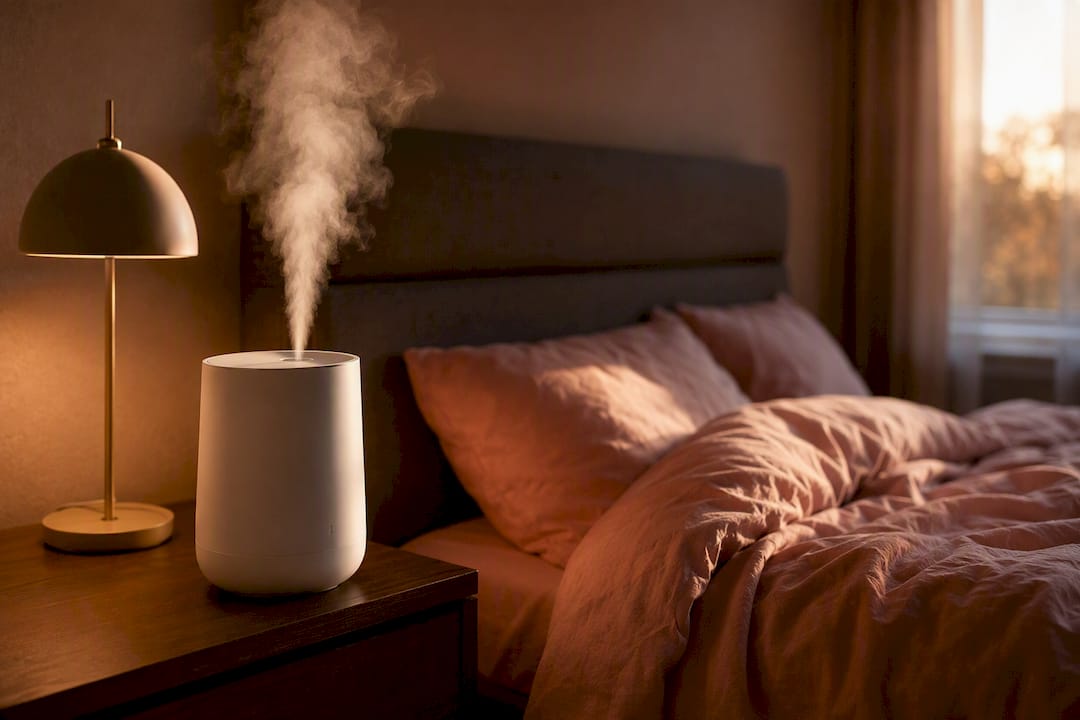
Indoors, running a humidifier, particularly overnight in a bedroom heated by forced air, reduces the moisture loss that dry indoor heating causes. Most people find lips feel noticeably better once room humidity sits somewhere in the 30 to 50 percent range, though you don’t need a lab-grade reading to benefit. If your skin feels tight the moment you wake up, your bedroom air is probably too dry.
Red Flags and When to Seek Medical Care
Most chapped lips clear up with consistent care. Some don’t, and that’s worth paying attention to rather than pushing through with more balm. Watch for:
- Chapping that hasn’t improved at all after two to three weeks of consistent occlusive care.
- Cracks or fissures that bleed and won’t close, especially at the corners of the mouth.
- Spreading redness, swelling, or pain that suggests a secondary infection rather than simple dryness.
- Cheilitis that keeps coming back season after season no matter how careful you are.
If any of those describe what you’re seeing, it’s time to see a dermatologist or your primary care provider rather than trying another balm. Persistent, severe, or recurrent cheilitis sometimes points to something beyond weather, including nutritional deficiencies or autoimmune conditions like Sjögren’s syndrome. A quick evaluation rules those out and gets you on a treatment plan suited to the actual cause.
Evidence-Based Healing Timeline and a Clinician-Recommended Routine
Here’s the number worth remembering: noticeable improvement in chapped lips typically takes about two to three weeks of consistent occlusive therapy, not two to three days. Anyone expecting overnight results from a single application is setting themselves up to give up too early.
A realistic daily routine looks like this:
- Morning: Cleanse gently, then apply a bland SPF 30+ lip balm before heading outside.
- Midday: Reapply after eating, drinking, or any exposure to wind.
- Evening: Swap the SPF balm for a fragrance-free ointment with ceramides or dimethicone.
- Overnight: Apply a thick layer of petrolatum and leave it on undisturbed until morning.
Stick with that sequence daily, and clinical guidance suggests most people see real, visible improvement within that two-to-three-week window, provided they’ve also cut out the irritants and licking habits that keep reinjuring the barrier.
A note from someone who covers this every winter
Writing about lip care season after season, the pattern that stands out most is how often people treat chapped lips like a cosmetic annoyance instead of a barrier problem that needs the same patience as any other skin repair.
Pro Tip: Swap every flavored or scented balm in your bag for a bland occlusive during the healing window. It’s the single fastest way to rule out contact dermatitis as the reason your lips won’t heal.
A simpler way to shop for winter lip care
Reading ingredient labels in a drugstore aisle gets old fast, especially when half the “healing” balms on the shelf are packed with the mint and fragrance that make chapped lips worse. If you’d rather have a curated option that already checks the right boxes, Lumeracosmetica’s Perfect Kiss Lipstick is built around hydration first, so you get color without sacrificing the barrier support your lips need mid-winter.

Before you buy anything, run the label through a quick checklist: look for petrolatum, dimethicone, or ceramides near the top of the ingredient list, and skip anything advertising menthol, camphor, or added fragrance. For more on how balm formulations differ, Lumeracosmetica’s guide to different kinds of lip balm for sensitive skin breaks down which formulas suit which skin type. If you’re ready to add a hydrating, dermatologist-informed option to your routine, check out the Perfect Kiss Lipstick page and see whether the formula matches what your lips need this season.
Frequently Asked Questions
Why are my lips chapped even though I use lip balm every day? Many balms contain menthol, camphor, or fragrance that feel soothing but actually irritate already-damaged skin and pull moisture out rather than sealing it in. Switch to a bland, fragrance-free occlusive like petrolatum or one with dimethicone and ceramides, and give it the full two-to-three-week window before judging results.
How often should I apply lip balm in winter? Reapply after every meal or drink, before heading outside, and once more right before bed with a thicker layer left on overnight. That nightly occlusion period does the most repair work since your lips go hours without talking, eating, or wind exposure.
Can dry lips be a sign of something more serious than weather? Usually not, but persistent cracking that doesn’t improve after two to three weeks of consistent care, or lips that bleed, swell, or keep recurring, can point to nutritional deficiencies, allergies, or autoimmune conditions like Sjögren’s syndrome. That’s worth a conversation with a doctor rather than another balm swap.
Does drinking more water actually help chapped lips? Yes, though it works slower than a topical ointment. When your body is dehydrated, it prioritizes core organs over peripheral skin, leaving lips among the first areas to show it. Hydration supports the repair a good occlusive is already doing on the surface.
This article is general information, not a substitute for advice from a qualified doctor. Consult a qualified healthcare professional about your own circumstances before acting on anything here.
Sources
- American Academy of Dermatology — Heal dry, chapped lips
- Cleveland Clinic — Chapped lips (cheilitis): causes, treatment & prevention
- Art of prevention: Practical interventions in lip-licking dermatitis — PMC
- NHS — Sore or dry lips
- Cleveland Clinic Health — How to get rid of chapped lips


