Cosmetic safety tips for women 40+: A smart guide

TL;DR:
- Women over 40 should prioritize ingredient transparency, regional safety standards, and product formulation over marketing claims like “natural” or “clean.” Understanding how regulations differ in Australia and the EU helps consumers make informed choices, especially regarding known allergens and potentially irritating ingredients. Careful product evaluation, ingredient awareness, and deliberate routines ensure safer, more effective skincare tailored to aging skin’s needs.
Picking up a product labeled “natural” or “clean” and assuming it’s automatically safe is one of the most common mistakes women make when shopping for cosmetics. The truth is that ingredient lists, regional regulations, and the way actives interact with mature skin are far more important than any marketing claim on the front of a bottle. Women over 40 in Australia and Europe face a particularly layered challenge: skin changes with age, local laws differ in meaningful ways, and the cosmetic market keeps introducing new ingredients and combinations. This guide walks you through what actually matters for your safety, your skin, and your confidence.
Table of Contents
- Understanding cosmetic regulations in Australia and Europe
- Reading and interpreting cosmetic ingredient lists
- Navigating actives: Acids, retinoids, and safety for mature skin
- Edge cases: Safety guidelines for pregnant, sensitive, or allergy-prone skin
- Staying current: Evolving regulations and product updates
- A fresh perspective: Why careful routines matter more than ‘clean beauty’ trends
- Explore beauty solutions for safe, effective routines
- Frequently asked questions
Key Takeaways
| Point | Details |
|---|---|
| Read ingredient lists | Ingredient labels reveal allergens and actives, helping you avoid irritation and unsafe products. |
| Know regulatory basics | Australia and EU both require product safety, but differ in ingredient listing and pre-market checks. |
| Be cautious with actives | Combining acids or retinoids can increase risk; start slowly and choose clinically tested formulas. |
| Special needs require extra care | Pregnancy or major sensitivities call for avoiding high-risk ingredients and prioritizing gentle options. |
| Check regulations often | Rules and restrictions change—mainstream brands and official sources help you stay up to date. |
Understanding cosmetic regulations in Australia and Europe
Once you realize cosmetic safety is more than marketing, it’s vital to understand the rules that actually help protect you and shape what ends up on store shelves.
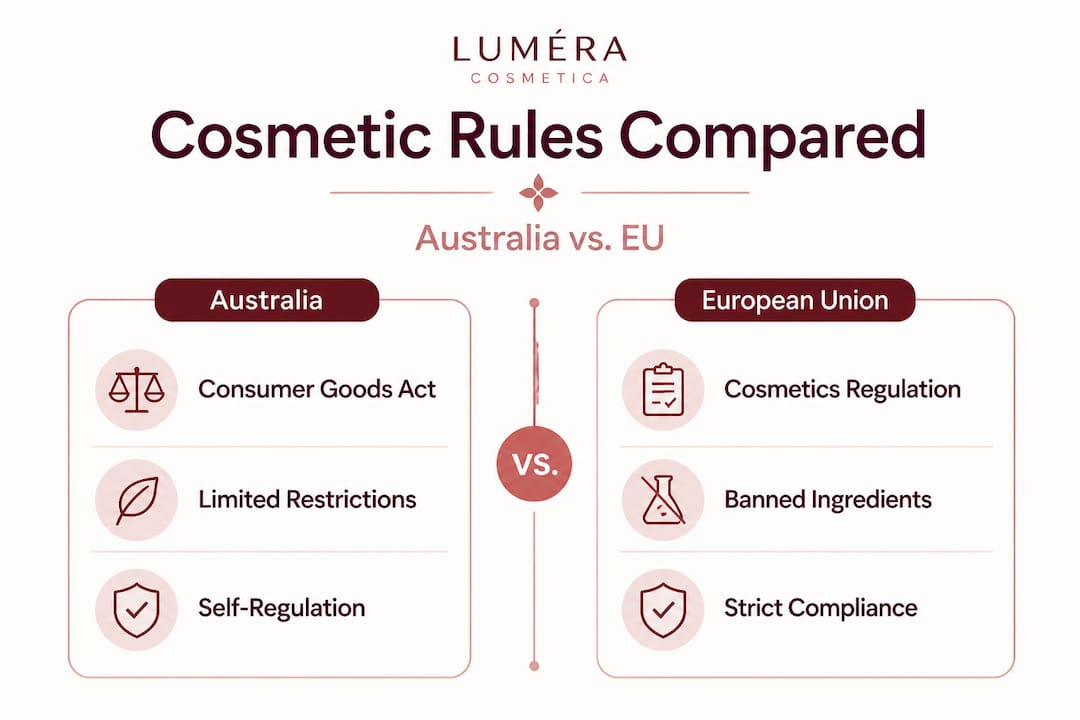
Both Australia and the European Union have formal regulatory systems for cosmetics, but they work differently. In Australia, ingredient-listing requirements are governed by the Consumer Goods (Cosmetics) Information Standard 2020, which mandates that ingredient names appear on the product container and are available at the point of sale. This framework is designed to give consumers the tools to make informed decisions and identify potential allergens before purchase.
In the EU, the picture is even more structured. Cosmetics sold on the EU market must be safe for human health under normal or reasonably foreseeable conditions of use. This regulation mandates a full safety assessment, a responsible person designation, and detailed product information files. The EU also maintains a growing list of prohibited and restricted substances, which is updated regularly.
Here is a quick comparison of the two systems:
| Feature | Australia | European Union |
|---|---|---|
| Regulatory framework | Consumer Goods (Cosmetics) Information Standard 2020 | EU Cosmetics Regulation (EC) No 1223/2009 |
| Ingredient listing | Mandatory on product label | Mandatory, using INCI names |
| Prohibited substances | Yes, restricted list | Yes, extensive Annex II, III, IV lists |
| Safety assessment | Required | Formal safety report by qualified assessor |
| Post-market monitoring | Yes | Yes, including serious undesirable effects reporting |
What does this mean for your shopping habits? First, always check that any product you buy locally lists its ingredients clearly. An unlabeled or poorly labeled product is not just a regulatory red flag but a practical one. Second, using a reliable cosmetic ingredients checklist before committing to a new product can save you from unexpected reactions.
Here are the most important practical implications:
- Always buy from retailers that comply with Australian or EU standards
- Cross-reference ingredient lists against known allergens for your skin
- Be skeptical of products imported from regions without equivalent safety oversight
- Check that fragrance components are listed separately, not hidden under a general “fragrance” entry
- Look for full INCI (International Nomenclature of Cosmetic Ingredients) names, which are standardized globally
Understanding the types of cosmetic ingredients used across different product categories also helps you read labels more confidently, so this knowledge genuinely builds on itself.
Reading and interpreting cosmetic ingredient lists
With background in regulations, let’s get practical. What do those labels and lists actually reveal about cosmetic safety?
Ingredient lists on cosmetic products are ordered from highest to lowest concentration. This means the first five to seven ingredients typically make up the bulk of the formula. When you are evaluating a new product, those top ingredients deserve the most scrutiny. A moisturizer that lists a potential irritant in the top five is more concerning than one where that same ingredient appears near the bottom.
For mature skin specifically, certain ingredient types trigger more frequent reactions. Fragrances, both synthetic and natural, are among the leading causes of contact dermatitis in women over 40. Preservatives like methylisothiazolinone and formaldehyde-releasing agents are also common culprits. Alcohol denat, which appears frequently in toners and some serums, can compromise the skin barrier over time, particularly when skin has already thinned with age.
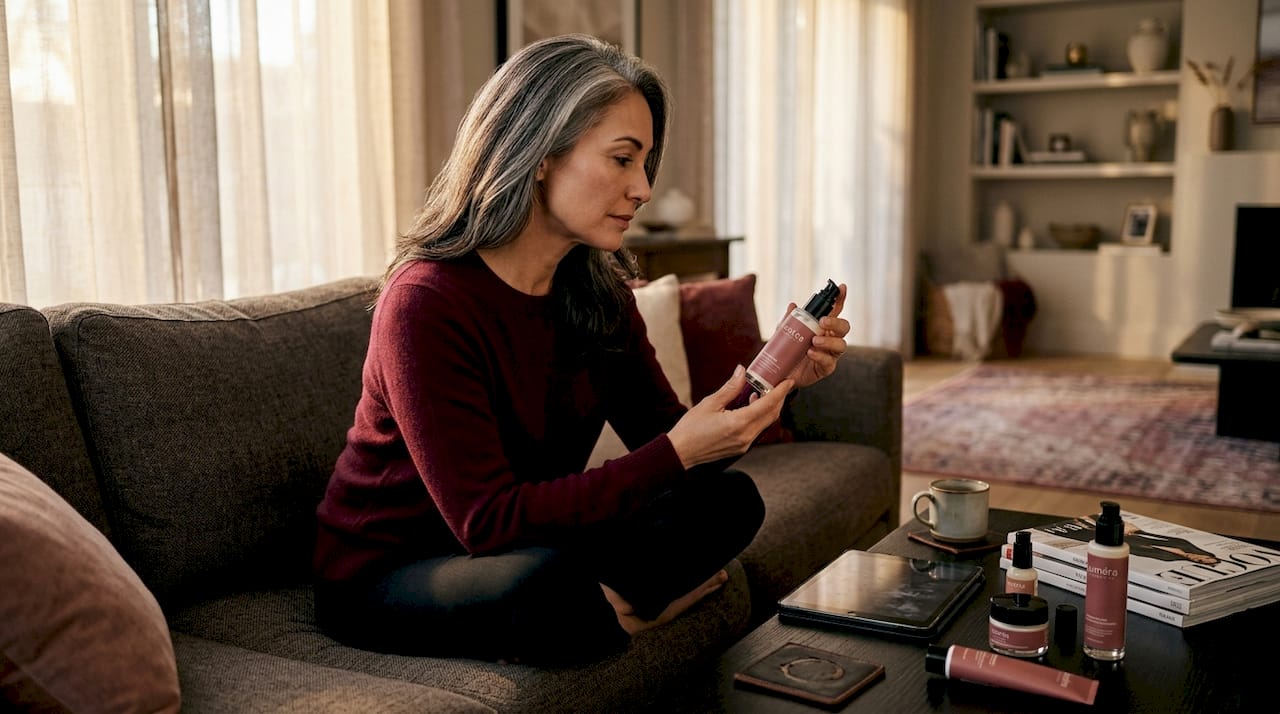
Consumers can reduce their risk of allergic reactions and irritation by using ingredient lists as a proactive screening tool, not just as post-purchase information. The more familiar you become with cosmetic ingredient types, the faster this process becomes.
Here is a simple process you can follow when evaluating a new product:
- Identify the top five ingredients and research any unfamiliar ones
- Scan the full list for your known allergens or problem ingredients
- Check whether fragrance or parfum is listed, and if so, consider patch testing
- Look for any concentration restrictions or warnings specific to your region
- Keep a personal note with ingredients that have previously caused reactions
The following table summarizes common irritants and their risk level for mature skin:
| Ingredient | Risk level for mature skin | Where it appears |
|---|---|---|
| Fragrance / parfum | High | Moisturizers, serums, cleansers |
| Methylisothiazolinone | High | Rinse-off and leave-on products |
| Alcohol denat | Moderate to high | Toners, setting sprays |
| Sodium lauryl sulfate | Moderate | Cleansers, foaming products |
| Essential oils (tea tree, lavender) | Moderate | Natural or “clean” products |
| Parabens | Lower risk than often claimed | Wide range of products |
Pro Tip: Build a personal “no-go” list and store it on your phone. Before buying anything new, scan the ingredient panel while still in store. This habit takes less than 60 seconds and prevents the frustration of discovering a reaction at home after a product is open.
Navigating actives: Acids, retinoids, and safety for mature skin
Knowing what to look for is good, but understanding how potent actives affect mature skin and how to approach them safely makes the biggest difference.
Actives like alpha-hydroxy acids (AHAs), beta-hydroxy acids (BHAs), retinoids, and antioxidants have strong evidence behind them for addressing fine lines, uneven tone, and loss of firmness. These are not ingredients to avoid outright, but they require more thoughtful use as you age. Mature skin tends to have a thinner lipid barrier and reduced cell turnover, which means actives can penetrate more deeply and sometimes cause more pronounced irritation than they would in younger skin.
The concern with mixing actives is well established. Combining acids increases the overall strength of a formulation and can significantly raise irritation risk, even if each individual acid is used at a seemingly moderate concentration. This is not a reason to panic, but it is a reason to be deliberate.
Key actives and what they do:
- AHAs (glycolic acid, lactic acid): Exfoliate the skin surface, improve texture and tone, increase photosensitivity
- BHAs (salicylic acid): Oil-soluble exfoliants that work inside pores, anti-inflammatory at lower concentrations
- Retinoids (retinol, retinal, tretinoin): Stimulate collagen production and cell turnover, but can cause dryness and peeling, especially at first
- Vitamin C (ascorbic acid): Antioxidant that brightens and supports collagen, unstable in some formulations
- Niacinamide: Strengthens the skin barrier, reduces redness, generally well-tolerated
A solid acid safety resource confirms what many dermatologists say in practice: layering multiple acids without professional guidance is one of the more common mistakes in at-home routines. Thoughtful routine design emphasizes barrier support and sun protection as non-negotiables, especially when using any active.
“Combining multiple acid-based products in one routine without professional guidance can significantly increase the risk of barrier disruption, redness, and long-term sensitivity, particularly in mature skin. The effectiveness of an active depends heavily on formulation context, not just its presence on the label.” Dermatology-aligned routine guidance
Pro Tip: When introducing a new active, use it every third night for the first two weeks before increasing frequency. This approach lets your skin adjust and gives you clear feedback about tolerance without committing to full daily use too quickly.
For those interested in enhancing results with makeup for mature skin or exploring the role of natural oils for hydration, building a stable, non-irritating base routine first makes all the difference.
Edge cases: Safety guidelines for pregnant, sensitive, or allergy-prone skin
Some safety tips become even more crucial when you’re pregnant, allergy-prone, or managing heightened sensitivity. Here’s what clinicians recommend in these cases.
Pregnancy brings hormonal shifts that can change how skin responds to products you have used for years. It also raises the stakes for ingredient safety, since some actives can affect fetal development. Skincare during pregnancy commonly recommends avoiding retinoids and prioritizing gentler actives plus daily sunscreen. High-dose vitamin A derivatives like tretinoin are the most firmly advised against, but even over-the-counter retinol is typically recommended to pause during pregnancy out of caution.
Hydroquinone, used for hyperpigmentation, is another ingredient to set aside during pregnancy. Its systemic absorption rate is higher than many realize, and with limited safety data for use in pregnancy, most clinicians prefer erring on the side of caution.
For women with significant allergies or reactive skin, the numbered checklist approach is particularly useful. Here is a practical routine safety check:
- Consult your healthcare provider before starting any new active during pregnancy or while managing a systemic condition
- Replace retinoids with gentler alternatives like bakuchiol or peptides during pregnancy
- Use only low-strength salicylic acid (under 2%) sparingly if BHA is needed, and avoid it in the first trimester
- Prioritize a broad-spectrum SPF 30 or higher every morning, regardless of weather
- Choose fragrance-free formulations where possible to reduce allergen load
- Patch test all new products on the inner arm for 48 hours before applying to your face
- Keep a symptom diary when introducing new products, noting date, product, and any reaction
The EU has progressively restricted more ingredients as safety research advances, and this ongoing process reflects how seriously regulators take evolving evidence. Checking lip balm safety is also worth factoring in, since lip products can be ingested in small amounts and deserve the same scrutiny as other cosmetics.
Staying current: Evolving regulations and product updates
Since safety rules can shift, it’s smart to know how to stay informed and verify your products keep pace with new regulations.
EU ingredient restrictions can change over time, which means a product that was fully compliant two years ago may include a now-restricted substance. Relying on compliant mainstream brands and checking official regulatory sources regularly helps manage this evolving landscape.
Here is how to stay on top of changes:
- Bookmark the EU Commission’s cosmetics legislation page for updates to Annexes II through VI
- Follow the Australian Competition and Consumer Commission (ACCC) product safety news section
- Sign up for newsletters from reputable cosmetic dermatology or regulatory bodies
- Re-read ingredient labels on products you have used for years, since formulations can change without a fanfare announcement
- Choose brands with a clear regulatory compliance statement and established track record in your region
- Avoid purchasing cosmetics from unverified online marketplaces where import compliance is uncertain
Mainstream brands operating in Australia and the EU carry a significant compliance burden, which works in your favor as a consumer. Niche imports from outside these regions may not meet the same safety standards, even if they carry appealing claims. Staying current on beauty supply options for mature skin also means knowing which retail environments are most likely to carry compliant, well-tested products.
A fresh perspective: Why careful routines matter more than ‘clean beauty’ trends
Beyond checklists and rule-following, it pays to think differently about cosmetic safety. Here is a perspective that challenges trend chasing and puts practical wisdom first.
The “clean beauty” movement has done something useful and something harmful at the same time. On the useful side, it made millions of women more curious about what is in their products. On the harmful side, it created the impression that an ingredient labeled “natural” is inherently safer than one that is synthetic. That is simply not true. Poison ivy is natural. Formaldehyde occurs naturally. Meanwhile, many synthetic ingredients have decades of safety data and precise concentration limits backed by toxicology.
For women over 40, chasing clean beauty trends can actually distract from the practices that matter most: reading full ingredient lists, understanding how actives interact, rotating products deliberately, and paying attention to how your skin actually responds. A product with five “clean” claims on the front and no evidence of clinical testing is not a smarter choice than a well-tested formula that happens to contain a preservative.
What we have observed consistently is that a methodical routine, reviewed and adjusted every three to six months, outperforms trend-based shopping every time. Skin changes, seasons change, and products are reformulated. The women who feel most confident in their routines are not those who found the perfect “clean” product. They are the ones who built a system for evaluating, testing, and refining.
An age-defying routine is not about the trendiest ingredients. It is about consistent, evidence-backed choices that respect how your skin works at this stage of life. Clinical testing, regulatory compliance, and honest ingredient transparency are the foundations. Everything else is noise.
Pro Tip: When evaluating any product claim, ask one simple question: “Is there independent clinical evidence for this?” If the answer is no, treat the claim as marketing, not fact.
Explore beauty solutions for safe, effective routines
If you are ready to apply what you have just learned, Luméra Cosmetica offers a curated range of resources and beauty solutions developed with mature skin in mind.
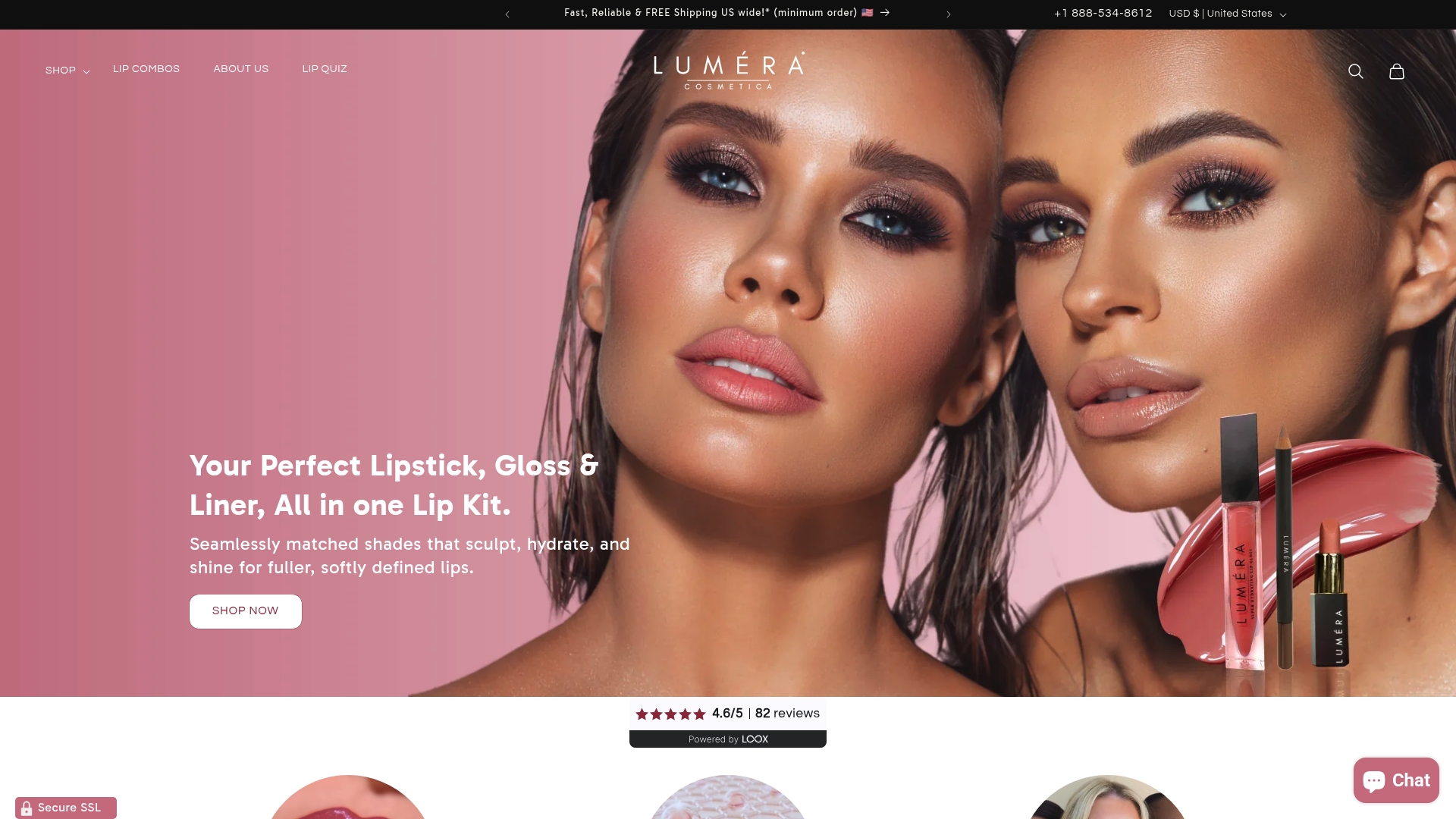
From detailed ingredient guides to thoughtfully formulated lip and facial products, everything at Luméra Cosmetica is designed to support women over 40 who want results without compromise. Whether you are building a new routine from scratch, looking for safer lip care options, or wanting to explore evidence-backed formulations that align with Australian and EU safety standards, the Luméra Cosmetica website is your starting point for confident, informed beauty choices. Explore the full range and discover what a well-designed routine can do for your skin at this stage of life.
Frequently asked questions
How can I tell if a cosmetic product is safe for my skin type?
Check that the product has a full ingredient list, look for regulatory compliance labeling on the container, and confirm it meets EU safety standards if purchased in Europe. Products clinically tested for mature or sensitive skin provide an additional layer of confidence.
Are certain cosmetic ingredients riskier for mature skin?
Yes, especially combined acid formulations, which increase irritation risk. Mature skin benefits from routines that prioritize barrier support, gentle actives, and daily sun protection before stacking multiple potent ingredients.
Should pregnant women avoid certain cosmetic ingredients?
Pregnant women should avoid topical retinoids and hydroquinone, and use caution with salicylic acid. Pregnancy-safe skincare focuses on gentle actives and consistent sunscreen use, with any new products discussed with a clinician first.
How do regulations change, and how can I keep up?
EU ingredient restrictions are updated regularly, meaning formulations can become non-compliant over time. Checking official regulatory sources and choosing mainstream brands with transparent compliance practices is the most reliable way to stay protected.
Recommended
- 7 Steps to a Smart Cosmetic Ingredients Checklist for Women 40+ – Luméra Cosmetica
- Cosmetic Pigment: Complete Guide for Women Over 40 – Luméra Cosmetica
- Simple makeup tips for women over 40: enhance beauty – Luméra Cosmetica
- Lipstick Basics: Enhancing Beauty for Women 40+ – Luméra Cosmetica
- Natural Skincare Tips for Women 40+: Best Anti-Aging