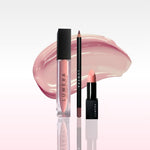
Best Pink Lip Liner: Preventing Dryness and Feathering

Finding a pink lip liner that defines your lips without emphasizing every fine line can feel like a true test after 40. As lips mature, they naturally lose moisture and become more prone to dryness, making creamy, hydrating formulas especially valuable for crisp definition. Pink lip liners offer a soft, flattering frame that resists feathering and blends easily with your natural tone. Learn how the right shade and nourishing ingredients create comfortable, beautiful lips that last all day in both Australian and British climates.
Table of Contents
- Pink Lip Liner For Mature Skin Explained
- Types Of Pink Lip Liners And Their Benefits
- Key Ingredients To Prevent Dryness And Feathering
- How To Apply Pink Lip Liner For Lasting Definition
- Common Mistakes With Lip Liner On Aging Lips
Key Takeaways
| Point | Details |
|---|---|
| Pink lip liners enhance mature lips | They provide definition without harshness and complement a wide range of skin tones. |
| Hydrating formulas are essential | Choose liners that contain moisturizing ingredients to prevent dryness and feathering. |
| Proper application techniques matter | Prepping lips and using a blending technique can significantly improve the overall appearance. |
| Avoid overlining and dark colors | These can emphasize fine lines and make lips look older; opt for softer, matching shades. |
Pink Lip Liner for Mature Skin Explained
Pink lip liners are a game-changer for women over 40 because they offer definition without looking harsh or overdone. Unlike darker shades, pink creates a softer frame that works beautifully with mature skin’s natural undertones.
Your lips change significantly after 40. The skin thins, loses elasticity, and becomes more prone to visible fine lines and texture irregularities. A well-chosen pink liner addresses these concerns while enhancing your natural lip shape.
Why Pink Works for Mature Lips
Pink flatters a wider range of mature skin tones than you might expect. It bridges the gap between nude and statement, giving you definition without drama.
Key advantages for mature skin include:
- Creates a soft, natural-looking lip boundary that doesn’t emphasize lines
- Works across multiple undertones—cool pinks suit fair or rosy skin, warmer pinks complement deeper complexions
- Pairs seamlessly with neutral or pink-toned lipsticks
- Provides subtle lift and dimension without heavy color
- Blends easily, reducing the risk of harsh edges
The science backs this up too. Lips have an incomplete barrier structure00222-4/fulltext), making them naturally prone to dryness and environmental damage—especially as you age. A hydrating pink liner helps protect this delicate area while defining your lips.
The following table summarizes which pink undertones work best for different mature skin complexions:
| Skin Tone | Ideal Pink Liner Shade | Why It Works |
|---|---|---|
| Fair or Rosy | Cool, soft pink | Complements undertones, subtle |
| Medium or Olive | Neutral pink | Universal, flatters warmth |
| Deep or Rich | Warm rose pink | Enhances radiance, vibrant |
| Sallow/Yellow | Blue-based pink | Brightens lips, balanced look |
The Dryness Problem
Dryness is the enemy of any lip liner, but especially pink shades. Dry lips show every feather line, making your lip color look patchy and aged.
Mature lips struggle because:
- The lip barrier weakens over time, losing moisture faster
- Oil glands diminish naturally with age
- Fine lines become more pronounced when dry
- Feathering becomes more visible on lighter shades
This is where formula matters. Your pink liner needs to glide smoothly without tugging or catching on dry patches. A creamy, hydrating formula prevents that chalky feeling that ages your entire look.
Choose a pink liner with built-in moisture or pair it with a hydrating lip balm underneath—this single step prevents most feathering issues.
Preventing Feathering
Feathering happens when color bleeds beyond your natural lip line into fine lines around your mouth. Pink shades show this more obviously than dark colors, so prevention is essential.
Two strategies work best:
- Use a lip primer or balm base – Apply a hydrating balm first, let it set for 30 seconds, then line. This fills in gaps and creates a smooth canvas.
- Choose a waterproof or long-wearing formula – These stay put better and resist migration throughout the day.
When comparing pink liners, test them on the back of your hand. Quality formulas feel creamy and smooth, not waxy or scratchy. They should glide without pressure, which indicates they’ll blend seamlessly on your lips.
Consider how your chosen shade compares to other pink options available. You might explore light nude alternatives that offer similar softness with even more neutral tones if pure pinks feel too bold.
Pro tip: Apply your pink liner slightly inside your natural lip line if you have very fine lines, then use a matching lipstick to blur the edge—this prevents feathering while still defining your lips beautifully.
Types of Pink Lip Liners and Their Benefits
Pink lip liners come in multiple formulations, each designed to solve different concerns. Understanding the types helps you choose what actually works for your mature skin, not just what looks pretty in the packaging.
The main distinction lies in texture and formula strength. Lip liners vary from harder pencils that create sharper lines to softer ones for filling in lips, giving you flexibility depending on your application preference and lip condition.
Pencil vs. Retractable Pink Liners
Both formats work for mature skin, but they have different strengths. Pencil liners require sharpening, which keeps the tip precise but wastes product over time.
Retractable liners offer convenience:
- No sharpening needed—always ready to use
- Easier to control for women with less steady hands
- Less product waste
- Better for travel and touch-ups
Pencil liners give you finer control for detailed application. They’re ideal if you have a steady hand and enjoy precise definition. The choice depends on your lifestyle and how much precision matters to you.
Here’s a quick comparison of pink lip liner types and their practical benefits for mature skin:
| Type | Best For | Frustration Reduced | Application Advantage |
|---|---|---|---|
| Pencil | Precision outline | Smudging, uneven edges | Sharp tip, detailed work |
| Retractable | Quick touch-ups | Product waste, lost caps | No sharpening, easier control |
| Hydrating Formula | Dry, aging lips | Tightness, chalky finish | Creamy feel, blends easily |
| Waterproof/Long-Wear | All-day definition | Color bleeding, feathering | Stays put, resists moisture |
Hydrating vs. Standard Formulas
This distinction matters most for preventing dryness on mature lips. Hydrating formulas contain nourishing ingredients that prevent the chalky, tight feeling standard liners can create.
Hydrating formulas typically include:
- Natural oils like rose or almond oil
- Beeswax for moisture retention
- Vitamin E for antioxidant protection
- Aloe vera for soothing properties
Herbal ingredients like rose oil, beeswax, and vitamin E nourish and soften lips while your liner sits on them throughout the day. This matters because standard formulas can actually draw moisture from your lips, making fine lines more visible.
Hydrating pink liners feel completely different on your lips—creamy instead of waxy, and they never feel tight or uncomfortable even after hours of wear.
Pigment Intensity Levels
Pink liners come in different pigment concentrations, affecting how visible they are. Sheer pinks provide subtle definition, while intensely pigmented versions create bold framing.
Choosing the right intensity depends on:
- Your natural lip color—darker lips need more pigment to show definition
- How much color you want visible
- Whether you’re pairing with lipstick or wearing alone
- Your preference for understated versus statement looks
For mature skin, sheer to medium pigmentation usually works best. You get definition without that harsh outline look that can age you. If you prefer more visible color, intensely pigmented versions work beautifully with a matching lipstick on top.
Long-Wear and Waterproof Options
Waterproof and long-wear formulas resist feathering better because they don’t migrate into fine lines. These stay put through meals, conversations, and the entire workday.
They work well for mature skin because they:
- Reduce movement that causes feathering
- Last longer between touch-ups
- Resist moisture and environmental factors
- Maintain crisp definition all day
The tradeoff is removal—waterproof formulas require actual makeup remover, not just water. For most women over 40, this is worth it because feathering prevention matters more than easy removal.
You might also explore how different types of lip liners offer distinct benefits for your specific needs beyond just pink shades.
Pro tip: Start with a hydrating, medium-pigment pink liner in retractable form if you’re new to lip lining—this combination balances ease of use, comfort, and natural-looking definition for mature skin.
Key Ingredients to Prevent Dryness and Feathering
The ingredient list on your pink lip liner matters more than the color itself. The right formula glides smoothly, stays put, and keeps your lips comfortable all day without that tight, pulled feeling that screams dryness.
Look for natural moisturizing ingredients that actually protect your lips rather than strip them. These aren’t luxury extras—they’re what separate a liner that works from one that makes your lips feel worse by evening.
Beeswax and Shea Butter Foundation
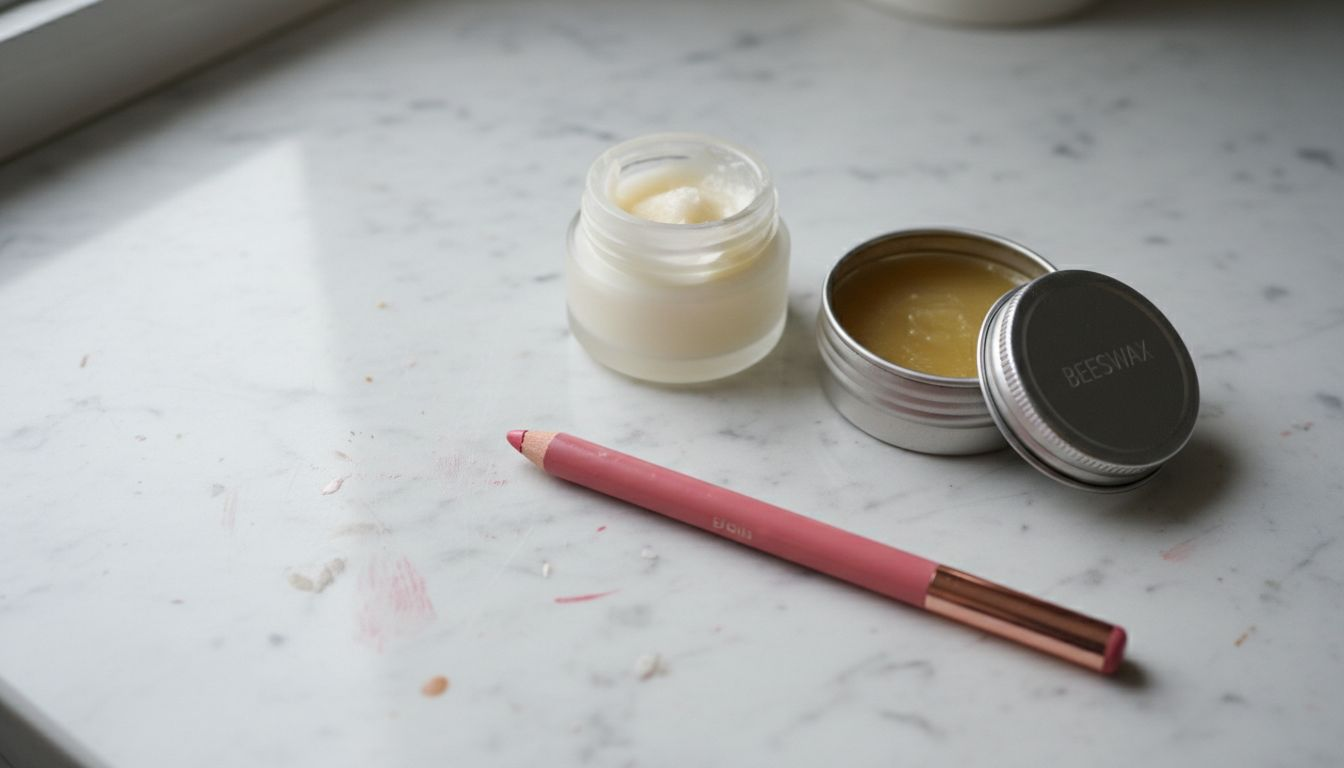
Beeswax and Shea butter form the core of effective pink liners for mature skin. Beeswax creates a protective barrier that locks moisture in without feeling greasy or waxy.
Shea butter provides deep hydration:
- Rich in fatty acids that mimic your skin’s natural oils
- Absorbs quickly without sitting on lips heavily
- Reduces inflammation from dryness or irritation
- Creates a smooth base for even color application
These two ingredients together create the creamy texture you want in a quality liner. When you test a pink liner on your hand, it should glide like butter, not scratch or tug. That smooth application prevents the micro-tears that lead to feathering.
Vitamin E and Coconut Oil for Protection
Vitamin E is your antioxidant shield against environmental damage. It protects against free radicals that accelerate lip aging while keeping your lips conditioned throughout the day.
Coconut oil adds another moisture layer with natural anti-inflammatory properties. Combined, these ingredients help maintain hydration even in harsh weather or heated indoor environments.
Natural ingredients like beeswax, Shea butter, vitamin E, coconut oil, and aloe vera form a moisture-resistant barrier on the lips that enhances liner performance, especially for mature or dry skin conditions.
Aloe Vera for Soothing
Aloe vera works differently than oils. It actively soothes irritation while providing lightweight hydration that doesn’t weigh down your liner.
Aloe excels at:
- Calming irritated or sensitive lips
- Providing hydration without heaviness
- Supporting lip repair overnight
- Creating a smoother surface for liner application
If your lips feel reactive to most liners, aloe vera in the formula makes a noticeable difference in comfort.
Check ingredient lists for these five components—beeswax, Shea butter, vitamin E, coconut oil, and aloe vera—because they work synergistically to prevent both dryness and feathering.
How These Ingredients Stop Feathering
Feathering happens because dry lips have uneven texture and fine lines that trap color. Hydrating ingredients smooth your lip surface, creating an even base where color sits properly.
When your lips are truly moisturized:
- Color doesn’t catch on dry patches
- The lip line stays crisp instead of migrating
- Fine lines become less pronounced
- Your liner lasts longer without reapplying
This is why ingredient quality determines feathering prevention more than liner formula type. A waterproof liner on dry lips will feather. A hydrating liner on prepared lips stays exactly where you apply it.
Understanding how to choose products with hydrating ingredients in your lipstick applies equally to your liner selection.
Pro tip: Check the first five ingredients listed on your pink liner—if you see beeswax, Shea butter, or oils in the top three, you’ve found a formula designed for mature, dry lips.
How to Apply Pink Lip Liner for Lasting Definition
Application technique separates a polished lip look from one that screams “amateur hour.” The way you apply your pink liner determines whether it stays put or feathers by lunchtime.
Proper application starts before you even pick up the pencil. Your lips need preparation to hold color correctly and prevent the bleeding that ruins your definition.
Prep Your Lips First
Skipping lip prep is the biggest mistake women over 40 make with liner. Your mature lips have texture and fine lines that catch color unevenly without proper preparation.
Follow these steps:
- Exfoliate gently – Use a soft lip brush or damp washcloth to remove dead skin. This creates a smooth canvas and prevents color from settling into dry patches.
- Apply moisturizer – Let a hydrating lip balm sink in for 30-60 seconds, then blot away excess. Your liner glides better on conditioned lips.
- Wait a moment – Don’t rush straight to lining. Give your lips time to absorb moisture so they feel plump and ready.
To apply pink lip liner for lasting definition, start by exfoliating and moisturizing the lips to create a smooth base that prevents feathering and increases color longevity.
Outlining Technique
Outlining is where precision matters. Use a sharp pencil—dull tips create uneven lines and require heavier pressure that damages delicate lip skin.
Start at the cupid’s bow (the center indent of your upper lip):
- Draw a short line down to one corner
- Return to center and draw to the other corner
- Work the lower lip in the same way
- Connect corners for a complete outline
This method gives you more control than trying to draw one continuous line. Light, feathered strokes look more natural than one heavy line. Your outline should follow your natural lip shape or slightly extend it for the illusion of fullness.
Filling vs. Outlining Only
Decide your approach based on your preference and the look you want. Outlining only keeps a softer, more natural appearance. Filling completely creates a longer-wearing base and prevents all feathering.
For mature skin, filling has advantages:
- Provides a color base that extends wear time
- Prevents lipstick from bleeding into fine lines
- Creates a matte finish if worn solo
- Gives you a safety net if your lipstick shifts
Many women over 40 prefer filling because it solves the feathering problem entirely. Your liner becomes an invisible foundation rather than a visible line.
Blending for Natural Definition
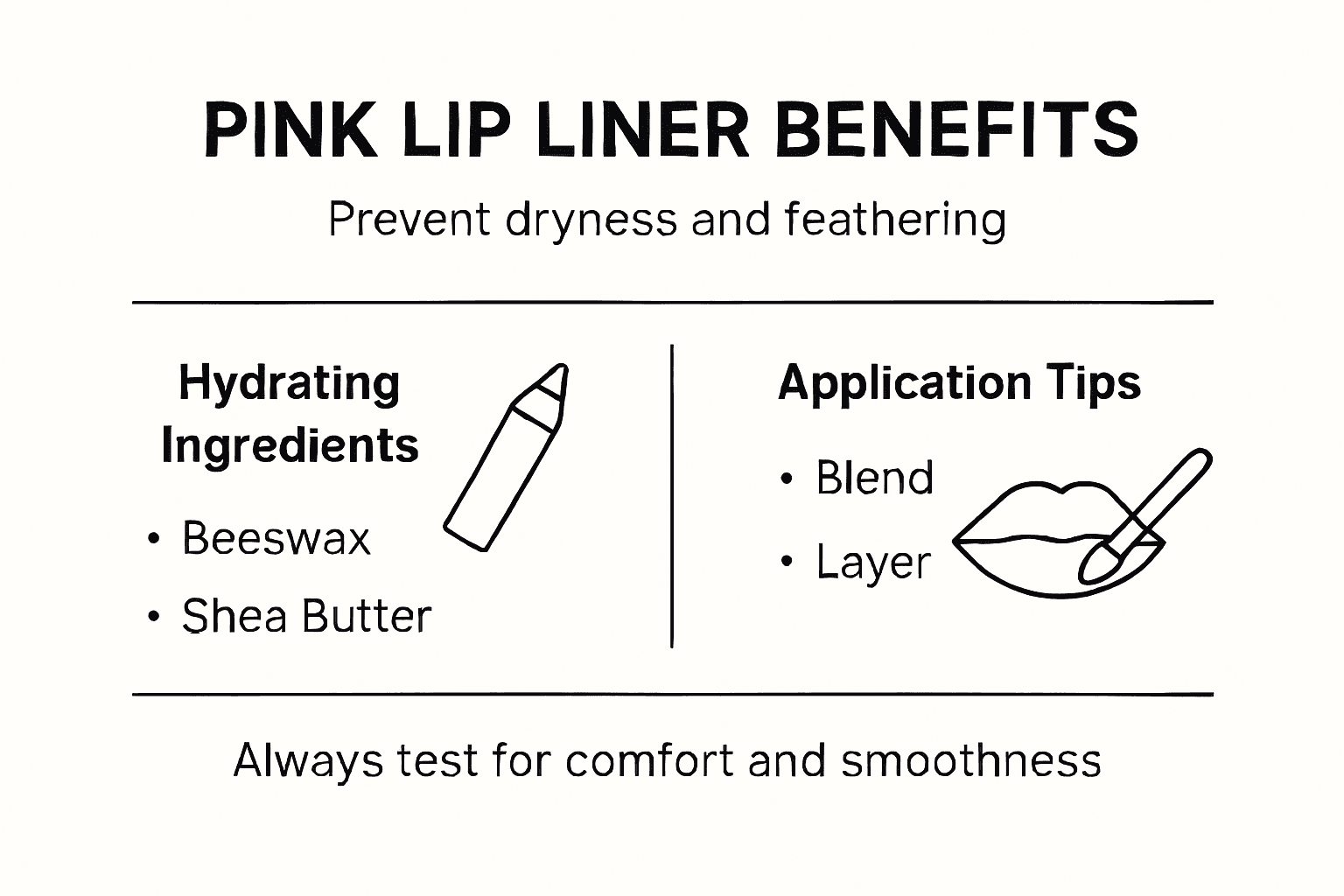
Blending prevents that harsh, drawn-on look that ages your face. After outlining or filling, use a clean finger or lip brush to blend the edges softly inward.
Blend your liner gently into the lip color—this erases harsh lines while keeping crisp definition, which is the sweet spot for mature lips.
Blending takes 5 seconds but transforms your entire look. It softens the appearance while maintaining the definition you worked to create.
Matching Color and Layering
Matching the lip liner color to lipstick or choosing a neutral shade achieves a natural look while ensuring lasting definition. Pink liners work beautifully with pink, mauve, or nude lipsticks.
If you’re wearing a different lipstick shade, choose a liner that bridges both colors or matches the lipstick exactly. This prevents visible outline gaps that age your lips.
Pro tip: Apply your liner, blend it slightly, then layer lipstick on top—this three-step approach (liner + blend + lipstick) creates definition that lasts until evening without looking overdone.
Common Mistakes with Lip Liner on Aging Lips
Women over 40 make the same lip liner mistakes repeatedly, and these errors age your face more than no liner at all. Understanding what not to do is just as important as knowing the right technique.
These mistakes are fixable once you recognize them. Small adjustments in product choice and application can transform your entire lip look from aging to elegant.
Overlining and Too-Dark Colors
Overlining draws attention to fine lines instead of hiding them. The darker and bolder your line, the more it emphasizes every vertical wrinkle on and around your lips.
This mistake includes:
- Drawing outside your natural lip line significantly
- Using colors darker than your natural lip tone
- Creating sharp, defined edges that highlight texture
- Applying heavy-handed lines that look drawn-on
Overlining or applying too dark a color can emphasize fine vertical lip lines and wrinkles on aging lips. Instead, use colors that complement your natural lip tone and stay close to your actual lip shape.
A soft pink that matches or complements your skin undertone looks naturally refined. It defines without screaming “I’m covering something up.”
Using Drying Formulas
This is the trap many women fall into. They buy a “long-wearing” liner without realizing it contains drying ingredients that make their lips look worse by noon.
Drying formulas backfire because:
- They pull moisture from already-delicate mature lips
- They settle into fine lines, making wrinkles more visible
- They cause flaking and patchy color
- They feel uncomfortable, making you want to touch your lips constantly
Your lip liner should feel creamy and comfortable, not tight or chalky. If a formula makes your lips feel pulled or uncomfortable after 30 minutes, it’s too drying for your skin.
Ignoring Lip Texture and Preparation
Skipping prep because you’re in a rush guarantees feathering and poor color payoff. Mature lips have texture that catches color unevenly unless you prepare first.
Don’t skip:
- Gentle exfoliation to remove dead skin
- Moisturizer application to plump lips
- A moment for absorption before lining
These three steps take 90 seconds total but prevent every major feathering problem.
Allergic Reactions and Product Irritation
Irritant or allergic reactions to lip liners can cause dryness, redness, scaling, and inflammation that worsen aging lips. Many lip liners contain fragrances, synthetic dyes, or harsh preservatives that mature skin reacts to negatively.
If your lips feel itchy, burn, or develop redness after using a liner, stop immediately. These reactions create chronic inflammation that ages your lips faster and makes any liner look terrible.
Patch test new liners on your inner arm 24 hours before applying to your lips—this simple step prevents painful reactions and protects your delicate lip skin.
Not Matching Your Lip Product Strategy
Using a pink liner with a completely different shade of lipstick creates visible gaps and looks mismatched. Your liner and lipstick should work as a team, not against each other.
Choose products that either match exactly or bridge the two shades harmoniously. Understanding proper lip makeup application for mature women helps you coordinate your entire lip strategy.
Pro tip: Before buying a new liner, test it on your wrist in natural light to check for dryness—if it feels waxy, scratchy, or chalky, your mature lips will struggle with it throughout the day.
Discover the Best Pink Lip Liner Solutions for Mature Skin
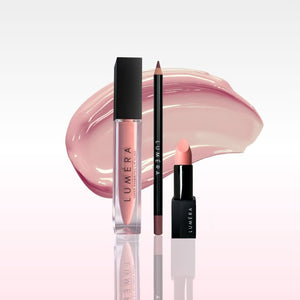
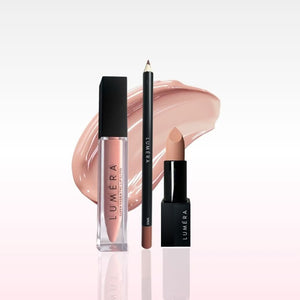
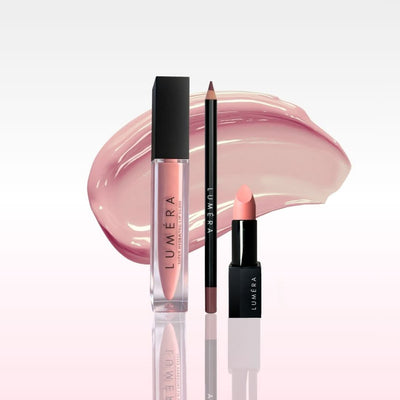
If dryness and feathering have been frustrating your lip look no matter what you try pink liners are often the trick to achieving a natural yet defined lip contour that complements mature skin. The key is choosing formulas that nourish prevent feathering and offer subtle definition without harsh lines or dryness. At Luméra Cosmetica you will find carefully crafted Waterproof Lip Liner Pencils that glide on smoothly and stay put throughout the day even on delicate aging lips.
Don’t let dryness or visible lip lines hold back your confidence any longer explore our range of hydrating pink liners designed for long wear and easy blending. Pair your perfect liner with our Creme Suede & Matte Lipstick Sets for a complete look that resists feathering and leaves lips feeling comfortable. Visit Luméra Cosmetica now to upgrade your lip routine and experience luscious lips that last no matter your age.
Frequently Asked Questions
What are the benefits of using a pink lip liner for mature skin?
Pink lip liners provide a softer definition for lips, complement a variety of skin tones, and create a natural lip boundary that minimizes the appearance of fine lines.
How can I prevent feathering when using pink lip liner?
To prevent feathering, apply a hydrating lip balm before lining, use a lip primer, and choose a waterproof or long-wearing formula. Blending the liner with your lipstick can also help maintain a clean line.
What ingredients should I look for in a pink lip liner to avoid dryness?
Look for hydrating ingredients like beeswax, shea butter, vitamin E, coconut oil, and aloe vera. These ingredients help moisturize the lips and prevent feathering throughout the day.
How do I properly apply pink lip liner for the best results?
Start by exfoliating and moisturizing your lips. Use a sharp pencil to outline your lips, then blend the edges slightly for a natural look. You can fill in your lips completely or only outline, depending on your desired appearance.