

3 Mistakes That Keep Adults' Lips Dry and 3 Dermatologist Backed Fixes

Lips dry out faster than any other skin on your body because they have almost no oil glands, a paper-thin outer layer, and constant exposure to air, wind, and saliva. The main culprits are weather, sun, medication, nutrient gaps, and habitual licking. The fastest fix: stop licking your lips, coat them in a bland ointment like petroleum jelly, and keep them shielded from sun and wind.
TL;DR:
- Lips have no oil glands and a thinner outer layer, causing them to lose moisture rapidly and making them vulnerable to dehydration from weather and habits.
- Habitual lip licking worsens dryness since saliva erodes remaining moisture, creating a cycle that prevents healing.
- Medications like retinoids and nutritional deficiencies in iron, B vitamins, or zinc often cause persistent dry lips unresponsive to topical treatments.
- Proper treatment involves using a petroleum jelly ointment at night and daytime lip balms with ceramides, SPF, and no irritants, while avoiding scrubs and plumping products.
- Persistent dryness beyond two to three weeks, bleeding, lesions, or non-healing cracks warrant medical evaluation for underlying conditions or medication side effects.
Table of Contents
- Why Lips Are Uniquely Vulnerable to Dryness
- What Actually Triggers Chapped Lips Day to Day
- Medications, Deficiencies, and Health Conditions Behind Chronic Dry Lips
- What to Use, What to Skip, and How to Build a Routine
- When Dry Lips Need a Doctor’s Attention
- Lumeracosmetica’s Approach to Everyday and Seasonal Lip Care
- The Three Mistakes I See Most, and the Three Fixes That Actually Work
- Where to Find Skin-Friendly Lip Products That Fit This Routine
- Sources
Why Lips Are Uniquely Vulnerable to Dryness
Your lips are built differently from the rest of your face, and that difference explains almost everything about why they crack, peel, and sting when the rest of your skin is fine. The border of the lip, called the vermilion, has a much thinner stratum corneum (the skin’s outer protective layer) than the surrounding facial skin. That thinner barrier does a worse job holding moisture in.
Lips also lack sebaceous and sweat glands almost entirely. Regular facial skin constantly bathes itself in a thin layer of natural oil and moisture from these glands. Lips get none of that self-lubrication, so they depend entirely on outside moisture and whatever protective layer you apply.
This combination produces something dermatologists call high transepidermal water loss, or TEWL: moisture escapes through the skin faster than it can be replaced. According to clinical references cataloged in StatPearls on cheilitis, this anatomical vulnerability is the baseline reason lips chap even under mild conditions that leave the rest of your skin untouched.
Here’s what makes lips so exposed compared to the rest of your face:
- No oil glands to replenish surface moisture
- A thin outer barrier that lets water escape quickly
- Constant exposure to air, since lips are rarely covered
- Frequent movement (talking, eating, smiling) that flexes and stresses the thin skin
- No layer of hair or dead skin buildup to slow evaporation, unlike scalp or elbow skin
None of this means dry lips are inevitable. It means the skin there needs more active protection than you’d guess just by looking at it.
What Actually Triggers Chapped Lips Day to Day
Most chapped lips trace back to a short list of everyday triggers, each with its own mechanism and its own fix.
- Cold, dry air and indoor heating. Winter air holds less moisture, and forced-air heating strips whatever humidity remains indoors. The result is accelerated evaporation straight off the lip surface. Fix: run a humidifier and apply an occlusive balm before you go outside.
- Sun and wind exposure. UV rays damage the thin lip skin directly, and wind speeds up evaporation the same way it dries laundry on a line. Sun exposure happens even on cloudy days, which is why dermatologists recommend SPF lip protection as a daily habit, not just a summer one.
- Habitual lip-licking. This feels like it helps, but saliva contains enzymes meant for digestion, not skin protection. Once saliva evaporates, it pulls remaining moisture with it and leaves lips drier than before, according to Ohio State Health & Discovery. Repeat that cycle daily and you get a chapping loop that never resolves.
- Contact irritants. Toothpaste ingredients, mouthwash, cinnamon or mint flavoring, and fragranced products can trigger contact cheilitis, a form of chronic lip inflammation caused by everyday chemical exposure rather than weather.
Medications, Deficiencies, and Health Conditions Behind Chronic Dry Lips
When dryness won’t quit despite good habits, the cause is often inside the body rather than outside it.
Medication is a common overlooked trigger. Systemic retinoids like isotretinoin commonly cause dryness, scaling, and cracking of the lips in many patients who take them, per StatPearls’ clinical reference on cheilitis. Blood pressure medications, some antihistamines, and certain cancer treatments carry similar side effects.
Nutritional gaps play a role too. Low iron, B vitamin deficiencies (particularly B2 and B12), and low zinc have all been linked to chronic lip dryness and cracking, especially at the corners of the mouth. If balms and ointments stop working entirely, a simple blood panel can rule this out.
Angular cheilitis, a cracking and inflammation specifically at the mouth’s corners, often points to a fungal or bacterial overgrowth rather than plain dryness, and it responds to antifungal or antibacterial treatment, not more balm.
Watch for these red flags that call for medical evaluation, not just more lip balm:
- Dryness that persists beyond two to three weeks despite consistent care
- Bleeding, deep cracking, or sores that won’t heal
- A scaly patch on only one side of the lip
- Any lesion that spreads beyond the normal lip border
Persistent, nonhealing dryness can signal something more serious, including actinic cheilitis, an autoimmune condition, or in rare cases a precancerous change, according to a peer-reviewed review on lip-licking dermatitis and cheilitis. That’s not a reason to panic over ordinary winter chapping, but it is a reason to see a clinician when the usual fixes stop working.
What to Use, What to Skip, and How to Build a Routine
Treating dry lips correctly means matching the product to the moment. At night, a plain occlusive ointment such as petroleum jelly forms a physical seal that traps moisture far more effectively than waxes or oils alone, making it the preferred overnight option for anyone dealing with more than mild chapping.
During the day, reach for balms built around ceramides, dimethicone, or hyaluronic acid, ideally with mineral SPF from zinc oxide or titanium dioxide. Dermatologists specifically warn against balms with menthol, camphor, or salicylic acid, since the tingling sensation they create is mild irritation, not healing.
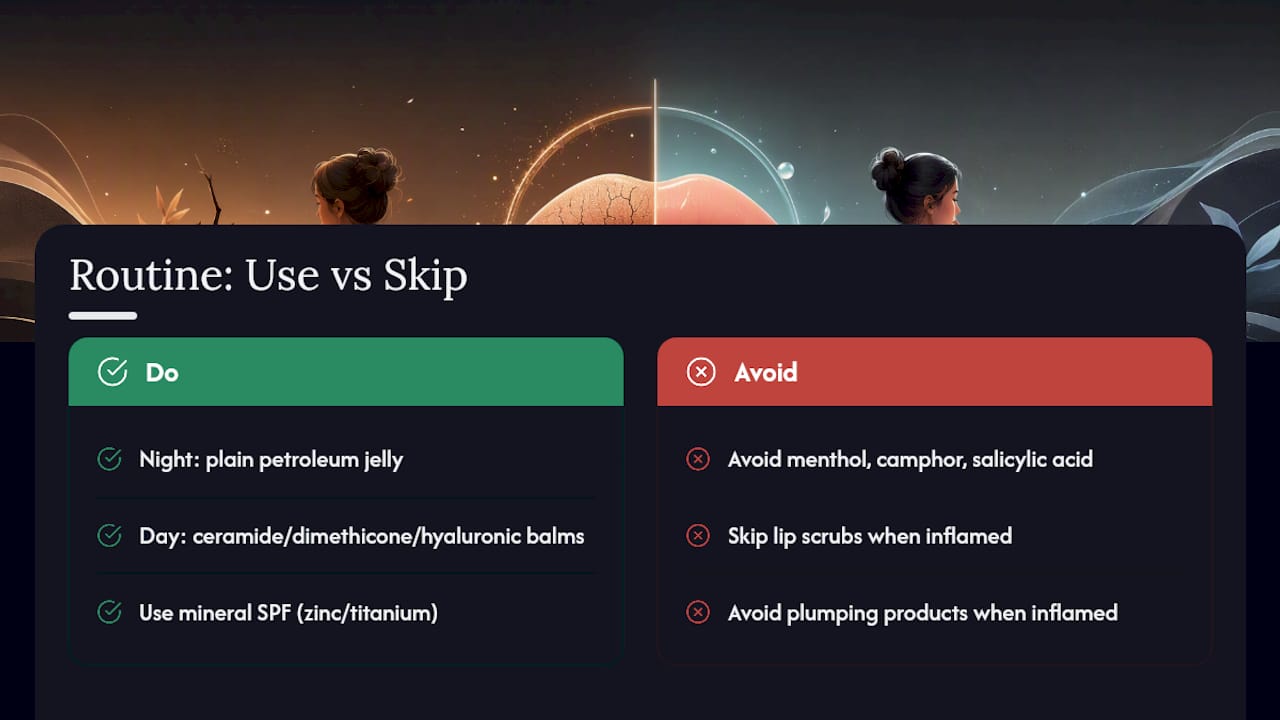
Skip lip scrubs and plumping products entirely while lips are inflamed. Exfoliating already-thin, compromised skin worsens the barrier damage instead of smoothing it. For year-round protection, Lumeracosmetica’s guide on preventing dry lips all year long breaks down seasonal swaps in more detail.
Pro Tip: Apply a thick layer of plain petroleum jelly right before bed and again the moment you wake up. A prolonged undisturbed occlusion period does more for severely chapped lips than any daytime balm can.
When Dry Lips Need a Doctor’s Attention
Most chapped lips resolve with better habits in a week or two. If yours don’t, or if any of these show up, it’s time for an evaluation:
- Sores that won’t heal or keep coming back in the same spot
- Cracking severe enough to bleed regularly
- A scaly, rough patch confined to one side of the lip
- Any spot that’s changing shape, size, or color
A clinician evaluating persistent lip dryness will typically start with your medication list, since drug-induced cheilitis is common and easy to miss. Expect possible blood tests for iron or vitamin deficiencies, patch testing if a contact allergy is suspected, and a biopsy if a lesion looks concerning for actinic cheilitis. Treatment that follows might include a topical steroid, an antifungal for angular cheilitis, or simply switching a medication that’s drying you out.
Lumeracosmetica’s Approach to Everyday and Seasonal Lip Care
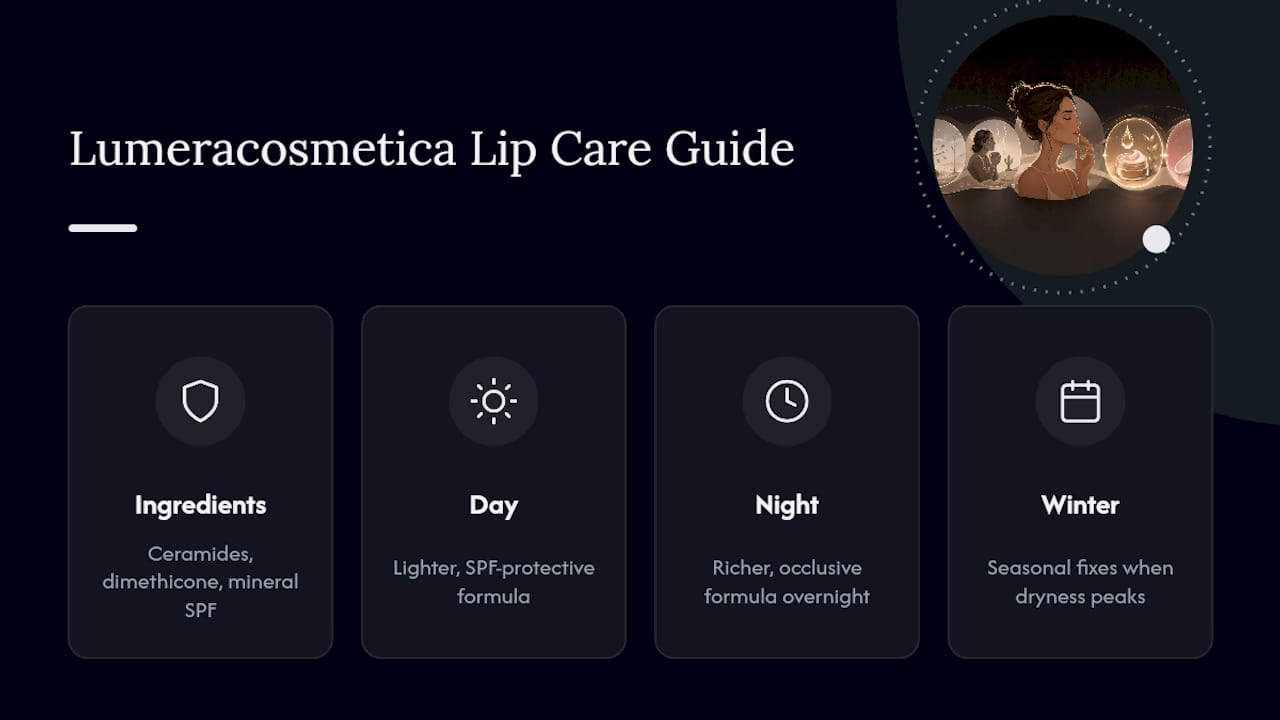
Some lip product brands build their formulas around dermatologists’ recommendations: skincare-infused ingredients that support the skin barrier instead of irritating it, favoring ceramides, dimethicone, and mineral SPF over menthol and fragrance combinations that can aggravate thin lip skin.
For mature lips especially, timing matters. A richer, occlusive formula at night followed by a lighter, SPF-protective option during the day mirrors exactly what dermatology guidance recommends. Lumeracosmetica’s lip balm guide for sensitive skin walks through which formulas suit which skin needs, and the brand’s winter-specific fixes cover the season when lip dryness peaks for most people.
The Three Mistakes I See Most, and the Three Fixes That Actually Work
The biggest mistake isn’t skipping lip balm. It’s licking, reaching for a minty “medicated” balm that stings on purpose, and treating SPF as optional. Swap those for three habits: petroleum jelly at night, an SPF balm every morning regardless of season, and a humidifier running while you sleep. If cracking or bleeding persists past a couple of weeks, see a clinician rather than cycling through more products. For product-specific routines, Lumeracosmetica’s complete guide to why lips become dry is worth a read.
— Rebecca
Where to Find Skin-Friendly Lip Products That Fit This Routine
If you’re rebuilding your lip care routine around the principles above, ceramides, mineral SPF, no menthol or fragrance, finding products that actually list those ingredients clearly can be tedious. Some brands curate lip kits and individual lip products that aim to match skin tones and are formulated with skincare ingredients rather than stinging, fragrance-heavy fillers common in drugstore balms.

This matters more for women 40 and over, since lip skin thins further with age and becomes even less forgiving of harsh ingredients. Lumeracosmetica’s guide on lip balm benefits for women 40 and up breaks down what to look for at that stage. None of this replaces a dermatologist visit if you’re seeing the red flags covered earlier, but for everyday prevention, it’s a practical place to start. Visit Lumeracosmetica to browse curated lip kits matched to your tone and skin needs.
Sources
- Cheilitis - StatPearls - NCBI Bookshelf
- Kiss chapped lips goodbye | Ohio State Health & Discovery
- Review article on lip-licking dermatitis and cheilitis (PMC)
- 7 dermatologists’ tips for healing dry, chapped lips
This article is general information, not a substitute for advice from a qualified doctor. Consult a qualified healthcare professional about your own circumstances before acting on anything here.


