What is a makeup base? The over-40 guide to radiant skin

TL;DR:
- A makeup base creates a hydrated, smooth surface that improves foundation application and longevity.
- It addresses mature skin needs by filling fine lines, boosting hydration, and reducing the amount of foundation needed.
- Choosing the right ingredients and applying it correctly enhances natural radiance and prevents patchiness.
If you’ve ever stood in the beauty aisle wondering whether you actually need a makeup base or if it’s just another name for primer, you’re not alone. Many women over 40 quietly skip this step because the category feels confusing or unnecessary. But a makeup base is its own product entirely, and it does something neither primer nor foundation can fully replicate: it creates a hydrated, smooth surface that makes your skin look genuinely better before a single drop of foundation touches it. In this guide, you’ll learn exactly what a makeup base is, why it matters more as skin matures, and how to use it for results that last.
Table of Contents
- What is a makeup base and why does it matter?
- Key ingredients and benefits for mature skin
- How to apply makeup base for flawless, long-lasting results
- Integrating makeup base into your daily routine
- Our take: Why a makeup base is the secret weapon for radiant, mature skin
- Explore Luméra Cosmetica for the ultimate finish
- Frequently asked questions
Key Takeaways
| Point | Details |
|---|---|
| What is makeup base | It’s a skin-prepping cosmetic applied after moisturizer to smooth and hydrate before foundation. |
| Benefits for women 40+ | A quality makeup base reduces fine lines appearance and keeps makeup fresh and radiant longer. |
| Choosing ingredients | Select hydrating, smoothing, and non-irritating ingredients to match your skin’s unique needs. |
| Application tips | Use a pea-sized amount, press gently, and let it set before applying foundation for best results. |
| Daily integration | Adjust your makeup base routine for different skin zones, daily changes, and occasions for optimal performance. |
What is a makeup base and why does it matter?
A makeup base is a skin-prepping product applied after your moisturizer and before your foundation. Its primary job is to create a smooth, even canvas by filling in fine lines, softening uneven texture, and locking in hydration. Think of it as the buffer layer between your skincare and your makeup, bridging the two so neither fights the other.
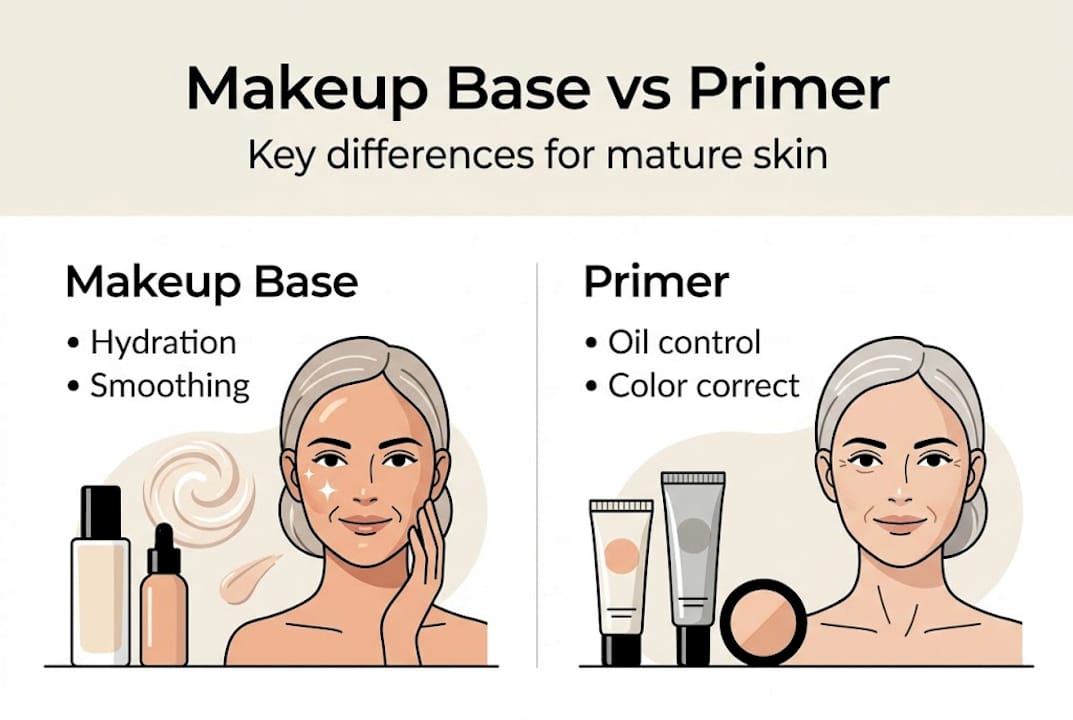
This is where a lot of confusion starts. People use the terms “base,” “primer,” and “foundation” interchangeably, but they serve genuinely different purposes. A primer typically focuses on oil control, color correction, or extending wear time. A foundation delivers coverage and color. A makeup base, by contrast, is primarily about skin preparation: hydration, smoothing, and creating the right surface texture so your foundation sits beautifully rather than settling into creases.
For women over 40, this distinction matters enormously. Skin becomes drier, fine lines are more visible, and the natural plumpness that once made foundation look effortless starts to fade. A makeup base directly addresses these changes. It smooths lines and hydrates skin before any coverage product is applied, which means your foundation needs to do less heavy lifting. The result is a more natural, radiant finish with less product overall.
Here’s a quick comparison to keep things clear:
| Product | Primary focus | When applied |
|---|---|---|
| Makeup base | Hydration and smoothing | After moisturizer, before foundation |
| Primer | Oil control, color correction, wear extension | After moisturizer or base |
| Foundation | Coverage and color | Last in the base layer |
Key benefits of a makeup base for mature skin:
- Hydrates the skin surface so foundation doesn’t look dry or cakey
- Fills fine lines and minimizes the appearance of texture
- Extends wear so you need fewer touch-ups throughout the day
- Helps foundation look more natural by creating an even surface
- Reduces the amount of foundation you need, which keeps skin looking lighter and fresher
If you want to go deeper on makeup hacks for women over 40, layering your products correctly is one of the highest-impact changes you can make.
Key ingredients and benefits for mature skin
Not all makeup bases are created equal, and the ingredients list tells you everything. Knowing what to look for means you can choose a base that actually works with your skin rather than just sitting on top of it.
Hydrating ingredients are the foundation of any good base. Hyaluronic acid draws moisture to the skin surface and keeps it there. Ceramides reinforce the skin barrier, which becomes more fragile with age. Glycerin is a reliable, budget-friendly humectant that softens and plumps. These three together create the kind of dewy, comfortable base that makes mature skin look its best.
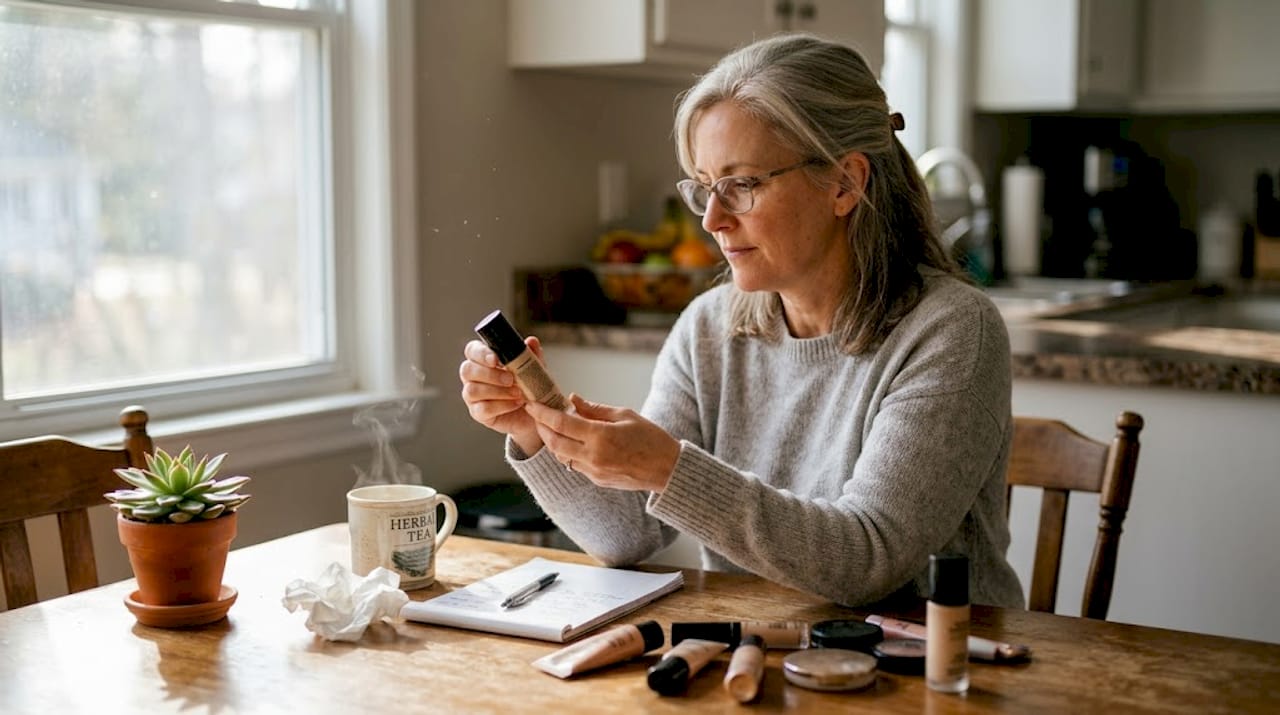
Smoothing fillers like dimethicone and silica work differently. They physically fill in the surface of the skin, blurring the look of pores and fine lines. Dimethicone in particular creates a silky layer that foundation glides over effortlessly. If you’ve ever noticed your foundation looking patchy or settling into lines, a dimethicone-based formula can make a significant difference.
Light-reflecting particles are a bonus worth seeking out. Subtle luminosity in a base instantly brightens dull or uneven skin tone, giving you a glow that looks like it comes from within rather than from highlighter.
| Ingredient | Benefit | Best for |
|---|---|---|
| Hyaluronic acid | Deep hydration, plumping | Dry, dehydrated skin |
| Ceramides | Barrier support, comfort | Sensitive or mature skin |
| Glycerin | Surface softening | All skin types |
| Dimethicone | Line-filling, smooth texture | Fine lines, uneven texture |
| Silica | Oil absorption, blur effect | Oily T-zone |
| Light-reflecting particles | Instant brightness | Dull or uneven tone |
Zone-specific bases that hydrate dry areas and mattify oily zones are especially effective for the combination skin patterns common in women over 40. You don’t have to choose just one formula for your whole face.
For sensitive skin, the single most important thing to check is fragrance. Fragrance is one of the most common irritants in beauty products, and mature skin tends to be more reactive.
Pro Tip: Go fragrance-free if you have any redness, sensitivity, or rosacea. Even products marketed as “gentle” can contain hidden fragrance under names like “parfum” or “aroma.”
Pairing your base with a solid skincare for makeup preparation routine makes every product in your stack work harder. And if you want a clear picture of where base fits in the bigger picture, the steps for mature skin makeup are worth bookmarking.
How to apply makeup base for flawless, long-lasting results
Getting the application right is just as important as choosing the right formula. Even the best base can underperform if it’s applied incorrectly, and a few simple adjustments can make a visible difference.
The correct order is: skincare first, then moisturizer, then makeup base, then foundation. Skipping or rearranging these steps reduces the effectiveness of every product involved.
Here’s how to apply your base for the best results:
- Complete your skincare routine and allow your moisturizer to absorb for at least one minute. Rushing this step causes pilling.
- Dispense a pea-sized amount of base onto your fingertip. This is genuinely all you need for your full face. More product doesn’t mean better coverage.
- Warm it slightly by pressing your fingertips together before applying. This helps the formula melt into skin rather than sitting on top.
- Press, don’t rub. Apply to key areas (forehead, nose, cheeks, chin) using gentle pressing motions. Rubbing disrupts your moisturizer and can cause patchiness.
- Focus on problem areas first: around the nose, between the brows, and any areas with visible lines or dryness.
- Wait 30 to 60 seconds before applying foundation. This short pause lets the base set and grip, which is what makes your foundation last.
- Apply foundation as normal. You’ll likely need less than usual.
Common mistakes to avoid:
- Using too much product (causes heaviness and pilling)
- Applying foundation immediately without letting the base set
- Rubbing the product in rather than pressing it
- Skipping the neck and décolletage on special occasions
Pro Tip: Use a hydrating base on your cheeks and a mattifying base on your T-zone. This zone-specific approach gives you the best of both worlds without compromising either area.
“For mature skin, the most effective method is to press base into the skin with fingertips rather than a brush or sponge. Fingertip warmth helps the formula bond with skin, creating a seamless surface that foundation adheres to naturally.”
For a complete walkthrough of how base fits into a finished look, the natural makeup guide over 40 is a great companion. And if you want your results to last all day, the light makeup look tips show how less product, applied correctly, consistently outperforms a heavier hand. Good makeup hygiene tips also extend the life of your products and keep your skin healthier.
Integrating makeup base into your daily routine
Knowing how to apply base is one thing. Knowing when and how often to use it is what makes it a genuine habit rather than an occasional experiment.
Here’s how to think about base across different types of days:
- Full makeup days: Apply base to the entire face after moisturizer. Follow with foundation, concealer, and the rest of your routine.
- Light makeup days: Apply base only to areas where you want a little smoothing or where foundation tends to fade, like around the nose or on the eyelids.
- No-makeup days: Skip the base entirely. Your skin benefits from breathing freely, and base is a makeup prep product, not a skincare treatment.
- Special events: Layer base more deliberately, focusing on areas that photograph heavily, like the forehead and cheeks. Allow extra setting time.
Pro Tip: If you wear SPF (and you should), apply it before your makeup base. SPF goes on after moisturizer and before any makeup product. Applying it in the right order prevents pilling and keeps your sun protection effective.
Zone-specific use is the key to handling mature skin’s mixed needs: hydrating base on dry areas, mattifying base on oily zones. This approach works year-round but becomes especially useful in summer when the T-zone tends to get oilier.
Base also adapts well to different coverage choices. On days when you want a no makeup makeup look, base alone under a tinted moisturizer or CC cream gives you a polished finish without heaviness. On days when you want your makeup to genuinely go the distance, pairing base with the right foundation technique is the backbone of any long-wear makeup guide.
Seasonally, consider switching formulas. A richer, more hydrating base in winter and a lighter, more mattifying version in summer keeps your routine responsive to what your skin actually needs.
Our take: Why a makeup base is the secret weapon for radiant, mature skin
Here’s what we’ve observed working with women over 40: most are either skipping the base entirely or using a primer and wondering why their foundation still looks patchy by midday. The honest truth is that for mature skin, a well-chosen makeup base is more impactful than a heavy foundation or an expensive primer.
Primer is often marketed as the essential prep step, but many primers are designed for younger skin concerns like large pores or excess oil. A makeup base, by contrast, addresses what mature skin actually needs: hydration, line-filling, and a surface that makes skin look alive rather than covered.
The right base can replace primer entirely, allow you to use a lighter foundation, and reduce how much you touch up during the day. Women who make this switch consistently tell us their skin looks fresher and more like themselves. That’s the outcome worth chasing. If you want the full picture on building a routine that delivers this, the steps for radiant mature skin lay it out clearly.
Explore Luméra Cosmetica for the ultimate finish
Ready to put these tips into action? At Luméra Cosmetica, we create products specifically with mature skin in mind, because we know that the right formula at the right step changes everything. Our range is designed to work together, from complexion prep through to the final touch of color.
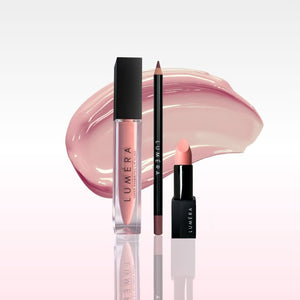
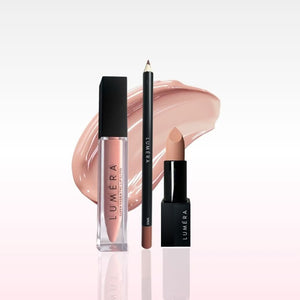
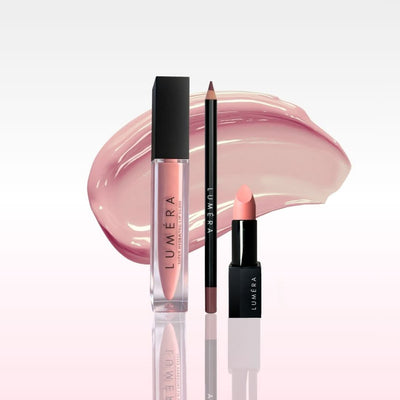
If you’re building out your routine, our Perfect Kiss Lipstick delivers rich, comfortable color that complements a polished base, and the Ombre Effect Lip Hi-Lighter adds dimension that makes any look feel complete. Explore our best sellers and find the finish that makes you feel most like yourself.
Frequently asked questions
Is makeup base really necessary for mature skin?
A makeup base is essential for mature skin because it smooths lines and hydrates the surface, giving foundation a far better canvas to work with than bare moisturized skin alone.
Can I use foundation without a makeup base?
You can, but without a base, foundation is more likely to settle into fine lines and fade faster. A makeup base extends wear and improves texture, especially on mature skin.
How do I pick the right makeup base for my skin type?
Choose hydrating formulas for dry areas, mattifying ones for oily zones, and always check the label for fragrance if your skin is sensitive. Zone-specific use gives you the most flexibility.
Is makeup base the same as primer?
No. A makeup base focuses on hydration and smoothing, while primers typically target oil control or color correction. They differ in function and often serve different skin types and concerns.
How much makeup base should I use?
Start with a pea-sized amount and press it into key areas. More product rarely improves results and can cause pilling under foundation.
Recommended
- Step by Step Natural Makeup Guide for Women Over 40 – Luméra Cosmetica
- Simple makeup tips for women over 40: enhance beauty – Luméra Cosmetica
- 7 Easy Makeup Hacks Every Woman Over 40 Should Know – Luméra Cosmetica
- 8 Makeup Essentials List Every Woman 40+ Needs to Know – Luméra Cosmetica
- Step-by-step skin rejuvenation for lasting, natural results