

What Is a Good Lip Stain? Editor-Tested Picks That Last

A good lip stain does two things at once: it holds color through coffee, lunch, and a mask without needing a mirror check, and it never makes your lips feel tight or chalky by hour three. That combination, longevity plus comfort, is what separates a genuinely well-formulated stain from a dye that just happens to be hard to wipe off.
A lip stain works differently from a lipstick. It uses transfer-resistant dyes that bind to the top layer of skin instead of sitting on the surface as a film of pigment and wax, which is why it survives eating and drinking better than most bullet lipsticks. Cosmetic chemists point out that pigment choice, not the label on the tube, is what actually determines whether a product stains.
When you’re shopping, look past the “long wear claims” claim on the box. Editor testing from outlets that put dozens of formulas through eating, drinking, and mask-wearing consistently finds that real-world staying power runs shorter than marketing copy suggests, so a formula with hydrating ingredients and a track record in independent testing beats one that only promises a big number.
- Prioritize hydrating ingredients (hyaluronic acid, squalane, botanical oils) over pigment concentration alone.
- Check for transfer resistance that’s been tested in real conditions, not just a lab claim.
- Confirm the applicator matches your skill level, since a felt-tip marker and a peel-off mask demand very different routines.
Pro Tip: If a product’s marketing leans hard on the word “stain” but lists mostly wax and oil on the ingredient panel, it’s probably a tinted balm, not a true stain, so check the colorant list before you buy.
Key Takeaways
A good lip stain balances long wear with real hydration, and that balance, not the biggest wear-time number on the box, is what determines whether you’ll actually like wearing it.
| Point | Details |
|---|---|
| Prioritize hydration ingredients | Look for hyaluronic acid, squalane, shea, or ceramides near the top of the ingredient list. |
| Match format to your routine | Peel-offs suit special occasions; liquid tints and markers suit daily low-maintenance wear. |
| Distrust marketing wear claims | Real-world editor testing through eating and drinking often shows shorter wear than package claims. |
| Prep matters more than product | Exfoliation and full drying prevent the patchy fade most peel-off users blame on the formula. |
| Luméra Cosmetica’s approach | Formulates for hydration alongside pigment and provides real application and removal guidance. |
Table of Contents
- What Makes a Good Lip Stain, Really?
- What Types of Lip Stains Exist?
- How Do You Choose the Right Lip Stain?
- How Do You Apply Lip Stain So It Actually Lasts?
- Why Does Lip Stain Dry Out Your Lips?
- Do Viral Peel-Off Stains Actually Work?
- How Do Editors Actually Test Lip Stains?
- Which Lip Stains Are Best for Wear, Finish, and Hydration?
- Why Do People End Up Disappointed With Lip Stains?
- A Practical Take on Choosing a Lip Stain
- How Luméra Cosmetica Approaches the Wear-Versus-Comfort Trade-Off
- Frequently Asked Questions
- Sources
What Makes a Good Lip Stain, Really?
The best lip stains balance five things: wear time, hydration, pigmentation, transfer resistance, and ease of application. Miss any one of those and the whole product feels like a compromise, even if the color itself is gorgeous.
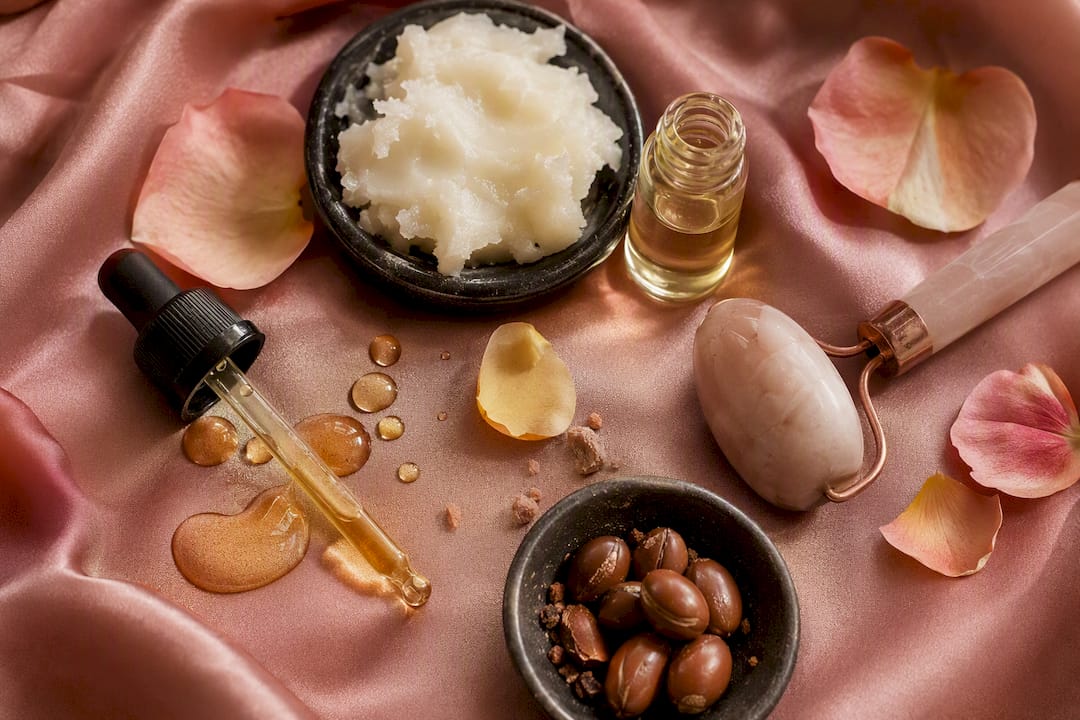
Wear time is the headline feature, but it needs context. A typical well-formulated stain holds visible color for several hours through normal activity, and longer wear can be achieved with peel-off or marker formats applied to properly prepped lips. Editors who’ve tested wear through actual meals and drinks report that the gap between claimed and actual wear time is often significant, which is why real-world testing matters more than a number on a box.
Hydration is where a lot of stains fail. Dye-based formulas that skip moisturizing ingredients tend to grip onto dry patches and flake by midafternoon. Formulas built with hyaluronic acid, shea, ceramides, or botanical oils hold color without that tight, papery feeling, and that’s the detail worth reading the ingredient list for before you check out.
Pigmentation and buildability matter because not every lip wants the same intensity. A sheer wash of berry reads completely differently from a bold, opaque red, and a genuinely versatile stain lets you layer for depth without turning patchy or streaky. If a single swipe looks blotchy, that’s usually a sign of poor pigment dispersion, not user error.
Transfer resistance is the attribute brands love to claim and rarely quantify. In practice, the more reliable test is a kiss test or a napkin blot after wear, not a “kiss-proof” sticker on the packaging. Makeup artists note that gel and cream-based stains resist smearing better than most opaque lipsticks precisely because the pigment sets into skin rather than staying as a movable film.
Applicator design affects how forgiving the product is day to day. Doe-foot wands are the most beginner-friendly. Precision tips give sharper lines but punish a shaky hand. Peel-off masques require the steadiest technique and the most patience.
Price and shade range round things out. A wider shade range signals a brand invested in more than one skin tone’s undertones, and pricing in the mid-price range tends to buy noticeably better hydration and pigment quality than the cheapest drugstore stains, though plenty of mid-range formulas from brands like Peripera and Laneige hold their own against pricier options.
- Wear time: expect several hours realistically, longer only with peel-off or marker formats on prepped lips.
- Hydration: look for hyaluronic acid, squalane, shea, or ceramides on the ingredient list.
- Transfer resistance: judge by napkin-blot behavior, not marketing claims.
- Applicator: doe-foot for beginners, precision tip for control, peel-off for committed routines.
- Price: $15 to $35 typically buys better comfort and pigment than bargain-bin stains.
What Types of Lip Stains Exist?
Lip stains come in four main formats, and each one trades off wear, hydration, and control differently. Picking the wrong format for your patience level is the most common reason people end up disappointed with a stain they otherwise liked.
Peel-off masques go on wet, often in a startling blue or purple, and dry into a peelable film that lifts away to reveal the stain underneath. Brands like Wonderskin built a following on this format. The upside is genuinely long, even wear; the downside is a mandatory prep step and a few minutes of drying time you can’t rush.
Marker or pen formats, the style Peripera and Rom&nd popularized, use a felt tip for precise application and tend to dry down fast into a lightweight matte or semi-matte finish. They’re fast and travel-friendly, but the felt tip can dry out if you store the pen tip-up instead of tip-down.
Liquid tints, the category Clarins and Benefit both play in, apply with a doe-foot wand and usually dry to a soft matte or natural finish. They’re the most forgiving format for beginners and blend well for a buildable, sheer-to-medium look.
Oil and balm stains, where brands like Laneige and Violette_FR have carved out a niche, prioritize comfort and shine over maximum longevity. They feel the most like a lip balm, hydrate the best of any format, and wear shorter as a trade-off.
Here’s a simple way to match your priority to a format:
- Want the longest wear with the least reapplication? Choose a peel-off masque and budget time for prep.
- Want the easiest, most foolproof application? Choose a liquid tint with a doe-foot wand.
- Want maximum comfort and shine, and you’re fine reapplying after meals? Choose an oil or balm stain.
- Want precision lines and quick touch-ups on the go? Choose a marker or pen format.
The one universal red flag: any format that requires heavy exfoliation or specific drying conditions (mainly peel-offs) will punish skipped prep with patchy, uneven color. That’s not a formula flaw. It’s a user-error trap baked into the category.
How Do You Choose the Right Lip Stain?
Start with how you actually live, not how the packaging markets to you. A stain that’s perfect for a desk job with occasional coffee breaks is the wrong pick for someone who eats out for lunch every day and needs real transfer resistance.
Run through this checklist before you buy:
- Wear-time claims: Do they cite real-world testing, or just a lab number?
- Ingredient list: Is there a hydrating agent (hyaluronic acid, squalane, shea) in the first half of the list, or is it mostly dye and alcohol?
- Applicator type: Does it match your skill level and the time you’re willing to spend applying it?
- Scent and irritant flags: Heavy fragrance in a lip product is often a sign the formula is compensating for a less refined pigment base.
- Shade accuracy: Are there swatches on real, varied skin tones, or only studio-lit product shots?
Ask yourself a few blunt questions while you’re shopping. Will you eat or drink heavily while wearing this, and does the format hold up to that? Do you want buildable coverage for different occasions, or a fixed, single-intensity wash of color? Are you shopping for a special event where a peel-off’s longer prep time is worth it, or for daily wear where a quick marker or liquid tint makes more sense?
Red flags worth walking away from: vague transfer-resistance language like “long-wearing formula” with no specifics, a shade range under six or seven options, and reviews that consistently mention dryness or flaking within a few hours. A narrow shade range is also a sign the brand didn’t test broadly across undertones, which often correlates with less refined formulation overall.
On price versus performance: paying more doesn’t guarantee better wear, but it usually buys better hydration. If you’re comparing two stains at similar price points, the one with a more specific ingredient story (named hydrators, named pigment technology) is usually the safer bet over one that just says “long-lasting formula.”
Pro Tip: Swatch on the back of your hand first, then wait ten minutes. If it feels tight or starts flaking before you’ve even applied it to your lips, it will behave the same way, or worse, once it’s on for hours.
How Do You Apply Lip Stain So It Actually Lasts?
Application technique affects wear time as much as formula quality does. Skipping prep is the single biggest reason stains that tested well in reviews underperform once someone tries them at home.
- Exfoliate lightly. Use a damp washcloth or a lip scrub to remove flaky skin, especially before peel-off formats, since residual flakes are the leading cause of patchy results.
- Dry completely. Any lingering moisture, from lip balm or just natural dampness, dilutes pigment and causes uneven color deposit.
- Apply in thin layers. One heavy coat looks blotchy; two or three thin coats build depth evenly and dry down more naturally.
- Let it set undisturbed. Marker and liquid formats need 30 to 60 seconds before you close your lips together; peel-offs need several minutes before peeling.
- Blot only if instructed. Some liquid tints want a blot-and-reapply step for a longer-wearing finish; check the product’s specific directions, since blotting a format that isn’t designed for it removes pigment instead of setting it.
A few format-specific notes: marker tips dry out fast if capped and stored tip-up, so store them tip-down between uses. Peel-off masques should never be rushed off before they’ve fully dried, or you’ll pull away pigment along with the film. Oil-based stains benefit from a light tap with a fingertip rather than a swipe, which helps the color settle rather than smear.
Pro Tip: To deepen color without patching, apply your first layer, let it dry fully, then apply a second thin layer only to the center of your lips. That builds a gradient effect instead of a flat, overly saturated look.
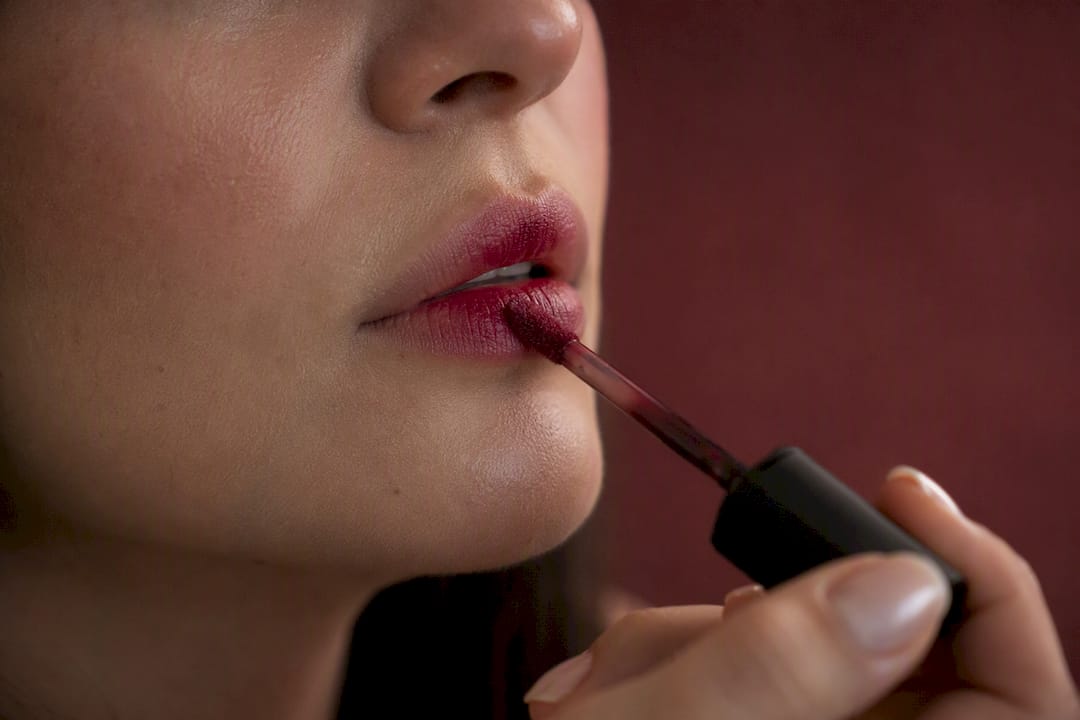
Removing a stain cleanly usually takes more than soap and water. Micellar water or an oil-based cleanser breaks down the pigment more effectively than a quick rinse, and a warm washcloth pressed against lips for a few seconds loosens the last traces without scrubbing.
Why Does Lip Stain Dry Out Your Lips?
Dryness happens when a formula leans too hard on pigment and alcohol-based solvents without balancing them against moisturizing agents. That’s a formulation choice, not an unavoidable side effect of staining technology.
Look for hyaluronic acid, which draws moisture into the surface layer; squalane, a lightweight oil that mimics skin’s natural lipids; botanical oils like jojoba or sunflower seed, which soften without adding much shine; shea butter, which reinforces the lip barrier; and ceramides, which help lips retain moisture over hours of wear. A formula that lists several of these near the top of its ingredient panel is signaling that comfort was a design priority, not an afterthought.
The balance matters more than any single ingredient. Properly formulated stains keep pigment intensity high while still including moisturizing agents, which is a harder chemistry problem than it sounds, since many hydrators can dilute pigment or interfere with how it binds to skin.
If you have sensitive lips, patch-test on your inner wrist or the corner of your mouth for 24 hours before a full application, especially with any formula containing strong fragrance or unfamiliar dyes. Fragrance-free and dye-minimal formulas are worth seeking out if you’ve reacted to lip products before.
- Look for hyaluronic acid, squalane, shea, botanical oils, or ceramides near the top of the ingredient list.
- Patch-test new formulas on your wrist or lip corner for 24 hours if you have sensitive skin.
- Avoid over-exfoliating between applications, since irritated skin absorbs pigment unevenly.
- Remove stubborn color with an oil-based cleanser rather than repeated scrubbing.
Do Viral Peel-Off Stains Actually Work?
Yes, and the chemistry behind them is genuinely different from a standard liquid tint, not just a marketing gimmick. Peel-off formulas, the format Wonderskin built its identity on, apply as a wet gel that often shows up in a shocking blue or purple shade.
That color isn’t the final result. It’s a guide shade that disappears once the mask sets and gets peeled away, revealing the actual stain underneath. This process, sometimes called liquid blading, deposits dye into the top skin layer more thoroughly than a swipe-on tint does, which is why peel-offs often outlast other formats by a wide margin.
The trade-off is preparation. Lips need to be exfoliated and completely dry before application, since any leftover moisture or flaking skin causes the peel to lift unevenly and leave patchy color behind. That’s a real cost in time and attention that a liquid tint or marker simply doesn’t demand.
- Pros: Longer wear, more even fade, minimal touch-ups needed through the day.
- Cons: Requires exfoliation and drying time, less forgiving of impatience, harder to remove partway through the day if you change your mind.
Other trending formats worth knowing: glossy stains (a category Huda Beauty and Rom&nd both play in) trade a bit of longevity for shine and a plumper look, and oil-based stains prioritize comfort for people who find matte formulas drying, even at the cost of a shorter wear window.
Pro Tip: If you’re trying a peel-off for the first time, do it on a day with no urgent plans right after. Give yourself the full drying window instead of rushing it before you walk out the door.
How Do Editors Actually Test Lip Stains?
Credible testing goes well beyond swatching a product once and writing down an impression. Editors who review lip stains for a living generally build a repeatable protocol: apply the product, then track it through a full day of eating, drinking, and normal activity, scoring comfort, fade pattern, and transfer at set intervals.
The core protocol usually breaks into a few measurable categories: wear time (how long visible color survives real activity, not just sitting still), transfer resistance (using a napkin blot or a direct kiss test against a mirror or glass), hydration (self-reported dryness or tightness after several hours), pigmentation (how true the dried-down color is to the swatch), and applicator ease (how forgiving the tool is for a first-time user).
Editors who tested dozens of stains for feel, pigment, longevity, and transfer resistance found that the formulas balancing quick-dry staining with real hydration consistently outperformed products that leaned on pigment alone, and that even fade, rather than patchy ring-fading around the edges, was the clearest sign of a well-formulated product.
That distinction between even fade and ring-fading is worth remembering when you’re wearing a stain yourself. If color disappears from the center of your lips first while the edges stay dark, that’s usually a sign of uneven pigment dispersion, not just normal wear.
When you’re reading reviews, treat a lab-style claim (“12-hour wear”) as a ceiling, not an expectation, and weigh it against real editor notes about eating and drinking through the day. The gap between the two numbers tells you more about a formula’s honesty than either number alone.
You can replicate a simplified version of this test at home: apply the stain, eat a full meal without reapplying, and check your lips in natural light afterward. That single test reveals more about real performance than any packaging claim.
Which Lip Stains Are Best for Wear, Finish, and Hydration?
Different priorities point to different formats and finishes, and no single stain wins on every axis. If all-day wear is your top priority, peel-off masques and marker formats from brands like Wonderskin and Rom&nd tend to outlast liquid tints, especially through meals.
If finish matters most, you’re choosing between a natural, barely-there look (liquid tints from brands like Clarins or Benefit), a glossy, plumped effect (oil stains or gloss-stain hybrids from Laneige or Huda Beauty), or a soft matte (marker formats from Peripera). None of these finishes is objectively better; they simply serve different moods and occasions.
If hydration is non-negotiable, because your lips are naturally dry or prone to flaking, oil and balm-based stains built around botanical oils and shea will feel noticeably more comfortable over a full day than a fast-drying matte formula, even if they don’t last quite as long.
A useful way to think about it: match the format to the day you’re actually having, not the day you wish you were having. A wedding or a 12-hour shift calls for peel-off longevity. A casual weekend with lots of snacking calls for a hydrating balm stain you don’t mind reapplying. A polished office look with minimal fuss calls for a liquid tint or marker.
Why Do People End Up Disappointed With Lip Stains?
Most complaints trace back to a mismatch between expectations and format, not a fundamentally broken product. The single biggest source of disappointment is wear-time inflation. When a box promises 12 hours and a formula delivers half that through normal eating and talking, the product feels like it failed, even though it may be performing exactly as most stains in its category do.
Dryness and flaking are the second most common complaint, and they usually trace back to skipping the ingredient check. A stain heavy on dye and alcohol with no hydrating agents will grip onto rough or chapped skin and look worse as the day goes on, which reads as a formula problem when it’s often a mismatch between the product and unprepped lips.
Patchy or uneven fade frustrates people who don’t realize prep matters. Peel-off users who skip exfoliation get blotchy results and blame the product, when the root cause is almost always leftover flaking skin or residual moisture.
Shade mismatch rounds out the list. Studio-lit product photography rarely reflects how a shade oxidizes or settles on different undertones, which is why swatches on varied skin tones matter more than a single polished marketing image.
A Practical Take on Choosing a Lip Stain
Comfort should win every tiebreaker. A stain that lasts ten hours but leaves your lips feeling like paper by hour four isn’t actually a better product than one that lasts six hours and feels fine the entire time. Most buying guides rank longevity first and treat hydration as a bonus feature, and I think that ordering is backward for how people actually live with a product day after day.
If you’re chasing maximum longevity for a specific event, a peel-off format earns its extra prep time. But for daily wear, a liquid tint or a well-formulated marker with real hydrating ingredients will serve you better than fighting with exfoliation and drying windows every morning.
The specialty formats aren’t superior, just situational. A peel-off for a wedding, a marker for a quick errand, an oil stain for a day when your lips already feel dry. None of these should be your only lip stain. The right one depends entirely on what your day actually demands, not on which product tested “best” in a roundup.
How Luméra Cosmetica Approaches the Wear-Versus-Comfort Trade-Off
Most of the disappointment covered in this guide comes down to one thing: brands optimizing for a wear-time number instead of the full day someone actually lives through. Luméra Cosmetica builds around comfort first, formulating with hydrating ingredients so the stain doesn’t turn tight or flaky by the afternoon, while still holding pigment through the eating, drinking, and talking that wear-time claims rarely account for.
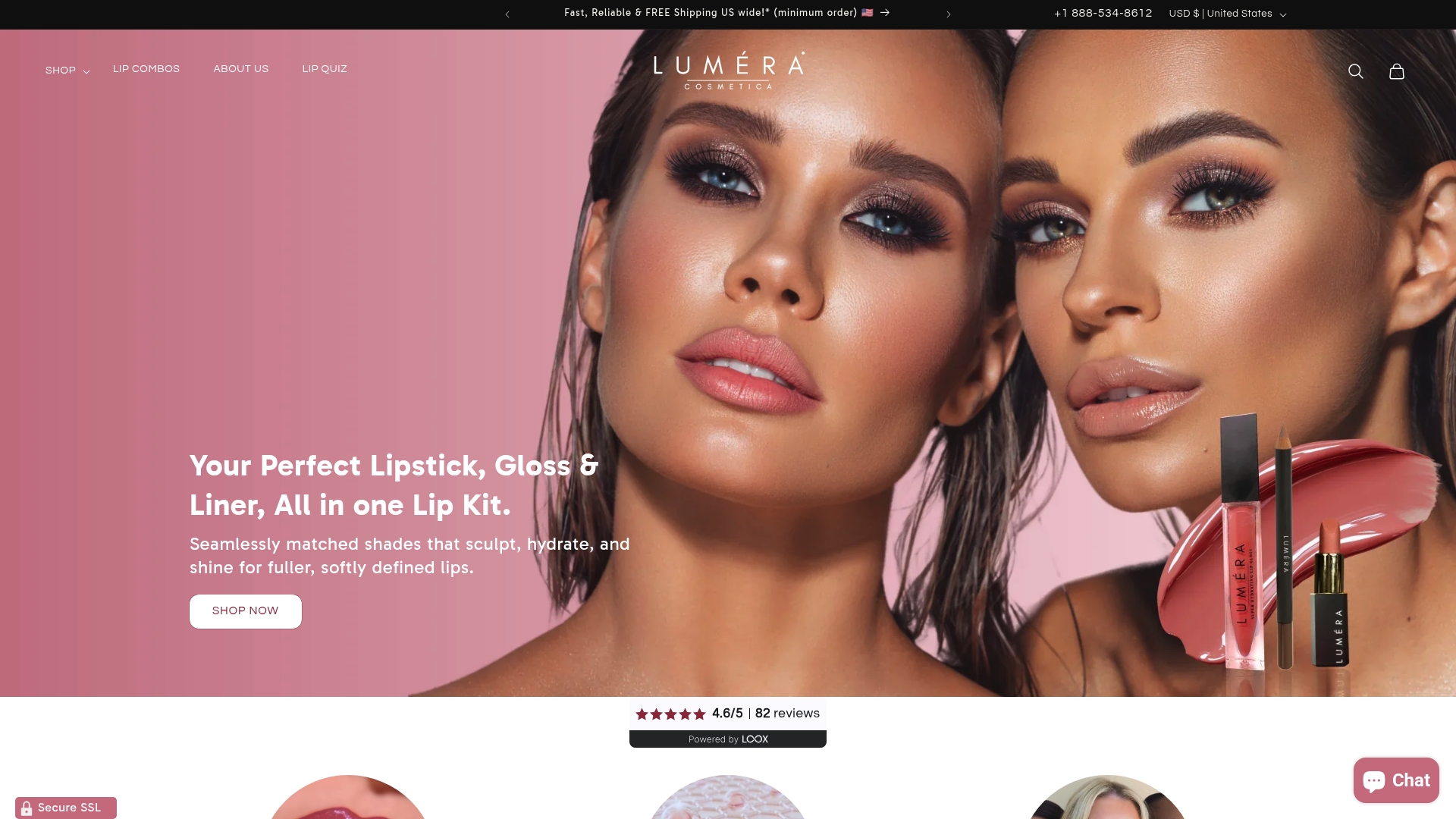
Every shade is shown with honest, editorial-quality imagery rather than studio lighting alone, so what you see is closer to what settles on your lips. Application and removal instructions come with each product, so you’re not guessing at prep steps the way peel-off newcomers often do.
If you want to see how the formulation and shade range work for your own lips, visit the Luméra Cosmetica landing page to explore the current lineup and application tutorials before you choose your next stain.
Frequently Asked Questions
What is a good lip stain, in one sentence? A good lip stain holds true color for several hours of real activity while keeping lips hydrated and comfortable, without relying on inflated wear-time claims.
What is the longest-lasting lip stain format? Peel-off masques typically deliver the longest, most even wear because their liquid-blading chemistry deposits pigment directly into the skin’s top layer, though they require careful prep.
What makes a good lip stain different from a regular lipstick? A stain uses dye that binds into the skin surface rather than sitting on top as a wax-and-pigment film, which is why it resists eating, drinking, and kissing better than most bullet lipsticks.
Are lip stains bad for hydration? Only if they’re poorly formulated. Stains built with hyaluronic acid, squalane, or shea butter maintain comfort through long wear; formulas relying purely on dye and alcohol tend to dry lips out faster.
How do you remove a stubborn lip stain? Micellar water or an oil-based cleanser breaks down pigment more effectively than soap and water, and a warm washcloth held against lips for a few seconds loosens the last traces without scrubbing.
Sources
Readers who want to dig into the original testing and formulation notes behind this guide can start with a handful of outlets that run repeatable, transparent protocols rather than one-time impressions.
- These Lip Stains Stay Fresh From Coffee to Cocktails | Allure
- The 12 Best Lip Stains of 2026, Tested and Reviewed | InStyle
- I Tested 20 Lip and Cheek Stains to Find the 3 Best | The Strategist
- The 8 Best Lip Stains of 2026, Tested and Reviewed | Byrdie
- The 3 Best Lip Stains of 2026 | Wirecutter
Testers across these outlets converge on the same point: even fade and genuine transfer resistance, verified through actual eating and drinking, tell you more than any number printed on packaging.


