

12 Lipstick Types With Pictures: A Visual Color Guide

The fastest way to understand lipstick types is to see them side by side: matte, satin, cream, gloss, sheer, liquid matte, stain, tinted balm, lip oil, metallic, velvet, and crayon all sit somewhere on a scale from barely there to fully opaque, and from featherlight to bulletproof.
- Each type below comes with a picture and a short, practical note on wear time and best use.
- You’ll also find a section matching shades to your undertone, since that matters more than the shade name on the tube.
- Skip ahead if you already know your finish preference and just need shade guidance.
Key Takeaways
Choosing the right lipstick comes down to matching finish and format to your occasion, and matching shade to undertone rather than skin color alone.
| Point | Details |
|---|---|
| Three axes define type | Finish, format, and pigment load combine to explain how any lipstick looks and wears. |
| Matte trades comfort for wear | Lower oil and more film formers make matte last for a substantial duration but feel drier than cream. |
| Undertone beats skin tone | Cool, warm, or neutral undertone determines which reds and nudes actually flatter you. |
| Neutralize lips for true color | A thin layer of concealer before swatching shows the tube’s actual shade, not your lip’s natural tint. |
| Liner and powder extend wear | Lining first and blotting with powder mid-wear are simple, product-free ways to make any formula last for a substantial duration. |
| Lumeracosmetica for shade matching | Lumeracosmetica’s shade and application guides help you pair the right finish and color to your undertone. |
Table of Contents
- Lipstick Types With Pictures: The Full Visual Gallery
- Finish vs. Format: Why Labels Matter More Than You Think
- How to Choose Lipstick by Skin Tone and Undertone
- Application and Longevity Tips by Lipstick Type
- What Most Guides Get Wrong About “Finding Your Shade”
- Find Your Match With Lumeracosmetica
- Frequently Asked Questions
- Sources
Lipstick Types With Pictures: The Full Visual Gallery
Here’s what each category actually looks like on the lip, plus the details that matter before you buy.
Matte
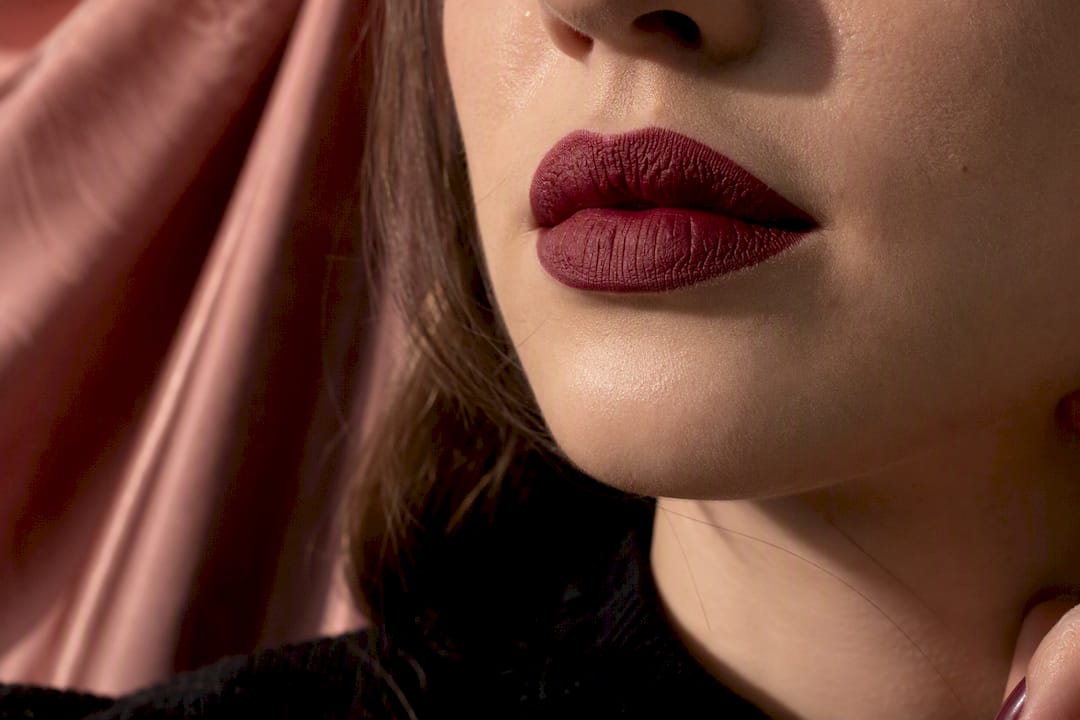
Full pigment, zero shine, and a dry finish that clings to lip texture. Matte formulas typically carry less oil and more film formers, which is exactly why they outlast a cream finish but can also settle into fine lines. Best for: work presentations, photos, anything where you don’t want to reapply every hour. Quick tip: prime with a thin layer of balm first or the color will grab onto dry patches.
Satin
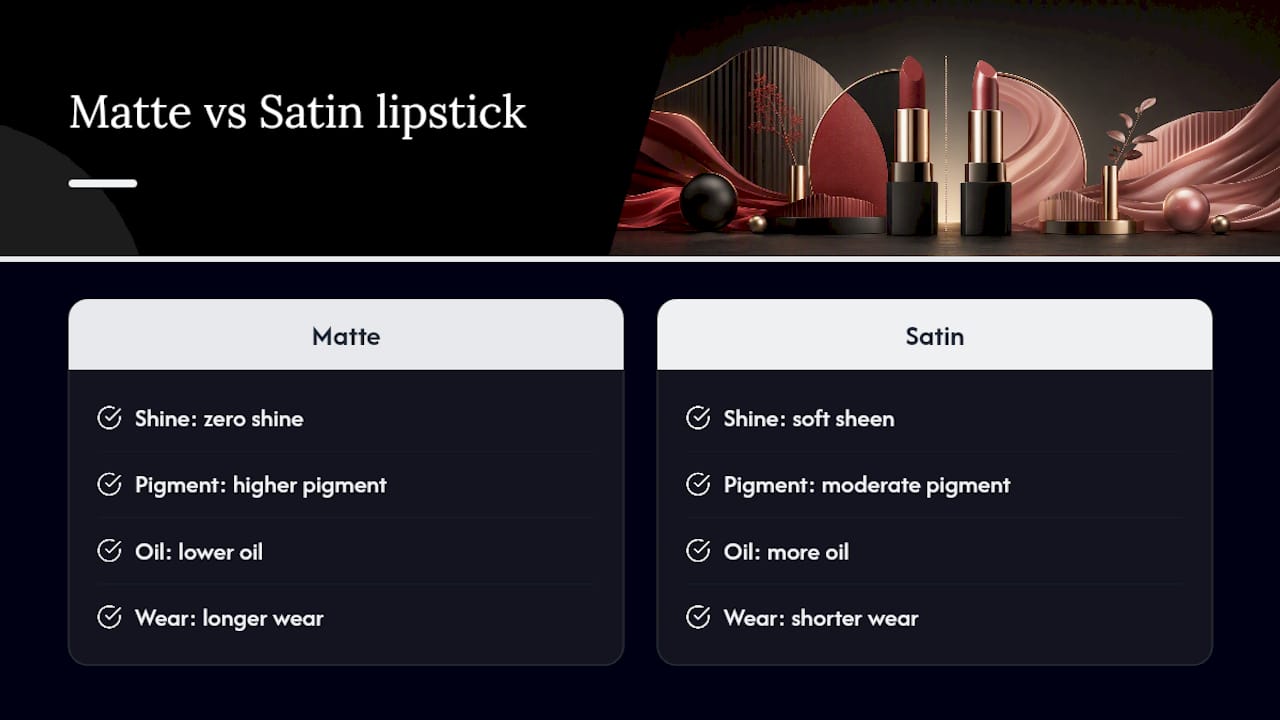
A soft, low sheen sits between matte and gloss. Pigment load is usually high but the finish reads more forgiving on textured lips. Best for: everyday wear when you want color without commitment to full matte.
Cream
Higher oil content makes cream formulas glide on easily and feel noticeably more hydrating than matte or satin. The tradeoff is shorter wear time, since cream formulas prioritize comfort over staying power. Best for: dry lips, cooler months, first-time lipstick wearers.
Gloss
Sheer to medium pigment with a wet, reflective finish. Gloss finishes work by bouncing light off the lip surface rather than by depositing heavy color, which is why they read youthful and low-maintenance. Best for: daytime, layering over other formulas.
Sheer
Low pigment load, often tinted rather than fully opaque. Color adapts slightly to your natural lip tone. Best for: minimal makeup days, beginners still figuring out shade preference.
Liquid Matte
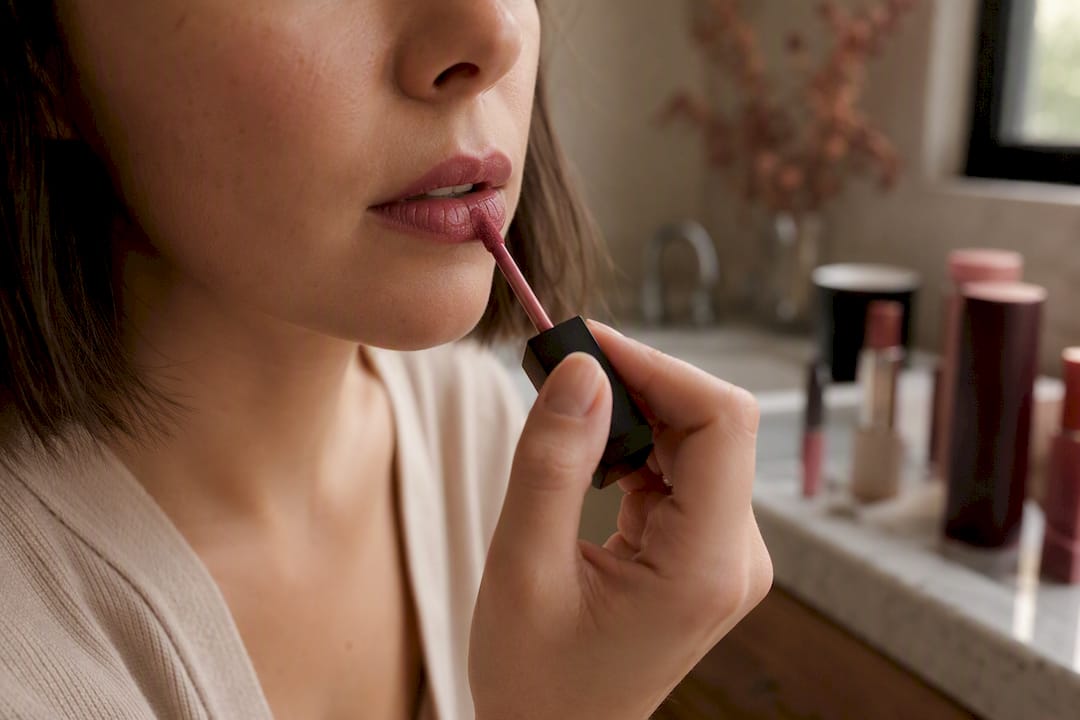
Applied wet with a doe-foot applicator, then it sets down dry and often transfer-resistant. Wear time tends to beat traditional bullet mattes. Best for: long events, humid climates. Quick tip: apply in thin layers, since a thick first coat cracks as it dries.
Stain
A tinted formula that bonds to the lip and leaves color behind even after the product wears off. Best for: anyone who hates reapplying and doesn’t mind a lighter, translucent look by the end of the day.
Tinted Balm
Balm-forward formula with a light wash of color. Comfort and hydration outrank pigment here. Best for: no-makeup makeup days, lip care combined with a hint of tint.
Lip Oil
Glossy, sheer, and genuinely nourishing thanks to a high oil base. Best for: overnight wear, treating chapped lips while still adding shine.
Metallic
Shimmer particles suspended in the formula catch light and add dimension. Pigment is usually full coverage. Best for: evening looks, statement makeup moments.
Velvet
A soft-focus matte with slightly more slip than a classic matte, so it looks plush rather than flat. Best for: readers who want matte’s staying power without the drying feel.
Crayon/Pot
Format, not finish. Crayons twist up like a pencil for quick application; pots require a fingertip or brush. Either can hold matte, satin, or cream formulas inside.
Pro Tip: If you’re trying to match a lipstick shade exactly to what you see in a photo or on a friend, dab a thin layer of concealer over your lips first. Natural lip pigment shifts the final color enough that testers and makeup artists routinely neutralize the lip before doing precise shade matching, especially for photos.
Finish vs. Format: Why Labels Matter More Than You Think
“Finish” describes how light interacts with the lipstick once it’s on: matte absorbs light, satin softens it, gloss and metallic reflect it. “Format” describes the packaging and application method: bullet, liquid, crayon, or pot. A single product can be a liquid matte, a cream bullet, or a metallic pot. Finish, format, and pigment load together are the three axes that actually explain why two lipsticks that look similar in the tube behave completely differently on the lip.
- Wax:oil ratio controls slip and longevity. More wax, less oil, means more staying power and less comfort.
- Film formers are what liquid mattes use to set into a transfer-resistant layer.
- Pigment load ranges from sheer tints to full opaque coverage, independent of finish.
Comfort-first formulas (cream, gloss, balm) sacrifice wear time. Longevity-first formulas (matte, liquid matte, stain) sacrifice slip. Pick based on whether you’re eating a three-course meal or standing in front of a camera for six hours.
How to Choose Lipstick by Skin Tone and Undertone
Skin tone tells you how light or deep your complexion is. Undertone tells you whether it leans warm, cool, or neutral, and that distinction matters more than the color of your skin itself when picking a flattering red or nude.
- Vein test: Green veins usually mean warm undertone; blue or purple veins usually mean cool; a mix suggests neutral.
- Jewelry test: If gold jewelry flatters you more than silver, you likely lean warm.
- Cool undertones tend to suit blue-based reds, berry, and rose shades.
- Warm undertones tend to suit coral, brick red, and warm nude shades.
- Deep skin tones often look striking in mauve, burgundy, and rich reds; medium tones suit roses, berries, and classic reds; light tones suit soft pinks, peaches, and light berries, according to Cosmopolitan’s shade-family breakdown.
Always swatch in natural daylight, not fluorescent store lighting, since both wildly distort true color. For a deeper shade breakdown by undertone, Lumeracosmetica’s lipstick color guide walks through specific shade families in more detail.
Pro Tip: Swatch on your inner wrist, not the back of your hand. Wrist skin is closer in tone to your lips and gives a far more accurate preview.
Application and Longevity Tips by Lipstick Type
- Prep first. Exfoliate gently, then apply a thin layer of balm and let it absorb for a minute before applying matte or liquid matte formulas, which grip better on smooth, hydrated lips.
- Line and fill bullet lipsticks with a matching liner to prevent color from bleeding and to add a base layer that extends wear.
- Blot, then set liquid mattes and long-wear formulas: apply, blot with a tissue, dust on translucent powder, then reapply a thin second coat for maximum staying power.
- Layer tinted balms and oils in two thin coats rather than one thick one for even, buildable color without patchiness.
- Seal stains by letting the first layer dry completely before deciding whether you need a second pass.
Pro Tip: Lip liner isn’t just for definition. Used as a base under any formula, it slows down feathering and gives sheer or cream lipsticks something to hold onto. For a full walkthrough, see Lumeracosmetica’s lipstick application steps or the matte lips step-by-step guide.
What Most Guides Get Wrong About “Finding Your Shade”
Most shade guides hand you a color wheel and call it done. That’s backwards. The finish decision should come before the shade decision, because a berry matte and a berry gloss photograph and wear completely differently even though they’d sit on the same swatch chart. I’d argue the undertone test matters less than how a shade behaves under your specific lighting and your specific lip texture, which is why the wrist test and daylight swatching aren’t optional steps, they’re the whole point.
The other overlooked piece: pigment load gets treated as a finish detail when it’s really its own variable. A sheer warm red and a full-coverage warm red aren’t interchangeable, even with identical undertone math behind them. Start with occasion and wear-time needs, then let undertone narrow the shade family, and only then worry about the exact name on the tube.
Find Your Match With Lumeracosmetica
Once you know your undertone and preferred finish, the harder part is finding a formula that actually delivers on both without drying out your lips by noon. Lumeracosmetica builds its lipstick range around that exact gap: shades organized by undertone family, and formulas engineered to hold pigment without the trade-off of a chalky, drying matte.
If you’re a reader who’s tested one too many mattes that crack by lunch, Lumeracosmetica’s non-drying lipstick line and long-lasting wear method are built specifically to close that gap. Browse the complete guide to lipstick types for women 30 to 60 to shop by finish and shade family, and pick the formula that matches the occasion you actually have coming up this week.
Frequently Asked Questions
What’s the difference between matte and satin lipstick? Matte has zero shine and higher pigment with lower oil, giving it longer wear but less comfort. Satin sits between matte and gloss with a soft sheen and a more forgiving feel on textured lips.
How do I know my undertone for lipstick shopping? Check your wrist veins (green suggests warm, blue or purple suggests cool) and note whether gold or silver jewelry flatters you more. Gold usually points to warm, silver to cool.
Which lipstick type lasts the longest? Liquid matte and stain formulas generally outlast traditional bullet lipsticks because they rely on film formers and skin-bonding pigments rather than a wax-based base.
Do I need lip liner for every lipstick type? Not strictly, but liner adds a base layer that slows feathering and extends wear, which matters most for sheer, cream, and liquid formulas that otherwise migrate.
What lipstick finish is best for beginners? Sheer, tinted balm, and satin formulas forgive uneven application and require little touch-up skill, making them the easiest starting point before moving to full-coverage mattes.
Sources
- What Lipstick Suits Me: How to Find Your Perfect Lip Colour — Liberty
- The Best Lipstick Colors for Every Skin Tone — Cosmopolitan
- Types of lipstick — MasterClass
- Types of Lipstick: A Guide to Every Finish and Style — Lipstick Queen


