Different Types of Lipstick: A Guide for Women 40+

TL;DR:
- Choosing the right lipstick type and shade enhances mature lips by avoiding dryness and emphasizing natural beauty. Creamy and semi-matte finishes provide hydration, comfort, and subtle volume, making them ideal choices. Applying liner and finger-patting techniques helps prevent feathering and extends wear.
Lipstick types are defined by their formula and finish, and choosing the wrong one can age your lips rather than flatter them. Matte, creamy, satin, glossy, sheer, and lip stain formulas each behave differently on mature skin. The different types of lipstick available today range from transfer-resistant film-former formulas to lightweight sheer tints, and understanding what separates them is the fastest way to find what actually works for your lips. Makeup artist Lisa Potter-Dixon confirms that the right tone and technique help women over 40 address thinning lips and fine lines directly.
What are the main types of lipstick and how do they differ?
Lipstick formulas fall into six core categories, each defined by its wax-to-oil ratio, pigment load, and finish agents. Manufacturers rigorously test wax ratios to prevent cracking and dragging, balancing waxes, oils, and film formers to produce distinct textures. That balance is what separates a creamy formula that glides on from a matte one that grips the lip surface.
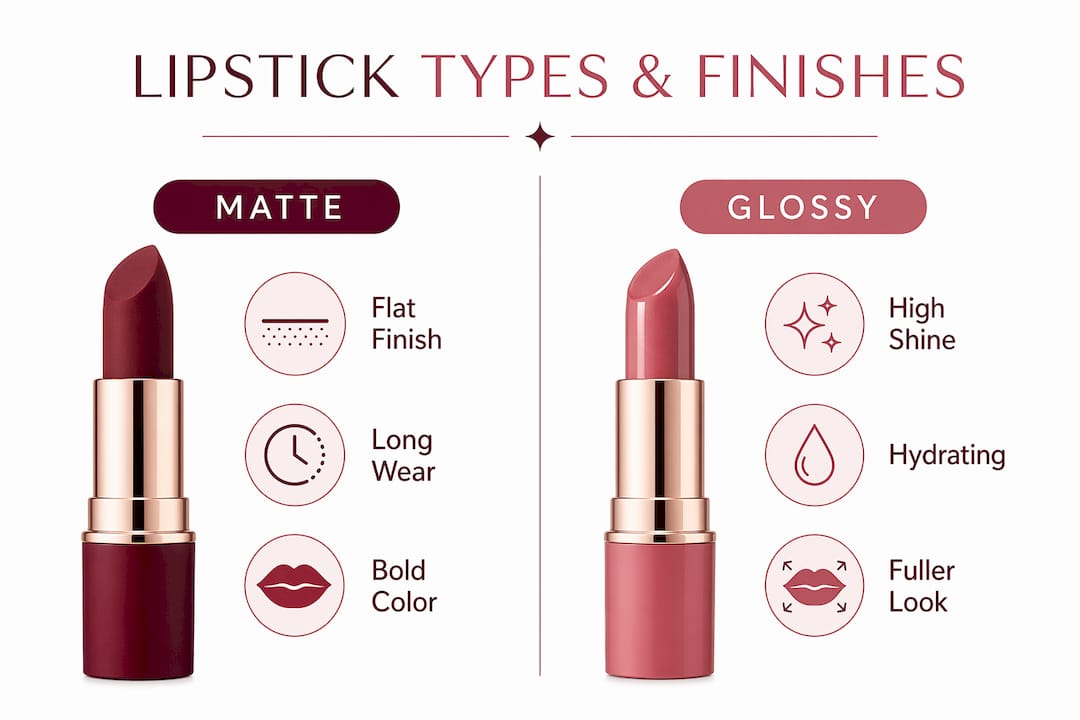
Matte lipstick uses high pigment loads and matting agents with minimal oil. The result is bold, flat color with strong transfer resistance. The tradeoff is dryness, which can settle into fine lines and make lips look thinner.
Creamy lipstick balances wax and emollient oils for a soft, slightly luminous finish. It applies smoothly, feels comfortable for hours, and suits mature lips well because it does not emphasize texture.
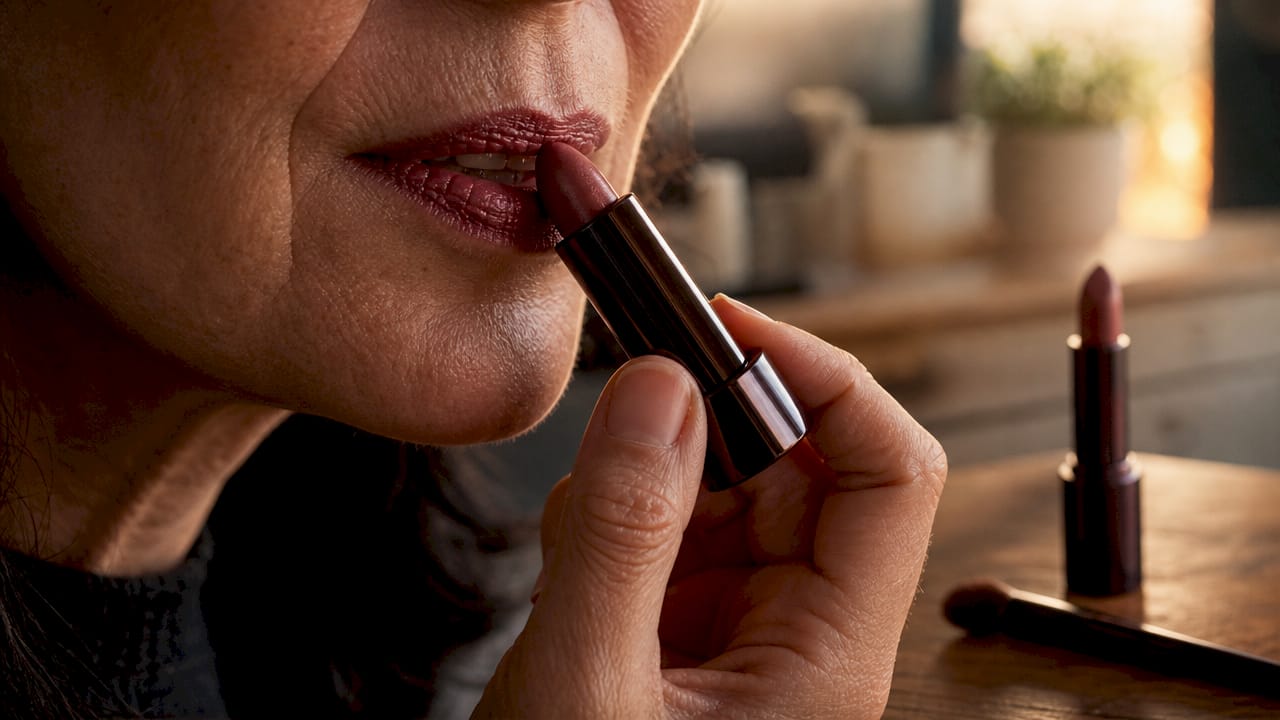
Satin sits between matte and creamy. It offers medium pigment with a subtle sheen and moderate wear. Think of it as the everyday workhorse finish.
Glossy lipstick relies on gloss enhancers and light-reflecting ingredients for high shine. It makes lips look fuller but transfers easily and requires frequent reapplication.
Sheer formulas carry low pigment and high oil content. They deliver a wash of color, feel almost weightless, and work well for casual or daytime wear.
Lip stains use water-based or alcohol-based dye technology. They deposit color directly into the lip surface, dry down completely, and last through meals and drinks. The downside is that they offer no moisture and can feel tight on dry lips.
| Type | Finish | Texture | Best for |
|---|---|---|---|
| Matte | Flat, no shine | Firm, dense | Evening, bold looks |
| Creamy | Soft luminosity | Smooth, emollient | Daily wear, mature lips |
| Satin | Subtle sheen | Medium weight | Office, versatile use |
| Glossy | High shine | Light, slick | Fuller lip effect |
| Sheer | Translucent glow | Lightweight, oily | Casual, natural looks |
| Lip stain | Stained, flat | Thin, drying | Long events, no-fuss wear |
How to choose the right lipstick type and shade for mature lips
Shade selection follows a clear rule: choose a nude one to two shades deeper than your natural lip tone. Going lighter creates an ashy, washed-out effect that reads as older rather than fresher. Going slightly deeper adds definition without looking overdone.
Skin undertone matters just as much as depth. Warm undertones (golden, peachy, olive) suit brick reds, terracottas, and warm browns. Cool undertones (pink, bluish, neutral) look best in berry, plum, and blue-based reds. Neutral undertones have the most flexibility and can wear both families well.
Lip fullness changes how a shade reads. Lighter and sheerer finishes create the visual illusion of fuller lips, while very dark shades can minimize lip size. For thinning lips, a creamy nude or soft rose in a satin finish does more flattering work than a deep plum matte. The Lumeracosmetica guide on lipstick for thin lips breaks this down with specific shade examples worth bookmarking.
Always test swatches on lips, not on the back of your hand. Lip skin has a different pigment density and undertone than hand skin, so the same shade reads completely differently in each location. This is especially true for women over 40, whose lip skin tone shifts with age.
Pro Tip: Apply a thin layer of lip balm before testing any new shade. It mimics the moisture level of your lips mid-day and gives you a truer read of how the color will actually wear.
The following steps make shade selection more reliable:
- Identify your undertone using the vein test (green veins suggest warm, blue-purple suggest cool).
- Pull three shades: one in your suspected range, one slightly warmer, one slightly cooler.
- Test all three directly on your lips in natural light.
- Choose the shade that makes your teeth look whiter and your skin look more even.
- For a full guide on matching color to skin tone, the Lumeracosmetica article on picking lip color walks through each undertone category in detail.
Matte vs. glossy lipstick: which finish actually works for mature lips?
Matte lipsticks use film formers and matting agents for bold color and transfer resistance. Glossy lipsticks use gloss enhancers for shine and easy application. Those two formulation approaches produce very different results on lips that have lost volume or developed fine lines.
Matte finishes photograph beautifully and last longer between touch-ups. The problem for mature lips is that matte formulas settle into vertical lip lines and can make lips look thinner and drier than they are. A liquid matte worn without a hydrating primer underneath often looks cakey by midday.
Glossy finishes reflect light, which visually plumps the lip. They feel comfortable and moisturizing throughout wear. The catch is that gloss transfers onto cups, collars, and phones, and needs reapplication every one to two hours. For a dinner out or a daytime event, gloss delivers a polished, youthful look with minimal effort.
The practical answer for most women over 40 is a satin or creamy semi-matte finish. Creamy and semi-matte textures are the most popular finishes among mature women because they combine comfort, hydration, and natural color. They do not settle into lines the way full mattes do, and they last longer than gloss without constant reapplication.
| Finish | Wear time | Hydration | Transfer resistance | Best occasion |
|---|---|---|---|---|
| Matte | 4–6 hours | Low | High | Evening, formal |
| Semi-matte | 3–5 hours | Medium | Medium | Daily, office |
| Glossy | 1–2 hours | High | Low | Daytime, casual |
| Sheer | 1–2 hours | High | Low | Casual, natural |
For occasions where you need long-lasting lip colors without constant touch-ups, a creamy semi-matte or a lip stain with a gloss overlay gives you the best of both worlds.
Application techniques that make lipstick last longer on mature lips
Preparation is the most skipped step in lipstick application, and it is also the most important one for mature lips. Start by exfoliating lips gently with a soft toothbrush or a sugar scrub two to three times a week. Follow with a hydrating balm applied at least five minutes before any lip color.
The application sequence matters:
- Apply a hydrating lip balm and wait five minutes.
- Blot away any excess balm with a tissue so the lip surface is not slick.
- Line lips with a natural-color lip liner that matches your natural lip tone. This defines the edge and prevents feathering regardless of the lipstick shade you choose on top.
- Apply your lipstick using a lip brush for precision, or use the bullet directly for a softer look.
- Use the finger-patting technique to press and blend color into the center of the lips. This softens the edges and prevents product from bleeding into fine lines.
- Blot once with a tissue, then apply a second thin layer for staying power.
- For gloss, apply a small dot to the center of the lower lip only and press lips together. This adds dimension without overloading the formula.
Pro Tip: Avoid applying lipstick directly from the tube in one swipe on mature lips. The drag of the bullet can pull at delicate lip skin and deposit uneven color. A lip brush gives you control over pressure and placement.
For fuller-looking lips, draw your liner just outside your natural lip line at the cupid’s bow and center of the lower lip. Keep the corners at your natural line to avoid an unnatural shape. The latest lipstick formula innovations blend comfort, hydration, and long-lasting color without heaviness, making them well suited to this layered approach.
Key takeaways
The most effective lipstick choice for women over 40 combines a creamy or semi-matte formula with a shade one to two tones deeper than the natural lip, applied with a liner and finger-patting technique to prevent feathering and maximize wear.
| Point | Details |
|---|---|
| Formula defines performance | Wax, oil, and film-former ratios determine texture, comfort, and how long color lasts. |
| Shade depth matters | Choose a nude one to two shades deeper than your natural lip tone to avoid a washed-out look. |
| Finish affects lip appearance | Creamy and semi-matte finishes flatter mature lips more than full mattes or heavy gloss. |
| Technique prevents feathering | Lip liner plus finger-patting stops color from bleeding into fine lines around the mouth. |
| Test on lips, not hands | Lip skin reads color differently than hand skin, so always swatch directly on your lips. |
What I’ve learned after years of watching lipstick trends come and go
The beauty industry cycles through finishes every few seasons, and I have watched full matte dominate, then gloss make its comeback, then “your lips but better” nudes take over. What stays constant is that the formulas that actually work on mature lips are rarely the ones getting the most attention on social media.
The biggest mistake I see is women over 40 reaching for the same matte liquid lipstick that looks incredible on a 25-year-old influencer. On mature lips, that formula settles into every line and drains color from the face. A creamy satin in a warm rose or a soft berry does more for a woman’s overall look than any trending ultra-matte shade.
The 2025 lipstick color trends are actually moving in a good direction for mature skin. Hydrated, skin-like finishes with real pigment are having a moment, and that is exactly what flatters lips that have lost a little volume. My advice is to build a small wardrobe of three to four formulas: one creamy everyday nude, one satin berry or rose for polish, one sheer gloss for weekends, and one long-wear semi-matte for events.
Stop chasing the formula that photographs best and start choosing the one that makes you feel most like yourself at noon, not just at 8 a.m. That is the real test of a great lipstick.
— Rebecca
Lumeracosmetica’s lip collections for women who want real results
Lumeracosmetica curates lip products specifically with mature skin in mind, from creamy everyday formulas to long-wear semi-mattes that hold up through full days without settling into lines.
The collections cover the full range of finishes discussed here, with shades developed to flatter warm, cool, and neutral undertones across a range of skin depths. Lumeracosmetica also carries a full eye makeup collection including mascaras, lashes, and eye shadows designed to complement lip looks for a complete, polished appearance. Pairing the right eye and lip products makes a significant difference in how a finished look reads, especially for women who want their makeup to feel effortless rather than heavy.
FAQ
What lipstick finish is best for mature lips?
Creamy and semi-matte finishes suit mature lips best. They hydrate without settling into fine lines and provide enough pigment for a polished look without heaviness.
How do I stop lipstick from bleeding into fine lines?
Use a lip liner matched to your natural lip tone before applying color, then press the lipstick in with a finger-patting motion. This technique reduces product migration into the lines around your mouth.
Should I test lipstick on my hand or directly on my lips?
Always test directly on your lips. Lip skin has a different pigment density and undertone than hand skin, so the same shade reads completely differently in each location.
What is the difference between matte and glossy lipstick?
Matte lipstick uses film formers and matting agents for flat, transfer-resistant color. Glossy lipstick uses gloss enhancers for shine and a fuller lip appearance, but it transfers more easily and needs more frequent reapplication.
How do I choose a nude lipstick that does not look washed out?
Select a nude shade one to two tones deeper than your natural lip color. Going lighter than your natural tone creates an ashy effect, while a slightly deeper nude adds definition and warmth.