What color lip liner works best for women over 40?

TL;DR:
- Choosing lip liner shades that match or subtly deepen your natural lip tone enhances age-related changes and ensures a natural appearance. Proper lip prep, a hydrating formula, and precise application techniques are essential for flattering results on mature lips. Expert-recommended shades and formulas from Luméra Cosmetica simplify selecting the ideal look tailored to your skin tone and texture.
Knowing what color lip liner to choose sounds simple until you are standing in front of a display wall with 40 shades and no clear guidance. The rules you may have heard — match your lipstick exactly, avoid dark liners, stick to nude — are either incomplete or flat-out wrong for mature lips. After 40, your lips have changed in ways that make the standard advice less reliable. Volume decreases, the lip border softens, and fine lines appear at the edges. The liner color and formula you choose can either work with those changes or against them. This guide gives you a clear, experience-based framework for getting it right.
Table of Contents
- Why lip liner color matters for mature lips
- How to choose the right lip liner color for your natural lips
- Recommended lip liner shade ranges for women over 40 in Australia and Europe
- Why liner formula matters: gel-like and hydrating options for mature lips
- Application tips for mature lips to enhance natural beauty with lip liner
- A fresh perspective: Rethinking lip liner color choices beyond age-based rules
- Explore expert lip liner choices at Luméra Cosmetica
- Frequently asked questions
Key Takeaways
| Point | Details |
|---|---|
| Match natural lip color | Choose a lip liner color that matches or is just slightly deeper than your natural lip tone for mature, natural-looking lips. |
| Prioritize formula | Select gel-like or hydrating lip liners to avoid feathering and to glide smoothly over fine lines. |
| Prep lips properly | Exfoliate and moisturize lips regularly to create a smooth base for perfect liner application. |
| Use light strokes | Apply lip liner with gentle, soft strokes rather than hard, continuous lines to enhance definition without harshness. |
| Explore tailored shades | Opt for shades recommended by makeup artists for your skin tone, such as Mac Whirl or Makeup Forever for Australian complexions. |
Why lip liner color matters for mature lips
The way lip liner behaves on mature skin is genuinely different from how it performs on younger skin. As lips lose volume and definition with age, the natural border becomes less distinct, making liner placement and color more important, not less. A shade that is too light disappears. One that is too dark draws attention to fine lines rather than the lips themselves.
Feathering is the most common complaint among women over 40, and it is almost always a color-plus-formula problem together. When liner migrates into the small vertical lines above the lip, it creates a blurred or messy effect that no amount of setting spray will fix after the fact. The solution starts before you even open the liner.
Lip prep matters as much as color because dryness and texture make liners look less smooth and more likely to look messy. Exfoliate gently with a soft toothbrush or sugar scrub two to three times a week, then follow with a nourishing balm before any liner touches your lips. This step alone changes how evenly color deposits.
Key things to keep in mind before choosing your shade:
- Lip border clarity decreases with age, so liner must compensate with precise but soft placement
- Lip texture affects color payoff — dry, lined lips absorb pigment unevenly
- Line thickness matters — a thinner, softer line reads more naturally on mature lips than a bold, defined outline
- Natural lip tone shifts with age, often becoming slightly paler or more uneven, which affects how liner shades appear
For more on enhancing mature lips daily, understanding your starting point is essential. Now that you understand why mature lips need special consideration, let’s explore how to choose the ideal lip liner color for you.
How to choose the right lip liner color for your natural lips
The single most flattering approach for women over 40 is to work with your natural lip tone rather than override it. This does not mean playing it so safe the liner is invisible. It means using color strategically to add definition, dimension, and staying power without creating a hard border that emphasizes lines.
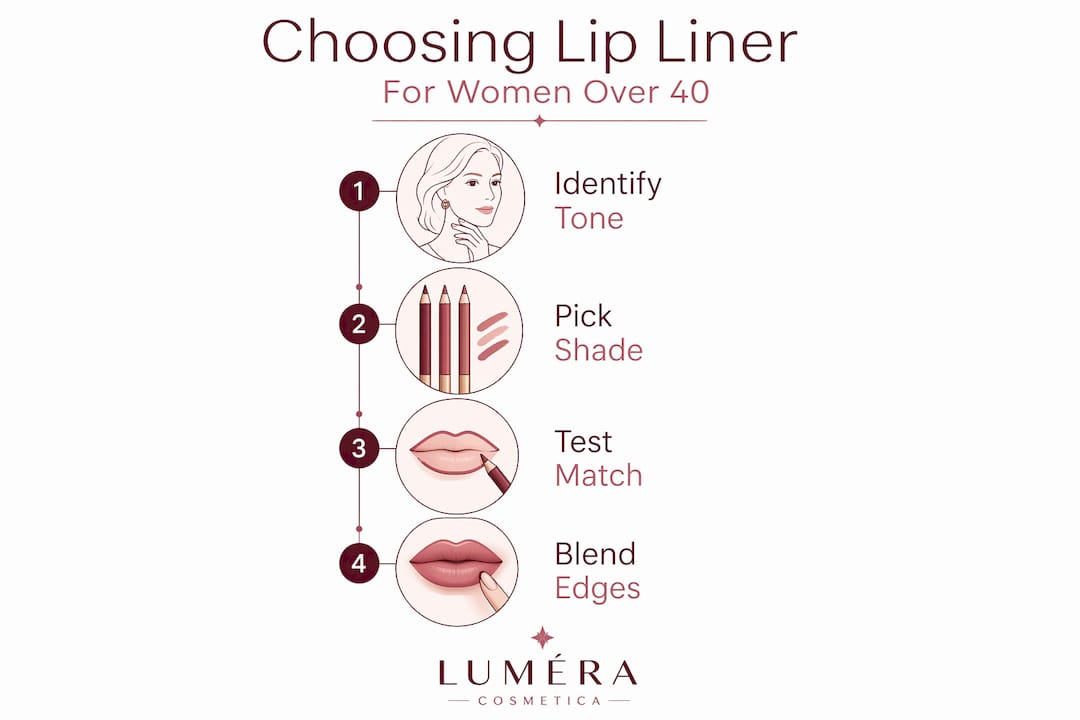
Many makeup artists recommend choosing a lip liner that matches your natural lip color or is 1 to 2 shades deeper for a natural, “your-lips-but-better” result. That one-to-two shades rule is more flexible than it sounds because it still gives you room for warmth, depth, or a slight pinkier tone depending on your undertone.
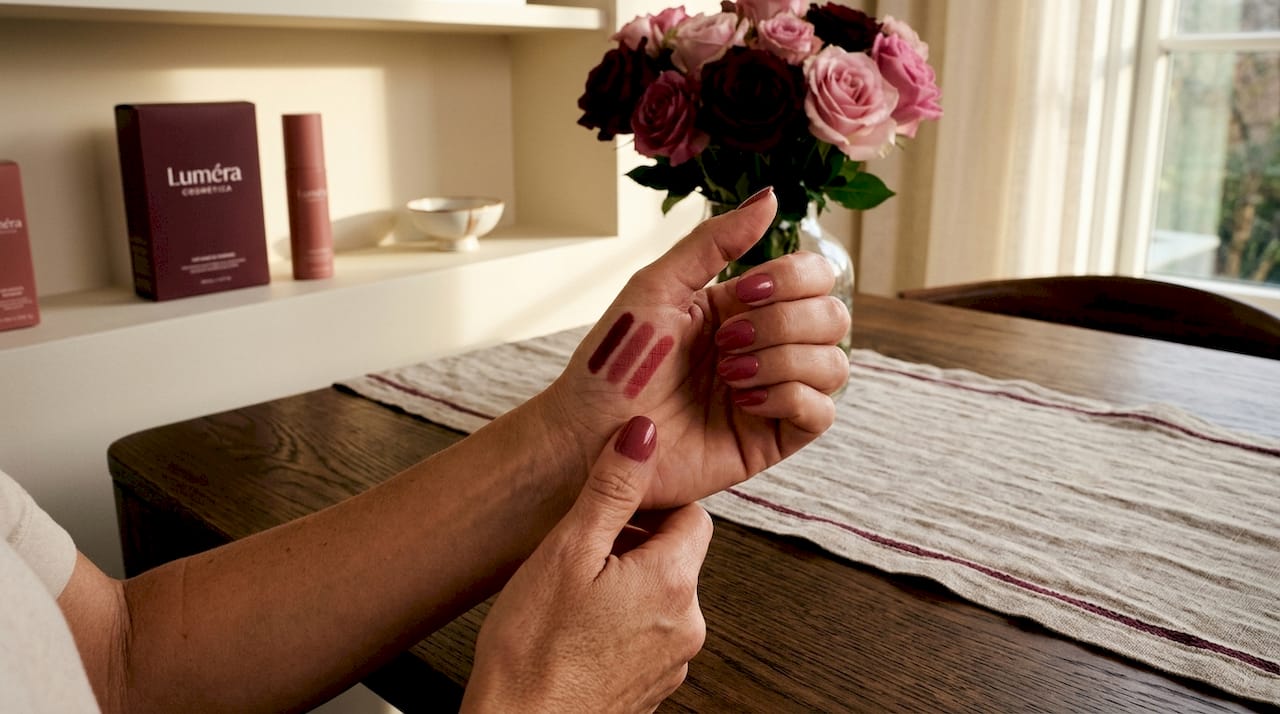
Understanding your undertone changes everything. Women with warm undertones (golden, peachy, or olive skin) look best in liners with brown or terracotta warmth. Cool undertones (pink, rosy, or bluish veins at the wrist) are flattered by liners with a slightly rosier or mauve base. Neutral undertones have the most flexibility and can wear both. Matching liner to your undertone prevents that slightly “off” quality where the liner looks applied rather than natural.
| Skin tone | Undertone | Flattering liner shades |
|---|---|---|
| Fair | Cool | Soft pink, rosy nude, muted mauve |
| Fair | Warm | Peachy nude, dusty rose, light terracotta |
| Medium | Cool | Berry-toned nude, rose-brown, soft plum |
| Medium | Warm | Warm nude, caramel, soft mocha |
| Deep | Cool | Rich berry, raisin-nude, deep mauve |
| Deep | Warm | Warm brown, brick red, deep terracotta |
A few principles for matching liner to your lipstick:
- For a monochromatic look, match liner as closely to your lipstick as possible and blend the edges inward
- For dimension and longer wear, go one to two shades deeper than your lipstick at the outer corners
- For a plumping effect, line just at or barely above the natural border and fill the entire lip
Pro Tip: If you are unsure whether a liner matches your lip tone, swatch it on the inner part of your lower lip, not your hand. That skin is the closest match to your actual lip color.
Blending is non-negotiable. After lining, use a fingertip or a small brush to soften the edge inward. This removes any hard lines and makes the whole thing look like your lips, only better. For recommendations on best nude lip liner options and best nude pink lip liners over 40, those curated guides go deeper into specific shade selections by skin tone.
With the importance of natural color matching clear, let’s look at which shades Australian and European experts recommend.
Recommended lip liner shade ranges for women over 40 in Australia and Europe
Knowing the category of shade you need is helpful. Knowing the specific products that makeup artists in Australia and Europe reach for repeatedly is more useful. Australian makeup artists’ go-to nude and neutral liner shades include MAC Whirl, Makeup Forever Anywhere Caffeine, MAC Cork, MAC Chestnut, and MAC Greige. Each one occupies a distinct part of the nude-to-neutral spectrum.
| Shade | Brand | Best for | Tone description |
|---|---|---|---|
| Whirl | MAC | Fair to light medium skin | Dusty muted pink, cool-neutral |
| Anywhere Caffeine | Makeup Forever | Light medium to medium skin | Warm peachy brown, golden warmth |
| Cork | MAC | Medium skin | Warm nude brown, versatile |
| Chestnut | MAC | Medium to deep skin | Rich warm brown, deep neutral |
| Greige | MAC | Cool-toned, unique looks | Gray-brown, cool and editorial |
What makes these shades work for mature skin is not just the color family. It is how they sit at the intersection of warmth, neutrality, and wearability. None of them skew too pink (which can look harsh) or too brown (which can look dated). They all land in a flattering middle ground.
A few notes on using these shades well:
- MAC Whirl layers beautifully under sheer pink lipsticks and is especially popular in Australia for its year-round versatility
- Anywhere Caffeine adds warmth without orange undertones, making it a strong choice for European olive complexions
- MAC Greige is underused and underrated. On the right cool-toned complexion, it creates a modern, sophisticated result that warmer liners cannot
Pro Tip: Do not limit yourself to one liner. Many makeup artists use two, applying a deeper shade at the outer corners and a closer-to-natural shade at the cupid’s bow to create dimension across the whole lip.
For a detailed top selling lip liners comparison and more on mocha lip liner for mature beauty, those resources break down formula and finish alongside shade recommendations. Knowing your ideal shade range is essential, but product formula and finish also hugely impact your lip liner experience.
Why liner formula matters: gel-like and hydrating options for mature lips
Color and formula are inseparable. You can choose the perfect shade and still have a disappointing result if the formula drags, dries, or feathers within an hour. Mature lips need formulas that were actually designed with texture and hydration in mind.
Gel-like liners prevent feathering and settling into fine lines on mature skin because of their smooth glide and lasting definition. Unlike waxy pencils that require pressure to deposit color, gel-style liners release pigment with a light touch, which means less dragging across delicate skin.
Hydrating formulas with ingredients like jojoba oil, mango seed butter, and hyaluronic acid prevent feathering and create a fuller, smoother pout on mature skin. These are not luxury add-ons. They are functional ingredients that directly improve how liner sits on lips that have lost elasticity and moisture retention.
What to look for in a liner formula if you are over 40:
- Smooth, creamy or gel-like texture that glides without tugging
- Hydrating ingredients such as jojoba oil, shea butter, or hyaluronic acid
- Long-wearing but not drying formulas that hold color without stiffening or cracking
- A fine tip that allows precision without requiring excessive pressure
- No transfer or bleeding within the first hour of wear
“The best liner for mature lips is not necessarily the longest-lasting one. It is the one that stays smooth, comfortable, and true to color throughout the day without migrating into fine lines.”
Pro Tip: Lightly dust a translucent setting powder around the lip border before applying liner. This creates a physical barrier that significantly reduces feathering, especially in warmer climates like Australia.
For more on lip liner techniques for flawless definition and advice specifically on preventing dryness and feathering, those guides pair well with everything in this section.
Application tips for mature lips to enhance natural beauty with lip liner
The right liner and the right color only get you halfway there. Application technique determines whether all of that knowledge translates into an actual flattering result. These steps are simple and take less than two minutes once they become habit.
- Prep your lips first. Exfoliate gently, then apply a thin layer of hydrating balm. Blot lightly with a tissue before applying liner so the lip is moisturized but not slippery.
- Start at the cupid’s bow. Define the two peaks first, then trace each side down toward the corners. This gives you a guide to follow and prevents asymmetry.
- Use light, feathered strokes. Celebrity makeup artist Joel Vasquez recommends applying with whisper-soft strokes instead of one aggressive continuous line, especially on mature lips.
- Fill the entire lip with liner. This extends lipstick wear significantly and creates a fuller appearance. Think of liner as the base coat for your lip color, not just the border.
- Blend the edges inward. Use a fingertip or a small flat brush to soften the liner edge. This eliminates any harsh outline and gives the whole look a seamless finish.
- Avoid overlining beyond a natural range. Tracing slightly above the natural border at the cupid’s bow adds definition and lift. Going too far beyond it at the sides or lower lip looks unnatural on mature skin.
Pro Tip: After filling lips with liner and applying lipstick, press a single ply of tissue against the lips and lightly dust translucent powder over it. This locks everything in without dulling the color.
For a deeper look at best lip liner techniques, that resource covers angles and pressure variations that most tutorials skip entirely. Let’s reflect on what all these factors mean and share some fresh insights about lip liner choices for mature women.
A fresh perspective: Rethinking lip liner color choices beyond age-based rules
Here is something the standard lip liner advice almost never says: the rules about what women over 40 “should” or “should not” wear are less about what actually flatters and more about outdated assumptions. Telling mature women to always stick to nudes is as unhelpful as telling younger women to always go bold. Color is a tool, not a rule.
The more useful framework is goal-driven. Use a liner one to two shades darker than your lipstick for dimension, or match your natural lip color to enhance it subtly. That is it. Two goals, two approaches. Everything else follows from there.
What we consistently see is that the women who get the best results from liner are not necessarily the ones using the “correct” age-appropriate shade. They are the ones who have done two things: prepped their lips properly and chosen a formula that works with their texture. Preparation and formula almost always outperform strict shade matching in terms of real-world results.
There is also an undertone problem that almost nobody talks about. Many women over 40 have slightly paler lips than they did at 25, which shifts what reads as “natural.” A liner that matched your lip tone at 35 may now sit noticeably darker. Revisit your liner shade every few years with fresh eyes. Your natural lip tone is not static.
Finally, soft and blended does not mean invisible. Some of the most elegant lip looks on mature women come from a slightly deeper liner, beautifully blended, worn with a sheer lipstick on top. It creates dimension and definition without a harsh line anywhere. For daily inspiration on enhancing mature lips, that kind of layered approach is consistently the one readers find most wearable.
Explore expert lip liner choices at Luméra Cosmetica
Finding the right lip liner color should not require trial and error across a dozen products. At Luméra Cosmetica, the selection is built specifically for mature lips, with formulas that glide smoothly, shades inspired by what professional makeup artists in Australia and Europe actually reach for, and detailed guidance to help you apply everything correctly.

Whether you are looking for a classic nude, a warm mocha, or something with a touch more depth, Luméra Cosmetica has curated options across every skin tone and undertone. The site also provides application guides, shade-matching support, and expert customer assistance so you never have to guess. From first-time lip liner users to women refining a look they have worn for years, the range and the resources are there to help you feel confident every time.
Frequently asked questions
What lip liner color is best for women over 40 to look natural?
Choose a lip liner that closely matches your natural lip color or is 1 to 2 shades deeper to create a flattering, natural result without harsh lines. Matching your undertone is just as important as matching the overall depth of color.
How can I prevent lip liner from feathering into fine lines as I age?
Use a gel-like liner with hydrating ingredients like jojoba oil, and always prep your lips with exfoliation and a moisturizing balm before application. A light dusting of translucent powder around the lip border before lining also creates a physical barrier against migration.
Are there specific lip liner shades recommended for Australian skin tones over 40?
Yes, go-to neutral shades from Australian makeup artists include MAC Whirl for fair tones, Makeup Forever Anywhere Caffeine for medium complexions, and MAC Chestnut for deeper skin tones. All offer flattering nude or neutral hues that suit mature skin.
What is the best way to apply lip liner for mature lips?
Apply with light, feathered strokes just at or slightly above the natural lip line, blend the edges inward, and fill the entire lip area with liner before applying lipstick. Avoid pressing hard or drawing one continuous aggressive line.