Recognize the signs of lipstick expiration for safer makeup

TL;DR:
- Lipstick expires due to oxidation, bacterial growth, and environmental factors, affecting safety and performance.
- Signs of expiration include rancid smell, changed texture, color fading, mold, and application issues.
- Using expired lipstick poses health risks like bacterial infections and lip irritation; proper storage extends shelf life.
Most women have a lipstick they’ve held onto for years, a beloved shade tucked in a drawer or handbag, barely touched but never tossed. The problem is that many women use lipsticks long after expiration without noticing the subtle warning signs creeping in. Expired lipstick isn’t just a beauty concern. It’s a hygiene issue that can affect your lip health in real ways. This guide walks you through exactly why lipstick expires, how to spot the signs with confidence, what risks you’re taking by ignoring them, and how to store your favorites so they last as long as safely possible.
Table of Contents
- Why lipstick expires: What causes change
- The unmistakable signs your lipstick has expired
- Health risks of using expired lipstick
- Safe practices: Storing lipstick to extend freshness
- Aging beautifully means letting go: Our take on lipstick expiration
- Discover safe, elegant lipstick options
- Frequently asked questions
Key Takeaways
| Point | Details |
|---|---|
| Check smell and texture | A sour or chemical scent, or a gritty texture, often signals lipstick expiration. |
| Safe storage matters | Keep lipstick cool, dry, and sealed to extend shelf life and protect your lips. |
| Prioritize lip health | Using expired lipstick increases risk of irritation and infection. |
| Replace regularly | Swap lipsticks every 1-2 years or earlier if you spot warning signs. |
Why lipstick expires: What causes change
Lipstick feels like a simple product, but its formula is actually a careful balance of ingredients working together. Every tube contains oils, waxes, pigments, and preservatives, each playing a specific role in texture, color payoff, and longevity. When any of those ingredients begin to break down, the whole formula shifts.
The main culprits behind expiration are oxidation of oils and waxes, preservative breakdown, and bacteria introduced from direct contact with your lips. Every time you apply lipstick, you’re transferring microorganisms onto the bullet. Over time, those bacteria multiply, especially when the cap is left off or the tube is stored somewhere warm.
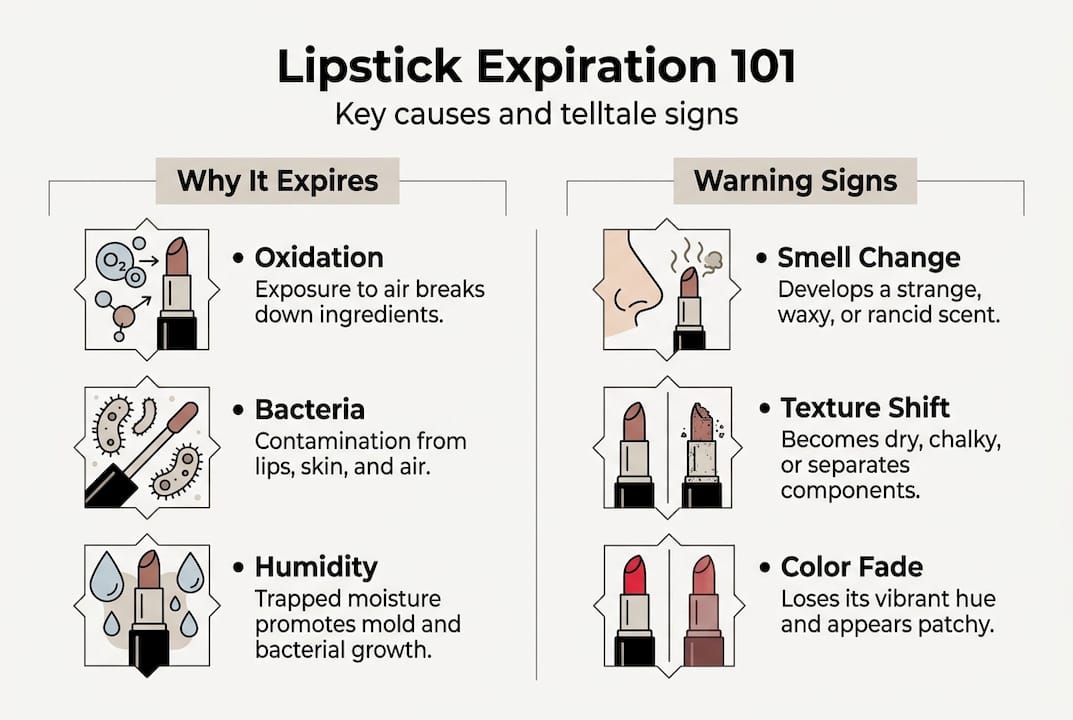
For women in Australia and parts of Europe, climate plays a bigger role than many realize. Heat and humidity accelerate the breakdown of both oils and preservatives. A lipstick sitting on a sunny bathroom shelf in summer is aging far faster than one kept in a cool, dry drawer. Light exposure also degrades pigments, which is why colors can shift or fade even before you notice texture changes.
Understanding lipstick basics helps you see why shelf life matters so much. As a general rule, unopened lipstick lasts around 18 to 24 months. Once opened, that window shortens depending on how often you use it, how you store it, and your environment.
| Lipstick status | Typical shelf life |
|---|---|
| Unopened, cool storage | Up to 24 months |
| Opened, ideal conditions | 12 to 18 months |
| Opened, warm or humid climate | 6 to 12 months |
| Shared or frequently used | 6 months or less |
“Expiration is driven by oxidation of oils and waxes, preservative breakdown, bacterial introduction via lips, and is accelerated by heat, humidity, and light.”
The formula doesn’t announce when it’s failing. It just quietly changes, which is exactly why knowing the signs matters so much.
The unmistakable signs your lipstick has expired
Knowing why lipstick expires, here are the most common and reliable signs to check for. The good news is that your senses are your best tools. You don’t need any special equipment, just a moment to actually look, smell, and swatch before you apply.
Smell is usually the first thing to change. Fresh lipstick has a faintly sweet, waxy, or neutral scent. Expired lipstick often smells rancid, sour, or vaguely chemical. If you open a tube and something feels off about the scent, trust that instinct.
Texture is the next giveaway. A good lipstick glides on smoothly. When it’s past its prime, it can feel crumbly, gritty, sticky, or unusually hard. Sometimes it drags instead of gliding, which is a clear sign the wax structure has changed.
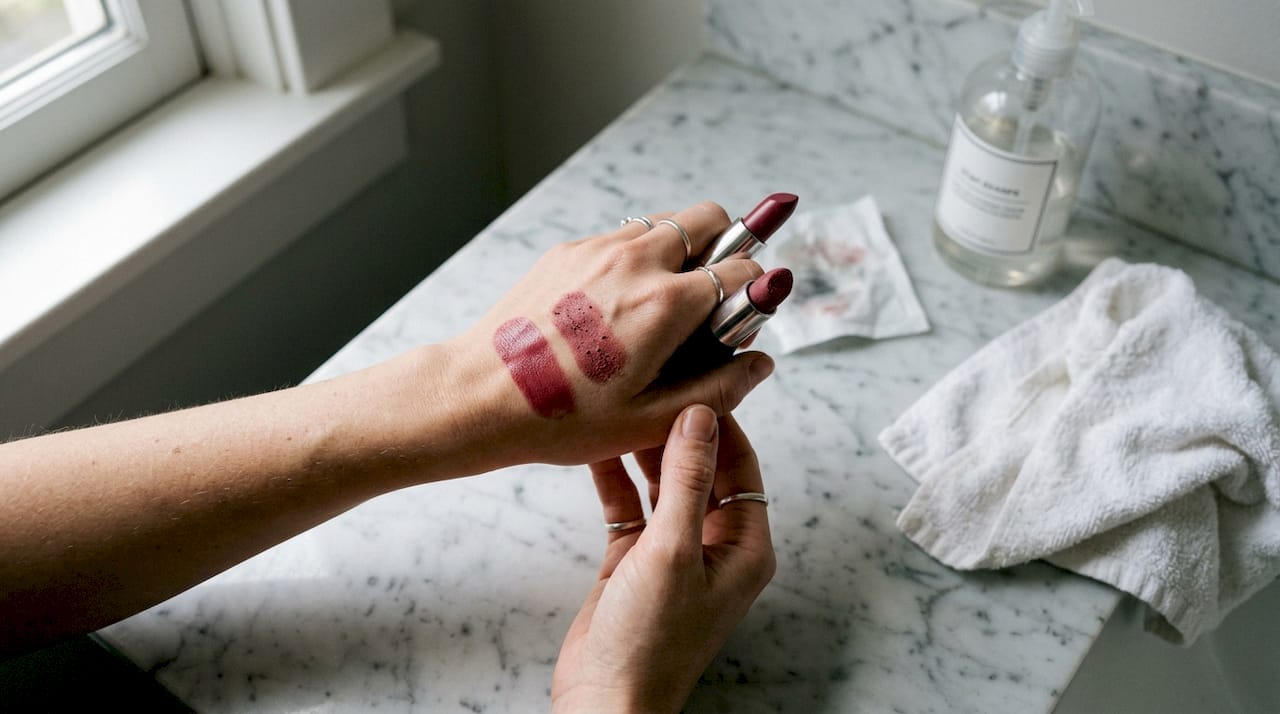
Color shifts are subtler but just as telling. Fading, darkening, or a dull, chalky appearance all signal that pigments have degraded. If your favorite red suddenly looks more brick than cherry, it may not be the lighting.
Performance drops noticeably too. Patchy application, clumping, or flaking mid-wear are signs the formula is no longer cohesive. A lipstick that used to last hours but now fades within minutes has likely broken down.
Visual clues on the bullet itself are the most obvious. Look for:
- Visible mold (usually fuzzy or discolored spots)
- Deep cracks running through the bullet
- Oil beads or a sweating appearance on the surface
- A white or grayish film forming on top
The primary signs of expired lipstick include changes in smell, texture, color, poor performance, and visible mold or oil beads. Any one of these is enough reason to toss it.
| Sign | Fresh lipstick | Expired lipstick |
|---|---|---|
| Smell | Sweet, waxy, neutral | Rancid, sour, chemical |
| Texture | Smooth, glides easily | Crumbly, sticky, gritty |
| Color | Vibrant, true to shade | Faded, dull, or darkened |
| Application | Even, long-lasting | Patchy, flaking, clumping |
| Appearance | Clean bullet | Mold, cracks, oil beads |
Pro Tip: Do a quick smell and texture check every time you reach for a lipstick you haven’t used in a while. It takes five seconds and could save your lips from irritation. You can also find practical lipstick preservation tips and common lipstick mistakes to avoid to keep your collection in better shape longer.
Health risks of using expired lipstick
Spotting expired lipstick is about more than appearance. Your health matters too, and the risks of ignoring expiration signs are more real than most people expect.
Expired lipstick can harbor harmful bacteria, including strains that cause skin infections. Every application puts that bacteria directly onto your lips, which are thin-skinned, sensitive, and closely connected to your mouth. Bacterial growth can cause irritation, infection, and allergic reactions, none of which are worth the risk of holding onto an old favorite.
The most common reactions include:
- Redness or inflammation around the lips
- Persistent itchiness or a burning sensation
- Swelling or puffiness that doesn’t resolve quickly
- Unusual dryness, peeling, or cracking
- Cold sore outbreaks triggered by bacterial or viral contamination
Women over 40 often have slightly more reactive skin, so these symptoms can appear faster and linger longer than they might have in younger years. If you notice any of these signs after applying a lipstick, stop using it immediately and discard the tube.
“Bacterial growth in expired cosmetics can cause irritation, infection, and allergic reactions that range from mild to serious.”
It’s also worth noting that reactions aren’t always immediate. Sometimes a lipstick causes low-grade irritation for weeks before you connect it to the product. If your lips feel persistently dry or reactive and you can’t identify the cause, check the age of every lip product you’re using.
For more guidance on avoiding common application errors that can also affect lip health, the expert lipstick tips we’ve put together for women over 40 are a helpful read. The bottom line is simple: when in doubt, throw it out.
Safe practices: Storing lipstick to extend freshness
Knowing what to look for and why, here’s how to keep your lipsticks fresher, safer, and beautiful for longer. Storage habits make a far bigger difference than most women realize, and small changes can meaningfully extend the life of a quality formula.
Heat, humidity, and sunlight speed up lipstick’s breakdown, so where you keep your tubes matters as much as how you use them. The bathroom, despite being the most common storage spot, is actually one of the worst places due to steam and temperature swings.
Here’s a simple routine to protect your collection:
- Store in a cool, dry place. A bedroom drawer or a dedicated cosmetics organizer away from windows is ideal.
- Keep away from direct sunlight. UV exposure fades pigments and breaks down oils faster than almost anything else.
- Seal tightly after every use. Leaving the cap off, even briefly, lets air and bacteria in.
- Wipe the tip with a clean tissue after each use. This removes surface bacteria and keeps the bullet cleaner between applications.
- Never share lipstick. Sharing transfers bacteria directly, dramatically shortening the safe use window.
- Track your open dates. Write the date you first opened each tube on a small sticker on the base. It takes seconds and removes all guesswork.
Pro Tip: If you live somewhere with hot summers, consider storing your most-used lipsticks in a small cosmetics fridge or the coolest room in your home during peak heat months. It genuinely extends their life.
Building a reliable long-lasting lipstick method starts with keeping your products in good condition from day one. And if you’re building or refining your daily routine, a solid everyday lipstick routine designed for women over 40 can help you get the most from every tube you own.
Aging beautifully means letting go: Our take on lipstick expiration
Here’s a perspective that doesn’t get said enough: holding onto expired makeup isn’t frugal. It’s actually a form of self-neglect dressed up as practicality.
We understand the attachment. A lipstick in the perfect shade feels irreplaceable. But beauty products have a life cycle, and using them past it doesn’t honor that shade or your skin. It works against both.
What we’ve seen, again and again, is that women who regularly edit their makeup collections feel more confident and more in control of their look. Letting go of what’s past its prime makes room for formulas that actually perform. It’s not about spending more. It’s about using what you have intentionally and replacing it when it’s genuinely time.
Choosing quality formulas and refreshing your collection as needed is a form of self-care that compounds over time. Your lips deserve products that are working for them, not against them. For practical lipstick longevity advice tailored to women over 40, we’ve put together a guide that makes this process feel simple rather than overwhelming.
Discover safe, elegant lipstick options
If you’ve gone through your collection and realized it’s time for a refresh, that’s actually a great place to be. You now know exactly what to look for, what to avoid, and how to store your products properly.
At Luméra Cosmetica, we formulate our lip products with longevity and safety in mind, so you get vibrant color and reliable performance from the first application to the last. Whether you’re looking for your next everyday shade or something a little more special, our collection is built for women who care about what they put on their skin. Explore our full range and find lipsticks that work as beautifully as they look.
Frequently asked questions
How long does lipstick really last after opening?
Most lipsticks last 12 to 24 months after opening, but watch closely for changes in smell, texture, or color as reliable indicators that it’s time to toss.
Is it safe to use lipstick past the expiration date if it looks fine?
Even if lipstick looks okay, bacteria can be present without visible signs, so it’s best to follow expiration guidelines and discard at the first hint of any change.
What are the first warning signs of expired lipstick?
A change in smell is usually the earliest sign, and changes in smell, texture, and color are the most reliable indicators to check before applying.
Can using expired lipstick damage my lips permanently?
Most problems are temporary, but infections from old lipstick can cause lasting damage if not treated promptly, so act quickly if you notice any irritation or unusual symptoms.