What is pH reacting lipstick? The science behind it

TL;DR:
- pH reacting lipstick changes color based on skin chemistry, mainly producing a soft pink shade.
- These lipsticks offer a natural, hydrating finish ideal for effortless, mature lips.
- Their real value lies in comfort and ease rather than personalized shade variation.
You pull a pH reacting lipstick from the tube and it looks almost colorless, maybe a faint peachy nude. Then it touches your lips and blooms into a rosy pink. The promise is thrilling: a shade uniquely yours, created by your own body chemistry. But scroll through any beauty forum and you’ll notice something odd. Nearly everyone ends up with roughly the same cool pink. So what’s really going on? This guide breaks down the actual science, sets realistic expectations, and gives you the practical tips to get the most flattering, comfortable results from these innovative lip products.
Table of Contents
- What is a pH reacting lipstick?
- How does pH reacting lipstick work?
- Benefits and drawbacks: Is a pH reacting lipstick right for you?
- How to make the most of pH reacting lipsticks: Application tips
- The real value of pH reacting lipsticks: More than just a gimmick?
- Explore more lipstick solutions with Luméra Cosmetica
- Frequently asked questions
Key Takeaways
| Point | Details |
|---|---|
| Science-based color | pH reacting lipsticks use your skin’s chemistry and moisture to create a personal tint. |
| Natural look focus | They deliver a soft, hydrating finish that flatters mature lips but offer less shade variety. |
| Prep matters | Moist, exfoliated lips ensure smooth, vibrant color with pH reacting formulas. |
| Know the limits | Most shades skew cool pink and suit natural looks, not dramatic color shifts. |
What is a pH reacting lipstick?
A pH reacting lipstick is a lip color formulated with special colorants that change shade when they come into contact with your skin’s natural pH and moisture. Unlike a traditional lipstick, which deposits a fixed pigment onto your lips, a pH reacting formula responds to your individual lip environment. The result is a tint that appears to “bloom” from nearly clear or pale to a wearable pink or rose shade.
The chemistry behind this is genuinely clever. Your lips have a slightly acidic pH, typically sitting somewhere between 5.5 and 7.0. The colorants used in these formulas, most commonly Red 27 (also called Acid Red 92), are pH-sensitive dyes that shift from a pale or orange-toned base to a vivid pink or red when they meet that acidic environment. Moisture activates the process. More on that shortly.
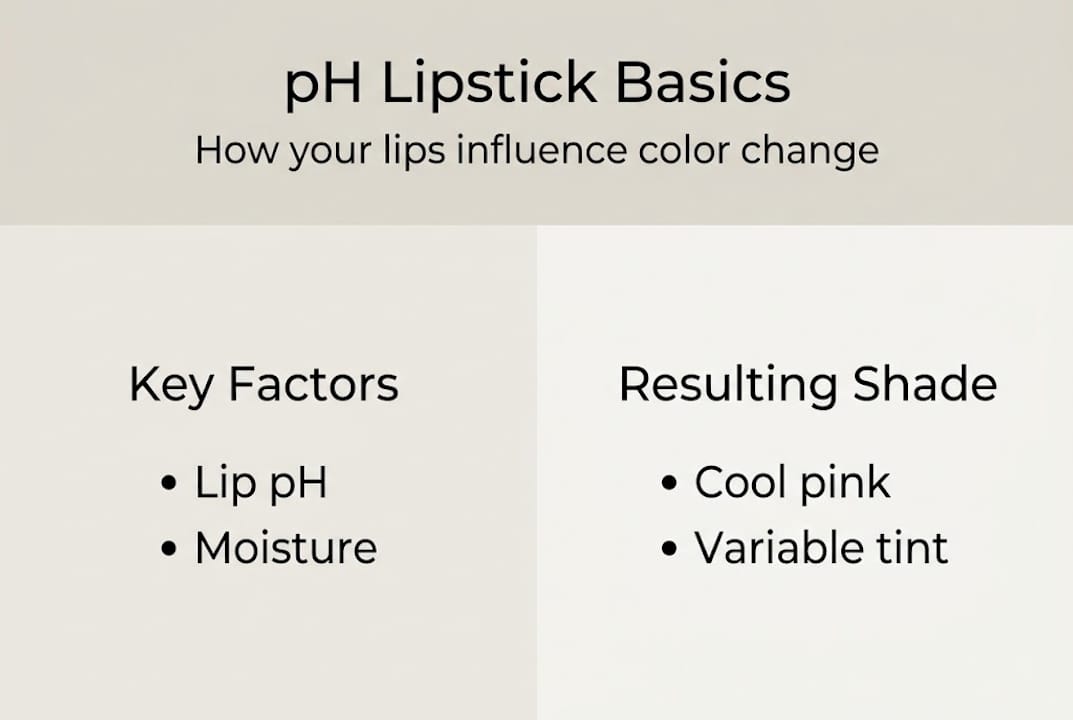
Here’s where the marketing gets a little ahead of itself. The promise of a “totally unique color for every woman” is appealing but overstated. As beauty science experts note, marketing overstates uniqueness; the real value lies in ease of use, hydration, and a natural finish rather than dramatic shade variety. Most people’s lips fall within a similar pH range, which means most people get a similar result: a cool, sheer pink.
That said, the finish these lipsticks deliver is genuinely appealing. Think soft, natural lip finishes with a hint of color that looks effortless. For women who want a polished look without the precision of a full lip, this category delivers.
Key characteristics of pH reacting lipsticks:
- Colorants: pH-sensitive dyes that activate on contact with skin
- Finish: Sheer to semi-sheer, often with a glossy or balm-like texture
- Shade range: Primarily cool pinks and roses (not a wide spectrum)
- Wear: Comfortable, hydrating, and easy to reapply
- Best for: Natural, no-makeup looks and low-fuss routines
If you want bold, opaque color or a wide shade selection, a traditional lipstick is still your best bet. But if you value comfort, a skin-friendly lipstick ingredients profile, and a finish that looks like your lips but better, pH reacting formulas are worth understanding.
How does pH reacting lipstick work?
Let’s get into what actually happens the moment this lipstick meets your lips. It’s a two-part reaction: pH and moisture work together to activate the colorant.
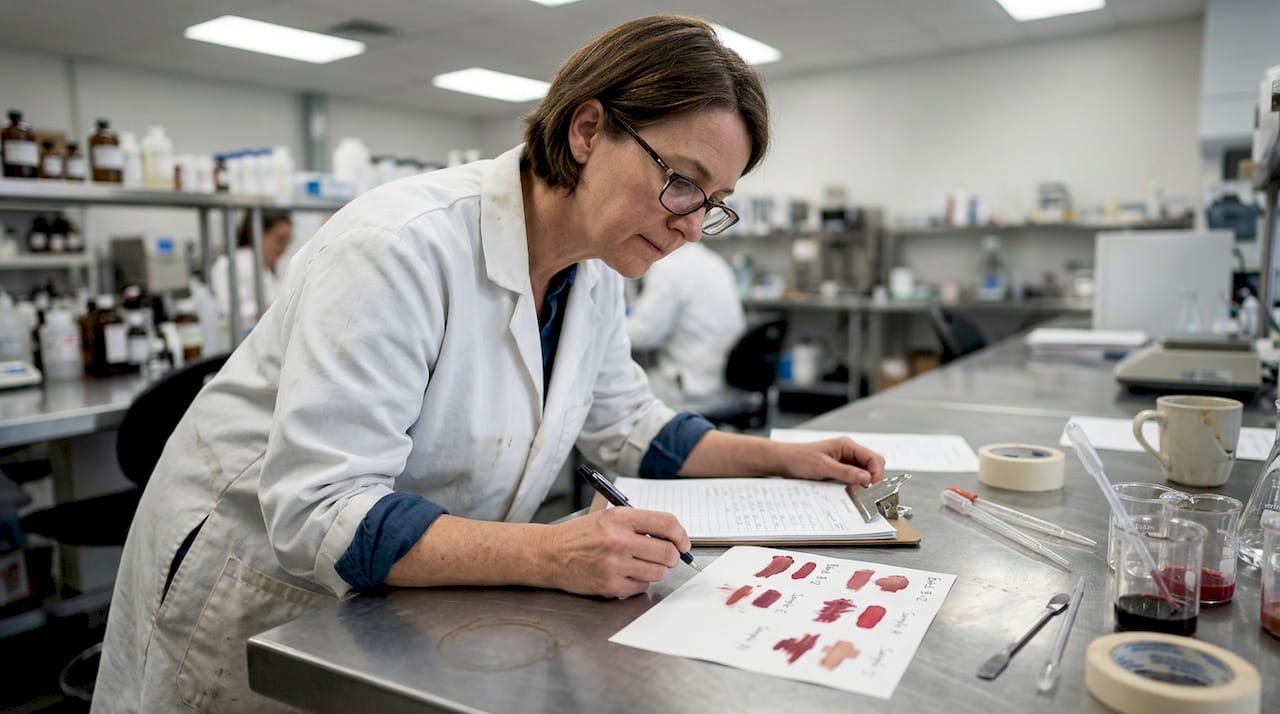
When you apply a pH reacting lipstick, the formula’s colorant (usually a halogenated fluorescein dye like Red 27) is initially in a “closed” molecular form. In this state it appears pale or colorless. The moment it contacts the slightly acidic, moist surface of your lips, the molecule opens up and absorbs light differently, producing that visible pink or red shift. The more moisture present, the faster and more evenly this reaction occurs.
Here’s a simple breakdown of the process:
| Stage | What happens | What you see |
|---|---|---|
| Application | Colorant meets lip surface | Pale or clear tint |
| Activation | pH triggers molecular shift | Color begins to bloom |
| Full development | Moisture completes reaction | Soft pink or rose shade |
| Wear | Tint holds on lip surface | Natural, sheer finish |
The role of emollients in these formulas is significant. Emollients like castor oil, shea butter, or vitamin E keep the formula spreadable and help distribute the colorant evenly across the lip surface. They also support the hydration needed for full color activation.
This is why lip condition matters so much. Dry or chapped lips lead to patchy or weak color development because the activation reaction is uneven without sufficient moisture. If your lips are flaky or dehydrated, the lipstick may look blotchy or barely visible in dry patches.
The shade that develops also tends to sit in the cool pink family for most wearers. This is because the dye’s reaction product is chemically fixed: it produces a specific pink-red tone regardless of your skin tone or undertone. Variation between individuals is real but subtle, usually a matter of intensity rather than hue.
Pro Tip: Apply a thin layer of lip balm and let it absorb for two minutes before applying your pH lipstick. This primes the surface for even color activation and helps the formula bloom more vibrantly, especially if your lips tend to run dry.
Benefits and drawbacks: Is a pH reacting lipstick right for you?
Let’s be honest about what these lipsticks do well and where they fall short. For women 40 and over, the considerations around lip products shift. Comfort, hydration, and a finish that doesn’t settle into fine lines matter more than they did at 25.
Benefits worth noting:
- Effortless application: No need to match a specific shade to your outfit or skin tone. The formula does the work.
- Hydrating formula: Most pH lipsticks are loaded with emollients and moisturizing agents, making them genuinely comfortable to wear all day.
- Natural finish: The sheer tint enhances your lips without looking heavy or overdone.
- Forgiving on mature lips: The balm-like texture doesn’t emphasize fine lines the way matte or highly pigmented formulas can.
- Low-maintenance: Perfect for touch-ups and quick routines.
Drawbacks to consider:
As beauty experts point out, the drawbacks include cool pinks that may be less flattering on warm or deep skin tones, rare potential for mild irritation, and the need for reapplication on dry lips. If you have a warm or golden undertone, a cool pink tint can sometimes look a little off. It won’t be dramatic, but it’s worth knowing.
| Feature | pH reacting lipstick | Traditional lipstick | Gloss finish lipstick |
|---|---|---|---|
| Shade control | Low (formula decides) | High (you choose) | Medium |
| Hydration | High | Variable | High |
| Finish | Sheer, natural | Matte to satin | Glossy |
| Ease of use | Very easy | Requires precision | Easy |
| Best for | Natural looks, 40+ | Bold, defined looks | Shine and volume |
For help with choosing lipstick color that suits your undertone, it’s worth knowing your warm versus cool profile before committing to a pH formula as your only lip product.
“The real value of pH reacting lipstick is not a personalized rainbow of shades. It’s the comfort, the hydrating finish, and the ease of a natural look that genuinely flatters mature lips.”
For women who want guidance on picking a good lip color that works with their natural coloring, pH lipsticks are a strong option for everyday wear, even if they’re not the only tool in your kit.
How to make the most of pH reacting lipsticks: Application tips
Getting the best results from a pH reacting lipstick is less about technique and more about preparation. Here’s how to set your lips up for the most vibrant, even color payoff.
- Exfoliate first. Use a gentle lip scrub or a soft toothbrush in small circles to remove any dry or flaky skin. Do this the night before or at least 30 minutes before application. Smooth lips mean even color.
- Apply a hydrating lip balm. Let it absorb for one to two minutes. You want your lips moisturized but not slick. A thin, absorbed layer of balm is ideal.
- Apply the pH lipstick directly from the bullet. Start at the center of your lips and work outward. The formula is forgiving, so you don’t need a liner for a clean edge.
- Wait 30 seconds. Let the color fully develop before assessing the shade. It deepens slightly as the reaction completes.
- Layer for intensity. A second coat over the developed color adds depth without changing the hue dramatically. This is the easiest way to customize intensity.
- Blot and reapply if needed. If you eat or drink, a quick reapplication takes seconds and refreshes the tint.
Pro Tip: If you want to warm up the cool pink tone, apply a nude or peachy lip liner underneath before the pH lipstick. It subtly shifts the final shade toward a more neutral or warm result without fighting the formula.
For a full natural look tutorial designed specifically for women over 40, you’ll find pairing suggestions that work beautifully with pH formulas. And if you’re still figuring out which shades suit your lips best, this guide on choosing lip color for mature lips is a practical starting point.
Remember: dry or chapped lips will always compromise the result. Consistent lip care between applications makes a real difference in how these formulas perform day to day.
The real value of pH reacting lipsticks: More than just a gimmick?
Here’s our honest take, and it might surprise you. The “personalized color” story is mostly marketing. The chemistry is real, but the variation between wearers is so subtle that calling it truly personalized is a stretch. What these lipsticks actually deliver is something more practical and, frankly, more valuable for women over 40.
Mature lips often lose volume and natural pigment over time. A heavy, opaque lipstick can look aging or require constant precision to avoid bleeding. A pH reacting lipstick sidesteps all of that. It gives you a tint that looks like your lips at their healthiest, a little flushed, a little glossy, completely effortless. No liner required. No color-matching anxiety.
We think the beauty industry undersells this. Instead of chasing the “unique shade” angle, the real pitch should be: this is the lipstick you can apply without a mirror and still look polished. That’s genuinely useful. Explore flattering lipstick shades that complement this formula for a complete, confident look.
Explore more lipstick solutions with Luméra Cosmetica
If this guide has you curious about building a lip routine that actually works for your lifestyle and your lips, Luméra Cosmetica is the place to continue exploring. We curate lip products and expert guides with women 40 and over in mind, because your needs are specific and you deserve more than generic beauty advice.
From hydrating formulas to classic pigmented options, our range is designed around comfort, flattery, and ease. Whether you’re ready to try a pH reacting formula or want to refine your shade selection, our lipstick shade tips give you the clarity to shop with confidence. Beautiful lips don’t require complicated routines. Let us help you find what works.
Frequently asked questions
Does pH reacting lipstick really look different on everyone?
The color varies slightly based on your lip’s natural chemistry, but most wearers develop a similar cool pink shade. As experts note, marketing overstates uniqueness, with the real value being ease and a natural finish rather than dramatic personal color variation.
Are pH reacting lipsticks good for dry or mature lips?
They work beautifully on well-hydrated lips but can appear patchy on dry or chapped ones. Dry or chapped lips lead to weak or uneven color, so prepping with balm and gentle exfoliation is essential before application.
Are there any risks or downsides to using pH reacting lipstick?
Most formulas are very safe, but mild irritation is possible in rare cases, and the shade range is narrow. The drawbacks include cool pinks that may not flatter all undertones, plus the need for reapplication throughout the day.
Is pH reacting lipstick better than traditional lipstick?
Neither is objectively better; it depends entirely on what you want. Marketing overstates uniqueness, but pH formulas genuinely win on ease, hydration, and natural finish, while traditional lipsticks offer far greater shade control and opacity.