Understanding Lip Pigmentation: Causes and Solutions

TL;DR:
- Lip pigmentation varies due to genetics, hormones, sun exposure, and cosmetic ingredients.
- Age-related changes in lips are influenced by hormonal shifts, UV damage, habits, and irritants.
- Proper skincare, sun protection, and mindful cosmetic choices can help manage lip color and health.
If you’ve noticed your lips looking darker, patchier, or simply different than they did a decade ago, you’re not imagining it. Many women over 40 assume these changes are just an unavoidable part of aging, something to cover up and move on from. But lip pigmentation is far more nuanced than that. It’s shaped by genetics, hormones, sun exposure, and even the products you use every day. Understanding what’s actually happening gives you real power over how you look and feel. This guide breaks down the causes, the cosmetic science, and the practical solutions so you can make smarter choices for your lips.
Table of Contents
- What is lip pigmentation?
- What causes lips to change color as we age?
- Common cosmetic ingredients and their impact on lip color
- Practical solutions: Reducing, covering, and enhancing lip pigmentation
- Myths, misconceptions, and the science behind lip pigmentation
- Expert perspective: Embracing your unique lips with confidence
- Explore beauty solutions tailored for you
- Frequently asked questions
Key Takeaways
| Point | Details |
|---|---|
| Lip pigmentation basics | Lip pigmentation is usually natural and not a sign of health problems. |
| Aging effects | Hormonal changes and sun exposure can lead to darker lips as we age. |
| Smart cosmetic choices | Choosing safe and nourishing lip products helps prevent unwanted pigment changes. |
| Practical solutions | Lifestyle habits, SPF use, and proper cosmetics can help manage lip pigmentation. |
| Embracing natural color | Confidence comes from understanding and celebrating your unique lips. |
What is lip pigmentation?
Lip pigmentation refers to the coloration of your lips, both the natural tone you were born with and any changes that develop over time. It’s not a single thing. It’s a spectrum of natural variation, lifestyle influence, and biological process all happening at once.
At the core of it is melanin, the pigment responsible for skin and lip color across all humans. Your lips contain melanocytes, the cells that produce melanin. When these cells are stimulated by sun exposure, hormonal shifts, or inflammation, they produce more pigment. The result can be lips that appear darker overall, uneven in tone, or marked with patches.
Lip pigmentation refers to the coloration of the lips caused by natural melanin, sun exposure, or genetics.
What makes lips especially vulnerable is that the skin on them is incredibly thin, with very few oil glands and almost no natural UV protection. That’s different from the rest of your face, which has more layers and more natural defense.
It’s also worth separating natural lip pigmentation from cosmetic pigment. Natural pigmentation is biological. Cosmetic pigment, like the color in a high pigment lipstick, is a formulated dye or mineral oxide applied externally. Both affect how your lips look, but they work in completely different ways.
Here are some common misconceptions worth clearing up:
- Darker lips always mean something is wrong with your health
- Only people with deeper skin tones experience lip pigmentation changes
- Lip color is fixed and can’t be influenced by lifestyle
- All pigmentation changes are permanent
- Cosmetic products have no effect on natural lip tone
None of these are fully accurate. Lip pigmentation is dynamic, influenced by dozens of factors, and far more manageable than most people realize.
What causes lips to change color as we age?
After defining lip pigmentation, it’s important to understand why it changes as we age. And the answer isn’t simple, because multiple forces are usually at work at the same time.
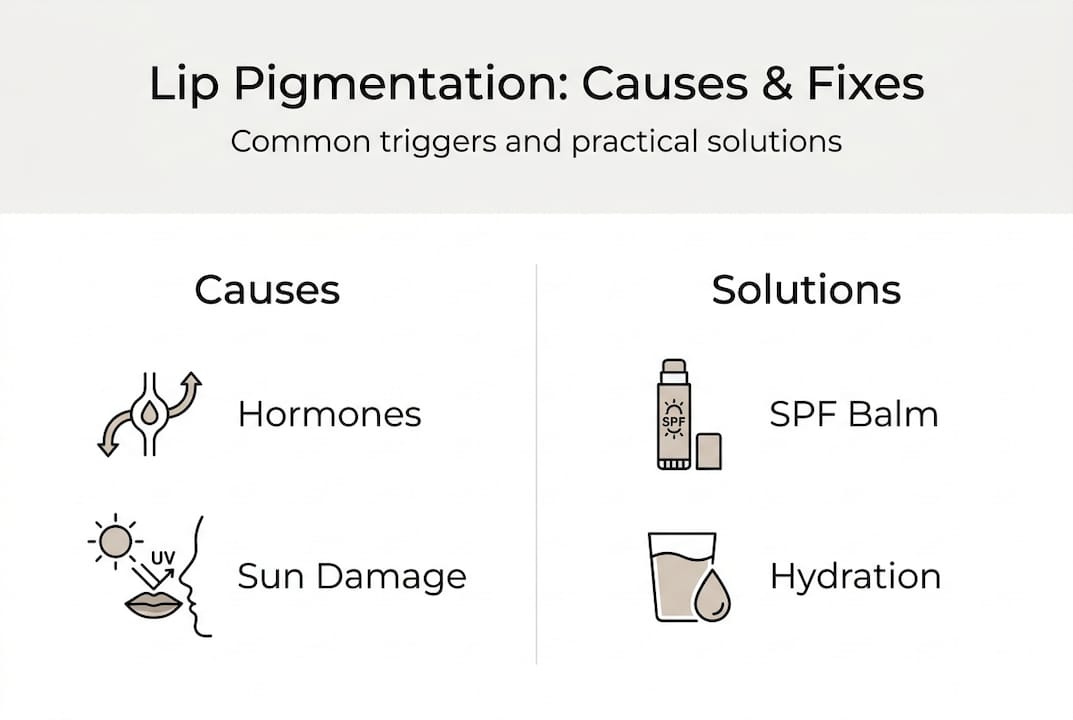
Hormonal changes after 40 are one of the biggest drivers. Estrogen plays a role in regulating melanin production, so as estrogen levels shift during perimenopause and menopause, melanocyte activity can become irregular. This is why some women suddenly notice uneven tone or darker patches on their lips that weren’t there before.
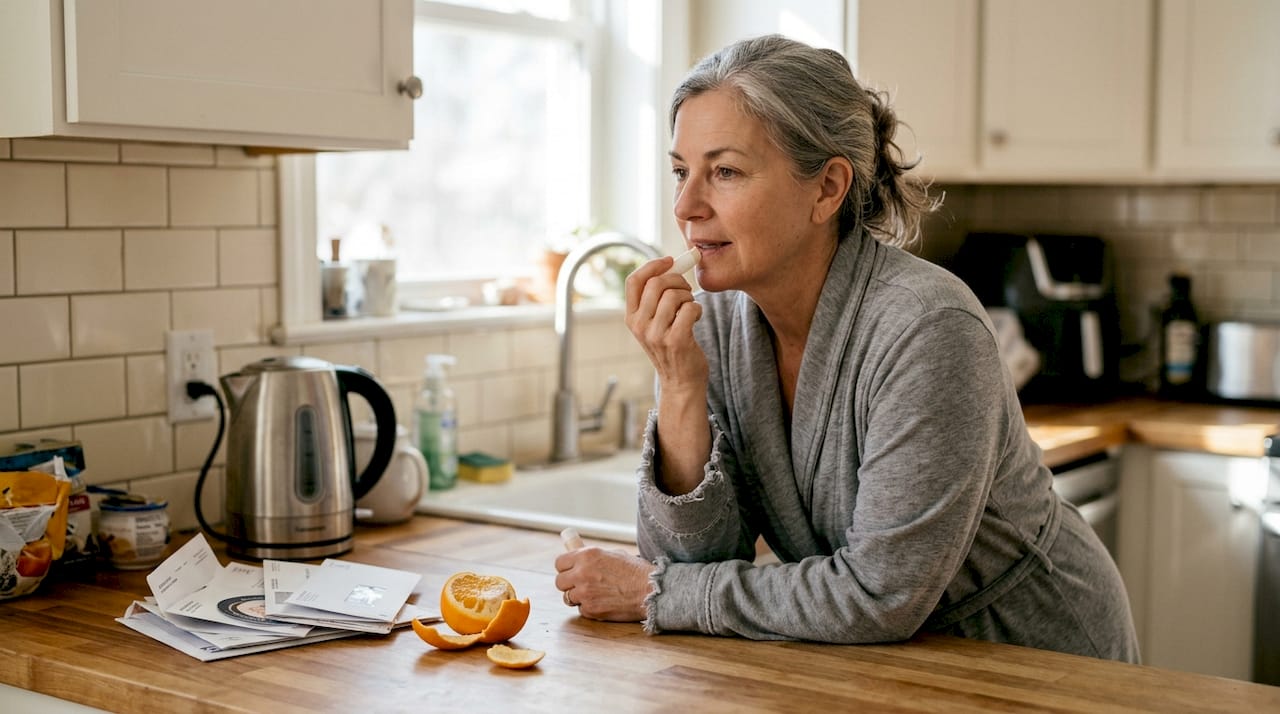
Cumulative sun exposure is another major factor. Every summer you’ve spent outdoors, every walk without SPF on your lips, adds up. UV rays trigger melanin production as a protective response. Over decades, that repeated stimulation can lead to lasting pigmentation changes.
Beyond hormones and sun, why lips get darker is also tied to aging, hormonal changes, UV exposure, smoking, and some cosmetics all contributing to the process.
| Cause | Effect on lips | Potentially reversible? |
|---|---|---|
| UV exposure | Darkening, uneven tone | Partially, with SPF use |
| Hormonal shifts | Patchy pigmentation | Sometimes, post-menopause |
| Smoking | Persistent darkening | Partially, if habit stops |
| Dehydration | Dullness, uneven color | Yes, with hydration |
| Certain medications | Hyperpigmentation | Depends on medication |
| Poor nutrition | Pale or uneven tone | Yes, with dietary changes |
Prevention is genuinely possible for many of these causes. Small daily habits make a real difference:
- Apply an SPF lip balm every morning before going outside
- Stay well hydrated throughout the day
- Eat foods rich in vitamins C and E, which support skin health
- Avoid smoking or reduce exposure to secondhand smoke
- Check your medications with your doctor if you notice sudden changes
- Remove lip makeup thoroughly each night to avoid residue buildup
Pro Tip: Look at your daily routine honestly. Are you skipping SPF on your lips? Drinking enough water? Sleeping with lipstick on? These small lipstick mistakes are often the easiest to fix and can make a visible difference within weeks.
Common cosmetic ingredients and their impact on lip color
Knowing the causes, let’s look more closely at the role of everyday cosmetic choices. What’s actually in your lipstick matters more than most people think.
Certain ingredients found in conventional lipsticks can worsen pigmentation over time. Some ingredients in lipsticks can irritate or darken lips with repeated use. The main culprits include synthetic dyes (particularly certain azo dyes), heavy metals like lead and cadmium found in some pigments, artificial fragrances that cause contact irritation, and preservatives like parabens that may trigger sensitivity reactions.
When lips become irritated or inflamed repeatedly, even mildly, the skin responds by producing more melanin. Over months and years, this low-grade inflammation quietly deepens lip color in ways that feel sudden but have actually been building.
| Ingredient | Effect | Verdict for mature lips |
|---|---|---|
| Synthetic azo dyes | May cause irritation and darkening | Avoid |
| Lead traces | Linked to pigmentation changes | Avoid |
| Artificial fragrance | Common irritant | Avoid |
| Vitamin E (tocopherol) | Nourishing, antioxidant | Seek out |
| Castor oil | Moisturizing, smooth application | Seek out |
| SPF filters (zinc oxide) | Protects against UV darkening | Seek out |
| Hyaluronic acid | Plumps and hydrates | Seek out |
When shopping for skin-friendly lipstick ingredients, look for formulas built around nourishing oils, mineral pigments, and added SPF. These support lip health rather than working against it.
Top ingredients to seek after 40:
- Vitamin E and C for antioxidant protection
- Shea butter or jojoba oil for moisture
- Zinc oxide for UV defense
- Hyaluronic acid for plumping effect
- Natural mineral pigments for color without irritation
Ingredients to avoid:
- Synthetic fragrance or parfum
- Petroleum-derived dyes
- Parabens in high concentrations
- Any product with undisclosed colorants
Pro Tip: Give your lips at least two or three days a week without any color product. Use those days to apply a rich, fragrance-free balm instead. This recovery time lets the lip barrier repair itself and reduces the cumulative irritation that drives pigmentation changes.
Practical solutions: Reducing, covering, and enhancing lip pigmentation
With a better understanding of ingredients, let’s explore what you can do to manage or enhance your natural lip pigmentation. The good news is that numerous products and approaches can help lighten, disguise, or enhance the look of pigmented lips.
Step-by-step approach to lightening and hydrating pigmented lips:
- Exfoliate gently once or twice a week using a soft lip scrub or a clean, damp cloth to remove dead skin cells that make pigmentation look more intense
- Apply a vitamin C serum to lips before bed, as vitamin C is one of the few ingredients with real evidence for reducing melanin production
- Use SPF lip balm every morning, even on cloudy days, to prevent UV-triggered darkening from adding to existing pigmentation
- Hydrate consistently with a nourishing balm containing shea butter or hyaluronic acid to keep the lip barrier strong
- Consult a dermatologist if pigmentation is sudden, spreading, or accompanied by other symptoms, as professional treatments like laser therapy may be appropriate
For cosmetic coverage and enhancement, the right makeup approach makes a significant difference:
- Use a lip liner that matches your natural tone or desired shade to create a clean, even base
- Try lip liner for dark skin techniques to balance uneven pigmentation beautifully
- Consider dark lipstick tips to work with deeper tones rather than fighting them
- Look into lip plump products that add volume while delivering nourishing ingredients
- Choose creamy, hydrating formulas over matte ones, which can emphasize texture and uneven color
The key insight here is that you don’t have to choose between covering pigmentation and caring for your lips. The right products do both at once.
Myths, misconceptions, and the science behind lip pigmentation
Finally, let’s separate beauty myth from fact when it comes to lip pigmentation. Some of the most persistent ideas in this space are simply not supported by science.
Myth: Only bad habits cause pigmented lips. This is one of the most damaging misconceptions because it creates unnecessary shame. Pigmentation is not always a sign of poor health; it often reflects natural variation. Genetics and hormones are the dominant factors for many women, regardless of their lifestyle.
Myth: You can permanently lighten lips with home remedies. Lemon juice, baking soda, and similar DIY treatments can actually irritate the lip barrier and worsen pigmentation over time. There’s no shortcut to lasting results.
Myth: A permanent stain means the color is locked in forever. Lip color is more dynamic than people think. With consistent SPF use, reduced irritant exposure, and targeted ingredients, many women see genuine improvement over months.
A key statistic worth knowing: research consistently shows that a significant portion of lip pigmentation changes in women over 40 are linked to cumulative UV exposure rather than internal health factors, which means prevention is both possible and effective.
Three science-backed facts every woman should know:
- Melanin production in lips responds directly to UV exposure, making daily SPF one of the most evidence-based interventions available
- Hormonal fluctuations during perimenopause and menopause genuinely alter melanocyte behavior, which is why pigmentation changes often cluster around this life stage
- Repeated low-grade irritation from cosmetic ingredients is a real and underrecognized driver of acquired lip darkening
Understanding the actual cosmetic pigment guide science helps you make choices based on evidence, not marketing.
Expert perspective: Embracing your unique lips with confidence
Here’s something the beauty industry rarely says out loud: natural lip pigmentation is not a problem to fix. It’s a feature of your face that carries your history, your genetics, and your individuality.
There’s a tendency in mainstream beauty culture to frame every visible change after 40 as a flaw requiring correction. But deeper lip tones, richer natural color, and unique pigmentation patterns are genuinely beautiful. Many of the world’s most striking lip looks come from working with natural pigmentation, not erasing it.
We believe cosmetic products should be tools for expression and enhancement, not concealment. Using a bold lipstick for confidence to amplify what’s already there is a completely different mindset from using makeup to hide something you’ve been told is wrong.
Cultural beauty standards vary enormously. In many traditions, fuller pigmentation and deeper lip tones are considered signs of vitality and beauty. The narrow standard that says lips should look a certain way is a recent and very specific cultural invention, not a universal truth.
Your lips at 40, 50, or 60 deserve celebration, not apology.
Explore beauty solutions tailored for you
If this article has sparked a closer look at your own lip care routine, you’re already ahead. Understanding what drives lip pigmentation is the first step toward making choices that genuinely support your lips rather than working against them.
At Luméra Cosmetica, we’ve built our product range around the specific needs of mature skin and lips. From formulas built with explore lipstick ingredients that nourish rather than irritate, to expert guides on color, care, and confidence, everything is designed with women over 40 in mind. Explore our resources and find products that align with both your beauty goals and your skin’s health.
Frequently asked questions
Is lip pigmentation a health concern?
Usually, lip pigmentation is harmless and reflects natural variation rather than an underlying health issue. However, sudden or unusual changes should be checked by a doctor. Pigmentation is not always a sign of poor health.
Can lip pigmentation be reversed or lightened?
Numerous products and approaches can help lighten or improve the appearance of pigmented lips, but results depend on the cause. Genetics-driven pigmentation is harder to change than pigmentation caused by sun exposure or irritants.
Which ingredients should I avoid in lipsticks to prevent darkening?
Avoid lipsticks containing synthetic dyes, artificial fragrance, and heavy metal traces, as some ingredients in lipsticks can irritate or darken lips over time with repeated use.
Do all women experience darker lips with age?
Not all women see the same changes. Aging, hormonal changes, UV exposure and habits all play a role, meaning the experience varies significantly from person to person.
Are there safe ways to enhance lip color without making darkening worse?
Yes. Choosing hydrating, fragrance-free formulas with mineral pigments and added SPF lets you enhance your lips while protecting them. Some ingredients in lipsticks cause irritation, so reading labels carefully makes a real difference.