

Lume Cosmetics: Buy Authentic Hydrating Lip Kits for Women 40+

Lume cosmetics, in the context that matters to most searchers over 40, refers to curated, skincare-infused lip products including lipstick, liner, gloss, and lip oils designed to hydrate and flatter mature lips. The best formulas favor satin or creamy textures with actives like hyaluronic acid over ultra-matte finishes that settle into lines. Keep reading for ingredient rules, shade guidance, and a step-by-step application routine built for lips that have changed over the past decade.
TL;DR:
- Hydrating, glossy formulas with hyaluronic acid and peptides help lips appear fuller and smoother but do not reverse volume loss or rebuild collagen.
- Satin finishes are ideal for mature lips because they provide rich pigmentation and slip without settling into fine lines, unlike matte formulas.
- Matching lip shades to your undertone—warm shades for warm undertones, cool shades for cool undertones—enhances natural look and definition.
- Proper application involves gentle exfoliation, hydrating balms, precise lining, layered application, and subtle gloss only in the center of the lower lip.
- Authentic Luméra Cosmetica products can be identified by official packaging details, full ingredient lists, and prices that reflect the added active ingredients.
Table of Contents
- What Lume Cosmetics Products Actually Are
- Why Skincare-Infused Formulas Matter More After 40
- How to Choose the Right Formula, Finish, and Shade
- A Step-by-Step Routine for Fuller-Looking, Longer-Wearing Lips
- What Skincare-Infused Lip Makeup Can and Can’t Do
- How to Identify Authentic Lumeracosmetica Products
- What Women Over 40 Say About Wearing These Formulas
- Allergies and Sensitivities Worth Knowing Before You Buy
- Layering and Removing Lip Color Without Damaging Mature Lips
- Luméra Cosmetica’s Approach to Curated Lip Kits for 40+
- Where to Start With Luméra Cosmetica
- Sources
What Lume Cosmetics Products Actually Are
The category covers a specific product mix: curated lip kits pairing a liner, lipstick, and gloss in one coordinated shade family, plus individual lipsticks, glosses, and lip oils sold on their own. What separates these from a drugstore lip color is what’s mixed into the base. Instead of straight pigment and wax, formulas add hyaluronic acid, peptides, squalane, or plant oils that sit on the lip surface and hold moisture there.
The visible difference shows up within minutes of application. A hydrating formula glides on without dragging over dry patches, and it doesn’t chalk up or crack by midafternoon the way older matte formulations often did. That said, these are still color cosmetics, not treatment products. The active ingredient concentrations support comfort and smoothing, but they work as a maintenance layer rather than a substitute for a real lip skincare routine.
Why Skincare-Infused Formulas Matter More After 40
Lips change with age in ways that have nothing to do with how much lipstick you own. Makeup artists consistently point to two shifts: increased dryness and a gradual loss of definition around the vermillion border, the natural edge where lip color meets skin. Glamour’s roundup of lipsticks for older women notes that this combination is exactly why rigid, long-wear mattes tend to look worse rather than better on mature lips. They photograph as flat, and they emphasize the fine vertical lines that develop as collagen production slows.
Hydrating, flexible formulas counter this in a few concrete ways. Emollient bases fill in fine texture so light reflects more evenly across the lip surface. Light-diffusing pigments, a technique borrowed from complexion makeup, soften the look of lines without needing a heavy layer of product. And formulas built around peptides or hyaluronic acid keep the lip surface plumper looking through the day rather than shrinking and cracking as the color wears.
None of this reverses volume loss or rebuilds collagen. What it does is remove the two biggest style mistakes women make as their lips change: choosing color that’s too dry to sit well, and choosing a finish that photographs as harsh. That’s a cosmetic fix, not a clinical one, and it’s worth knowing the difference before you shop.
How to Choose the Right Formula, Finish, and Shade
Getting this right online, without swatching in person, comes down to a handful of rules that cut return rates dramatically.
Ingredients to look for:
- Hyaluronic acid and squalane for moisture retention through the day
- Peptides and vitamin E for a smoothing, comfort-forward feel
- Shea butter or jojoba oil as a base emollient
Ingredients to avoid or limit: alcohol-forward formulas and heavy synthetic fragrance, both of which dry out lips faster than they hydrate them, according to TODAY’s roundup of lipsticks for mature lips.
On finish, satin sits in the sweet spot for most women 40+: enough pigment payoff to look finished, enough slip to avoid settling into lines. Creamy formulas work well for daily wear, and a sheer gloss layered over liner adds shine without the stickiness of an all-over gloss application. InStyle’s tested picks for older women back satin and balm-like textures specifically because they mask surface texture rather than highlight it.
Shade selection matters as much as finish. Match undertone first, not trend: warm undertones tend to look best in brick, terracotta, and warm rose shades, while cool undertones lean toward berry and true rose. As a general rule, going slightly deeper than your natural lip color adds definition that thinner lips lose with age, while staying within one or two shades of your natural tone. A curated lip kit that pairs liner and lipstick in the same undertone family removes most of the guesswork.
Pro Tip: If you’re unsure of your undertone, check the veins on your inner wrist in natural light. Blue or purple veins usually mean cool undertones; green veins usually mean warm.
A Step-by-Step Routine for Fuller-Looking, Longer-Wearing Lips
Getting a smooth, defined result starts before you touch a lipstick tube.
- Prep the surface. Exfoliate lightly once or twice a week, not daily. Over-exfoliating mature lips can worsen texture rather than smooth it, since the skin barrier there is thinner and repairs more slowly.
- Hydrate overnight, protect by day. Apply a nourishing lip balm before bed and a tinted balm with SPF in the morning. Daily lip SPF is genuinely underused, and dermatology-adjacent testing has flagged it as a meaningful step for reducing cumulative sun damage on a feature that gets constant UV exposure.
- Line before you color. Use a creamy, hydrating liner to define the lip’s natural edge, overlining just slightly along the cupid’s bow if you want more visual volume.
- Layer the lipstick thin. Apply in one light coat, blot gently, then reapply a second thin layer instead of one heavy pass. This keeps pigment from pooling into fine lines.
- Gloss the center only. A dab of clear or sheer gloss in the middle of the lower lip catches light and reads as fullness, without the all-over shine that can look greasy by midday.
Pro Tip: Blot with a single tissue fold between layers rather than a full wipe. It removes excess oil without stripping the color you just built up.
What Skincare-Infused Lip Makeup Can and Can’t Do
The immediate benefits are real and worth paying for. Hydrating actives make lipstick feel comfortable for hours instead of tight after 30 minutes, and light-diffusing formulas create a genuine, temporary illusion of fuller, smoother lips. That’s the entire value proposition, and it delivers.
What it doesn’t do is replace targeted skincare or professional treatment. As Glamour’s investigation into skincare claims in makeup points out, active ingredient concentrations in color cosmetics are typically lower than in dedicated treatment products, which limits any lasting structural effect. Brands are increasingly running clinical testing on peptide and hyaluronic acid formulas, which is a meaningful step up from unverified marketing claims, but it doesn’t turn a lipstick into a serum.
Build a simple daily habit around it: SPF-containing lip balm in the morning, a hydrating treatment at night, and let your color cosmetics handle the finish rather than the repair work. If you’re dealing with persistent cracking, swelling, or a rash that doesn’t resolve with a formula change, that’s a conversation for a dermatologist, not a shade swap.
How to Identify Authentic Lumeracosmetica Products
Buying lip color online carries one real risk: counterfeit or gray-market versions of popular kits circulating on third-party marketplaces. A few checks protect you before you check out.
First, buy directly from Lumeracosmetica or from retailers explicitly listed as authorized partners on the brand’s own site. Third-party marketplace listings with no verifiable seller history are the single biggest source of counterfeit cosmetics complaints industry-wide.
Second, check packaging details against official product photos: batch codes, font consistency, and the finish of the outer box. Authentic kits ship with consistent branding across every unit, so a shade name spelled differently or a mismatched color scheme is a red flag.
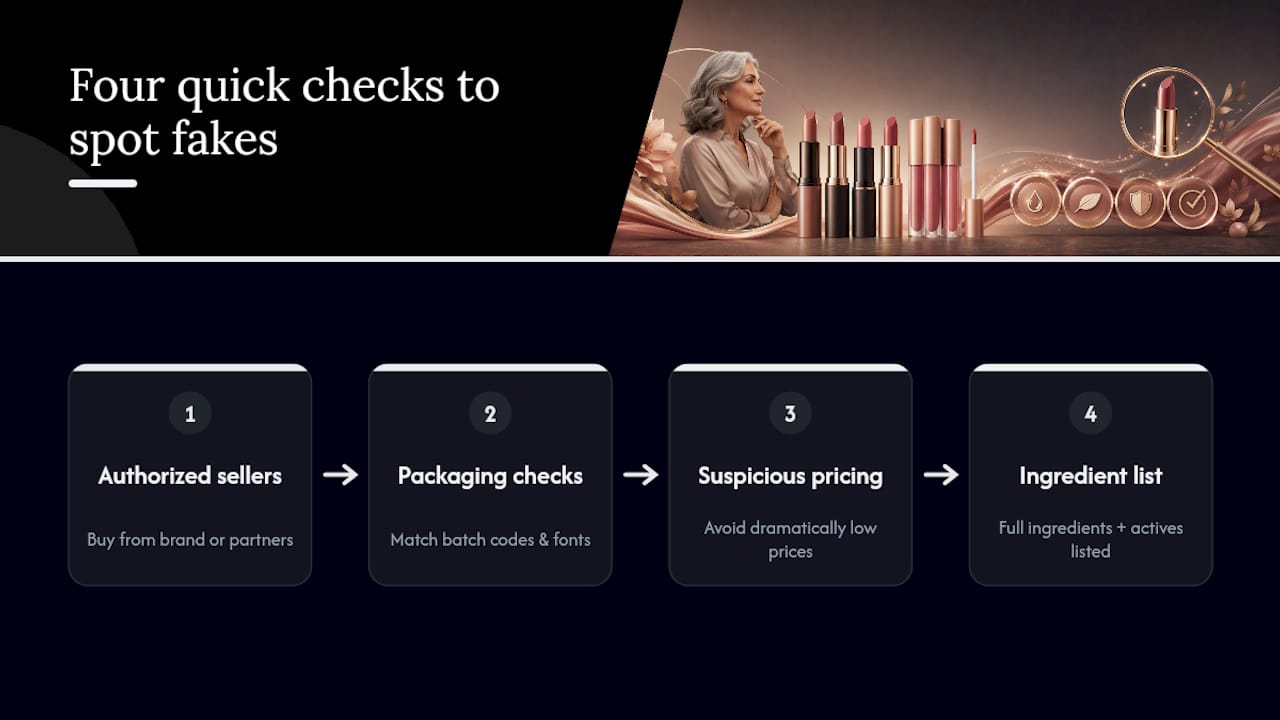
Third, be wary of pricing that sits dramatically below the standard range for curated lip kits. Skincare-infused formulas cost more to produce because of the added actives, and a price that looks too good usually means the product inside isn’t what the label claims.
Finally, authentic Lumeracosmetica formulas will list full ingredients, including the specific actives like hyaluronic acid or peptides, directly on the packaging and on the product page. If a listing is vague about ingredients or omits them entirely, treat that as a signal to buy elsewhere.
What Women Over 40 Say About Wearing These Formulas
The most consistent feedback from women in this age group centers on comfort over the course of a day, not just how a color looks in a mirror. Formulas that stay hydrating past hour four, without needing a reapplication, tend to earn repeat purchases, while anything that dries out by lunch gets abandoned regardless of shade payoff.
Shade versatility is the second recurring theme. Buyers 40+ tend to favor curated kits precisely because matching liner, lipstick, and gloss within one undertone family removes the trial-and-error of building a coordinated look from separate products bought at different times. A kit that arrives pre-matched saves both money and the frustration of an online purchase that looked right on screen but wrong against actual skin tone.
Longevity claims get scrutinized carefully by this audience, more so than by younger shoppers chasing trend colors. Reviewers in this bracket tend to test a formula through a full workday, including coffee and lunch, before deciding whether it earns a spot in a daily rotation. Comfort during wear, not just the initial swatch, is what tends to separate a product that gets repurchased from one that doesn’t.
Allergies and Sensitivities Worth Knowing Before You Buy
Lip skin is thinner and more reactive than skin elsewhere on the face, which means ingredients that cause no issue on your cheek can still cause irritation on your mouth. The most common triggers in lip cosmetics are synthetic fragrance, certain dyes (particularly carmine, derived from insects, which some people react to without knowing the source), and preservatives like parabens or formaldehyde-releasing agents.
Alcohol-forward formulas, often used to help long-wear color set faster, are a frequent culprit behind ongoing dryness that gets mistaken for an ingredient allergy when it’s actually simple irritation from repeated dehydration. If a lipstick consistently leaves lips tighter or flakier than before you started wearing it, check the ingredient list for alcohol denat. or SD alcohol near the top before assuming it’s an allergy.
True allergic reactions, swelling, hives, or a rash that spreads beyond the lip line, warrant seeing a dermatologist or allergist rather than switching brands repeatedly and hoping for the best. Patch testing a new formula on the inner forearm for 24 hours before applying it to your lips is a simple way to catch a reaction before it happens somewhere as sensitive as your mouth. If you have a known sensitivity to lanolin, beeswax, or a specific dye, read full ingredient panels rather than relying on “hypoallergenic” marketing language, which isn’t a regulated claim in most markets and can vary widely between brands.
Layering and Removing Lip Color Without Damaging Mature Lips
Application technique changes what a formula can deliver, and removal technique protects the results from one day to the next.
Start with clean, hydrated lips, ideally a few minutes after applying balm so it has time to absorb rather than sitting on the surface as a barrier. Use a lip liner in a creamy, non-drying formula to trace the natural lip line, correcting asymmetry gently rather than dramatically overdrawing, which tends to look obvious rather than natural on mature lips. Fill the entire lip with liner first; this acts as a base that helps lipstick hold its color longer and resist feathering into surrounding fine lines.
Apply lipstick in two thin coats rather than one thick one, blotting lightly with a single-ply tissue between coats. This is the layering step that most determines whether color lasts through a meal or needs touching up within the hour. Finish with a small amount of gloss in the center of the lower lip only, which reads as fullness without adding the slip that causes color to migrate.
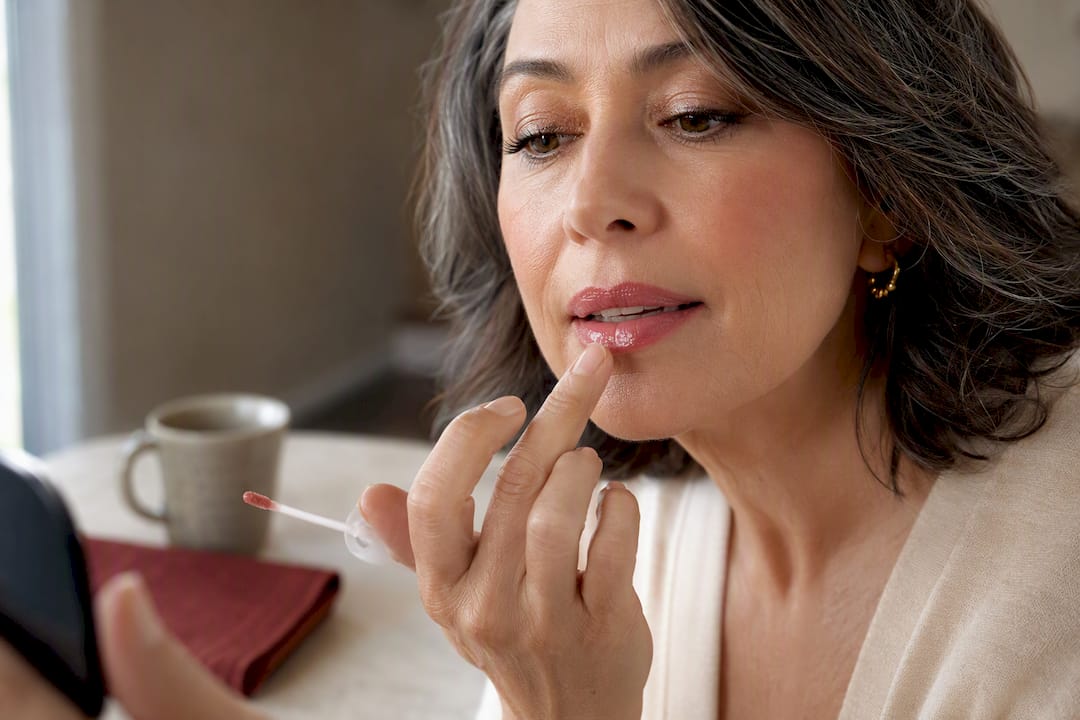
To remove at the end of the day, avoid scrubbing, which stresses already-thin lip skin. Use a gentle oil-based remover or micellar water on a cotton pad, pressing and holding for a few seconds before wiping to let the oil break down the pigment first. Follow immediately with a nourishing overnight balm, since lip skin cell turnover slows with age and benefits from consistent overnight hydration more than a once-weekly treatment.
Luméra Cosmetica’s Approach to Curated Lip Kits for 40+
Luméra Cosmetica builds every kit around one idea: shade matching and ingredient selection shouldn’t be guesswork for the reader shopping alone at midnight. Curated lip kits pair liner, lipstick, and gloss within a single undertone family, so hyaluronic acid, peptides, and shea butter show up consistently across the set rather than in just one piece. That coordination is what Luméra Cosmetica’s guides, including its creamy lipstick hydration breakdown, are built to explain in plain terms, not marketing shorthand.
— Rebecca
Where to Start With Luméra Cosmetica
If you’ve read this far, you already know what to look for: hydrating actives, a satin or creamy finish, and a shade matched to your undertone rather than a trend. Luméra Cosmetica builds its curated lip kits around exactly that brief, pairing liner, lipstick, and gloss in one coordinated undertone family so you’re not guessing how three separate purchases will look together.
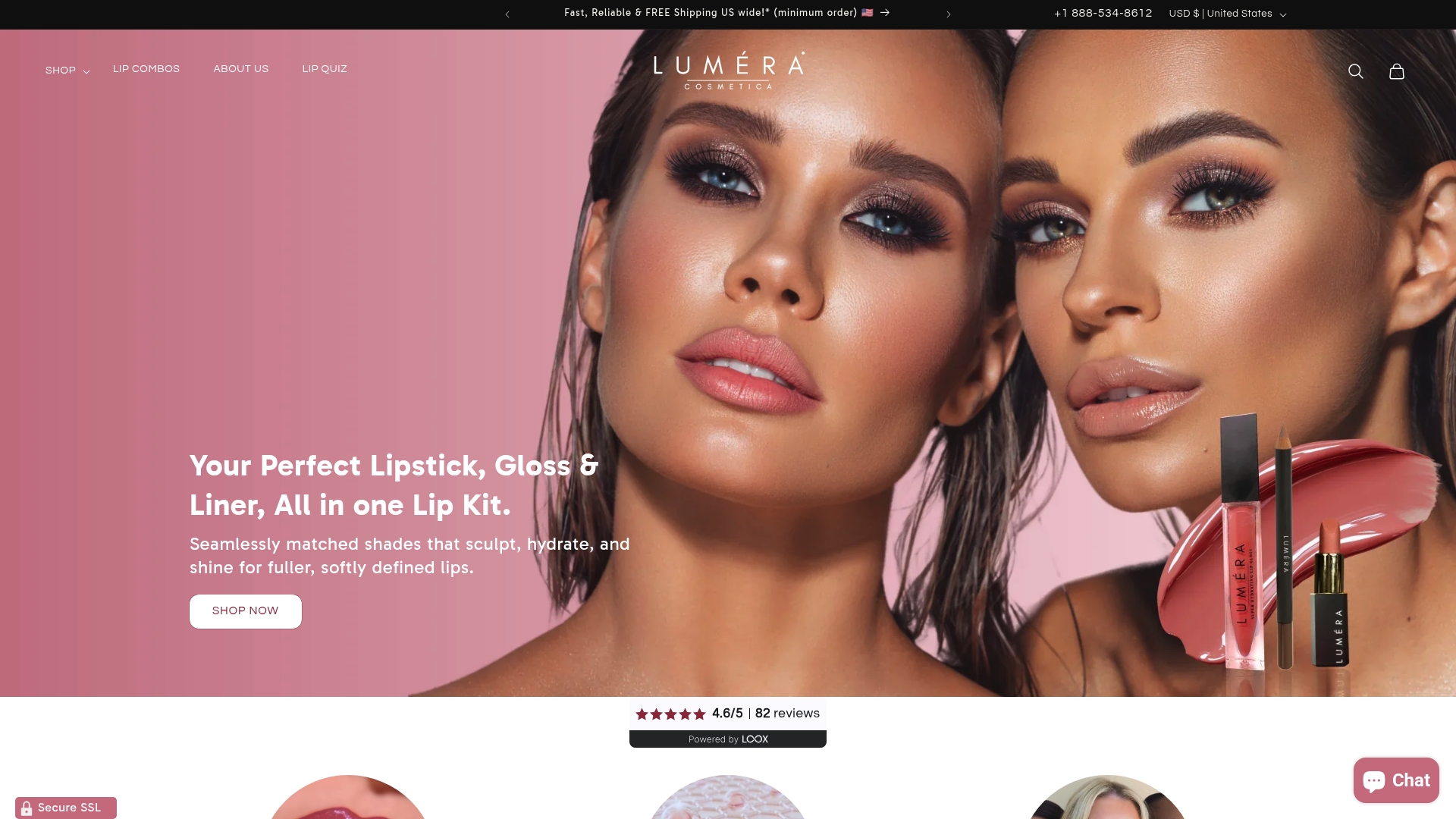
Each kit is formulated with the actives covered above, hyaluronic acid, peptides, and shea butter among them, so the hydration and comfort benefits are built in rather than an afterthought. If you’re new to a shade family, start with the anti-aging lipstick checklist to confirm your undertone before you commit to a kit. Browse the current lineup on the Luméra Cosmetica shop and pick the kit whose shade family matches what you identified using the undertone check above.


