What Can I Use Instead of Lip Liner for Mature Lips

TL;DR:
- Lip liner alternatives like tinted balms, eyeshadow, concealer, and contour crayons effectively define lips while offering added hydration, especially suited for mature skin. Proper application involves blending edges immediately and treating dryness beforehand to achieve a natural, youthful look. DIY tinted balms with natural ingredients are affordable, customizable options that prioritize skin health alongside color enhancement.
Lip liner alternatives are widely available, effective, and better suited to mature lips than most women realize. Tinted balms, eyeshadow, concealer, creamy contour crayons, and DIY tinted products all deliver soft definition without the precision demands or harsh lines of a traditional pencil. Vogue describes the rise of “no-liner lip liners” that offer sheer, blurred finishes, and that shift reflects exactly what women over 40 in Australia and Europe are already reaching for. If you have ever wondered what to use instead of lip liner, the answer is closer to your makeup bag than you think.
What can I use instead of lip liner?
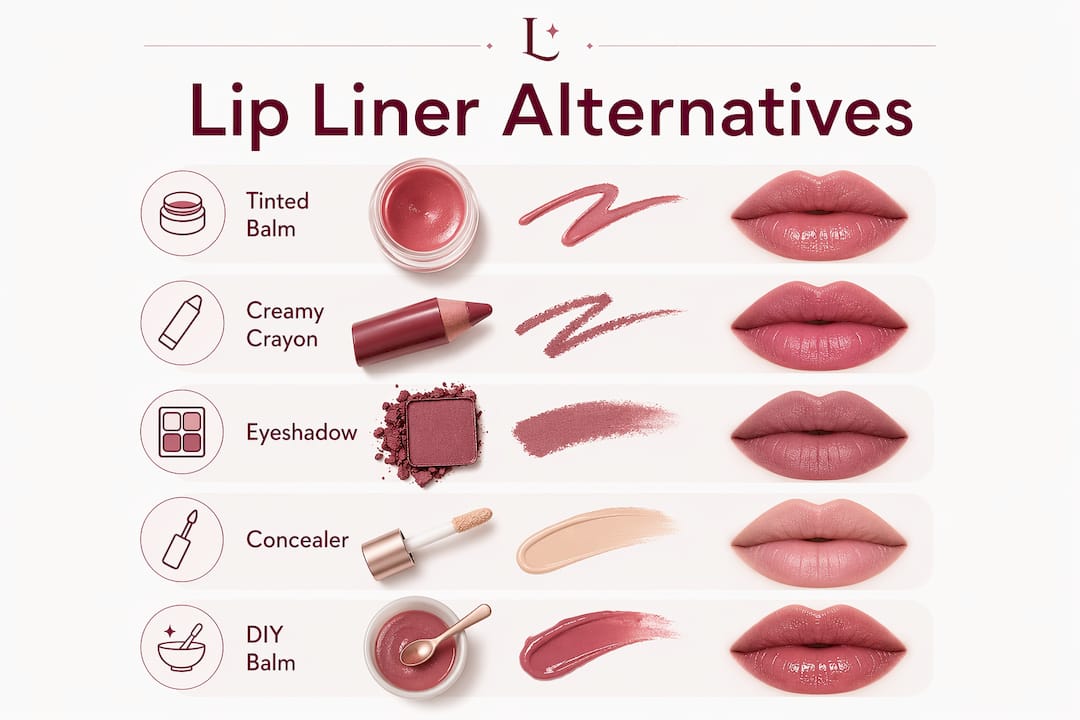
The best substitutes for lip liner fall into four practical categories, and each one works differently depending on the finish you want and how much time you have.
- Tinted lip balms and glosses deliver color and hydration in one step. Brands like Burt’s Bees, Laneige, and Clarins all make tinted balms that deposit a wash of color along the lip edge when applied with a brush. The finish is soft and forgiving, which makes them ideal for dry or thinning lips.
- Eyeshadow or pressed powder in a neutral or muted rose tone can be pressed along the lip border with a small angled brush. The powder texture blends naturally into skin and creates a diffused edge rather than a hard line. This is one of the oldest tricks in professional makeup kits.
- Concealer or foundation applied just outside the lip line with a small brush sharpens the border and corrects asymmetry without adding color. It works especially well before applying a bold lipstick when you want a clean edge without a visible liner.
- Creamy retractable lip contour crayons are the most direct substitutes for lip liner. Peptide-infused formulas now combine color with skincare ingredients, offering nourishing wear that traditional wax-based liners cannot match. These crayons sharpen to a point, apply smoothly, and blend easily with a fingertip.
The key difference between these options and a classic lip liner comes down to wear time and texture. Traditional liners are waxy and long-lasting by design. Alternatives tend to be creamier, shorter-wearing, and more comfortable on lips that lose moisture quickly with age. For most everyday looks, that trade-off is worth it.
Pro Tip: Apply a tinted balm first, then trace the outer edge of your lips with a small angled brush loaded with the same product. You get definition and hydration in one pass.
| Product type | Best for | Wear time |
|---|---|---|
| Tinted lip balm | Hydration and soft color | 1 to 2 hours |
| Eyeshadow/powder | Diffused, natural border | 2 to 3 hours with setting spray |
| Concealer | Correcting lip shape | Varies with base makeup |
| Creamy contour crayon | Closest to traditional liner | 3 to 4 hours |
How to apply alternatives for a natural, youthful look
Application technique matters more than the product itself when you are working with lip liner alternatives. Soft contouring with blended edges consistently produces more flattering results on mature lips than sharp outlines, and the method is simpler than you might expect.
- Start with a hydrating base. Apply a thin layer of plain lip balm and let it absorb for one minute before any color. This prevents dry patches from grabbing pigment unevenly, which is the main reason color looks patchy on mature lips.
- Choose a shade close to your natural lip tone. Industry experts recommend neutral shades softened by fingers or brushes to create forgiving, natural-looking definition. Going too dark or too light with your liner substitute creates the same harsh contrast you were trying to avoid.
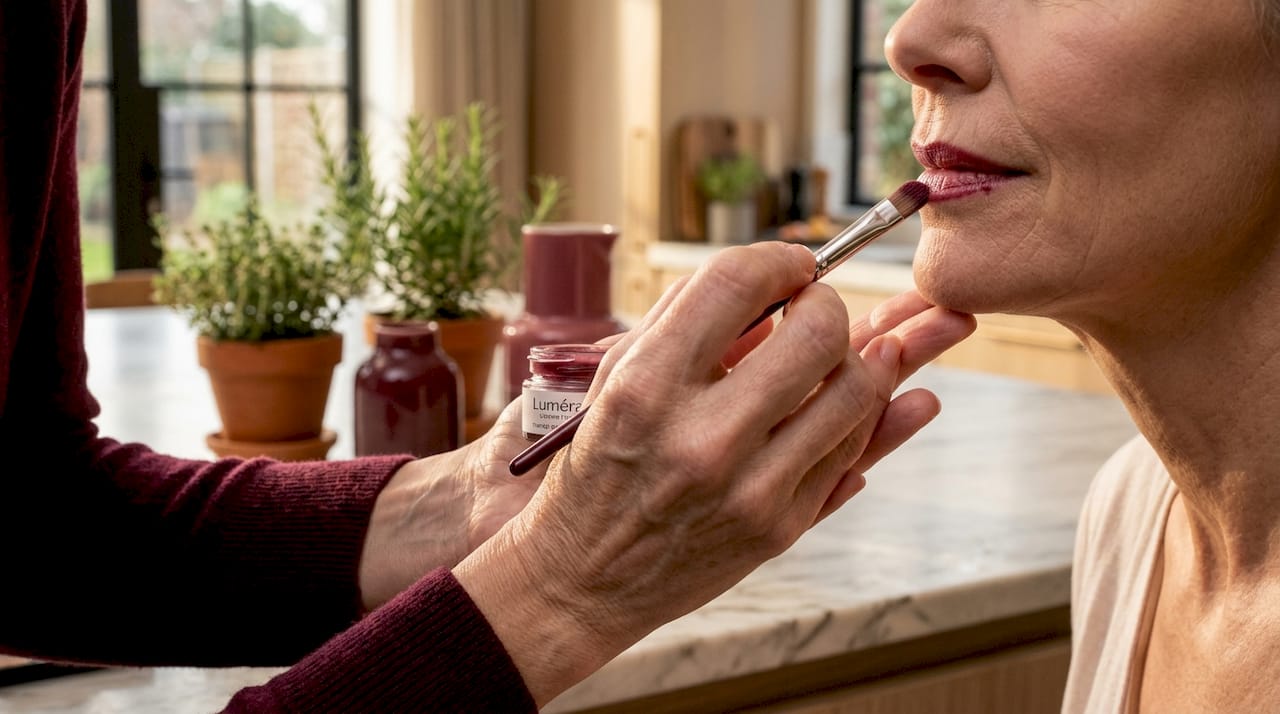
- Apply with a small angled brush, not directly from the product. Loading an angled brush gives you control over placement and pressure. Trace just inside the natural lip border rather than outside it. This subtly defines the shape without making lips look smaller.
- Blend immediately with a fingertip. Blurring edges before the product sets is the professional method for preventing feathering and keeping the finish soft. Press gently along the border in short tapping motions rather than wiping.
- Layer your lipstick or gloss over the top. The liner substitute acts as a base that anchors the color and reduces bleeding into fine lines around the mouth. Finish with a gloss in the center of the lips to add volume optically.
For women managing thinning lips, the soft lip contour approach works better than trying to overdraw with a sharp pencil. Overdrawn lines on mature skin tend to look obvious and can settle into fine lines within an hour. A blurred, slightly-beyond-the-border application with a creamy product reads as fuller without looking artificial.
Pro Tip: Warm a creamy contour crayon between your fingertips for ten seconds before applying. The slight warmth makes the formula glide more smoothly and blend more easily, especially in cooler climates like the UK or southern Australia in winter.
Safety and skin health for mature lips using liner alternatives
Mature lips are more vulnerable to irritation than younger skin, and that affects both which products you choose and how you apply them. Addressing lip health before layering cosmetics is not optional. It is the foundation of a good result.
- Treat dryness and cracking before applying any color product. Cheilitis and sun damage impair the vermilion border and make clean application nearly impossible. If your lips are persistently dry, flaky, or inflamed, a week of consistent barrier repair with a plain occlusive balm will make a visible difference to how any product sits.
- Check ingredient lists for common irritants. Fragrances, menthol, camphor, and certain preservatives are frequent triggers for lip sensitivity in women over 40. Products marketed as “tingling” or “plumping” often contain these ingredients and can worsen dryness over time.
- Patch test any new product, especially DIY formulas. Apply a small amount to the inside of your wrist and wait 24 hours before using it on your lips. This is especially relevant for natural colorants like beetroot powder, which can cause reactions in some people.
- Avoid layering heavy products over inflamed or broken skin. Lip inflammation may require clinical treatment before cosmetics can achieve their best results. Masking damage with pigment can trap bacteria and slow healing.
- Prioritize SPF lip products during the day. Sun damage is a leading cause of lip thinning and color loss in women over 40, particularly in Australia where UV exposure is intense year-round. A tinted balm with SPF 30 addresses color, hydration, and protection in one product.
The mature lip guide from Lumeracosmetica covers these health-first principles in detail and is worth reading alongside any new product routine.
Easy DIY alternatives for lip liner: tinted balms and natural options
Homemade lip liner options are genuinely useful, affordable, and customizable. The basic formula for a DIY tinted balm requires only four ingredients and takes about fifteen minutes to make.
- Melt the base. Combine one teaspoon of beeswax pellets with one teaspoon of coconut oil and half a teaspoon of shea butter in a small heatproof bowl set over simmering water. Stir until fully melted.
- Add your colorant. Remove from heat and stir in a small amount of beetroot powder for a natural rose-pink tint, or use cosmetic-grade mica powder for a wider color range. Start with a quarter teaspoon and adjust. DIY tinted balms using beeswax, oils, and natural colorants are customizable and affordable, making them a practical alternative to commercial products.
- Pour into a container. Use a small lip balm pot or a clean empty lip gloss tube. Pour carefully while the mixture is still liquid and allow it to set at room temperature for 30 minutes.
- Test and adjust. Once set, apply a small amount to your lips. If the tint is too light, remelt and add more colorant. If the texture is too hard, remelt and add a few extra drops of coconut oil.
The advantages of this approach are real. You control every ingredient, the cost is a fraction of commercial products, and you can match the tint exactly to your natural lip color. The limitations are equally real. DIY formulas do not contain preservatives, so they have a shelf life of roughly three months. They also lack the precise pigment dispersion of commercial products, which means color can look uneven if the colorant is not fully incorporated.
Pro Tip: Add one drop of vitamin E oil to your DIY balm mixture before pouring. It extends shelf life slightly and adds a genuine skin-conditioning benefit that commercial balms often only claim.
For women with sensitive lips, stick to beetroot powder over synthetic dyes. Beetroot is a food-grade colorant with a low irritation profile, though a patch test is still recommended before full use.
Key takeaways
Soft, blended lip liner alternatives work better for mature lips than traditional wax pencils because they combine color with hydration and require no precision technique.
| Point | Details |
|---|---|
| Best product substitutes | Tinted balms, eyeshadow, concealer, and creamy contour crayons all replace traditional lip liner effectively. |
| Application method | Blend edges immediately with a fingertip before the product sets to prevent feathering and maintain softness. |
| Skin health first | Treat dryness or inflammation before applying any cosmetic product, as damaged lips affect adherence and appearance. |
| DIY tinted balms | Beeswax, coconut oil, shea butter, and beetroot powder create an affordable, customizable lip tint at home. |
| Safety for mature lips | Patch test all new products and avoid fragrances, menthol, and camphor, which commonly irritate sensitive mature lips. |
Why softer lip definition changed how I think about liner
I spent years recommending precise lip liner as the non-negotiable first step for any lip look. Then I started paying closer attention to what actually looked good on women over 40, and the answer was almost never a sharp pencil line. The shift toward blurred, natural contouring is not just a trend. It reflects something real about how mature skin interacts with hard edges. Sharp lines settle into fine lines. They emphasize asymmetry. They require constant touch-ups. A blended contour does none of those things.
What I find most interesting is that the best results I have seen come from women who stopped trying to replicate a precise liner look and started treating their lips more like the rest of their face. Soft color, good hydration, a little definition at the border. That is it. The tips for restoring lip fullness that focus on blending and layering consistently outperform any technique that relies on a sharp outline.
The DIY approach also deserves more credit than it gets. A well-made tinted balm with beetroot powder and shea butter is genuinely competitive with mid-range commercial products for everyday wear. It is not a compromise. It is a choice that prioritizes skin health alongside color, which is exactly the right priority after 40.
— Rebecca
Discover Lumeracosmetica’s lip range for women 40+
Lumeracosmetica formulates lip products specifically for the needs of mature lips, with soft textures, nourishing ingredients, and shades that complement natural lip tones rather than fighting them. If the alternatives and techniques in this article appeal to you, the Lumeracosmetica range takes those principles further with products designed to hydrate, define, and protect in one step. Explore the full collection and find lip products for mature women that work with your skin rather than against it. Every formula is built around the idea that great lip color and good lip health are not competing goals.
FAQ
What is the easiest substitute for lip liner?
A tinted lip balm applied with a small angled brush is the easiest substitute for lip liner. It delivers color and hydration simultaneously and requires no precision technique.
Can I use lipstick as lip liner?
Yes, you can use lipstick as a lip liner by applying it with a small angled brush along the lip border and blending inward. Creamy lipstick formulas work best for this technique, though wear time is shorter than a traditional liner.
What are the best homemade lip liner options?
A DIY tinted balm made from beeswax, coconut oil, shea butter, and beetroot powder is the most practical homemade option. Patch test before use and store for no longer than three months.
How do I stop lipstick feathering without a lip liner?
Blending a liner alternative along the lip border and softening the edge with a fingertip before the product sets creates a blurred boundary that prevents color migration. A light dusting of translucent powder around the lip edge also helps.
Are lip liner alternatives better for dry, mature lips?
Creamy and balm-based lip liner alternatives are generally better for dry, mature lips than traditional wax pencils because they add moisture rather than drawing it out. Peptide-infused and nourishing formulas are specifically designed to address the hydration and comfort needs that mature lips require.