Cosmetic Pigment: Complete Guide for Women Over 40

Did you know that the FDA approves only a select number of color additives for use in cosmetics, protecting millions of consumers each year? For women over 40, these pigments play a vital role in how makeup performs, feels, and looks on maturing skin. Understanding the origins, functions, and safety of cosmetic pigments can transform not just your appearance, but your confidence in every product you choose.
Table of Contents
- Defining Cosmetic Pigments Clearly
- Types Of Cosmetic Pigments Used
- How Cosmetic Pigments Function
- Safety And Regulatory Considerations
- Selecting Right Pigments Safely
Key Takeaways
| Point | Details |
|---|---|
| Cosmetic Pigments Defined | These color additives enhance makeup by providing specific colors and visual effects, essential for transforming beauty products. |
| Types of Pigments | There are natural and synthetic pigments, each offering distinct benefits and suitability, particularly important for mature skin. |
| Importance of Safety | Regulatory bodies ensure that cosmetic pigments are rigorously tested for safety, which is especially critical for sensitive skin over 40. |
| Selecting Pigments | Women over 40 should prioritize hypoallergenic, dermatologically tested pigments that complement their changing skin needs. |
Defining Cosmetic Pigments Clearly
Cosmetic pigments are the colorful heart of makeup, transforming simple formulations into vibrant beauty solutions. According to the FDA, these color additives are specialized substances used in makeup and personal care products to impart specific colors and visual characteristics.
Pigment Composition and Origins
These colorants come from diverse sources - some are extracted from natural botanical elements, while others are precisely synthesized through advanced chemical processes. As regulated by European Commission Regulation 1223/2009, cosmetic pigments must meet stringent safety standards to ensure they are suitable for human application.
For women over 40, understanding pigment characteristics becomes crucial. Pigments are not just about color, but about how they interact with mature skin’s unique texture and tone. They can provide:
- Enhanced luminosity
- Natural-looking coverage
- Skin-flattering undertones
- Hydrating color delivery
When selecting cosmetic pigments, mature skin requires nuanced choices that complement changing skin conditions. Learn more in our guide on choosing lipstick sets to understand how pigment selection can dramatically impact your makeup’s final appearance and skin compatibility.
Types Of Cosmetic Pigments Used
Cosmetic pigments represent a sophisticated world of color technology, offering women over 40 a diverse range of options to enhance their makeup look. These pigments can be categorized into several distinct types, each with unique characteristics and visual effects.
Natural vs. Synthetic Pigments
Two primary categories dominate the cosmetic pigment landscape: natural and synthetic pigments. Natural pigments derive from minerals, plants, and organic compounds, while synthetic pigments are chemically engineered for precise color and performance. Some specialized pigments, like alumina effect pigments, provide unique visual properties. According to Wikipedia, these pearlescent pigments based on aluminum oxide create a distinctive matte, metal-like appearance in cosmetic formulations.
Key Pigment Classifications
For mature skin, understanding pigment types becomes crucial. The main categories include:
- Mineral Pigments: Natural, skin-friendly options derived from ground minerals
- Synthetic Organic Pigments: Chemically created for vibrant, long-lasting color
- Metal Oxide Pigments: Provide excellent coverage and stability
- Interference Pigments: Create unique light-reflective effects
Discover more about selecting the perfect lip color for your skin tone to understand how different pigment types can complement your natural beauty. Each pigment type offers unique benefits, helping women over 40 achieve a radiant, age-defying makeup look that enhances their natural features.
Here’s a comparison of the main cosmetic pigment types for mature skin:
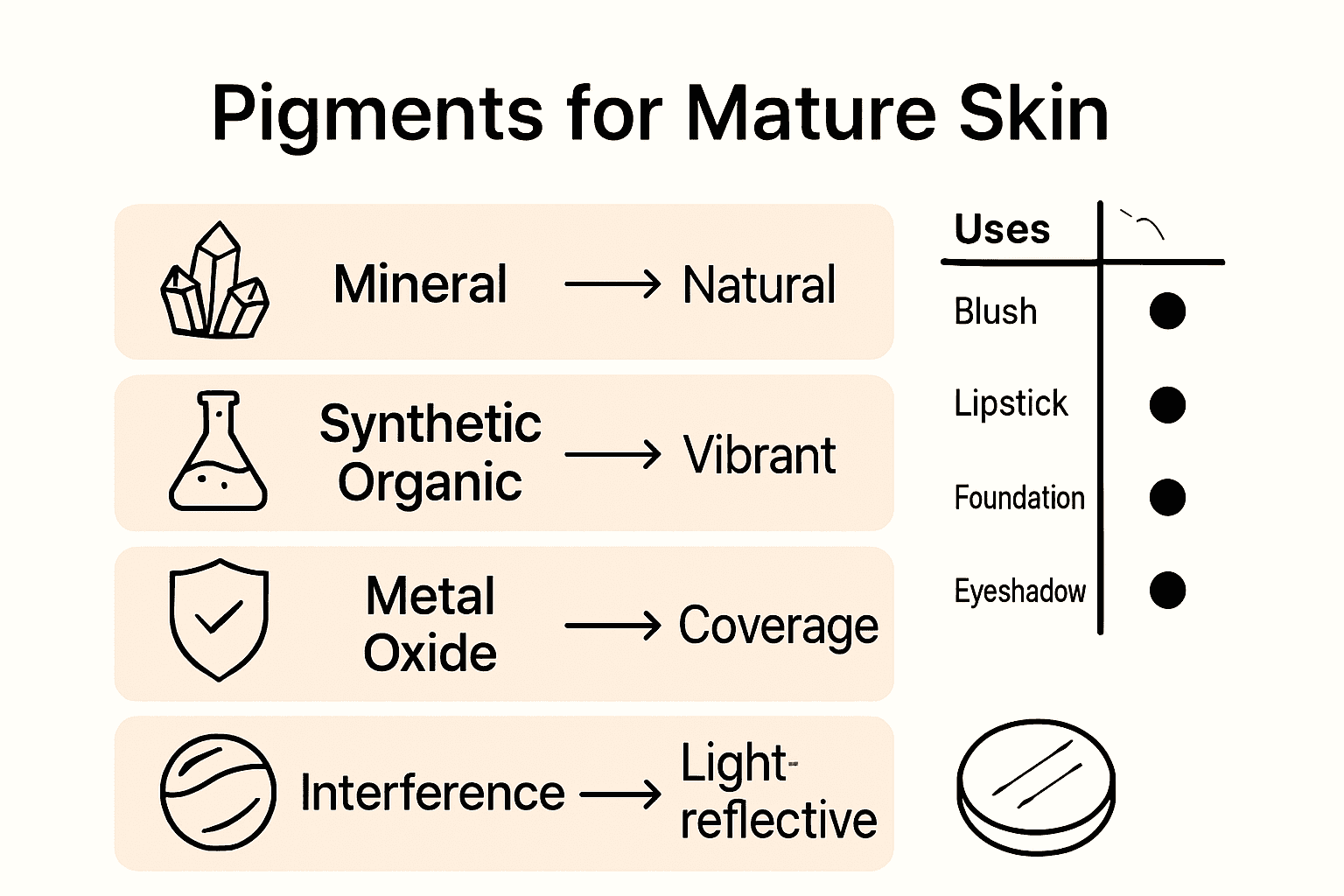
| Pigment Type | Source | Key Benefits | Common Uses |
|---|---|---|---|
| Mineral Pigments | Ground minerals | Skin-friendly Natural look |
Foundation Blush |
| Synthetic Organic Pigments | Chemical synthesis | Vibrant color Long-lasting |
Lipstick Eyeshadow |
| Metal Oxide Pigments | Metal oxides | High coverage Stability |
Concealer Powder |
| Interference Pigments | Engineered layers | Light-reflective Unique effects |
Highlighter Gloss |
How Cosmetic Pigments Function
Cosmetic pigments are sophisticated color delivery systems that interact with light, skin texture, and visual perception to create stunning makeup effects. Beyond simple coloration, these remarkable compounds play a complex role in transforming cosmetic appearances.
Light Interaction and Color Mechanisms
Pigments fundamentally function through strategic light manipulation. According to cutting-edge research from ArXiv, some advanced photonic pigments can reflect specific light wavelengths, creating structural coloration without traditional dye mechanisms. This means pigments don’t just sit on skin - they actively interact with light to produce nuanced, dynamic color effects.
Biological and Optical Properties
Natural pigments like melanin demonstrate incredible functional complexity. Research indicates that these compounds do more than color - they absorb broad light spectrums and provide photoprotection. As documented in ArXiv research, melanin functions as both a colorant and a protective biological mechanism, a principle increasingly mimicked in advanced cosmetic formulations.
Key Pigment Functionality Aspects
For women over 40, understanding pigment function becomes crucial. Pigments now offer multi-dimensional benefits:
- Color delivery with natural skin interaction
- Light-reflective properties
- Skin-tone complementing effects
- Protective optical characteristics
Learn more about selecting long-lasting lipstick formulations to appreciate how advanced pigment technologies can enhance your makeup experience and skin appearance.
Safety And Regulatory Considerations
For women over 40, understanding the safety landscape of cosmetic pigments is more than a precaution - it’s a critical aspect of maintaining healthy, radiant skin. Regulatory bodies work diligently to ensure that every pigment used in cosmetics meets rigorous safety standards.
Regulatory Oversight
The cosmetic pigment industry is closely monitored by international regulatory agencies. According to the FDA, color additives in cosmetics must be meticulously approved for specific uses and meet stringent safety standards to protect consumer health. This means every pigment undergoes extensive testing before reaching your makeup bag.
European Union Safety Standards
In the European market, EC Regulation 1223/2009 provides comprehensive guidelines for cosmetic safety. This regulation mandates detailed safety assessments, ensuring that cosmetic products - including their pigments - are thoroughly evaluated for potential health risks. For mature skin, this means an additional layer of protection against potentially harmful ingredients.
Key Safety Considerations for Mature Skin
When selecting cosmetic pigments, women over 40 should focus on:
- Hypoallergenic formulations
- Non-comedogenic pigment compositions
- Minimal chemical interactions
- Skin-friendly ingredient profiles
- Dermatologically tested products
Explore our guide to choosing lipstick kits to understand how to select cosmetic pigments that not only look beautiful but prioritize your skin’s health and sensitivity.
Selecting Right Pigments Safely
Choosing the right cosmetic pigments is a delicate balance between beauty and safety, especially for women over 40 who have more sensitive and discerning skin requirements. The selection process goes far beyond aesthetic appeal, demanding careful consideration of multiple safety factors.
Regulatory Compliance Essentials
According to research from AllChem, selecting cosmetic pigments requires meticulous attention to regulatory standards. This includes strict monitoring of heavy metal content and microbiological safety to guarantee consumer protection. Women must look beyond color and understand the underlying safety profile of each pigment they consider.
European Safety Standards
In the European cosmetic market, pigment selection is even more rigorous. YouWish highlights that only pigments listed in specific regulatory annexes are permitted. Manufacturers must ensure minimal impurities, creating an additional layer of safety for mature skin consumers.
Key Selection Criteria for Mature Skin
When selecting pigments, focus on these critical safety parameters:
- Hypoallergenic formulations
- Verified ingredient purity
- Minimal potential for skin irritation
- Dermatologically tested compositions
- Transparent manufacturing processes
Discover the best lipstick shades for mature skin to understand how thoughtful pigment selection can enhance both your beauty and skin health.
Elevate Your Beauty with Safe, Radiant Pigments Made for You
Mature skin has unique needs when it comes to makeup, especially around choosing the right cosmetic pigments that enhance your natural glow without irritation. If you want vibrant color, skin-flattering tones, and long-lasting comfort, understanding pigment safety and performance is essential. Our products are designed to meet these very challenges so you can feel confident and radiant every day.

Explore the gentle, nourishing options in our LIP OIL collection, perfect for delivering hydrating color that complements mature skin. For shimmering eye makeup that works in harmony with your unique features, check out the Luméra Eye Collection. Ready to find your perfect pigment match with trusted formulas tailored for women over 40 Visit Luméra Cosmetica today and embrace makeup that truly cares for your skin and beauty.
Frequently Asked Questions
What are cosmetic pigments and how are they used in makeup?
Cosmetic pigments are specialized color additives used in makeup and personal care products to impart specific colors and visual characteristics. They enhance beauty solutions and can provide natural-looking coverage, luminosity, and skin-flattering undertones.
What types of pigments should women over 40 consider for their makeup?
Women over 40 should consider using mineral pigments for their skin-friendly properties, synthetic organic pigments for vibrant colors, metal oxide pigments for excellent coverage, and interference pigments for unique light-reflective effects.
How do cosmetic pigments interact with mature skin?
Cosmetic pigments interact with mature skin by enhancing color delivery while complementing changes in skin texture and tone. They can provide light-reflective properties and hydrating color delivery, which are beneficial for achieving a radiant, age-defying look.
What safety considerations should women over 40 take into account when selecting cosmetic pigments?
When selecting cosmetic pigments, women over 40 should focus on hypoallergenic formulations, non-comedogenic compositions, minimal chemical interactions, and products that are dermatologically tested to ensure health and safety for more sensitive skin.