What Is Natural Makeup and Why It Matters

Finding genuinely natural makeup can be confusing for many women, especially with so many american trends shaping the beauty industry. Navigating claims about organic and chemical-free products matters because your skin deserves clean, effective care that reflects personal values and environmental responsibility. More than 60 percent of women over forty now seek makeup that is transparent about ingredients and safe for sensitive skin. This article breaks down common myths and helps you recognize what truly sets authentic natural makeup apart.
Table of Contents
- Defining Natural Makeup And Common Myths
- Core Ingredients And Product Types Explained
- Natural Makeup Vs. Organic And Clean Labels
- Sustainability And Safety In Modern Makeup
- Choosing Genuine Natural Makeup In 2026
Key Takeaways
| Point | Details |
|---|---|
| Understanding Natural Makeup | Natural makeup involves products primarily composed of botanical and mineral ingredients, but it does not mean they are entirely chemical-free. Consumers should be mindful of ingredient origins and their effects on skin. |
| Label Clarification | Terms like natural, organic, and clean beauty have distinct meanings that require consumer awareness. Natural makeup allows some synthetic ingredients, while organic products must meet strict standards. |
| Sustainability Focus | The demand for sustainable beauty is leading brands to adopt ethical practices and environmentally friendly formulations. Consumers should seek transparency in ingredient sourcing and packaging. |
| Informed Choices | To select authentic natural makeup, individuals must research ingredients, check certifications, and prioritize brands committed to transparency and sustainability. |
Defining Natural Makeup and Common Myths
Natural makeup represents a nuanced approach to cosmetics that extends far beyond simple marketing claims. At its core, natural makeup refers to products formulated with ingredients primarily derived from botanical and mineral sources, minimizing synthetic chemical interventions. Contrary to popular belief, natural cosmetics involve complex ingredient considerations that go well beyond a simple “all natural” label.
Consumers often misunderstand what constitutes natural makeup, believing it means completely chemical-free or automatically superior to traditional cosmetics. However, the reality is more sophisticated. Some synthetic ingredients can actually be beneficial, while certain natural components might cause skin irritation. The key is understanding ingredient origins, processing methods, and potential interactions with individual skin chemistry.
Several persistent myths surround natural makeup that require careful deconstruction. Many believe natural products are automatically organic, less effective, or universally gentle - none of which are inherently true. Organic certification involves strict agricultural standards, effectiveness depends on precise formulation, and natural ingredients can still trigger allergic responses. Responsible consumers should prioritize reading ingredient lists, understanding certifications, and recognizing that “natural” does not automatically equate to “perfect for everyone”.
Pro tip: Always patch test new natural makeup products on a small area of skin and review complete ingredient lists to ensure compatibility with your specific skin needs and sensitivities.
Core Ingredients and Product Types Explained
Natural makeup ingredients represent a sophisticated blend of botanical and mineral components carefully selected for their therapeutic and cosmetic properties. Topical care ingredients derive from plant extracts that offer multiple skin benefits, including antioxidant protection, hydration, and anti-aging effects. These natural components typically include essential oils, herbal extracts, fruit enzymes, and mineral pigments that provide both aesthetic and functional advantages.
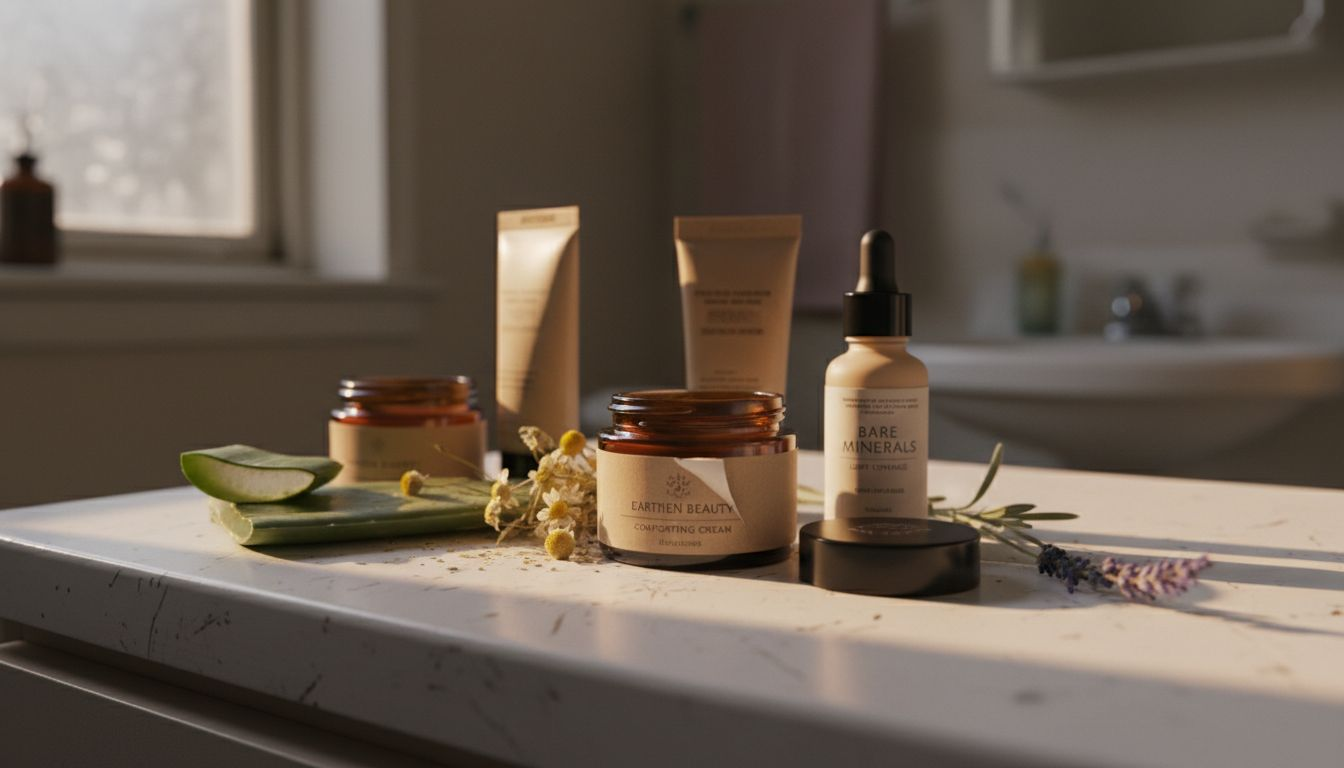
The landscape of natural makeup encompasses several distinct product types, ranging from foundations and concealers to blushes and eyeshadows. Botanical ingredients like chamomile, green tea, and aloe vera are frequently incorporated to provide soothing and nourishing qualities. Mineral-based products, particularly those using zinc oxide and titanium dioxide, offer natural sun protection and gentle coverage, making them especially suitable for women with sensitive skin seeking clean, minimally processed cosmetic options.
Safety and regulatory considerations play a crucial role in natural makeup formulation. European Union standards require rigorous safety assessments for natural cosmetic ingredients, ensuring minimal microbial contamination and toxin exposure. This means that natural makeup products must undergo extensive testing to validate their purity, effectiveness, and compatibility with human skin. Consumers can look for certifications that indicate thorough ingredient verification and adherence to strict manufacturing standards.
Pro tip: When selecting natural makeup, prioritize products with transparent ingredient lists and third-party certifications, and always perform a patch test to ensure individual skin compatibility.
Natural Makeup vs. Organic and Clean Labels
The cosmetic industry’s labeling landscape is complex, with terms like natural, organic, and clean beauty often used interchangeably but representing distinctly different concepts. Clean beauty trends prioritize product safety by focusing on ingredient transparency, sustainability, and ethical manufacturing processes. Unlike simple marketing claims, these labels carry nuanced meanings that require careful consumer understanding.
Organic cosmetics represent the most rigorous category, requiring strict agricultural certification and sustainable sourcing practices. Natural makeup, by contrast, allows for some synthetic ingredients while emphasizing botanical and mineral components. Clean beauty emerges as a broader philosophy that transcends ingredient origin, concentrating instead on excluding potentially harmful substances regardless of whether they are synthetic or naturally derived. This approach prioritizes consumer health and environmental responsibility over rigid categorization.
Cosmetic label distinctions reveal important regulatory variations that impact product composition and marketing claims. Organic products must meet extensive certification standards, natural products maintain a percentage of plant-based ingredients, and clean beauty focuses on eliminating toxic components. Consumers should recognize these nuanced differences to make informed purchasing decisions, understanding that overlapping definitions can sometimes lead to confusion and potential greenwashing practices.
Here’s a concise comparison of key label types in cosmetics:
| Label Type | Ingredient Requirements | Certification Needed | Focus Area |
|---|---|---|---|
| Natural | Mostly plant/mineral sources | Sometimes, varies by region | Ingredient origin |
| Organic | High % organic plant ingredients | Mandatory, strict standards | Sustainable agriculture |
| Clean Beauty | Excludes harmful substances | Not required, but valued | Safety and transparency |
Pro tip: Always read ingredient lists carefully and research brand certifications to truly understand the composition and safety standards of your makeup products.
Sustainability and Safety in Modern Makeup
Consumer demand for sustainable beauty products has dramatically transformed the cosmetics industry, pushing brands toward more environmentally conscious and health-focused formulations. Modern makeup now goes beyond aesthetic appeal, incorporating ethical manufacturing practices, ingredient transparency, and reduced environmental impact. Women are increasingly seeking products that align with their values of personal wellness and global responsibility.
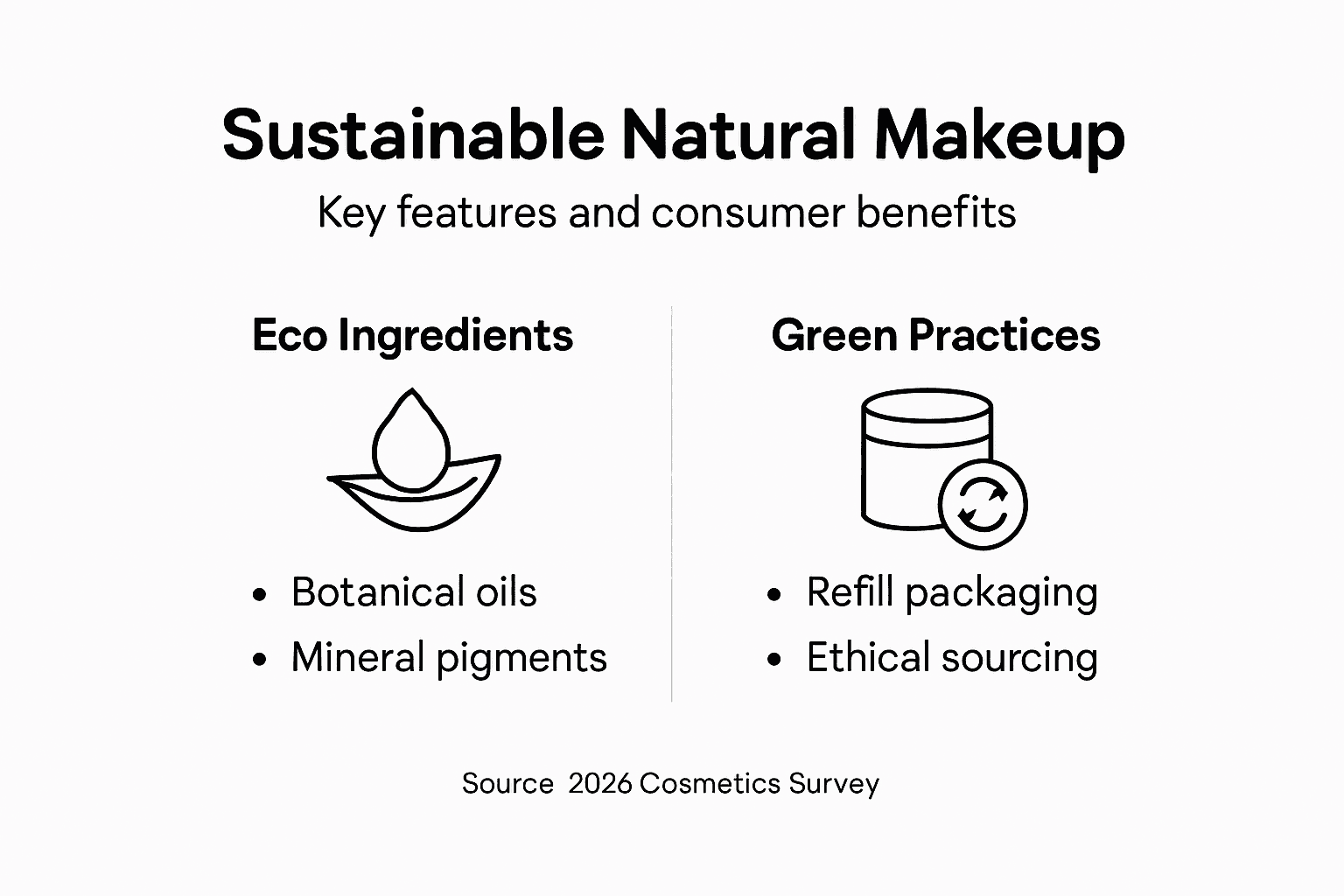
The shift towards sustainable makeup involves sophisticated scientific innovations. Green chemistry principles are revolutionizing cosmetic development, with researchers replacing petrochemical ingredients with renewable natural sources. Biotechnology plays a crucial role in creating high-performance makeup that maintains efficacy while minimizing ecological footprints. Eco-friendly formulation strategies now prioritize ingredient safety, renewable sourcing, and reduced waste throughout the production process.
Sustainability in modern makeup extends beyond ingredient selection to encompass comprehensive environmental considerations. Brands are implementing comprehensive approaches that include recyclable packaging, reduced carbon emissions, cruelty-free testing, and ethical sourcing of raw materials. These multifaceted strategies demonstrate a commitment to both consumer health and global environmental preservation, reflecting a holistic understanding of beauty that transcends traditional cosmetic boundaries.
The table below summarizes sustainability strategies in modern makeup:
| Sustainability Strategy | Description | Consumer Benefit |
|---|---|---|
| Green Chemistry | Uses renewable, safe materials | Reduces toxin exposure |
| Biotechnological Innovation | Produces effective natural ingredients | Maintains product performance |
| Eco-Friendly Packaging | Uses recyclable or minimal packaging | Lowers environmental impact |
| Ethical Sourcing | Ensures fair labor and sourcing practices | Supports global responsibility |
Pro tip: Research makeup brands that provide transparent ingredient lists and third-party sustainability certifications to make informed, environmentally conscious purchasing decisions.
Choosing Genuine Natural Makeup in 2026
Navigating the complex world of natural makeup requires a strategic approach that goes beyond surface-level marketing claims. Selecting authentic natural cosmetics demands careful consideration of multiple factors that extend well beyond simple ingredient lists. Consumers must develop a critical eye for authenticity, understanding that true natural makeup involves comprehensive commitments to transparency, sustainability, and ethical production.
In 2026, ingredient transparency becomes paramount for discerning makeup enthusiasts. Modern consumers expect detailed information about product origins, processing methods, and environmental impact. This means looking beyond buzzwords like “natural” or “clean” and investigating specific sourcing practices, manufacturing processes, and the actual percentage of plant-based ingredients. Certification becomes crucial, with third-party verifications offering reliable indicators of genuine natural makeup formulations.
The evolution of natural makeup also involves understanding the intricate balance between performance and purity. Brands that successfully navigate this landscape will demonstrate rigorous testing protocols, innovative green chemistry techniques, and a genuine commitment to reducing environmental footprint. Advanced biotechnology now enables the creation of high-performance natural makeup that meets sophisticated aesthetic and functional requirements, challenging traditional perceptions about natural product efficacy.
Pro tip: Develop a personal checklist that includes verifying brand certifications, examining complete ingredient lists, and researching a company’s sustainability practices before making natural makeup purchases.
Discover the Power of Authentic Natural Makeup Today
Choosing genuine natural makeup means embracing products that prioritize transparency, sustainability, and real skin benefits. If you want to avoid confusion and greenwashing, start by exploring trusted formulas designed specifically for sensitive and diverse skin types. At Luméra Cosmetica, our Face Makeup for Every Skin Type | Natural Radiance by Luméra Cosmetica collection showcases botanical and mineral-based ingredients aligned with modern natural makeup principles discussed in the article.
Experience firsthand how clean, effective, and ethically crafted makeup can enhance your natural beauty while supporting eco-friendly values. Visit https://lumeracosmetica.com now to explore our full range including our Luméra Eye Collection | Mascara, Lashes & Eye Shadow for a complete natural look. Shop today and make informed choices that honor your skin’s health and the planet’s future.
Frequently Asked Questions
What is natural makeup?
Natural makeup refers to cosmetic products primarily made from botanical and mineral ingredients, minimizing synthetic components. It aims to provide both aesthetic appeal and skin benefits while focusing on ingredient transparency and safety.
How does natural makeup differ from organic and clean beauty products?
Natural makeup has a higher allowance for some synthetic ingredients, while organic products must meet strict agricultural standards for sourcing. Clean beauty prioritizes ingredient safety and transparency, regardless of whether the ingredients are natural or synthetic.
Are natural makeup products always safe for sensitive skin?
Not necessarily. While natural makeup often contains gentle ingredients, some natural components can still cause allergic reactions. It’s essential to read ingredient lists and perform patch tests to ensure compatibility with your skin.
What should I look for when choosing natural makeup products?
When selecting natural makeup, prioritize products with transparent ingredient lists, third-party certifications, and ensure they align with your personal values regarding sustainability and ethical sourcing.
Recommended
- Understanding the Nude Lip: A Comprehensive Guide – Luméra Cosmetica
- No Makeup Makeup Look Step by Step for Women 40+ – Luméra Cosmetica
- Simple Skincare for Makeup: The Essential Guide – Luméra Cosmetica
- Multipurpose Makeup – Streamlining Beauty for Women 40+ – Luméra Cosmetica
- Understanding Natural Hair Care for Black Hair | MyHair