

Finding that perfect lipstick shade can feel like an ongoing challenge, especially when your skin tone and style have evolved over the years. For women in cities across Australia and the United Kingdom, the right color not only complements complexion but also boosts daily confidence. By focusing on skin undertone discovery and embracing your personal aesthetic, you can more easily select lipstick shades that flatter and empower, creating a polished look that truly belongs to you.
Table of Contents
- Step 1: Assess Your Skin Undertone
- Step 2: Identify Your Personal Style Preferences
- Step 3: Evaluate Lipstick Colors In Natural Light
- Step 4: Test Lipstick On Your Lips
- Step 5: Review And Refine Your Final Selection
Quick Overview
| Key Point | Explanation |
|---|---|
| 1. Assess Your Skin Undertone | Identify if you have warm, cool, or neutral undertones using vein, jewelry, and shirt tests to choose complementary lipstick shades. |
| 2. Identify Personal Style Preferences | Evaluate your makeup choices based on your social and professional life to express your personality through lipstick colors. |
| 3. Evaluate Lipstick Colors in Natural Light | Always test lipstick in natural daylight to see its true color and how it complements your skin undertone effectively. |
| 4. Test Lipstick on Your Lips | Apply lipstick directly on your lips, checking for comfort and shade performance before making a final decision. |
| 5. Review and Refine Selection | Critically compare top lipstick choices to assess comfort, consistency with your undertone, and personal confidence to ensure a good match. |
Step 1: Assess Your Skin Undertone
Understanding your skin undertone is crucial for selecting lipstick shades that will naturally complement your complexion. Skin undertones are subtle color variations beneath the surface that determine how colors interact with your natural skin color.
To identify your undertone, you’ll need to perform a few simple tests that reveal whether you have warm, cool, or neutral undertones. Skin color variations depend on several factors that go beyond surface appearance.
Here are three reliable methods to determine your skin undertone:
- The Vein Test
- Look at the veins on your wrist in natural daylight
- Blue or purple veins suggest cool undertones
- Green veins indicate warm undertones
- Veins that appear both blue and green suggest neutral undertones
- The Jewelry Test
- Gold jewelry looks best on warm undertones
- Silver jewelry complements cool undertones
- People with neutral undertones look great in both metals
- The White Shirt Test
- Hold a pure white shirt near your face in natural light
- If your skin looks pink or rosy, you have cool undertones
- If your skin appears golden or yellowish, you have warm undertones
- If you look balanced, you likely have neutral undertones
Understanding your skin phototype can provide additional insights into how your skin responds to color and light.
Pro tip: Natural daylight provides the most accurate assessment of your undertones, so perform these tests near a window for the most reliable results.
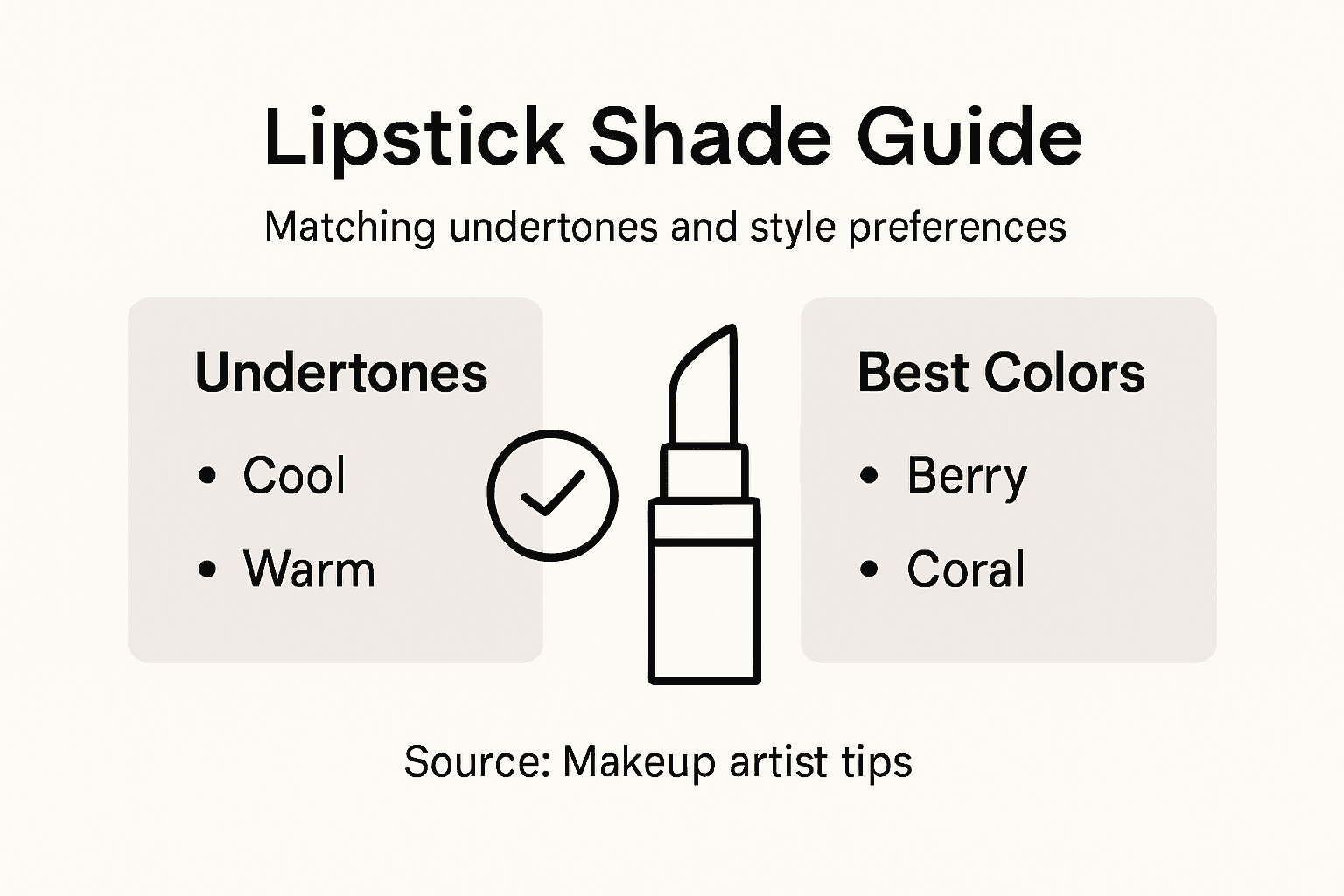
Here is a quick reference for matching skin undertones with recommended lipstick shade families:
| Undertone Type | Common Skin Hues | Best Lipstick Families |
|---|---|---|
| Cool | Pink, rosy, blue | Berry, rose, mauve |
| Warm | Golden, yellow | Coral, peach, brick |
| Neutral | Olive, balanced | Nude, rose, red |
Step 2: Identify Your Personal Style Preferences
Choosing the right lipstick isn’t just about color matching - it’s about expressing your unique personality and feeling confident in your look. Makeup usage reflects personal identity and can be a powerful tool for self-expression.
Understanding your personal style involves exploring several key dimensions that go beyond simple color preferences. Consider these critical aspects of your aesthetic identity:
-
Professional Style
- Minimal and understated makeup for corporate environments
- Bold and statement-making looks for creative industries
- Versatile makeup that transitions between work and social settings
-
Social Confidence
- Makeup choices that enhance your natural features
- Shades that make you feel empowered and comfortable
- Lipstick colors aligned with your personal comfort level
Personal style is more than appearance - it’s about how makeup makes you feel about yourself.
Practical Assessment Steps:
- Review your current makeup collection
- Note which lipstick shades you gravitate toward
- Analyze the colors you feel most confident wearing
- Consider your typical social and professional environments
Style preferences are deeply personal and evolve with social contexts. Your ideal lipstick shade should not just complement your skin tone, but also reflect your inner confidence and aesthetic vision.
Pro tip: Take smartphone photos of yourself wearing different lipstick shades to objectively assess which colors truly enhance your look and make you feel most confident.
Step 3: Evaluate Lipstick Colors in Natural Light
Selecting the perfect lipstick shade requires more than just looking in a bathroom mirror - it demands careful assessment in natural daylight. Lipstick color perception varies dramatically depending on lighting conditions and your unique skin undertone.
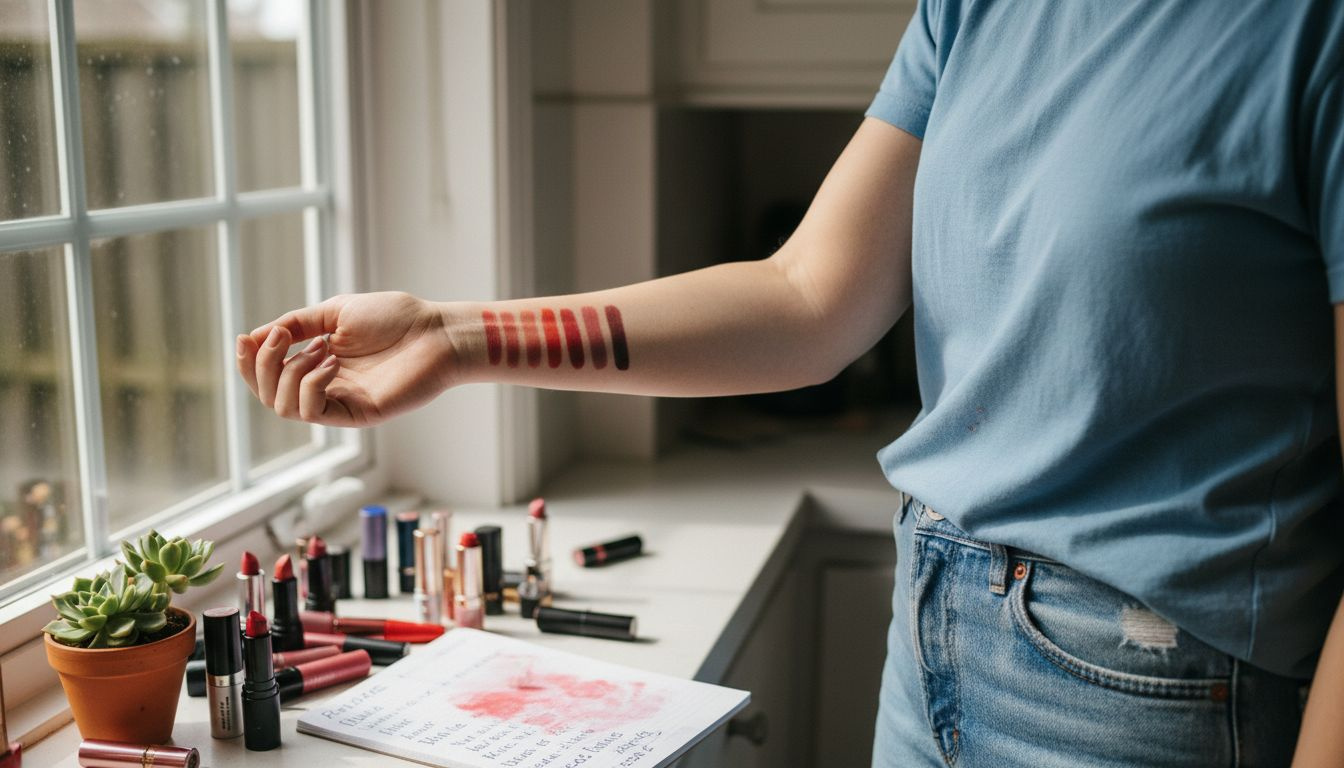
To accurately evaluate lipstick colors, you’ll want to create a strategic testing environment that reveals the true shade and how it interacts with your skin. This process goes beyond simply swatching colors - it’s about understanding how the lipstick transforms in different lighting scenarios.
Recommended Evaluation Methods:
- Test lipstick shades near a window with natural sunlight
- Avoid artificial lighting which can distort color perception
- Compare swatches in multiple lighting conditions
Critical Evaluation Steps:
- Select 3-4 potential lipstick shades
- Apply thin layers on your inner wrist
- Step near a window or outdoor space
- Observe how colors change in daylight
- Check how shades complement your skin undertone
Natural light provides the most honest representation of a lipstick’s true color and interaction with your skin.
Professional makeup artists understand that lipstick color testing requires a nuanced approach. Daylight reveals subtle pigment variations that indoor lighting completely masks, giving you the most accurate preview of how the shade will actually look.
Pro tip: Photograph your lipstick swatches in natural light to create a personal reference guide for future makeup selections.
Step 4: Test Lipstick on Your Lips
Testing lipstick directly on your lips is the ultimate way to determine whether a shade truly works for you. Lipstick testing involves critical safety considerations beyond just aesthetic appeal.
Before committing to a full application, you’ll want to perform a careful and strategic lip test that goes beyond simple color observation. This process helps you understand how the lipstick feels, looks, and performs in real-world conditions.
Comprehensive Lip Testing Protocol:
- Clean and moisturize lips beforehand
- Apply a thin layer of lipstick
- Check color intensity and true shade
- Assess comfort and potential skin reactions
- Evaluate wear time and texture
Detailed Application Steps:
- Start with clean, exfoliated lips
- Apply lipstick in natural lighting
- Blot with tissue to remove excess product
- Observe color in multiple light settings
- Check for any skin sensitivity
Proper lip testing reveals more than just color - it uncovers how a lipstick truly performs on your unique skin.
Professional makeup experts understand that cosmetic safety protocols require thorough product testing. A comprehensive lip test ensures you select a lipstick that not only looks beautiful but feels comfortable and suits your individual skin chemistry.
Pro tip: Wait at least 30 minutes after application to fully assess the lipstick’s true color, comfort, and potential skin reaction.
Use this summary to help evaluate lipstick comfort and performance during testing:
| Factor | What to Check | Why It Matters |
|---|---|---|
| Texture Feel | Smooth, gritty | Impacts overall comfort |
| Lasting Power | Stays, fades fast | Indicates wearability |
| Skin Sensitivity | Irritation, stable | Ensures skin safety |
| Shade Outcome | True, changes | Ensures color accuracy |
Step 5: Review and Refine Your Final Selection
Selecting the perfect lipstick is an art of careful evaluation and personal reflection. Product refinement requires systematic assessment beyond initial impressions, ensuring you choose a shade that truly complements your unique style.
Your lipstick selection journey culminates in this critical review stage, where you’ll critically analyze your top choices against multiple criteria. This isn’t just about color - it’s about finding a lipstick that feels like an authentic extension of your personal aesthetic.
Key Evaluation Criteria:
- Consistency with skin undertone
- Comfort during wear
- Color performance in different lighting
- Alignment with personal style
- Long-term wearability
Refinement Checklist:
- Compare top 2-3 lipstick shades side by side
- Assess color in natural and artificial light
- Note how each shade makes you feel
- Consider versatility across different outfits
- Prioritize personal confidence
Your ideal lipstick should make you feel both beautiful and authentically yourself.
Professional makeup experts understand that cosmetic product selection is a nuanced process requiring careful consideration of multiple factors. Trust your instincts while maintaining an objective perspective during your final review.
Pro tip: Take smartphone photos of yourself wearing each lipstick shade to help you objectively compare and make your final selection.
Discover Your Perfect Lipstick Match with Luméra Cosmetica
Choosing the right lipstick shade to complement your undertone and personal style can feel overwhelming. This challenge of finding a color that enhances your unique beauty and boosts your confidence is exactly why we created our versatile selection of lip products. Whether you are aiming for a natural look or a bold statement our Lip Oil – Luméra Cosmetica nourishes your lips while providing beautiful shades that align perfectly with your skin tone.
Explore how our collection supports your journey from initial testing in natural light to confident wear all day long. Take the next step in elevating your makeup routine with essentials designed for every skin type in our Face Makeup for Every Skin Type | Natural Radiance by Luméra Cosmetica. Visit https://lumeracosmetica.com now and find the lipstick shade that truly reflects your style and makes you feel exceptional today.
Frequently Asked Questions
How can I determine my skin undertone for choosing lipstick?
Understanding your skin undertone is essential. Look at the veins on your wrist: blue indicates cool undertones, green suggests warm undertones, and a mix of both points to neutral undertones. Perform this test in natural daylight for the most accurate assessment.
What lipstick shades are recommended for warm undertones?
If you have warm undertones, consider shades like coral, peach, and brick. These colors will enhance your natural warmth and give you a flattering look. Test these shades in natural light for the best result.
How do I evaluate lipstick colors to see if they suit me?
To evaluate lipstick colors, apply swatches on your inner wrist in natural light. Observe how the colors change under different lighting conditions, then select shades that harmonize with your skin undertone and personal style.
What steps should I take to test lipstick on my lips?
Before applying lipstick directly, ensure your lips are clean and moisturized. Apply a thin layer, check the color intensity, and wait at least 30 minutes to assess its comfort and how it interacts with your skin.
How can I refine my lipstick choices after testing?
After testing, compare your top 2-3 lipstick shades side by side under both natural and artificial light. Evaluate how each shade makes you feel and consider their versatility across different outfits before making your final selection.
Is it necessary to take photos when choosing a lipstick shade?
Yes, taking photos while trying different lipstick shades can help you objectively compare your options. Review your images in natural light, as they can provide a clearer representation of how well the shades suit you.
